
Petrol Price Rise Adds £12 to a Typical 50-Litre Fill-Up
Petrol prices rose from 150.66p to 174.80p a litre by 1 October, adding around £12 to a 50-litre fill-up. Find out what drove the surge for drivers in England.

The Parking Ticket Pal Editorial Team
12 October 2026
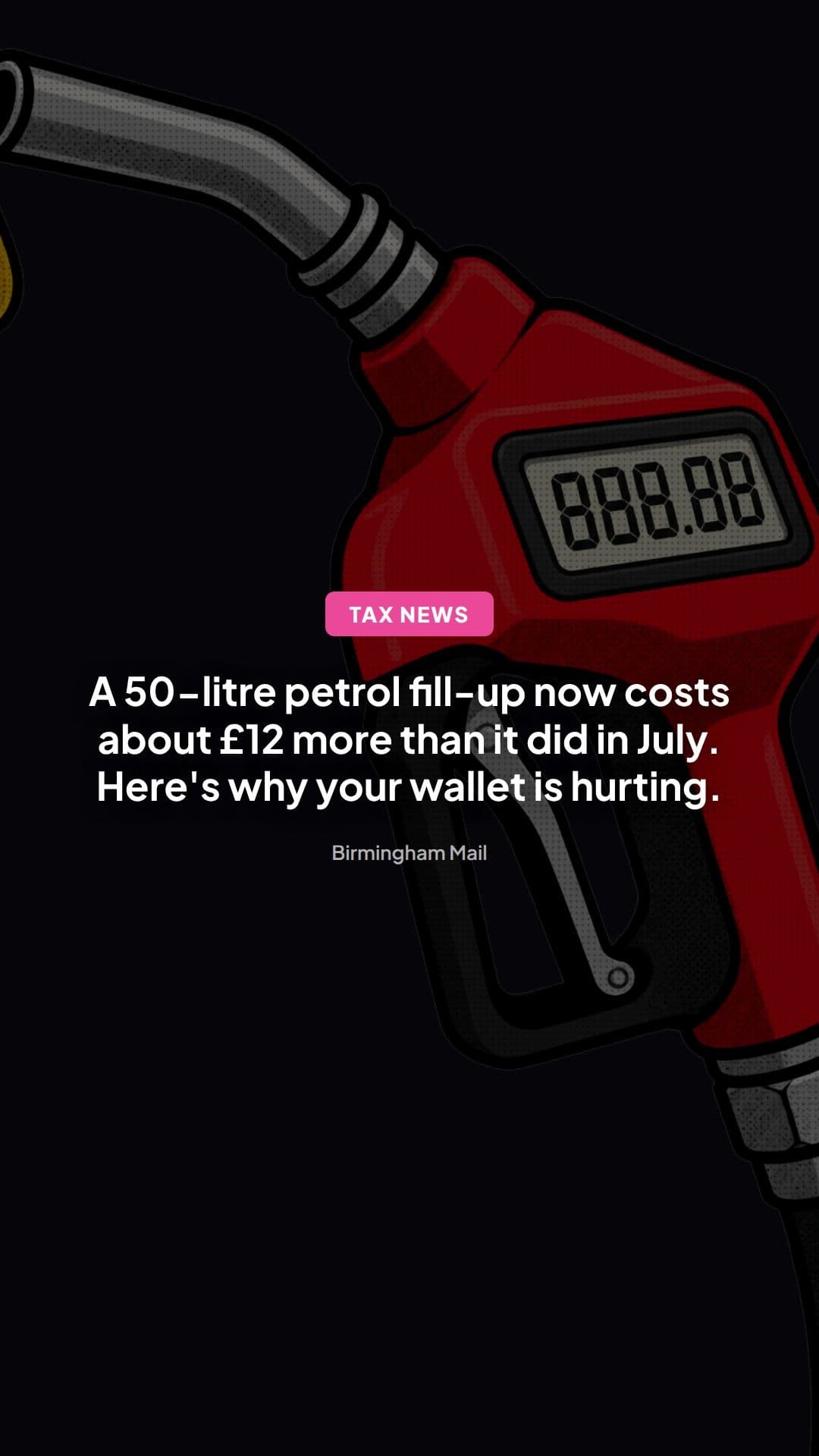
Petrol Up 24p a Litre: What a £12 Dearer Fill-Up Really Means for Drivers
You pull onto the forecourt, lift the nozzle and watch the numbers climb. Then you reach the till and wince. A tank that cost one price in the summer now costs noticeably more, and the difference is not small change. According to the Birmingham Mail's report, a typical 50-litre fill of unleaded is now around £12 dearer than it was a few months ago.
This post looks at what lies behind that figure, how it plays out in a household budget, which rules and rights apply at the pump, and what drivers can do about it.
What happened
The Birmingham Mail reported that the average price of a litre of unleaded in England rose from 150.66p in early July to 174.80p on 1 October. That is a rise of 24.14p per litre, or roughly 16% in three months. Diesel also reached record levels, so drivers of both fuel types are affected.
The £12 headline comes from simple arithmetic:
| | Price per litre | Cost of 50 litres | |---|---|---| | Early July | 150.66p | about £75.33 | | 1 October | 174.80p | about £87.40 | | Difference | 24.14p | about £12.07 |
Most of us do not think in litres. We think in "a tank" or "a fiver's worth". Framing the increase as a cost per fill makes it far more tangible. A driver filling up once a week would be spending about £12 more per tank, which over a month adds up to a meaningful sum. These are our own illustrative sums based on the reported averages, not a forecast.
An important caveat: the figures are national averages. Real prices vary widely between motorway services, independent forecourts and supermarkets, and between regions. The average tells you the direction of travel, not what you will pay at the pump down your road.
Why it matters
Fuel is a heavily taxed product
It helps to understand why pump prices behave as they do. A litre of petrol or diesel is made up of the product itself, retailer margins, fuel duty and VAT. Fuel duty is charged as a fixed amount per litre, and VAT at 20% is then charged on top of the whole lot, duty included. That means a rise in the wholesale cost of fuel gets VAT added on its way to the pump, so the final increase is bigger than the underlying one.
Our existing coverage looks at this in more detail, including the post on why drivers are paying more VAT as fuel prices surge. The key point here is that drivers have almost no control over any of these components.
The cost is not shared equally
For some drivers a £12 rise is an irritation. For others it is a real squeeze:
- Rural drivers often have no realistic alternative to the car and fewer forecourts to compare.
- Shift workers and carers cannot always shift journeys to cheaper times or use public transport.
- Self-employed drivers, couriers and delivery drivers treat fuel as a core business cost, and diesel at record levels hits them hardest.
- Families with older, thirstier cars feel it more than those with efficient or electric models.
Higher fuel costs also spill into other prices, because goods and services are moved by diesel-powered vehicles. Drivers can end up paying twice, once at the pump and again at the shops.
Why October matters
Prices tend to attract the most attention at the start of a month, when new figures are published, and at the start of autumn, when darker evenings and colder weather push up mileage on short trips, heater use and, for many families, the school and commuting routine. A high starting point for the colder months is worth planning around.
The legal angle
Rising fuel costs are mostly an economics story, but some law and regulation sits around the forecourt and around how drivers react to the price.
Making off without payment
When prices climb, forecourt drive-offs tend to become a talking point. Under section 3 of the Theft Act 1978, making off without payment is a criminal offence in England and Wales where someone knows payment is required and leaves dishonestly intending to avoid paying. The key word is dishonestly.
What if you genuinely forgot, perhaps because a card payment did not go through or you were distracted by children in the back? Generally, forecourts and police expect prompt contact. If you realise your mistake, the sensible course is to contact the station as soon as possible and pay. This is general information rather than advice on any particular situation, and anyone who has received a letter or contact from police or a retailer about an unpaid fill should seek independent advice.
Fuel quality and your consumer rights
Fuel is a good under the Consumer Rights Act 2015, which means it should be of satisfactory quality and fit for purpose. If you put fuel in your car and it turns out to be contaminated, you may have a claim against the retailer. Keep your receipt, avoid driving the car further, and photograph the pump and any relevant details. For a fuller explanation, see our coverage of drivers still waiting for compensation after fuel contamination.
Price transparency and monitoring
The competition watchdog, the CMA, has been looking at how fuel is priced and whether savings are passed on to drivers. There is also government-backed price transparency work that requires fuel retailers to share their prices so that drivers can compare them. Our posts on the Fuel Finder scheme and on CMA probes into UK petrol prices go into detail. For readers, the practical value is that comparison tools exist and are getting better.
Storing fuel at home
A rise in prices sometimes tempts people to stockpile when they think the next increase is coming. Be careful. Petrol is highly flammable, and rules apply to how much you can keep and in what containers. Guidance from the Health and Safety Executive indicates that private individuals can keep up to 30 litres of petrol in suitable, approved containers without needing to notify the petroleum enforcement authority. Check the official guidance before storing any quantity at home, and never use makeshift containers. The savings are not worth the risk, and your home insurance may have its own conditions.
Business drivers and HMRC rates
If you drive a company car, or use your own car for work, the rules around fuel reimbursement matter. HMRC publishes Advisory Fuel Rates, which are reviewed quarterly, for company car drivers claiming or repaying business mileage. Employees using their own vehicles can generally receive approved mileage allowance payments of 45p per mile for the first 10,000 business miles and 25p after that without a tax liability. If your costs have risen faster than those rates, you may be out of pocket. Check the latest figures on GOV.UK and ask your employer or an accountant if you are unsure.
What drivers should know
You cannot change the price on the forecourt sign, but you can change how much of it you pay. These are the practical steps most likely to help.
1. Compare by the price per litre, not the brand
A 24p swing is large, but differences of several pence between forecourts a mile apart are common. Use price comparison apps or the government's fuel price data where available. Supermarket forecourts are often cheaper, but not always, so check local prices rather than assuming.
2. Avoid motorway services unless you have to
Motorway forecourts routinely charge a premium. Fill up before you join, or leave at a junction and use a town forecourt if you are running low.
3. Do the sums on a detour
A 10-mile round trip to save 5p a litre on a 40-litre fill saves £2, but the extra miles may cost most or all of that. Cheap fuel hunting is only worthwhile if the station is on your route or very close.
4. Watch your parking and your phone
Chasing a cheap fill can lead to avoidable penalties. Pulling into a forecourt that is actually a private car park, queuing in a way that blocks others, or using a phone to compare prices while moving can all cost far more than you save. We have covered the risk of fines and points when hunting for cheap fuel and the debate around parking charges issued in petrol station queues, both of which are worth reading if you often use unfamiliar forecourts.
5. Trim consumption
You do not need to drive like a saint. The basics that make a genuine difference:
- Check tyre pressures monthly. Under-inflated tyres increase drag.
- Remove roof boxes and racks when not in use.
- Clear out the boot. Extra weight needs extra fuel.
- Drive smoothly. Harsh acceleration and braking waste fuel.
- Combine short trips so the engine warms up once instead of several times.
- Use air conditioning sensibly, and keep windows closed at higher speeds.
6. Check your records if you claim mileage
If you claim business mileage, keep a log. Dates, journeys and mileage are worth recording as you go, not reconstructing months later.
7. Consider your next car with fuel in mind
If your car is due for replacement, running costs are worth weighing alongside the purchase price. Efficient petrol, hybrid and electric models behave very differently when the pump price jumps. We have written about the rise in interest in used electric vehicles and hybrids as petrol prices climb, and charging prices carry their own risks, so compare carefully.
Looking ahead
Nobody can say with certainty where pump prices go next. They respond to global oil and wholesale markets, exchange rates, refinery supply and tax decisions, and forecasters are often wrong. What the Birmingham Mail's figures show is that a 16% rise can happen in a single quarter, and that drivers who budget on the assumption that prices will fall back are taking a risk.
Several things are worth watching:
- Government tax decisions. Fuel duty has been a recurring political issue, and changes to duty flow straight through to the pump with VAT added.
- Competition scrutiny. Ongoing regulatory attention to whether lower wholesale costs reach drivers could affect retailer behaviour.
- Price transparency tools. Better data makes it easier to find the cheapest local station and puts pressure on those that charge more.
- Winter driving costs. Colder weather typically increases fuel use per mile, so the real cost of a rise may be larger than the pump price suggests.
The sensible approach is to treat the £12 figure as a planning prompt. Work out what a typical month's fuel costs you now, see whether your habits, route or vehicle could be adjusted, and keep an eye on official sources such as GOV.UK and the CMA for developments that affect what you pay.
In short: the £12 figure is the headline, but the real story is the 24p rise per litre behind it. You cannot control the price, but comparing forecourts, driving efficiently, keeping accurate records and avoiding costly detours or penalties can take some of the sting out of it.
This article provides general information about UK motoring and consumer rules and is not legal or financial advice. For decisions about your own circumstances, consult official guidance or a qualified professional.
Written by
The Parking Ticket Pal Editorial Team
Source-checked parking guidance
Ready to Challenge Your Ticket?
Let our AI analyse your PCN and generate a professional appeal letter in minutes.
Start Free Appeal