PCN code 91: Off-street permit parking ticket guide
Got a PCN code 91 for an off-street car park without a permit? Learn what it means, key evidence to check, and appeal grounds in England & Wales.

Priya Sharma
28 March 2026
PCN Code 91: Your Complete Guide to Off-Street Permit Parking Tickets
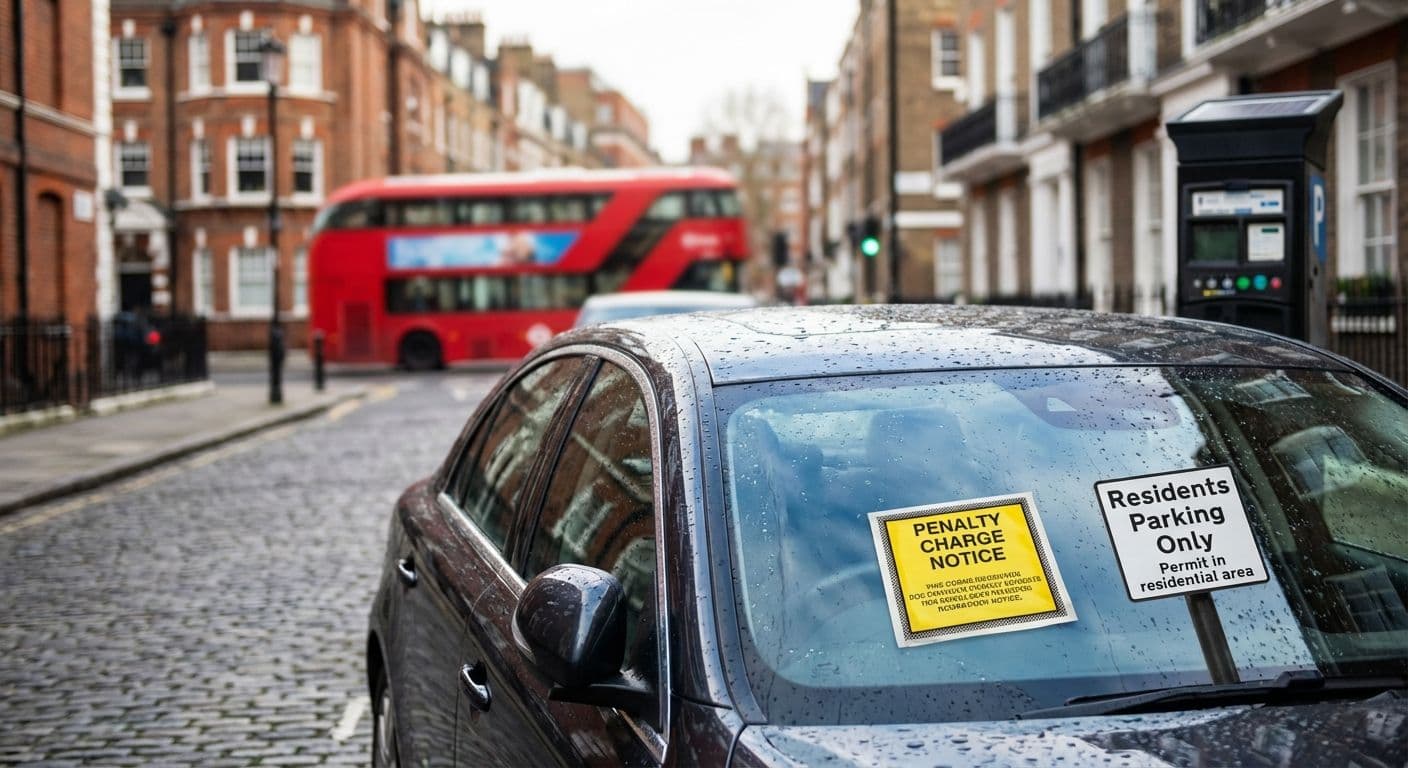
You've returned to your car to find a Penalty Charge Notice tucked under the wiper — and the code printed on it reads 91. If you're parked in a council-run off-street car park that operates a permit scheme, this is the contravention you'll be dealing with. It means, in plain English: parked in a permit bay without displaying a valid permit.
Before you reach for your wallet or assume you've simply got to pay up, stop. PCN code 91 is one of those contraventions where the detail really matters — and where a surprisingly high number of tickets get overturned on appeal. This guide walks you through everything you need to know, from what the code actually means to the strongest grounds for fighting back.
What Does PCN Code 91 Actually Mean?
PCN code 91 is a civil parking contravention that applies specifically to off-street locations — meaning car parks, rather than public roads. The full wording is:
"Parked in a permit bay without displaying a valid permit."
It sits under the Traffic Management Act 2004, which governs civil parking enforcement in England and Wales. Councils that have decriminalised parking enforcement — which is the vast majority of them — can issue these PCNs through their Civil Enforcement Officers (CEOs).
The key distinction here is that this is an off-street contravention. On-street permit bay violations typically fall under code 16 or code 85. Code 91 is reserved for council-managed car parks, multi-storeys, surface-level car parks, and similar off-street locations where a permit scheme is in operation.
Why Are These Car Parks Permit-Only?
Not all council car parks are pay-and-display or free-to-use. Some are designated for specific users — residents with annual permits, staff at nearby public buildings, blue badge holders, or traders operating in a town centre. You'll often find permit-only bays sitting alongside pay-and-display spaces within the same car park, which is where confusion frequently arises.
Common examples include:
- Residents' car parks associated with a housing estate or street, managed by the council
- Staff permit zones near hospitals, civic centres, or schools
- Season ticket bays in town centre car parks
- Shared-use bays that operate as permit-only during certain hours
If a CEO spots your vehicle in one of these bays without a permit displayed — or with a permit that's expired, unreadable, or doesn't correspond to that specific car park — you'll get a code 91 PCN.
How Much Is the Fine?
The penalty amount varies depending on which council issued it and whether the contravention is classified as higher or lower level. In most cases, code 91 is treated as a lower-level contravention, meaning:
- £50–£70 in most English councils outside London
- £60–£80 in London boroughs
- A 50% discount applies if you pay within 14 days of the issue date
That discount is worth keeping in mind even if you're planning to appeal — if your appeal fails, you'll lose the reduced rate. More on that timing issue below.
The Evidence You Should Check Immediately
This is where most successful appeals begin. Before anything else, get hold of the evidence the council holds against you. You're entitled to request this, and it typically includes:
- Photographs taken by the CEO — showing your vehicle, the bay markings, and any permit (or lack of one) displayed
- The CEO's observation notes — how long they watched your vehicle, what they saw
- The Traffic Regulation Order (TRO) — the legal document that authorises the permit bay in the first place
Request this evidence as part of your informal challenge or formal representation. Councils are obliged to provide it.
What to Look For in the Photos
Go through the CEO's photographs carefully. Specifically check:
- Is your vehicle clearly in a designated permit bay? Bay markings can be faded, partially obscured, or ambiguous.
- Was a permit actually displayed? Sometimes a permit slips off the dashboard or isn't visible from outside — that's different from not having one at all.
- Do the photos show adequate signage nearby? The permit requirement must be clearly communicated at the entrance to the car park and at the bay itself.
- Is the timestamp correct? Check the date and time on the photos against when you were actually parked.
Pro tip: If the CEO's photos show no signage in the frame — or the signage is partially obstructed — this can be a strong appeal point. The burden is on the council to demonstrate that the restriction was clearly communicated.
Grounds for Appealing a PCN Code 91
Here are the most effective arguments used to challenge these tickets:
1. The Signage Was Inadequate or Absent
For a permit bay to be legally enforceable, it must be properly signed in accordance with the Traffic Signs Regulations and General Directions 2016. If the signs at the car park entrance or adjacent to the bay were:
- Missing entirely
- Damaged or unreadable
- Obscured by vegetation, parked vehicles, or poor lighting
- Contradictory (e.g., one sign suggesting pay-and-display, another suggesting permit-only)
...then you have a genuine case. Councils have lost appeals on exactly this basis.
2. The Traffic Regulation Order Is Defective
The TRO is the legal instrument that creates the permit bay. If it wasn't properly made, advertised, or doesn't actually cover the bay where you were parked, the contravention may not be valid. This is a more technical ground, but worth checking — particularly if the car park has been recently reconfigured.
3. You Had a Valid Permit But It Wasn't Visible
If your permit fell off the dashboard, was obscured by sunlight reflection, or was tucked somewhere the CEO couldn't easily see, this is worth arguing. Provide evidence that you hold a valid permit for that car park — a copy of the permit itself, the council's records showing it was active, or correspondence confirming your permit status.
4. The CEO Made a Factual Error
If the photographs show you were parked in a pay-and-display bay rather than a permit bay, or the observation notes contain errors about your vehicle's registration, make, or colour — these are legitimate grounds to challenge.
5. Mitigating Circumstances
These won't always win an appeal outright, but councils do sometimes exercise discretion. If you were attending a medical emergency, your permit had only just expired, or there was a council administrative error in renewing your permit, it's worth raising.
The Appeal Process: Step by Step
- Informal challenge (within 14 days of the PCN): Write to the council explaining your grounds. Keep the discount period in mind — if your challenge fails, you typically get another chance to pay at the discounted rate.
- Formal representation (after a Notice to Owner is issued): If the informal challenge is rejected, you'll receive a Notice to Owner. You then have 28 days to make a formal representation.
- Independent adjudicator: If the council rejects your formal representation, you can appeal to the Traffic Penalty Tribunal (outside London) or London Tribunals (for London boroughs). This is a free, independent service — and adjudicators are not afraid to rule against councils where the evidence is weak.
Pro tip: Always appeal in writing, keep copies of everything, and reference the specific evidence you're relying on. Vague appeals are far less effective than ones that point to a specific photograph, sign, or TRO clause.
Common Mistakes Drivers Make
- Paying immediately without checking the evidence — you might have a perfectly valid appeal
- Assuming a permit for a nearby car park covers this one — permits are usually location-specific
- Not requesting the CEO's photos — these often reveal flaws in the council's case
- Missing the appeal deadlines — the 14-day and 28-day windows are strict
Your Actionable Next Steps
If you've received a PCN code 91, here's what to do right now:
- Note the issue date — your 14-day discount window starts immediately
- Request the evidence pack from the council, including CEO photographs and the relevant TRO
- Photograph the car park signage yourself — go back and document what's there (or not there)
- Check your permit status — confirm it was valid and covers that specific location
- Draft your informal challenge — focus on the strongest factual ground you have
- Keep copies of everything — every letter, email, and photograph
PCN code 91 is far from a dead cert for the council. With the right evidence and a clear, focused appeal, you stand a genuine chance of getting it cancelled — without paying a penny.
Written by
Priya Sharma
Legal Aid Coordinator
Ready to Challenge Your Ticket?
Let our AI analyse your PCN and generate a professional appeal letter in minutes.
Start Free Appeal