PCN Code 74: Off‑Street Restricted Area Rules & Appeals
PCN code 74 means using a vehicle in an off-street restricted area. Learn what councils must prove, common sign flaws, and how to appeal in the UK.

Priya Sharma
25 June 2026
PCN Code 74: Off-Street Restricted Area Rules & How to Appeal
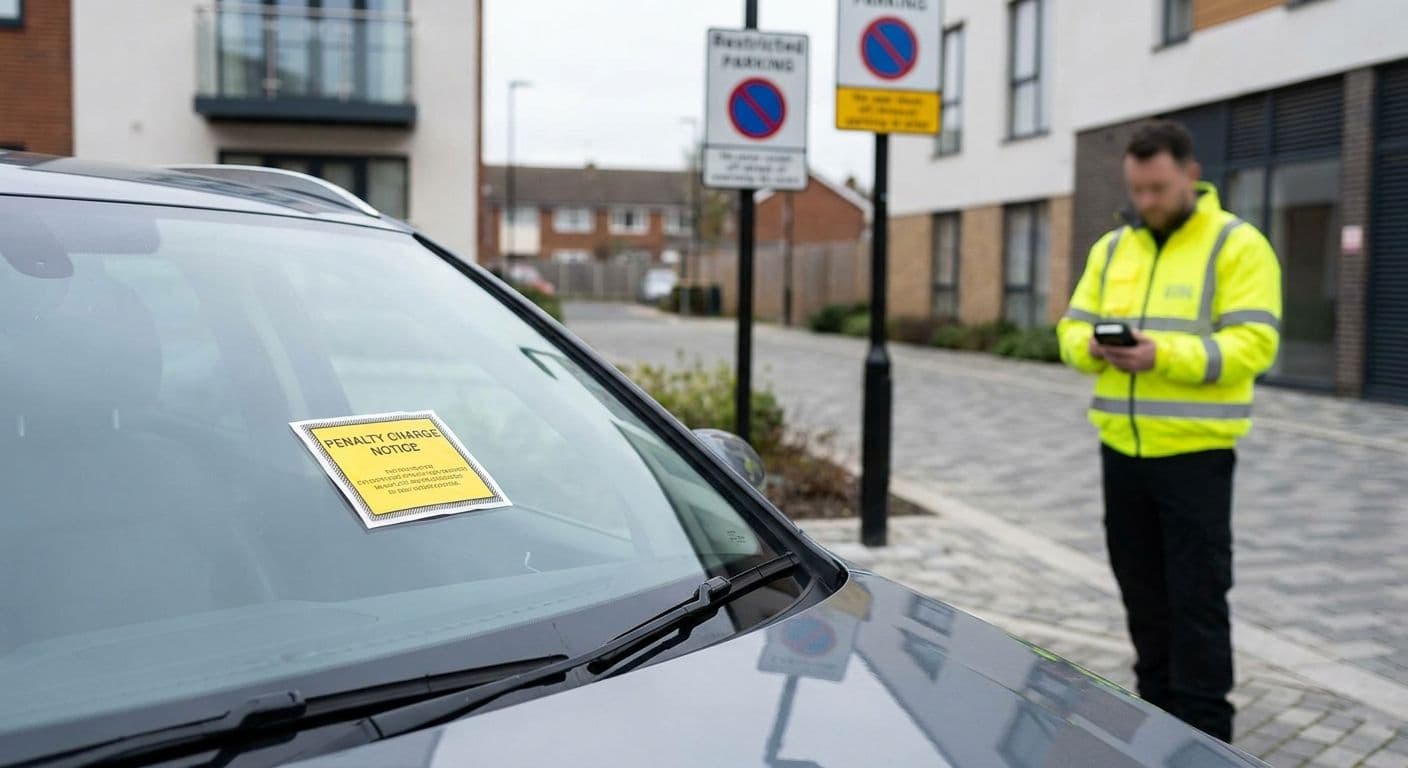
You've parked in a council car park, done everything you thought was right, and come back to find a Penalty Charge Notice tucked under your wiper. The code on the ticket? 74. It sounds obscure, but PCN code 74 is one of the more commonly issued off-street parking contraventions in England and Wales — and it's also one of the more successfully challenged ones, if you know what to look for.
Whether you're convinced the restriction wasn't clearly signed, you think the council has made an error, or you simply want to understand what you're actually being accused of, this guide walks you through everything you need to know.
What Does PCN Code 74 Actually Mean?
PCN code 74 is issued for "using a vehicle in a restricted area contrary to the off-street parking place order."
In plain English: you drove or parked your vehicle in a section of an off-street car park — or on council-managed land — where some form of restriction applies, and the council says you breached it.
"Off-street" simply means the contravention happened away from the public highway. Think council-run car parks, civic centre forecourts, hospital grounds managed under a parking order, or even certain open-air spaces covered by a formal Traffic Regulation Order (TRO).
The legal authority for issuing this PCN comes from the Traffic Management Act 2004, which gave councils in England and Wales the power to enforce civil parking contraventions. The specific restrictions themselves are set out in each council's Off-Street Parking Place Order — a local legal instrument that defines exactly what's permitted and what isn't in each area.
What Kind of Restrictions Trigger a Code 74 PCN?
This is where it gets interesting, because code 74 covers a surprisingly wide range of situations. Common scenarios include:
- Driving through a pedestrian-only zone within a car park or civic space during restricted hours
- Entering a section reserved for specific vehicle types — such as a loading bay, permit holder zone, or disabled bay access route
- Using a turning area or service road that's designated off-limits to general traffic
- Accessing a section of car park that's closed or restricted under a temporary or seasonal order
For example, imagine you pull into a council car park in Coventry and drive through what appears to be an open section near the exit — but that area is actually a designated pedestrian priority zone between 8am and 6pm under the council's off-street order. You've just triggered a code 74, even if you only drove through for 30 seconds.
What Must the Council Prove?
Here's the key question when you're considering an appeal. For a code 74 PCN to be valid, the council must be able to demonstrate:
- A valid Off-Street Parking Place Order exists covering the specific area where the contravention allegedly took place
- The restriction was clearly and lawfully signed at the point of entry and within the restricted zone
- Your vehicle was observed in the restricted area — usually supported by photographic evidence or CCTV footage
- The PCN was correctly served in accordance with the statutory requirements
That fourth point trips councils up more often than you'd think. If the PCN wasn't fixed to the vehicle or handed to the driver correctly, or if it was served outside the permitted timeframe, it can be challenged on procedural grounds alone.
Common Weaknesses in Code 74 PCNs
This is where your appeal can gain real traction. The most successful challenges to PCN code 74 tend to focus on one of the following:
Sign Failures
The council's off-street order is only enforceable if the restrictions are adequately signed on the ground. If the signs at the entrance to the restricted area were:
- Missing entirely
- Obscured by vegetation, parked vehicles, or vandalism
- Faded or damaged to the point of being illegible
- Contradictory or confusing in their layout
...then you have a strong argument that the restriction wasn't adequately communicated. Take photographs immediately if you believe this is the case.
The Order Doesn't Cover Your Vehicle Type
Some off-street orders apply only to certain vehicle categories. If you were driving a motorcycle, a bicycle-carrying vehicle, or a vehicle with a valid permit, check whether the order's restriction actually applies to you.
No Adequate Notice at the Point of Entry
Unlike on-street restrictions, off-street restrictions must be clearly notified before a driver enters the restricted area. If you had no reasonable opportunity to see the restriction before you were already in it, that's a legitimate ground of appeal.
Incorrect Details on the PCN
Check the PCN carefully for errors in the vehicle registration mark (VRM), the date, the time, or the location description. A significant error — particularly in the VRM — can invalidate the notice entirely.
Pro tip: Request the council's photographic evidence as early as possible. Under the PCN process, they must provide this, and it often reveals whether the signage was genuinely adequate or the observation was correctly made.
How to Appeal a PCN Code 74: Step by Step
Step 1 — Pay the Discounted Rate or Challenge (Not Both)
When you receive a PCN, you'll typically have 28 days to either pay at the discounted rate (usually 50% of the full penalty) or make an informal challenge. You cannot do both — paying is treated as an admission of liability.
If you believe you have grounds to challenge, do not pay. Instead, write your informal challenge within the 28-day window.
Step 2 — Make an Informal Challenge
Write to the issuing council clearly and concisely. Set out:
- Why you believe the restriction wasn't adequately signed
- Any evidence you have (photographs, dashcam footage)
- Any factual errors in the PCN itself
Keep your tone factual and unemotional. Councils respond better to evidence-based challenges than to expressions of outrage.
Step 3 — Formal Representations
If the council rejects your informal challenge, they'll issue a Notice to Owner (NtO). You then have 28 days to make formal representations — this is the statutory stage where you set out your grounds in writing, and the council must respond formally.
Grounds for formal representations under the Traffic Management Act 2004 include:
- The contravention did not occur
- The PCN was issued in circumstances where a penalty charge was not payable
- The vehicle had been taken without your consent
- The order is invalid
Step 4 — Appeal to the Traffic Penalty Tribunal
If the council rejects your formal representations and issues a Notice of Rejection, you have 28 days to appeal to the independent Traffic Penalty Tribunal (for councils outside London) or London Tribunals (for TfL and London boroughs).
This is a genuinely independent process — adjudicators are not employed by councils, and they overturn a significant proportion of cases where sign failures or procedural errors are demonstrated. You can submit your appeal online and request a written or personal hearing.
Pro tip: The Traffic Penalty Tribunal publishes its decisions publicly. Before writing your appeal, search for similar code 74 cases to see what arguments have succeeded and how adjudicators have reasoned their decisions.
What Happens If You Ignore a Code 74 PCN?
Ignoring a PCN is never a good strategy. If you fail to pay or challenge within the statutory deadlines, the penalty escalates:
- The full charge becomes payable (typically £70 outside London, £130 in London)
- A Charge Certificate is issued, increasing the penalty by 50%
- The debt is registered at the Traffic Enforcement Centre (TEC) at Northampton County Court
- Enforcement agents (bailiffs) can be instructed to recover the debt
At that point, your options become significantly more limited and more expensive.
Your Action Plan
If you've received a PCN code 74, here's what to do right now:
- Note the date — you have 28 days from the PCN date to challenge or pay at the reduced rate
- Revisit the location and photograph the signage, or lack of it
- Check the PCN for errors in your VRM, date, time, or location
- Request the council's evidence pack — ask for all photographic evidence and a copy of the relevant Off-Street Parking Place Order
- Write your informal challenge setting out your specific grounds clearly
- Keep copies of everything — every letter, photograph, and response
Code 74 PCNs are far from unbeatable. Councils rely on drivers paying up without question, but with the right evidence and a methodical approach, a well-founded appeal has a genuine chance of success.
Written by
Priya Sharma
Legal Aid Coordinator
Ready to Challenge Your Ticket?
Let our AI analyse your PCN and generate a professional appeal letter in minutes.
Start Free Appeal