PCN Code 51: Priority Signs Explained & Appeal Tips
Got a PCN code 51 for failing to comply with priority signs? Learn what the signs mean, common council errors, and evidence to use in an appeal.

Isabella Romano
11 July 2026
PCN Code 51: Priority Signs Explained & How to Appeal
You're driving through a narrow residential street, the kind where two cars genuinely can't pass at the same time. There's a sign you half-noticed, a brief moment of hesitation, and then you squeeze through anyway. A few days later, a Penalty Charge Notice drops through your letterbox. PCN code 51: failing to comply with a sign indicating priority over oncoming vehicles.
It feels harsh. Maybe even unfair. But before you resign yourself to paying up, it's worth understanding exactly what this contravention involves — and whether you've actually got grounds to fight it.
What Is PCN Code 51?
PCN code 51 is a moving traffic contravention issued when a driver fails to comply with a sign that gives priority to vehicles coming from the opposite direction.
This is distinct from most parking PCNs. It's enforced under the Traffic Management Act 2004, which gives London boroughs and certain other councils the power to issue civil penalties for moving traffic offences — not just parking ones. Outside London, this type of enforcement is less common, though it's expanding.
The contravention specifically relates to the priority sign system used on narrow roads where two-way traffic can't easily pass simultaneously.
Understanding Priority Signs: What Do They Actually Mean?
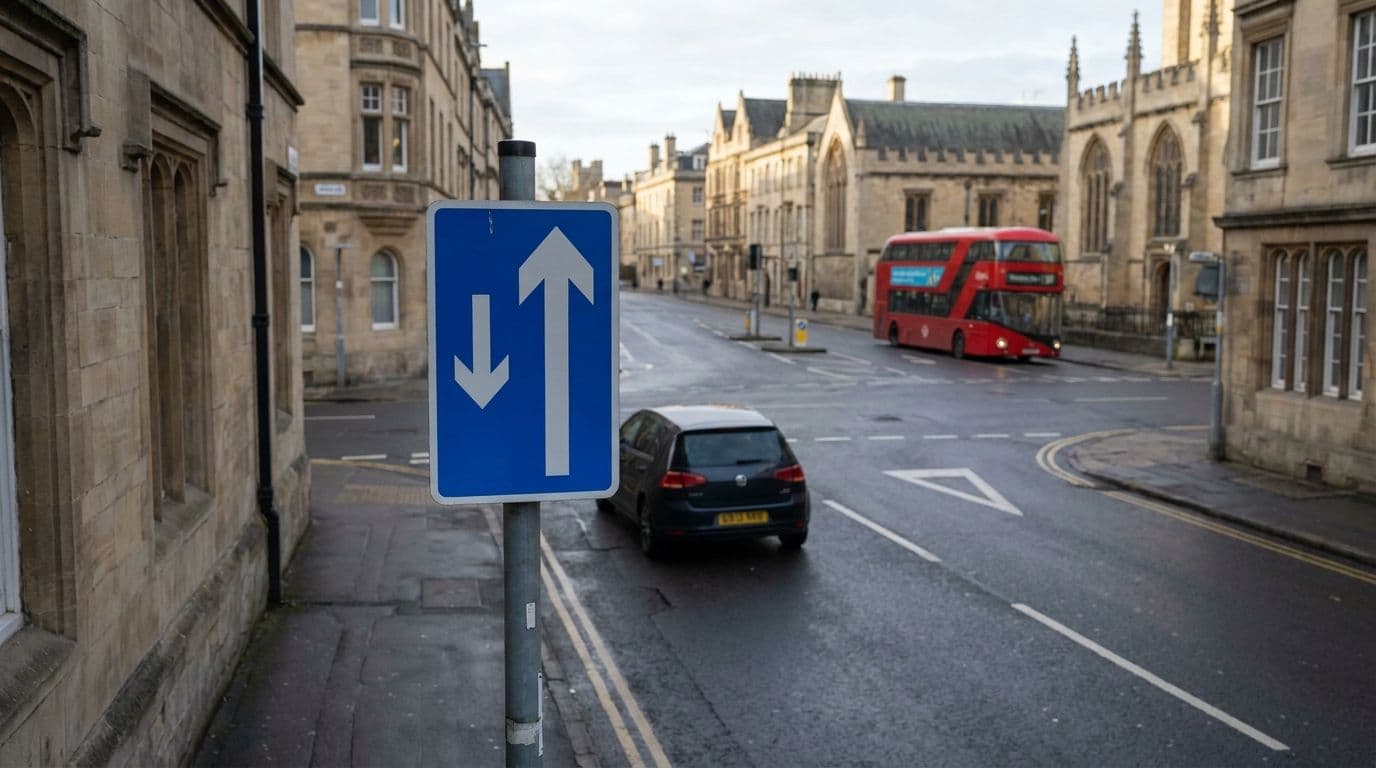
The UK uses two complementary signs to manage traffic flow on narrow roads. Both are prescribed under the Traffic Signs Regulations and General Directions (TSRGD) 2016:
- Blue rectangular sign with a red arrow and white arrow — This means oncoming vehicles have priority over you. You must give way and wait until it's safe to proceed.
- Blue rectangular sign with a white arrow and red arrow — This means you have priority over oncoming vehicles. You can proceed, but with care.
These signs are typically installed in pairs on either end of a narrow section of road. One end gets the "give way" sign, the other gets the "you have priority" sign.
The key point: If you're facing the red-over-white sign, you must wait for oncoming traffic to clear before entering the restricted section. Proceeding without doing so is the contravention that triggers a code 51 PCN.
Where Is Code 51 Enforced?
Moving traffic enforcement, including code 51, is primarily a London phenomenon for now. Councils with delegated powers under the Traffic Management Act — such as Camden, Islington, Hackney, Tower Hamlets and many others — can use CCTV and fixed cameras to capture these violations automatically.
Outside London, Traffic Regulation Orders (TROs) govern these restrictions, but civil enforcement is patchy. Some areas enforce through the police; others barely enforce at all. However, with the government's expanding framework for moving traffic enforcement, more councils across England are gaining these powers.
Pro tip: Check whether the council that issued your PCN actually has moving traffic enforcement powers. If they don't have the relevant designation, the PCN may be invalid on its face.
Common Grounds for Appeal
Here's where it gets interesting. Code 51 PCNs are appealable — and councils don't always get it right. Here are the most productive avenues to explore:
1. The Signs Were Missing, Obscured or Non-Compliant
Under TSRGD 2016, priority signs must be correctly positioned, properly illuminated where required, and clearly visible to an approaching driver. If the sign was:
- Covered by overhanging foliage
- Faded or damaged beyond legibility
- Positioned in a way that didn't give adequate warning
- Missing entirely on one end of the restriction
...then you have a strong argument that the contravention wasn't properly signed. Request the council's signage audit records as part of your evidence gathering.
2. You Didn't Enter the Restricted Section
If you stopped before entering the narrow section — perhaps because you spotted oncoming traffic and waited — but the camera captured your vehicle at the wrong moment, you may not have technically committed the contravention. CCTV footage is your friend here. Request it from the council under your Subject Access Rights.
3. The Traffic Regulation Order Is Defective
The signs must be backed by a valid Traffic Regulation Order. If the TRO was never properly made, advertised or sealed, the restriction has no legal force. This is a technical but powerful argument. You can request a copy of the relevant TRO from the council — they're obliged to provide it.
4. Exemptions Apply
Certain vehicles may be exempt from the restriction depending on how the TRO is worded. Emergency vehicles are the obvious example, but some TROs also carve out exemptions for residents, loading vehicles or specific vehicle types. Check the exact wording carefully.
5. Procedural Errors in the PCN Itself
The PCN must contain specific information under the Traffic Management Act 2004, including the date, time, location, contravention code and the amount of the penalty. If any of this is wrong — even a minor error in the street name or an incorrect vehicle description — it could form the basis of a successful challenge.
The Evidence You Need
A strong appeal is built on evidence. Here's what to gather before you write a single word:
- CCTV footage of the alleged contravention (request this from the council promptly — it may not be retained indefinitely)
- Photographs of the signs at the location, ideally taken soon after the PCN is issued
- A copy of the Traffic Regulation Order backing the restriction
- Google Street View or historical imagery if signs have recently changed or been obscured
- Witness statements if anyone was in the vehicle with you
How to Appeal: Step by Step
Step 1: Informal Representation
You have 28 days from the date of the PCN to make an informal representation to the council. During this period, if you pay, you pay the reduced rate (usually 50% of the full charge). But if you're appealing, hold off paying and submit your grounds in writing.
Be factual, calm and specific. Reference the relevant legislation. Attach your evidence.
Step 2: Formal Representation
If the council rejects your informal appeal, they'll issue a Notice to Owner (NtO). You then have 28 days to make a formal representation. The grounds are prescribed by law and include things like: the contravention didn't occur, the vehicle was exempt, or the TRO is invalid.
Step 3: Independent Tribunal
If your formal representation is rejected, you can appeal to an independent adjudicator. In London, this is London Tribunals (formerly TPT — the Traffic Penalty Tribunal handles cases outside London). This is a free process for the appellant, and adjudicators are genuinely independent of the councils.
Pro tip: Adjudicators take signage compliance seriously. If you can demonstrate that the signs didn't meet TSRGD 2016 requirements, you stand a real chance of having the PCN cancelled at tribunal — even if the council has already rejected your appeal twice.
What Happens If You Ignore It?
Don't. Ignoring a PCN escalates quickly. The charge increases to the full penalty amount after the discount period, then a Charge Certificate is issued adding a further 50%. After that, the debt is registered at the Traffic Enforcement Centre and enforcement agents (bailiffs) can become involved.
Quick Checklist Before You Appeal
- [ ] Is the issuing council authorised to enforce moving traffic contraventions?
- [ ] Were the priority signs correctly positioned and compliant with TSRGD 2016?
- [ ] Is there a valid TRO backing the restriction?
- [ ] Does the PCN contain all required information and is it accurate?
- [ ] Have you requested CCTV footage and signage photographs?
- [ ] Are you within the 28-day window for informal representation?
A PCN code 51 isn't automatically a lost cause. Councils make mistakes with signage, TROs and procedure — and when they do, the appeal process exists precisely to correct those errors. Do your homework, gather your evidence, and don't be afraid to take it all the way to London Tribunals or the Traffic Penalty Tribunal if you believe you're in the right.
Written by
Isabella Romano
Civil Enforcement Officer
Ready to Challenge Your Ticket?
Let our AI analyse your PCN and generate a professional appeal letter in minutes.
Start Free Appeal