
PCN code 51: no entry sign fines and how to challenge
Code 51 means you drove past a no entry sign. Which signs count, what 'except buses' plates change, the grounds you can use and every deadline.

The Parking Ticket Pal Editorial Team
18 November 20267 min read
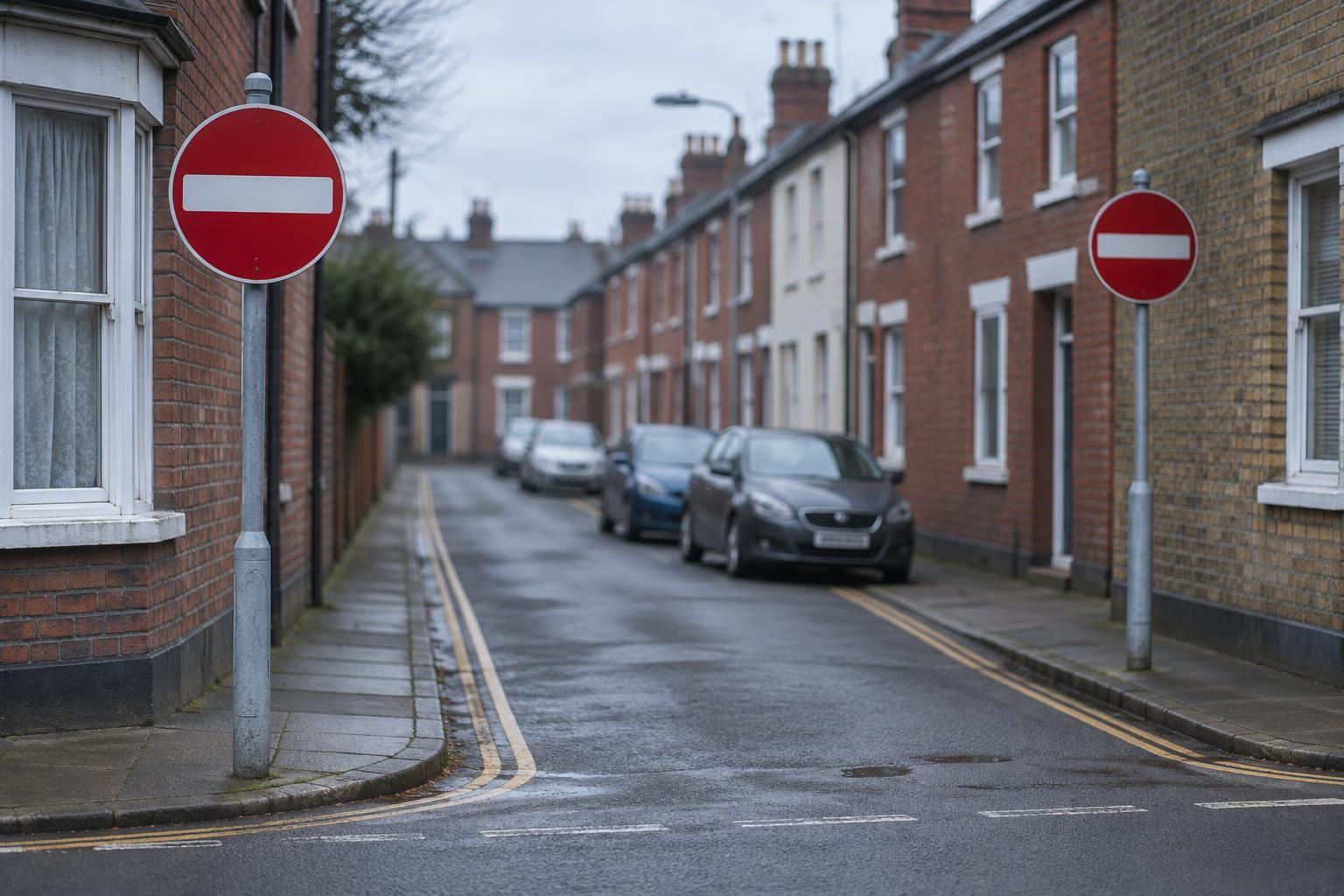
Code 51 means a camera recorded your vehicle driving past a no entry sign. The wording on the standard list is "Failing to comply with a no entry restriction".
The PCN is sent by post to the registered keeper.
What code 51 means
The sign is the one the Highway Code captions "No entry for vehicular traffic". It applies to everything classed as a vehicle, which includes pedal cycles unless a plate says otherwise.
There is only one suffix. 51j means camera enforcement, and the code list says the j does not have to appear on the PCN.
Plates. The traffic sign regulations allow a no entry sign to carry an "Except" plate for trams, buses, local buses, cycles, buses and cycles, or local buses and cycles. A "No entry except buses" point is still a no entry restriction for a car.
A limit worth knowing. A no entry sign is on the list of signs councils can enforce only "when the restriction or prohibition is one that may be indicated by another traffic sign subject to civil enforcement". That wording appears in the law for England and for Wales, and the London Act has an equivalent note. In plain terms, the sign has to be standing in for a restriction that is itself on the enforceable list, such as one-way traffic. It is reasonable to ask the council which traffic order the sign gives effect to.
Codes that look similar
Check the sign in the council's image against the code on the PCN:
- Code 29: failing to comply with a one-way restriction.
- Code 52: failing to comply with a prohibition on certain types of vehicle, for example a "No motor vehicles" sign.
- Codes 53 and 54: pedestrian zones.
- Code 33: using a route restricted to certain vehicles, such as a "buses and cycles only" sign.
- Code 50: a banned turn.
If the image shows a different sign from the one code 51 describes, say so in your representations.
Who can issue it
Code 51 is enforced by camera. Outside London, government guidance says councils may issue these PCNs "only based on evidence from a camera" and approved equipment. London Tribunals says London authorities "commonly use cameras".
It is used by London boroughs and Transport for London, and since 2022 by councils in the rest of England that hold moving traffic powers. Welsh councils with the powers can use it too.
In London the owner, not the driver, is normally liable.
Grounds people use to challenge code 51
The first ground is the same everywhere: the contravention did not occur.
- The sign could not be seen in time. "The signs and lines were wrong" is the Traffic Penalty Tribunal's first example, and guidance says signs must comply with the national regulations. Look for a sign twisted away from your approach, hidden by foliage or a parked van, or missing on your side.
- You did not pass the sign. The tribunal's other example is "the events alleged did not happen". If you joined the road from a driveway, car park or side access beyond the sign, the footage should show that.
- Your vehicle was covered by the plate. A bus or cycle exception, for instance.
- The sign is not one the council can enforce, for the reason above. Raise it as a question first, since it turns on the traffic order.
- The PCN was served late. It should normally be sent within 28 days of the alleged contravention, or longer if the DVLA was slow to supply your details. In London this comes under the ground that the penalty exceeded the amount applicable.
- You were not the owner. You sold the vehicle before, or bought it after, the date.
- The vehicle was taken without your consent, for example it was stolen.
- You are a hire firm and the hirer signed a statement accepting liability.
- The penalty is more than the correct amount.
Outside London the list adds a procedural impropriety by the council (such as a PCN lacking required information), an invalid traffic order, and the penalty having already been paid.
Warning notices outside London. Guidance says that for 6 months after camera enforcement starts at a location, councils should send a warning notice for a first contravention there. If the camera looks new, ask when enforcement began.
If a police officer waved you through, or the road was blocked and you had no other way out, explain what happened and send proof. Guidance says traffic orders should exempt anything done at the direction of a police constable in uniform. Outside London an adjudicator can recommend cancellation for compelling reasons, but the council need not follow it.
Evidence to gather
- The council's footage, to see where your vehicle came from and whether the sign is visible in it. Outside London the council must send a clear copy of the record on request.
- Photos from the driver's approach, including any plate under the sign.
- The traffic order, if you are questioning what the sign enforces. Ask the council for it.
- Proof of sale, a hire agreement or a crime reference number where relevant.
The stages and deadlines
A postal PCN has no informal challenge stage. Your first step is formal representations.
In London
- Pay within 28 days of the date of the notice. If payment arrives in the first 14 days you pay half.
- Or make representations so that they arrive within 28 days of the PCN being served.
- The authority accepts or rejects them. London Tribunals says adjudicators expect a reply within 3 months.
- From a Notice of Rejection you have 28 days to pay or appeal to London Tribunals.
Outside London (England and Wales)
- Pay at the 50% rate within 21 days of the PCN issue date.
- Or make representations within 28 days of the PCN issue date.
- A Notice of Rejection can take up to 56 days. The full amount usually applies from then.
- From the Notice of Rejection you have 28 days to pay or appeal to the Traffic Penalty Tribunal.
Both tribunals are free. Citizens Advice says not to pay a ticket you are challenging, because paying is usually treated as accepting it.
How much is it?
Go by the figure printed on your PCN. As checked on 18 Nov 2026:
- London: minor moving traffic contraventions are £160, a level in force across the boroughs from 7 April 2025.
- Outside London: the Traffic Penalty Tribunal describes moving traffic PCNs as "up to £70".
There is no higher or lower level for code 51. The list shows the level as not applicable.
If you ignore it
If you neither pay nor challenge within 28 days, the authority can issue a Charge Certificate, which adds 50%. If that is unpaid after 14 days, the debt can be registered at the Traffic Enforcement Centre and you receive an Order for Recovery.
You then have 21 days to pay or challenge the order on limited grounds, such as never having received the PCN. GOV.UK lists form PE3 for moving traffic contraventions in London boroughs and form TE13 for moving traffic contraventions outside London. If you are out of time you also need form TE14. After that, bailiffs can be instructed.
Related guides
- PCN code 50: no left turn, no right turn and no U-turn
- PCN code 33: routes for buses, trams and cycles only
- PCN code 52: prohibited vehicle types
- TE13 and TE14: challenging an Order for Recovery
Parking Ticket Pal tracks every deadline on a ticket and reminds you before each one, so the 28 day window for representations is not missed.
This is general information, not legal advice.
Written by
The Parking Ticket Pal Editorial Team
Source-checked parking guidance