PCN Code 33 Illegal U‑Turn: How to Beat It on Appeal
Got a PCN code 33 for an illegal U-turn? Learn the UK rules, common CCTV/signage errors, and the best evidence to challenge the penalty on appeal.

Emma Thompson
6 June 2026
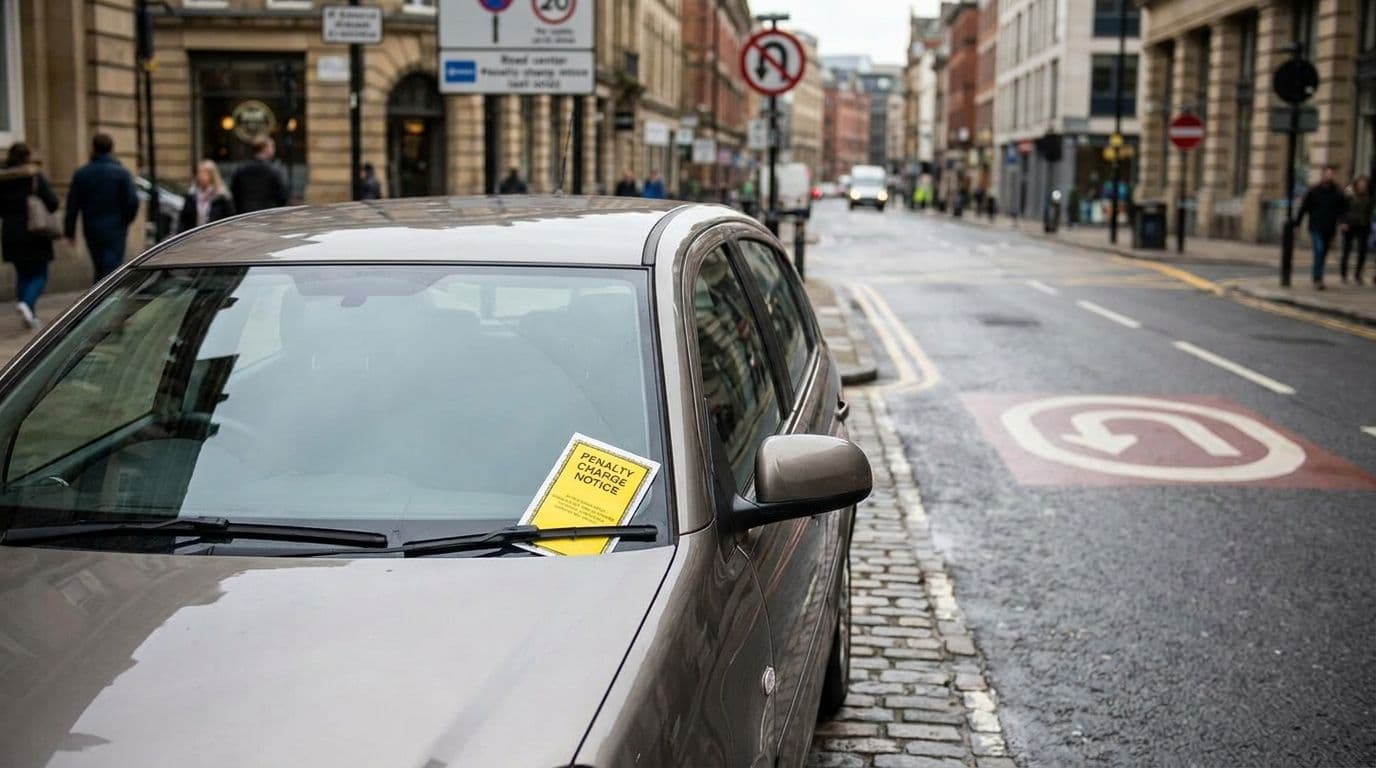
PCN Code 33 Illegal U-Turn: How to Beat It on Appeal
You're driving through a busy London borough, traffic is moving, and you spot a gap to turn around. It seems harmless enough — until a few days later a Penalty Charge Notice drops through your letterbox. PCN code 33: making a prohibited U-turn. The fine is £130 in London (reduced to £65 if you pay within 14 days), and suddenly that quick manoeuvre feels very expensive indeed.
Here's the thing: code 33 PCNs are among the most successfully challenged moving traffic contraventions in the UK. Councils rely heavily on CCTV footage and automated camera systems, and there are more ways for them to get it wrong than you might think. This guide walks you through exactly how these penalties work, where councils slip up, and how to build a winning appeal.
What Is PCN Code 33?
PCN code 33 is issued for making a prohibited U-turn in a controlled area. Unlike most parking PCNs, this is a moving traffic contravention — meaning it's captured on camera rather than by a warden standing next to your car.
In London, councils have had the power to enforce moving traffic contraventions (including U-turns) since the Traffic Management Act 2004, with enforcement rolling out progressively across boroughs. Outside London, local authorities in England have been gaining similar powers under the Traffic Management Act provisions extended to non-London councils — though coverage is still patchy depending on your area.
The fine levels are:
- London: £130 (reduced to £65 for early payment)
- Outside London: typically £70 (reduced to £35)
How Are These PCNs Issued?
Unlike a parking ticket slapped on your windscreen, code 33 PCNs are almost always issued by post, based on CCTV or fixed camera footage. A council officer reviews the footage, identifies your registration plate, checks it against DVLA records, and sends the Notice to Keeper (NtK) to the registered address.
This process introduces several potential failure points — and that's good news for you if you're appealing.
Is Your U-Turn Actually Prohibited?
Before anything else, you need to establish whether the U-turn restriction was legally in place and properly signed at the location.
A U-turn prohibition must be indicated by the "No U-turn" sign — circular blue sign with a red border and a curved arrow with a cross through it (sign number 612 in the Traffic Signs Regulations and General Directions 2016). Without this sign being correctly displayed, the restriction cannot be lawfully enforced.
Ask yourself:
- Was there a no U-turn sign clearly visible at the point where you turned?
- Was the sign obscured by foliage, a parked lorry, or poor positioning?
- Was the sign facing the correct direction for your lane of travel?
- Were there any advance warning signs, and were they present?
Pro tip: Use Google Street View to check historical sign placement at the location. Councils sometimes add or move signs, and Street View can show what was there at the time of the alleged contravention — particularly useful if signs were recently installed.
Common Grounds for Appeal
1. Signage Was Absent, Damaged, or Obscured
This is the most powerful ground for challenging a code 33 PCN. If the no U-turn sign wasn't clearly visible, the restriction wasn't properly communicated to drivers. Take photographs of the location as soon as possible. If the sign was hidden behind a tree branch or a parked vehicle, document it.
Councils have a legal duty to ensure signs comply with TSRGD 2016. A sign that's the wrong size, faded beyond legibility, or positioned where a reasonable driver couldn't see it can invalidate the PCN entirely.
2. CCTV Footage Doesn't Show a U-Turn
You're entitled to request the CCTV footage used as evidence against you. Sometimes the footage is ambiguous — your vehicle may have performed a three-point turn (which is not a U-turn), or turned into a side road rather than completing a U-turn. These are not the same thing legally, and councils have been known to misclassify the manoeuvre.
Request the footage in your formal representations. If what's captured doesn't clearly show a prohibited U-turn, say so explicitly and describe what actually happened.
3. The Restriction Wasn't in Force at the Time
Some U-turn restrictions operate only during certain hours — for example, peak hours or school run times. Check the sign carefully for any time-plate beneath it. If your manoeuvre took place outside the restricted hours, the PCN should not have been issued.
4. Exemptions Apply to Your Vehicle
Certain vehicles are exempt from moving traffic restrictions. Emergency vehicles are the obvious example, but licensed taxis, buses, and vehicles displaying valid trade plates may also have exemptions depending on the Traffic Regulation Order (TRO) in force. Check the specific TRO for that road — you can request this from the council.
5. Procedural Errors by the Council
Councils must follow strict timelines under the Traffic Management Act 2004:
- The Notice to Keeper must be issued within 28 days of the contravention
- If issued outside this window, it's invalid
Check the date on your PCN against the date of the alleged contravention. Also verify that your vehicle details (registration, make, model) are correctly recorded. Errors here can be grounds for cancellation.
Gathering Your Evidence
A strong appeal isn't just a strongly worded letter — it needs evidence. Here's what to collect:
- Photographs of the junction, sign placement, and any obstructions
- Google Street View screenshots showing historical sign positions
- Dashcam footage if your vehicle was fitted with one — this is gold if it shows the manoeuvre clearly or the absence of a sign
- A copy of the Traffic Regulation Order (request this from the council — they must provide it)
- The CCTV footage used as evidence (you can request this under your right to see the evidence against you)
- A written account of what actually happened, including the exact time, direction of travel, and what you were trying to do
The Appeals Process: Step by Step
Step 1: Informal Representations
You have 28 days from the date of the PCN to make informal representations to the council. Write clearly, state your grounds, attach your evidence, and request that the PCN be cancelled. Keep a copy of everything.
If you pay the discounted amount during this period, you lose your right to appeal — so don't pay if you intend to challenge it.
Step 2: Formal Representations
If the council rejects your informal appeal, they'll issue a Notice of Rejection along with a Notice to Owner (NtO). You then have 28 days to make formal representations. This is the last stage before an independent tribunal.
Step 3: Independent Tribunal
If formal representations are rejected, you can appeal to an independent adjudicator:
- London Tribunals (formerly PATAS) for London councils
- Traffic Penalty Tribunal for councils outside London
These bodies are genuinely independent of the council, and their decisions are binding. Adjudicators take signage failures and procedural errors seriously. The hearing can be done online or in writing, so you don't need to attend in person.
What Happens If You Ignore It?
Ignoring a code 33 PCN is never the answer. If you do nothing:
- The charge increases to the full penalty after 28 days
- A Charge Certificate is issued, adding a 50% surcharge
- The debt is registered with the Traffic Enforcement Centre at Northampton County Court
- Bailiffs (enforcement agents) can be instructed to recover the debt
Don't let it reach that stage — even if your appeal is rejected at every council level, take it to the tribunal.
Actionable Next Steps
If you've received a PCN code 33, here's what to do right now:
- Don't pay yet — payment waives your right to appeal
- Note the date of the PCN and the alleged contravention date
- Visit the location and photograph everything, especially the signs
- Request the CCTV footage and the Traffic Regulation Order from the council
- Check your dashcam if you have one — back up the footage immediately
- Write your informal representations within 28 days, clearly stating your grounds
- Keep copies of every letter, email, and piece of evidence you submit
- Escalate to the tribunal if the council rejects your appeal — don't give up
A PCN code 33 might feel like an open-and-shut case for the council, but the reality is that signage failures, camera errors, and procedural mistakes give drivers real grounds to fight back. Stay calm, gather your evidence, and make the process work for you.
Written by
Emma Thompson
Traffic Law Specialist
Ready to Challenge Your Ticket?
Let our AI analyse your PCN and generate a professional appeal letter in minutes.
Start Free Appeal