PCN Code 30: Parked Longer Than Permitted (UK Guide)
Received a PCN code 30 for parking longer than permitted? Learn what it means, common evidence, defences, and how to appeal UK council tickets.

James Wilson
26 February 2026
--- title: "PCN Code 30: Parked Longer Than Permitted (UK Guide)" summary: "Received a PCN code 30 for parking longer than permitted? Learn what it means, common evidence, defences, and how to appeal UK council tickets." keywords: [PCN code 30, parked longer than permitted, UK parking ticket, council PCN, civil enforcement officer, CEO notes, parking bay time limit, pay and display expiry, parking contravention code 30, informal challenge, formal representations, Notice to Owner, Traffic Management Act 2004, London Councils contravention codes, PATAS, London Tribunals, Traffic Penalty Tribunal, mitigating circumstances, signage and lines, grace period, proof of payment] category: pcn-codes ---
PCN Code 30: Parked Longer Than Permitted (UK Guide)
You pop back to the car thinking you’ve timed it perfectly. The school run was chaos, the queue in the pharmacy was endless, and your “two-minute” stop became… well, longer.
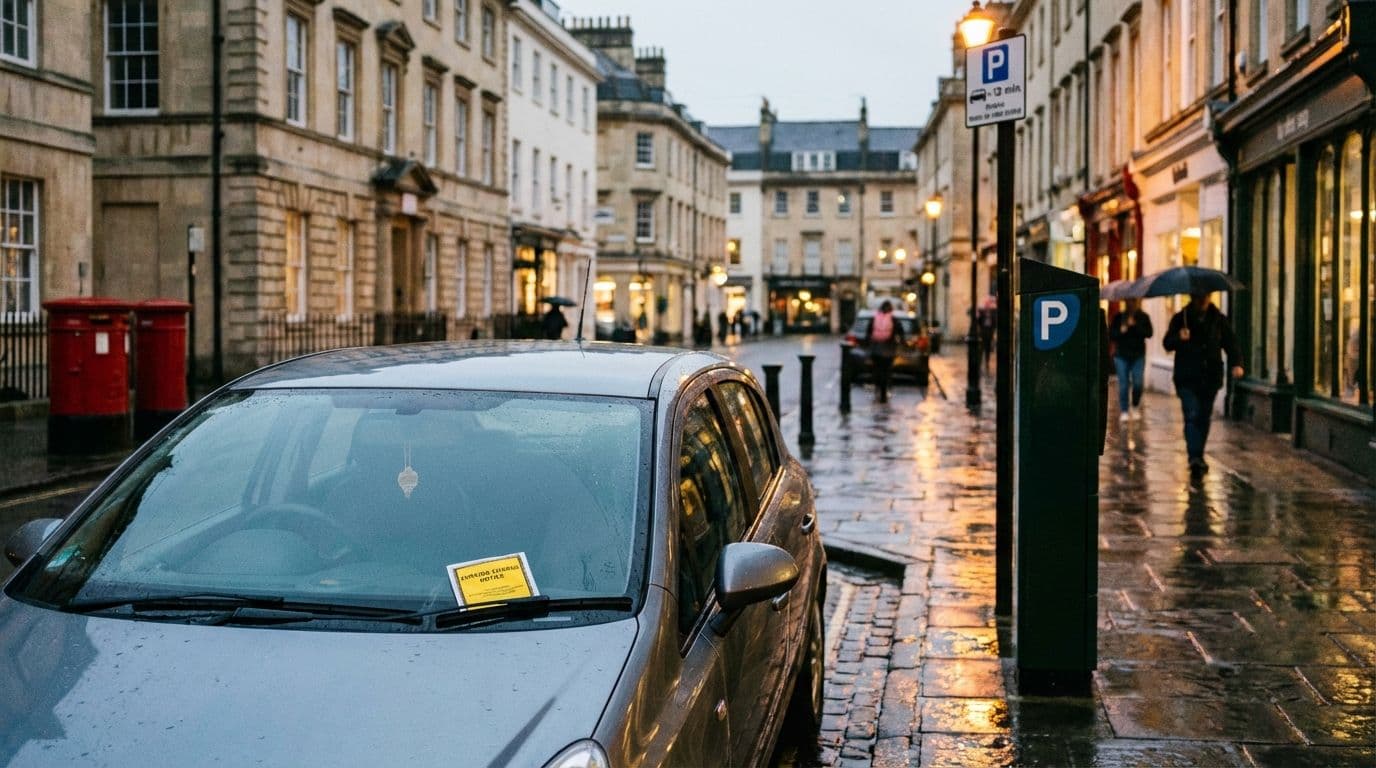
Then you spot it: that yellow packet tucked under the wiper.
A **PCN with contravention code 30** is one of the most common council tickets in the UK, and it’s also one of the most frustrating—because it often feels like you were only *slightly* late. The good news is that code 30 cases are usually very evidence-driven, which means there are plenty of practical angles to check before you pay.
This guide walks you through **what PCN code 30 means**, what councils normally rely on, the **most effective defences**, and exactly **how to appeal** (informally, formally, and to the tribunal if needed).
---
What does PCN Code 30 mean?
**PCN Code 30** generally means:
**“Parked for longer than permitted.”**
It’s used where there’s a **maximum stay** or **time-limited bay**, such as:
- *“Max stay 1 hour”* bays
- *“No return within 1 hour/2 hours”* bays
- Short-stay bays near shops or stations
- Limited waiting bays in Controlled Parking Zones (CPZs)
This is different from cases where your paid time ran out on a pay-and-display ticket (that’s often **code 05** or **code 82**, depending on the situation). **Code 30 is about exceeding a permitted stay**, not necessarily about payment expiring.
Where you’ll most commonly see it
- Time-limited **on-street bays** (often free but short-stay)
- “Shared use” bays where the time limit applies to certain hours
- Places where the sign says you can park but only up to a stated maximum
---
The story councils rely on (and what they’ll show as evidence)
Councils don’t need to prove you intended to overstay—just that you did. For a code 30 PCN, their evidence usually includes:
- **CEO notes** (Civil Enforcement Officer notes)
- Times observed - Details of signs nearby - Any interaction (e.g., “driver not seen”)
- **Photographs**
- Your vehicle in the bay - The location/lines - Sometimes the nearby sign (though not always)
- **Observation period**
- Many councils will note “observed from X to Y” before issuing
- **Handheld device logs**
- Time of issue and location data
Pro tip: Ask for the CEO notes early
If you’re challenging, request the CEO notes and all photos straight away. If the council’s timeline is shaky, code 30 appeals can unravel quickly.
---
The key question in every Code 30 case
**How did the council decide you’d exceeded the maximum stay?**
Because in a time-limited bay, there are usually only a few ways to “prove” overstaying:
- **They saw you parked long enough** (continuous observation)
- **They used “no return” logic** (you left and came back inside the no-return window)
- **They inferred duration from previous notes** (less common but it happens)
Your job is to check whether their method actually stacks up.
---
Common real-life scenarios (and why they matter)
Scenario 1: “Max stay 1 hour” bay, CEO returns later
You parked at 10:05. The CEO notes “first seen 10:10” and then issues at 11:12.
That looks straightforward—**unless** the bay sign was unclear, missing, or the “max stay” restriction didn’t apply at that time/day.
Scenario 2: “No return within 1 hour” — you popped round the corner
You leave the bay and come back 30 minutes later, thinking a different part of the street counts as a new place.
But “no return” often applies to the same bay or length of road (depending on the order and signage). The detail matters.
Scenario 3: You did leave, but the council assumes you didn’t
If a CEO records your vehicle at 10:05 and again at 11:10, they might treat it as continuous parking—unless you can show you were elsewhere (receipt, dashcam, phone location, pay-by-phone record elsewhere).
---
Defences that actually work for PCN Code 30
Not every “I was only five minutes late” argument lands. The strongest challenges focus on **signage, timing, observation, and compliance with procedure**.
1) The signage didn’t clearly communicate a maximum stay
For a code 30 contravention, the council must show the restriction was properly signed.
Look for:
- Missing sign plates
- Signs turned away, obscured by foliage, or too high to read
- Conflicting signs (e.g., nearby bay says different hours)
- The sign doesn’t match the bay markings (e.g., bay looks like a different restriction)
**Actionable tip:** Go back and take photos from the driver’s approach angle, not just close-ups. Tribunals like context.
---
2) The bay markings are non-compliant or misleading
If the bay lines are badly faded, broken, or ambiguous—especially if it’s unclear where the bay starts/ends—that can support a challenge.
Check:
- Are the bay end markings visible?
- Does the bay look like two bays merged into one?
- Are there old markings still showing (ghost lines)?
---
3) The council can’t prove duration properly
A code 30 allegation needs a reliable basis for the “longer than permitted” claim.
Red flags include:
- Only one photo/time stamp and no proper observation record
- CEO notes that don’t show a start time of observation
- Timings that don’t make sense (e.g., issue time before “from” time)
- No evidence explaining *how* the maximum stay was exceeded
**Pro tip:** If the sign says “Max stay 1 hour”, the council’s evidence should make it obvious your stay exceeded an hour. If it doesn’t, push on that.
---
4) You were entitled to park longer (exemptions/dispensations)
Depending on the bay and local Traffic Regulation Order (TRO), exemptions may apply (for example, certain loading/unloading allowances in some contexts—though code 30 is typically used for limited waiting, not loading bans).
If you had:
- A valid permit that changes the restriction
- A dispensation/waiver from the council
- A Blue Badge (note: time limits can still apply in certain bays)
…then the precise rules at that location matter.
---
5) The PCN details are wrong or inconsistent
This sounds minor, but errors can matter.
Check:
- Vehicle registration
- Location (correct street/zone)
- Contravention description (matches sign)
- Date/time
If the location is vague (e.g., long road with multiple different restrictions), that can be relevant.
---
6) Mitigating circumstances (worth using carefully)
Mitigation isn’t the same as a legal defence, but councils sometimes cancel on discretion.
Examples that *can* help:
- Breakdown (with evidence)
- Medical emergency (briefly explained, with supporting proof if possible)
- Delays outside your control (e.g., road closure trapping you in)
Keep it simple and evidenced. The more “everyday inconvenience” it sounds, the less likely it succeeds.
---
What about a “grace period” for Code 30?
People often hear “10 minutes grace” and assume it applies everywhere. In practice:
- The well-known **10-minute grace period** is typically associated with **paid-for parking / end of paid time** and certain circumstances.
- **Code 30 is about exceeding a maximum stay**, and councils may argue a grace period doesn’t apply in the same way.
That said, if you were only marginally over and the council’s evidence/timing is borderline, it’s still worth raising the issue of **fairness and proportionality** alongside any stronger points (signage, proof, observation).
---
How to appeal a PCN Code 30 (step-by-step)
This is a council PCN process under the **Traffic Management Act 2004** framework.
Step 1: Decide quickly whether to pay or challenge
- If you pay within **14 days**, most councils offer the **50% discount**
- If you challenge informally and lose, many councils re-offer the discount (not guaranteed, but common)
**Practical approach:** If you have a genuine argument (signage/evidence), challenge early while the discount window is open.
---
Step 2: Make an informal challenge (before the Notice to Owner)
If the PCN was placed on your vehicle (or handed to you), you can usually submit an informal challenge online.
Include:
- Your PCN number and VRM
- A clear timeline (“I parked at… I returned at…”)
- What you’re disputing (e.g., signage missing, insufficient observation)
- Attach photos/receipts/screenshots
---
Step 3: Wait for the Notice to Owner (NTO) if not cancelled
If you don’t pay and the council doesn’t cancel, the registered keeper gets a **Notice to Owner**.
That’s when you can make **formal representations** (stronger, structured, evidence-led).
---
Step 4: If rejected, appeal to the independent tribunal
Depending on where you are:
- **London Tribunals** (formerly PATAS) for London authorities
- **Traffic Penalty Tribunal** for most of England and Wales outside London
This is where clear evidence wins. If the council’s photos don’t show the sign, or their observation record is weak, adjudicators can and do allow appeals.
**Pro tip:** In your tribunal appeal, focus on 2–3 strong points. Don’t bury your best argument under five weaker ones.
---
A quick informal challenge template (copy/paste)
Use this as a starting point and tailor it to your facts:
**Subject:** Informal challenge – PCN Code 30 (Parked longer than permitted)
Dear [Council Name],
I am challenging PCN [PCN NUMBER] issued on [DATE] at [TIME] at [LOCATION]. The alleged contravention is code 30 (parked for longer than permitted).
**My grounds for challenge are:**
1) **Insufficient evidence of exceeding the permitted stay.** The council’s evidence/photographs do not demonstrate how long the vehicle was parked in contravention of the signed maximum stay. Please provide the CEO’s full notes and all photographs taken, including any images of the applicable time-plate sign.
2) **Signage issue at the location.** The maximum stay restriction was not clearly conveyed to a motorist parking in the bay (e.g. sign not visible/obscured/unclear). I attach photographs taken from a driver’s viewpoint showing [brief description].
In light of the above, I request the PCN is cancelled.
Yours faithfully,
[Name]
[Address / Email]
---
Evidence checklist (what to gather today)
- Photos of:
- The bay markings (start/end) - The sign plate(s) nearest your car - The street context (so it’s clear what a driver sees)
- Council’s case materials:
- All CEO photos - CEO notes - Any observation times logged
- Your proof:
- Receipts/time-stamped evidence - Phone location timeline (if relevant and you’re comfortable using it) - Pay-by-phone screenshots (even if it was a free bay nearby—anything that shows movement)
---
Next steps (do this now)
- **Read the sign wording carefully**: “Max stay” and “No return” rules are easy to misread.
- **Check the council photos online** and note what they *don’t* show (especially signage).
- **Go back to the location** and photograph signs/lines from a driver’s approach.
- **Submit an informal challenge** if you have a solid point and you’re within (or near) the discount window.
- If needed, **prepare for the Notice to Owner** and keep your argument tight for formal representations and tribunal.
If you want, paste the PCN wording (both sides) and the sign wording from the bay, and I’ll help you shape the strongest appeal points for a code 30 case.
Written by
James Wilson
Legal Counsel
Ready to Challenge Your Ticket?
Let our AI analyse your PCN and generate a professional appeal letter in minutes.
Start Free Appeal