PCN Code 23: Wrong Vehicle Bay? Rules & Appeals UK
Got PCN code 23 for parking in the wrong class of bay? Learn what it means, common signs, key evidence and how to appeal a UK council ticket.

Isabella Romano
4 June 2026
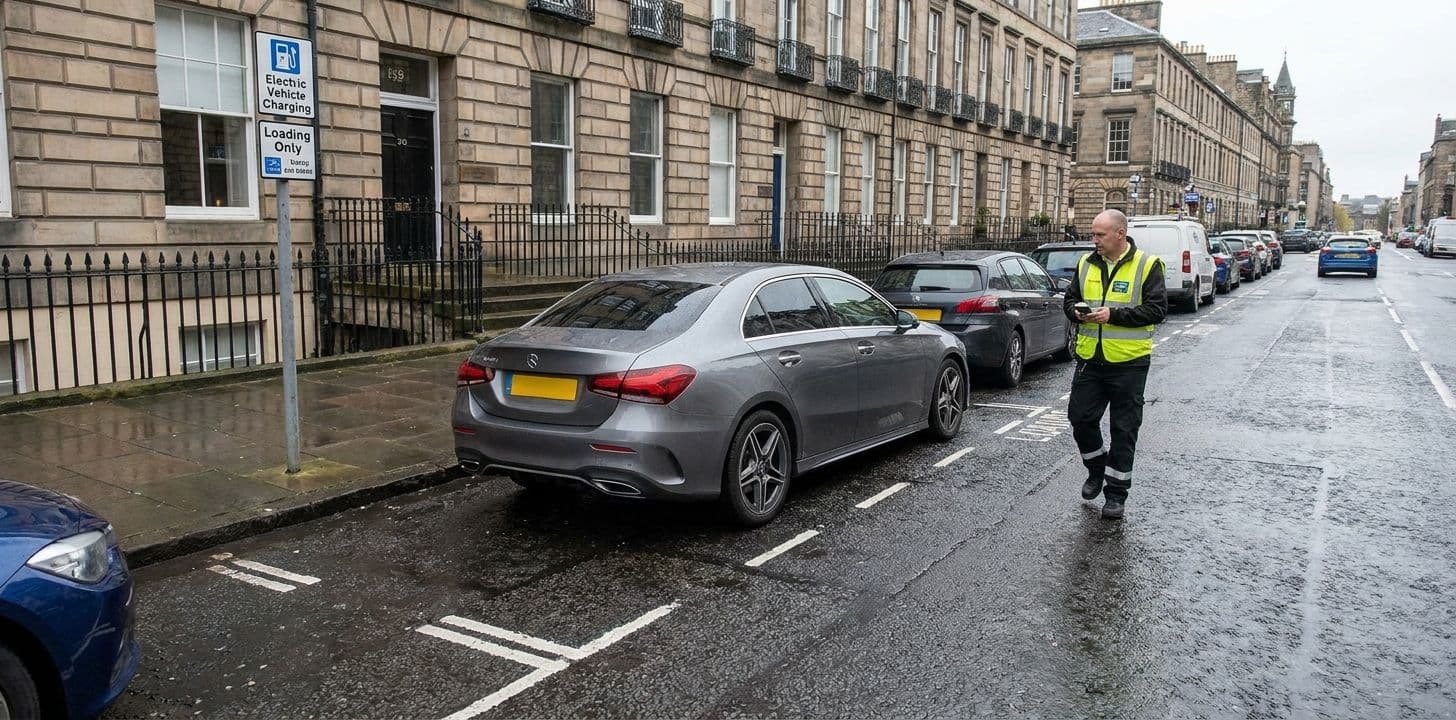
PCN Code 23: Parked in the Wrong Class of Bay? Here's What to Do
You pull up, spot a space, check there's no double yellow line, and park up. Job done — or so you think. Then you return to find a Penalty Charge Notice tucked under your wiper. The code? 23. The reason? "Parked in a place not designated for that class of vehicle."
It's one of those parking contraventions that catches drivers completely off guard, because on the surface the bay looked perfectly usable. No obvious restriction, no time limit sign — just a space. But UK councils are strict about which vehicles can use which bays, and if yours doesn't qualify, you're getting a ticket. Let's break down exactly what PCN code 23 means, where it catches drivers out most often, and — crucially — how to fight it if you think it's unfair.
What Does PCN Code 23 Actually Mean?
PCN code 23 is issued under the Traffic Management Act 2004, which governs civil parking enforcement across England and Wales. It applies when a vehicle is parked in a bay that's specifically designated for a different class of vehicle.
This isn't about permits or payment — it's about the type of vehicle the bay is reserved for. Councils create designated bays for specific categories, and parking any other class of vehicle in them — even briefly — is a contravention.
The fine is typically:
- £110 in London (reduced to £55 if paid within 14 days)
- £70 outside London (reduced to £35 if paid within 14 days)
Which Bays Trigger a Code 23?
This is where drivers often get caught out. Code 23 applies to a surprisingly wide range of bay types. Here are the most common:
- Motorcycle bays — reserved for powered two-wheelers only; parking a car here, even a small one, is a contravention
- Goods vehicle bays — designated for loading/unloading by commercial vehicles; a van driver using one for personal parking may still be caught out if the vehicle doesn't meet the class definition
- Car club bays — increasingly common in cities like London, Bristol, and Manchester; reserved exclusively for registered car club vehicles (Zipcar, Enterprise Car Club, etc.)
- Coaches and minibuses — some councils designate specific bays for larger passenger vehicles
- Hackney carriage (taxi) bays — while code 45 covers taxi ranks specifically, some councils use code 23 for general taxi-designated waiting areas
- Electric vehicle bays — though code 71 is more commonly used off-street, some on-street EV bays can trigger a code 23 if the signage specifically restricts by vehicle class rather than charging purpose
- Permit bays restricted by vehicle class — for example, a residents' bay that specifies "permit holders: motorcycles only"
Pro tip: The key distinction with code 23 is vehicle class, not permit status. If you're in a residents' bay without a permit, that's a different contravention (usually code 16 or 19). Code 23 is specifically about the type of vehicle you're driving.
Why Do Drivers Get Caught Out?
Honestly? Signage. Or rather, the lack of clear signage — or signage that's easy to miss.
In a busy street, a small blue rectangle indicating a motorcycle bay can be obscured by overgrown hedges, parked lorries, or simply positioned in a way that's not visible from where you approached. Car club bays are often marked with branded bay markings on the road surface plus a small sign, but if the road marking is faded or the sign is facing the wrong direction, it's genuinely easy to miss.
Here are the most common scenarios where drivers get stung:
- Faded road markings — the bay markings indicating "MOTORCYCLES ONLY" or a car club logo have worn away
- Obstructed or missing signs — the sign designating the bay type has been knocked over, vandalised, or is positioned behind a parked vehicle
- Unfamiliar bay types — drivers from outside the area who aren't used to car club bays or specific goods vehicle zones
- Ambiguous signage — a sign that restricts the bay by class but doesn't make it immediately obvious which classes are excluded
What Evidence Does the Council Need?
For a code 23 PCN to be valid, the council must be able to demonstrate that:
- The bay was clearly designated for a specific class of vehicle
- The designation was properly signed and marked in accordance with the Traffic Signs Regulations and General Directions (TSRGD)
- Your vehicle falls outside that designated class
- The Civil Enforcement Officer (CEO) observed the contravention and recorded it correctly
When you request the council's evidence pack — which you're entitled to do — it should include photographs taken by the CEO showing the vehicle, the bay markings, and the relevant signs. This evidence pack is your starting point for any appeal.
How to Appeal a PCN Code 23
The appeals process runs in stages. Here's how it works:
Stage 1: Informal Challenge (within 14 days)
This is your first opportunity to contest the ticket and keep the 50% discount. Write to the council (or use their online portal) explaining why you believe the PCN was issued incorrectly.
Strong grounds for an informal challenge include:
- Signs were missing, obscured, or in a state of disrepair
- Road markings designating the bay class were faded or illegible
- The signage didn't comply with TSRGD requirements
- The CEO made an error in identifying your vehicle class
- You have photographic evidence contradicting the council's version of events
Pro tip: Take your own photographs immediately if you can — before moving the vehicle if possible. Time-stamped photos showing the state of signs and road markings are some of the most powerful evidence you can submit.
Stage 2: Formal Representations (after a Notice to Owner)
If your informal challenge is rejected, you'll receive a Notice to Owner. You then have 28 days to make formal representations. At this stage, the council must consider your grounds more carefully and issue a formal Notice of Rejection if they disagree.
Your formal representations should reference:
- Specific legal grounds (e.g., signage non-compliance with TSRGD)
- Any photographic or documentary evidence
- Any relevant precedent — councils and adjudicators have previously cancelled code 23 PCNs where signs were obscured or markings were inadequate
Stage 3: Traffic Penalty Tribunal (Independent Appeal)
If your formal representations are rejected, you can escalate to the Traffic Penalty Tribunal (outside London) or London Tribunals (inside London). This is a free, independent process and adjudicators are genuinely impartial — they regularly find in favour of motorists where signage is inadequate.
You can appeal online, submit written evidence, or request an oral hearing. Statistics consistently show that around 35–40% of appeals that reach the tribunal stage succeed, so don't be put off escalating if you have a solid case.
Real-World Example: The Car Club Bay Trap
Imagine you're visiting Manchester city centre, you spot a bay near your destination, park up, and return to find a code 23 PCN. The bay was a car club bay — clearly marked with a Zipcar logo on the tarmac, but the sign on the adjacent post had been rotated by 90 degrees, meaning it faced the wall rather than the road.
This is a textbook appeal scenario. The road marking alone may not constitute sufficient legal designation if the accompanying sign isn't compliant with TSRGD requirements. Document the sign's position, photograph it from your approach direction, and submit this with your informal challenge. Many councils will cancel at this stage rather than risk losing at tribunal.
Quick Checklist: Before You Appeal
- [ ] Photograph the bay, road markings, and all nearby signs
- [ ] Note the time, date, and exact location
- [ ] Check whether signs were visible from your direction of approach
- [ ] Request the council's evidence pack to see what the CEO photographed
- [ ] Check if the signage complies with TSRGD (correct size, position, and content)
- [ ] Submit your informal challenge within 14 days to retain the 50% discount
Your Next Steps
If you've received a PCN code 23, don't simply pay it without investigating. The contravention relies entirely on the council proving that the bay was properly and clearly designated for a specific vehicle class. Inadequate signs, faded markings, or poorly positioned notices are all legitimate grounds for a successful appeal.
Start with an informal challenge, gather your photographic evidence, and work through the stages methodically. If you genuinely parked in a clearly marked motorcycle or car club bay by mistake, the honest approach is to pay promptly and take the discount — but if there's any doubt about the quality of the signage, it's absolutely worth challenging.
The process is free, the potential saving is significant, and the law is firmly on your side when councils fail to meet their signage obligations.
Written by
Isabella Romano
Civil Enforcement Officer
Ready to Challenge Your Ticket?
Let our AI analyse your PCN and generate a professional appeal letter in minutes.
Start Free Appeal