
PCN code 02: loading restrictions and how to challenge
Code 02 means parked or loading where both waiting and loading are banned. How to read yellow kerb marks, the grounds you can use, and the deadlines.

The Parking Ticket Pal Editorial Team
18 November 20267 min read
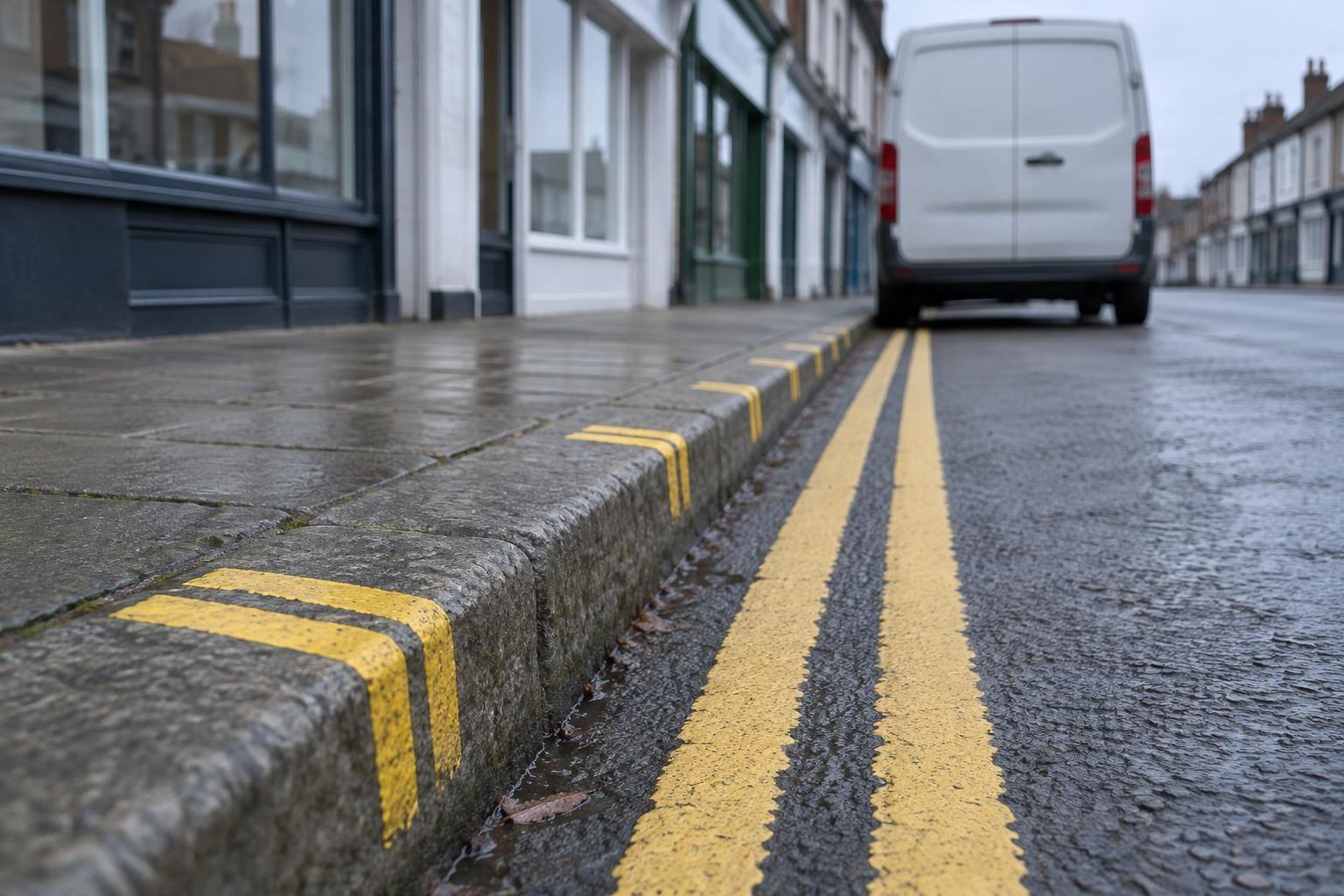
Code 02 looks a lot like code 01, and both are about yellow lines. The difference is the yellow marks on the kerb. Where those marks apply, you cannot stop to load or unload, so the most common answer to a yellow line ticket is not open to you.
The full wording on the standard list is "Parked or loading / unloading in a restricted street where waiting and loading / unloading restrictions are in force".
This guide covers council penalty charge notices (PCNs) in England and Wales, and says where London is different.
What code 02 means
Two restrictions have to be in force at the same time for a code 02:
- A waiting restriction, shown by single or double yellow lines along the road.
- A loading restriction, shown by yellow marks on the kerb or at the edge of the carriageway, with black and white plates nearby.
The Highway Code explains the kerb marks like this:
- Double kerb marks: no loading or unloading at any time.
- Single kerb marks: no loading or unloading at the times shown on the plate.
Loading restrictions can run for different hours from the yellow lines beside them, so always check the times shown on the plates.
Code 02 is a higher level contravention, so it carries the larger of the two parking penalties your council uses.
The letter after the code
On the standard code list, the suffixes for code 02 mean:
- 02a: the restriction was made by a temporary traffic order.
- 02j: camera enforcement. The list says this can only be used for code 02 where there is also a mandatory cycle lane at the location (London and England only).
- 02o: the ticket relates to a Blue Badge holder.
What you can still do where loading is banned
- Passengers can still get in or out. The Highway Code says that where loading restrictions apply, "You may stop while passengers board or alight."
- Loading is not an exemption. On an ordinary yellow line you may stop to load or unload. Where kerb marks apply and the time is within the hours on the plate, you may not.
- A Blue Badge generally does not help. Badge holders in England may park on yellow lines for up to 3 hours, "but in general not where there are restrictions on loading or unloading".
Red routes are separate. Red lines ban stopping to park, load or let passengers out, and they use different codes.
Common situations
- You stopped for a delivery on a high street with double kerb marks.
- You parked on a single yellow line in the evening, when the waiting restriction had ended, but did not notice the kerb marks. If only the loading restriction was in force and you were simply parked, check the times closely. Code 02 needs both restrictions to apply.
- You displayed a Blue Badge on a double yellow line without seeing the kerb marks.
Grounds people use to challenge code 02
A tribunal can only cancel a PCN on set legal grounds. The ones that fit code 02 best all come under "the contravention did not occur":
- The signs and lines were wrong. This is the Traffic Penalty Tribunal's own first example. For code 02, look for the kerb marks at the exact spot you stopped and for the black and white plate. If the kerb marks are missing or worn away where you parked, or there is no plate for a single kerb mark, say so and send photos.
- The loading restriction was not in force. Compare the time on the PCN with the times on the plate. If the loading ban had ended, the officer has used the wrong code, and if you were loading on an ordinary yellow line you may have been allowed to stop.
- A passenger was boarding or alighting. This is allowed even where loading is banned. Explain who it was and how long it took.
- The events alleged did not happen. Wrong place, wrong time, or the vehicle was not there.
The remaining grounds apply to any parking PCN: you were not the owner at the time, the vehicle was taken without your consent, you are a hire firm and the hirer accepted liability, the penalty is more than the correct amount, the council made a procedural mistake such as answering your challenge too late, or the traffic order is invalid.
If something exceptional happened, put it to the council as a compelling reason. A council can cancel a PCN at any point in the process.
Two things that will not work on their own: saying you were loading, and the 10 minute grace period. The grace period only covers parking places where you are allowed to park and have overstayed. Government guidance says roads with yellow lines are not designated parking places.
Evidence to gather
- Dated photos of the kerb at the spot you stopped, the nearest black and white loading plate, the yellow lines and any time plate. Take a wider shot that shows how far the plate is from where you parked.
- The council's own photos, which you can usually view online with the PCN number.
- Anything that shows the stop was to let someone in or out: a statement from the passenger, an appointment letter, a taxi or lift booking.
Send copies, not originals.
The stages and deadlines
1. The PCN. You have 28 days to pay, and the penalty is halved if you pay within 14 days.
2. Informal challenge. Write to the council before a Notice to Owner arrives. If you do it within 14 days and the council rejects it, the council will usually still accept the half rate. Citizens Advice says not to pay a ticket you are challenging, because paying is usually treated as accepting it.
3. Notice to Owner. This goes to the registered keeper if the PCN is unpaid. You have 28 days from getting it to pay in full or make formal representations. The council has 56 days to give its decision.
4. Tribunal. If you get a Notice of Rejection, you have 28 days to pay or appeal: to London Tribunals for a London PCN, or to the Traffic Penalty Tribunal elsewhere in England and Wales. It is free.
A PCN sent by post skips the informal stage. Follow the instructions on it and make representations within 28 days.
How much is it?
Amounts vary by council and band, so go by your PCN. As checked on 18 Nov 2026:
- London: higher level parking penalties are £160 in Band A areas and £140 in Band B areas, halved if paid within 14 days. These took effect on 7 April 2025.
- Outside London: the Traffic Penalty Tribunal describes parking PCNs as "up to £70", depending on the contravention.
If you ignore it
When the 28 days after a Notice to Owner or a Notice of Rejection pass without payment, the council can issue a Charge Certificate. That adds 50% and gives you 14 days to pay.
If it is still unpaid, the council can register the debt at the Traffic Enforcement Centre and you will be sent an Order for Recovery. You then have 21 days to pay or, on limited grounds, send form TE13. If you are out of time you need form TE14 as well. After that, the debt can go to bailiffs.
Related guides
- PCN code 26: double parking
- PCN code 27: parked next to a dropped kerb
- TE13 and TE14: challenging an Order for Recovery
Parking Ticket Pal tracks every deadline on a ticket and reminds you before each one, so you do not lose the discount or the right to appeal by a day.
This is general information, not legal advice.
Written by
The Parking Ticket Pal Editorial Team
Source-checked parking guidance