Parking QR Code Scam: Couple Lose £370 to Fake Sign
A couple lost £370 to a convincing parking QR code scam. Learn how fake payment signs work, what to check before paying and how to protect yourself.

The Parking Ticket Pal Editorial Team
25 August 2026
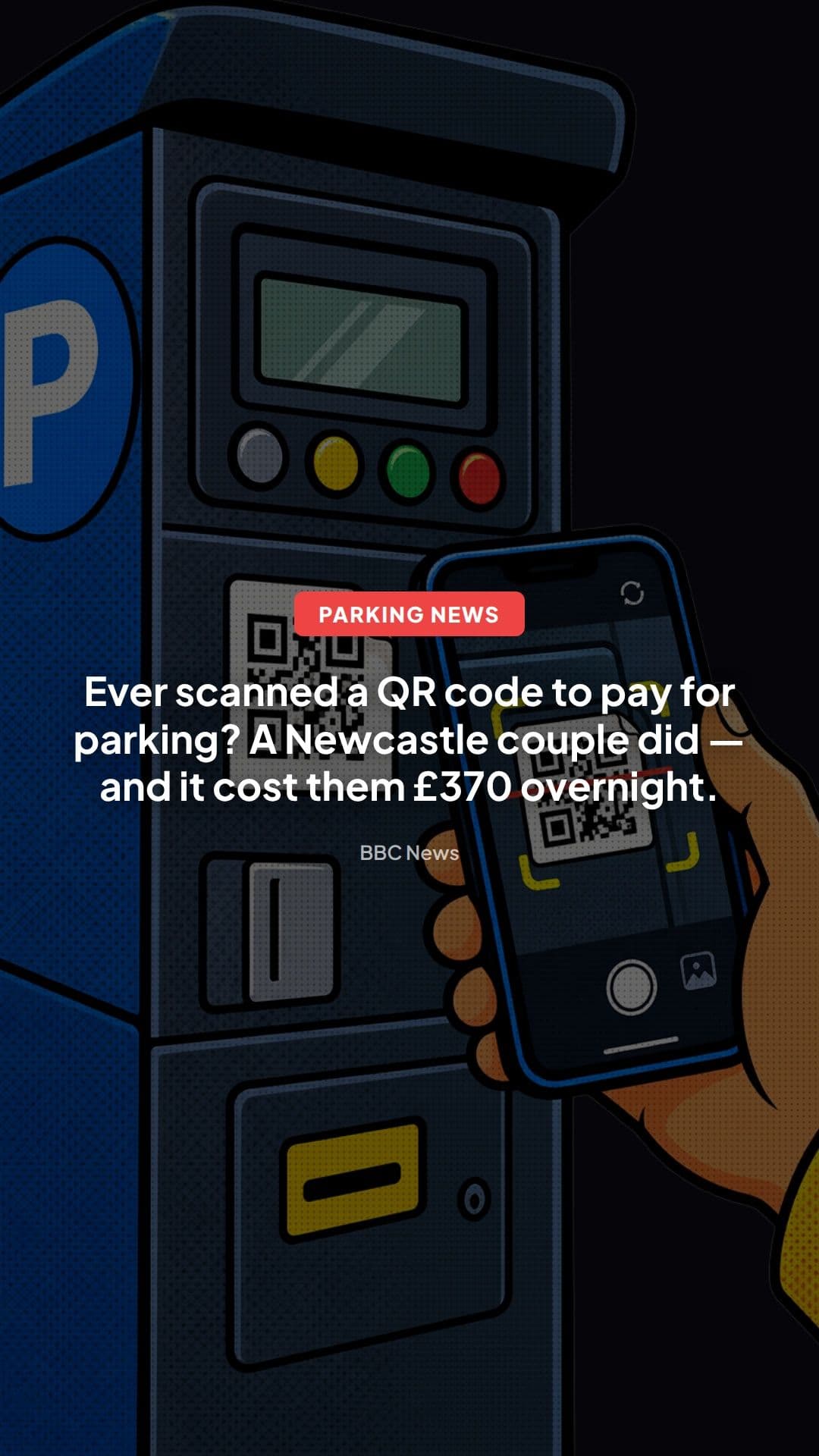
Couple Warn of Parking QR Code Scam After £370 Loss
Imagine walking back to your car after a quick coffee, satisfied you have paid for your parking through a smart, official-looking QR code, only to discover weeks later that the "payment" you made went straight into a fraudster's pocket. That is exactly the ordeal a couple recently described to the BBC after losing £370 to a fake parking QR code sign. Their warning is simple but unsettling: the scam looked completely convincing, and there was nothing about the sign that gave the game away.
This is not a story about a couple who were careless. It is a story about how easily a criminal with a sticker and a printer can turn an everyday act, paying for parking, into a financial trap. It deserves a closer look, because the tactics involved are spreading and the losses can be significant.
What Happened
According to the BBC report, the couple used what they believed was a legitimate QR code payment sign in a car park to pay for their parking session. The code led them to a website that looked convincing enough to accept card details and process a payment. In reality, the QR code had been placed there by a scammer, effectively hijacking the appearance of a genuine cashless parking system. The result was a loss of £370, a sum far beyond any normal parking tariff, suggesting the fraudulent site was used to harvest card details for wider misuse rather than simply pocketing a one-off parking fee.
The couple's central warning is about how difficult it was to spot anything wrong. Modern pay-by-phone and QR code parking systems are designed to be quick and frictionless. A scam sticker placed over, or next to, a genuine sign exploits that exact convenience. There is no obvious visual cue, no spelling mistake, no crude photocopy quality that might once have given away a con. The couple's experience shows just how far this type of fraud has evolved.
Why It Matters
Cashless parking has become the default in much of the UK. Councils and private operators have pushed drivers towards apps and QR codes for years, partly to cut down on cash handling and machine maintenance, and partly because it is simply cheaper to run. The unintended consequence is that drivers have been trained to trust a code stuck to a post without a second thought.
That trust is precisely what criminals are exploiting. A QR code is just a pattern that points to a web address. There is no built-in verification that the address belongs to the council, the landowner, or a legitimate payment provider such as RingGo, PayByPhone or JustPark. Anyone can generate a QR code linking to any site within seconds and print it onto a sticker that looks identical to an official one. Placed over or beside a genuine sign in a busy car park, it can catch out dozens of drivers before anyone notices.
This matters for several reasons beyond the immediate financial loss:
- Scale of exposure. Because a single sticker can be scanned by many different drivers over days or weeks, one fraudulent code can generate a high number of victims before it is spotted and removed.
- Compounding risk. Losses are not limited to the advertised parking fee. Fake payment pages are often designed to capture full card details, which can then be used for further fraud well after the parking trip is forgotten.
- Confusion with genuine penalties. Drivers who unknowingly fall for a scam code may still end up with a Parking Charge Notice on their windscreen for the same session, because no genuine payment was ever recorded by the real operator. That leaves victims dealing with both a financial fraud and an unfair parking fine.
The Legal Angle
There are two separate legal issues at play here, and it is worth understanding both.
The fraud itself. Setting up a fake payment site and tricking someone into entering card details is a criminal offence under the Fraud Act 2006, specifically fraud by false representation. This is a matter for the police and Action Fraud, not a civil dispute with a parking company. Victims should report the incident to Action Fraud (the UK's national reporting centre for fraud and cybercrime) and to their bank as quickly as possible. Banks have obligations under the Contingent Reimbursement Model and wider Payment Services Regulations to investigate authorised push payment fraud, and in many cases victims can recover some or all of their losses, though this is not guaranteed and depends on the circumstances of the payment.
Any resulting parking charge. If a genuine PCN follows because the real operator has no record of payment, drivers are not without options. Motorists who can show they made a genuine attempt to pay, even if that payment was intercepted by a scam, have grounds to challenge a resulting charge through an informal appeal or, if necessary, through POPLA or the Independent Appeals Service depending on whether the operator is a member of the British Parking Association or the International Parking Community. Evidence such as bank statements showing the fraudulent transaction, screenshots of the fake site, and photographs of the scam sticker can all help demonstrate that the driver acted reasonably and in good faith.
It is also worth noting that landowners and operators have a degree of responsibility to keep their signage clear and their payment systems secure. Where a fraudulent code has clearly been placed by a third party, this does not automatically excuse a driver from a legitimate PCN, but it can form part of a wider argument about fairness, particularly if the operator was slow to remove reported fake codes or failed to warn drivers despite prior reports.
What Drivers Should Know
There are practical steps every driver can take to reduce the risk of falling victim to this kind of scam, without needing to abandon cashless parking altogether.
- Check for tampering. Look closely at the sign itself. Scam stickers are often placed slightly askew, on a different material, or positioned oddly compared with the rest of the signage. A code that looks like it has been added on top of existing text is an immediate red flag.
- Use the official app or website directly. Rather than scanning a code, it is safer to search for the car park operator's official app (RingGo, PayByPhone, JustPark and similar are the most common) and enter the location code manually, or use the operator's own verified website.
- Check the web address after scanning. Before entering any card details, look at the URL. Genuine parking payment sites will typically match the operator's known domain. Anything unfamiliar, slightly misspelt, or generic should be treated with suspicion.
- Avoid entering more information than necessary. A legitimate parking payment should only ever need a vehicle registration, location code, and card details. Requests for extra personal information are a warning sign.
- Photograph the sign before scanning. This creates useful evidence both if the code turns out to be fraudulent and if a PCN is later wrongly issued.
- Report suspected scam codes immediately. Contact the car park operator or landowner, and report the incident to Action Fraud. Removing a fake sticker quickly limits the number of additional victims.
- Act fast if you have paid a fraudulent site. Contact your bank straight away to flag the transaction and request a chargeback or fraud investigation, and keep all correspondence and evidence.
Drivers who are also dealing with signage that is unclear or misleading more generally, whether fraudulent or simply poorly maintained, may find it useful to understand how confusing or defective signs can be used as part of a legitimate challenge to a parking charge.
Looking Ahead
This case is unlikely to be an isolated incident. As councils and private operators continue rolling out cashless and app-based payment systems, the opportunity for low-cost, high-reward scams involving fake QR codes will only grow. Unlike cloning a card machine or tampering with a meter, printing a sticker requires no specialist equipment and can be done anywhere in minutes.
There are signs that awareness is starting to catch up with the problem. Some councils have begun adding anti-tamper features to official signage, and consumer groups have repeatedly urged drivers to use verified apps rather than scanning unknown codes. However, the pace of enforcement and public warning still lags behind the pace at which these scams can be set up and taken down.
For now, the responsibility largely sits with drivers to stay alert, and with car park operators to keep signage secure and to respond quickly when fraudulent codes are reported. The couple's £370 loss is a timely reminder that convenience should never come at the cost of caution, particularly when a simple scan of a phone is all it takes to hand over your card details to a stranger. If you believe you have been targeted by a similar scam, reporting it promptly to your bank and to Action Fraud remains the most effective way to limit the damage and help protect other drivers from falling into the same trap.
Written by
The Parking Ticket Pal Editorial Team
Source-checked parking guidance
Ready to Challenge Your Ticket?
Let our AI analyse your PCN and generate a professional appeal letter in minutes.
Start Free Appeal