
Parking on Zebra Zig-Zags: £1,000 Fine and 3 Points
Cumbria Police warns that parking or stopping on zebra crossing zig-zags can mean three penalty points and a £1,000 fine. Learn the rules and enforcement.

The Parking Ticket Pal Editorial Team
16 November 202610 min read
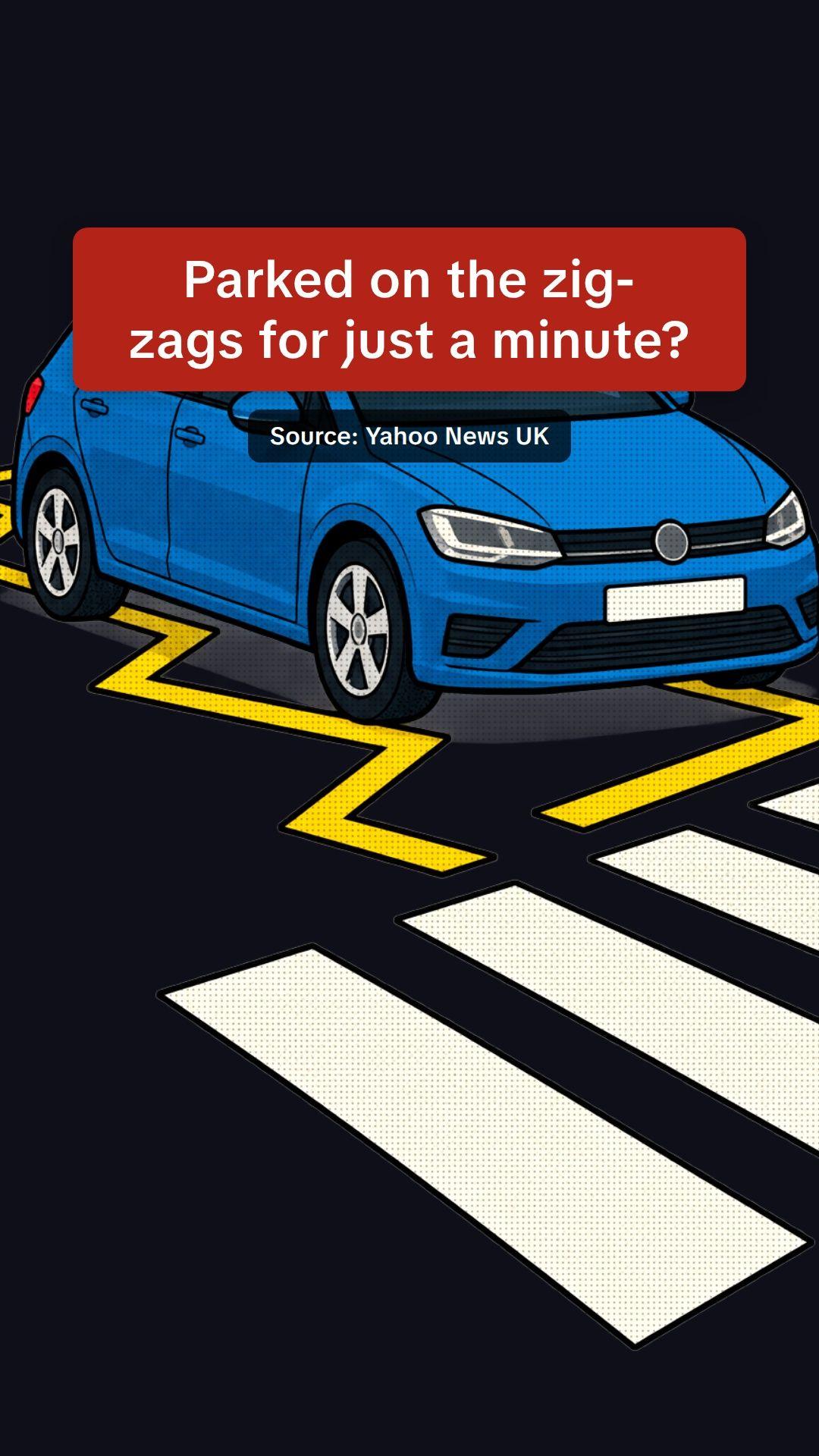
Parking on Zebra Crossing Zig-Zags: Why Cumbria Police's £1,000 Warning Matters
Most of us have done it, or at least seen it. A driver pulls up on the white zig-zags beside a zebra crossing, hazards flashing, "just for a minute" while they dash into the newsagent or wait for a child to come out of school. It feels harmless, and nobody is blocking the road. Yet those zig-zags are among the most legally clear-cut markings on the network, and the penalties are heavier than many drivers assume.
That is the message behind a recent warning from Cumbria Police, reported by Yahoo News UK. Here is what it means in practice and why the rules are tougher than they might look.
What happened
According to the report, Cumbria Police reminded drivers that stopping or parking on the zig-zag markings at a zebra crossing can lead to three penalty points and a fine of up to £1,000. The warning appears to be a public nudge rather than a change in the law. The rule has been in place for decades, but the force clearly feels enough drivers are ignoring it to justify a reminder.
The report also makes a useful contrast. Councils generally enforce parking on double yellow lines, which is typically a civil matter. Zig-zag rules sit in a different category, which is why police are the ones speaking up.
Why zig-zags matter more than they look
The zig-zag markings are not decorative. They create what the regulations call the "controlled area" around a crossing, and they exist for one reason: sightlines.
A pedestrian stepping onto a zebra crossing needs to see approaching traffic. Approaching drivers need to see that pedestrian. A parked van, a waiting taxi or a school-run SUV on the zig-zags can hide a child from an oncoming driver until it is far too late. Smaller pedestrians and wheelchair users are particularly exposed, because their eye line is lower than the parked vehicle's roofline.
There is also a knock-on effect. A vehicle stopped on the zig-zags tends to lead other drivers into bad decisions, such as swerving around it or edging forward to see past it. That is exactly the scenario the markings are meant to prevent.
The legal angle: why this isn't a "normal" parking fine
A road traffic offence, not just a parking charge
The rules for crossings are set out in the Zebra, Pelican and Puffin Pedestrian Crossings Regulations and General Directions 1997, made under the Road Traffic Regulation Act 1984. In broad terms, they say:
- A vehicle must not stop in the controlled area of a crossing, which includes the zig-zag lines, except in limited circumstances.
- Drivers must not overtake the moving vehicle nearest the crossing within the zig-zag area.
- Drivers must give way to pedestrians who are on a zebra crossing.
Breaching these rules is a criminal offence. The maximum fine on conviction is level 3 on the standard scale, currently £1,000, which matches the figure in the Cumbria Police warning. The offence also carries three penalty points, which is what distinguishes it from an ordinary parking contravention.
The Highway Code backs this up. Rule 243 tells drivers not to stop or park on a pedestrian crossing, including the area marked by zig-zag lines. Rule 191 deals with the no-overtaking requirement.
"Stopping" is broader than "parking"
Many drivers think of this as a parking offence, but the wording is about stopping. That matters in a few ways:
- Dropping off or picking up is stopping. Having the engine running or the hazards on does not change that.
- Waiting in a queue can also be an issue. If traffic is backed up, drivers should avoid ending up stationary on the zig-zags. Leave a gap rather than creeping forward into the markings.
- Briefly pausing to let someone out of the car is still within the prohibition.
There are limited exceptions in the regulations, such as when you are prevented from moving by circumstances outside your control (a breakdown or an accident), when you are avoiding an accident, or when you are following a police officer's direction or an emergency situation. These are narrow, and "I was only a minute" is not among them.
Blue Badge holders
The Blue Badge scheme gives some concessions on yellow lines, but it does not authorise stopping on a pedestrian crossing or its zig-zags. Holders should not assume the badge offers a defence here.
Who enforces, and how?
This is where it gets slightly more complicated, and where the Cumbria warning is worth reading carefully.
- Police can enforce the offence directly. A fixed penalty notice of £100 and three points is a common outcome, although the case can instead go to court, where the fine can be larger.
- Councils, in some areas, can also take enforcement action using civil powers, usually issuing a penalty charge notice (PCN). In London in particular, boroughs and TfL enforce zig-zag contraventions, often with cameras.
Whether you face a civil PCN from a council or a police fixed penalty depends on where you are and who has the relevant powers. Civil PCNs generally carry no penalty points, while a police fixed penalty or court conviction does. That difference is significant. Points stay on a licence for several years and can affect insurance premiums. If you are unsure which regime applies in your area, check your local council's website or the notice itself.
Don't confuse these with school "Keep Clear" markings
A common source of confusion is the yellow zig-zags outside schools. These are different from the white zig-zags at crossings:
- White zig-zags at zebra, pelican and puffin crossings carry the statutory stopping ban described above.
- Yellow school entrance markings relate to a "School Keep Clear" restriction, which is typically enforced through a traffic order and signage. Councils tend to handle these, often by camera.
Both can lead to a fine, but through different legal routes. The consequences, including whether penalty points are involved, may differ.
We have previously looked at how zig-zag cases have played out in London appeals, in our posts on why a TfL pedestrian crossing zig-zag appeal failed and a Lambeth zig-zag PCN appeal that was refused. Those cases show how rigidly the markings are applied, which is worth knowing if you are tempted to argue that "nobody was crossing."
What drivers should know: practical advice
1. Treat the white zig-zags as a no-go zone, full stop. It does not matter whether a pedestrian is visible. The restriction applies at all times, regardless of whether anybody is waiting to cross.
2. Build the walk into your plans. If you are dropping someone off, picking up a child or popping into a shop, look for a legal place a short walk away. A few extra steps are cheaper than three points.
3. Keep clear in queues. When approaching a crossing in slow traffic, hold back until there is room to clear the zig-zags entirely. It is the same discipline as avoiding box junctions.
4. Don't overtake in the zig-zag area. Many drivers focus on stopping and forget this part. If the vehicle ahead is moving and nearest the crossing, overtaking within the zig-zags is also prohibited.
5. Check the signs and markings on unfamiliar streets. Fresh paint and worn paint look different, but both can be enforceable. If the markings are faded, that alone is not a safe assumption.
6. If you receive a notice, read it carefully. Work out whether it is a police fixed penalty or court summons (a criminal matter, with points) or a council PCN (civil, normally without points). The right response depends on which it is, and the notice should tell you what your options are and the deadlines. Deadlines matter, because missing them can escalate the matter.
7. Gather evidence if you think the notice is wrong. If you believe the markings were not valid, your vehicle was not actually stopped, or you fall within an exception such as a breakdown, photos, dashcam footage and timestamps can be important. For a council PCN, the usual route is informal challenge, then formal representations, then independent adjudication. For police action, you can decline a fixed penalty and have the matter heard in court, but that carries risks, including a higher penalty if you are convicted. For anything with points or a possible court appearance, consider speaking to a qualified legal adviser or a motoring organisation rather than relying on general guidance.
Looking ahead
The Cumbria warning will probably not be the last of its kind. Police forces across the UK regularly run seasonal campaigns about school-run parking, and there is growing political attention on dangerous parking around crossings, schools and pavements. Councils are also being given more tools and more camera technology, which makes it easier to catch contraventions that once relied on a warden or officer being in the right place.
For drivers, the safe assumption is that enforcement will keep getting more consistent. The legal position is already settled. The difference is that fewer people will get away with it.
It is also worth remembering why the rule exists. A crossing is a place where people, often children and older pedestrians, step into the road trusting that drivers can see them. Keeping the zig-zags clear costs nothing, and ignoring them can cost far more than points on a licence.
Key takeaways
- Stopping or parking on zebra crossing zig-zags can carry three points and a fine of up to £1,000, as Cumbria Police has reminded drivers.
- The offence is about stopping, not just parking, so drop-offs and brief waits count.
- Overtaking in the zig-zag area is also prohibited.
- Enforcement can be by police (potentially with points) or, in some areas, by councils through civil PCNs. Check which applies to your notice.
- Yellow school markings are a different restriction from white crossing zig-zags.
- For notices carrying points or court action, consider seeking professional advice and check the official guidance, including the Highway Code and gov.uk.
This article is general information about UK motoring rules and is not legal advice. Rules and enforcement arrangements vary by area, so check official sources or seek professional advice about your own situation.
Written by
The Parking Ticket Pal Editorial Team
Source-checked parking guidance