
Parking Fines: The Three-Year Fight Every Driver Should Know
A motorist spent three years challenging two parking fines she says were wrongly issued. Learn how PCN appeals work and protect your UK driver rights.

The Parking Ticket Pal Editorial Team
24 September 2026
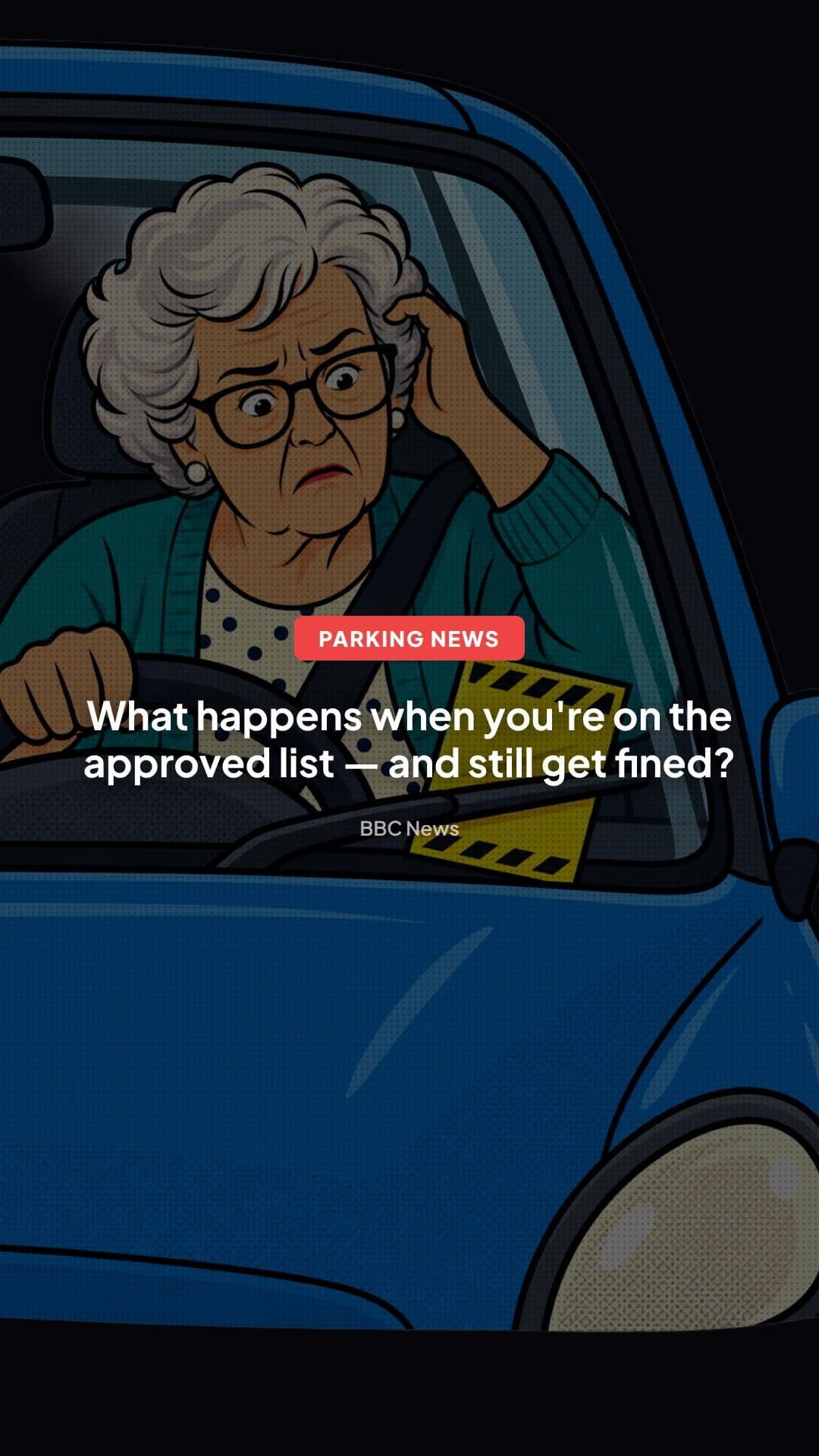
The three-year fight over two parking fines: why disputing a PCN can drag on for years
Hook
Imagine spending three years of your life, letters, phone calls, appeal forms and probably more than a few sleepless nights, all over parking charges that together might cost less than a decent weekly food shop. That is exactly the position Val Price found herself in, as reported by BBC News. Her case, covering just two parking fines she believes should never have been issued in the first place, dragged on for three years before any resolution was reached.
For many people reading her story, the instinctive reaction might be "why not just pay it and move on?" But Val Price's fight touches something that resonates with thousands of UK motorists every year: the principle that you shouldn't have to pay for something you didn't do wrong, no matter how small the sum or how long the fight takes.
What happened
According to BBC News, Val Price describes a three-year battle to overturn two parking fines that she maintains were wrongly issued. While the full detail of her case sits with the original reporting, the shape of her experience will be instantly familiar to anyone who has ever tried to challenge a parking charge in the UK, whether that charge came from a local council or a private parking operator.
What typically happens in these cases follows a familiar, frustrating pattern. A driver receives a Penalty Charge Notice (PCN) or a Parking Charge Notice from a private firm. They believe it has been issued unfairly, perhaps because of unclear signage, a payment system error, a misread number plate, or a genuine misunderstanding about where or when restrictions applied. They write in to challenge it. The response, if one comes at all, often rejects the appeal with limited explanation. The driver then has to decide whether to escalate, formally represent their case, or take it to an independent tribunal.
At each stage, the clock keeps ticking, discounts for early payment disappear, and the charge can increase. For council-issued penalties, unresolved cases can eventually end up with debt recovery action or even bailiffs at the door. For private parking tickets, unpaid charges can be pursued through the small claims court. What should, in theory, be a straightforward dispute over a few pounds can spiral into a drawn-out, stressful ordeal that eats up months or, in Val Price's case, years.
Why it matters
It would be easy to dismiss this as one person's stubbornness over what might seem like relatively small sums. But that misses the point entirely, and it's a point that matters to every driver in the UK.
Parking enforcement in Britain is big business. Councils in England alone generate parking-related income running into the billions each year, and private parking companies issue millions of tickets annually. When enforcement systems are automated, ANPR cameras, ticket machines that can misfire, algorithms flagging supposed contraventions, mistakes are inevitable. The question is not whether errors happen, but whether the system makes it reasonably possible for an ordinary driver to correct them without a multi-year war of attrition.
Val Price's experience raises uncomfortable questions about proportionality. If challenging a fine correctly and reasonably still takes three years, something in the process is failing drivers. It suggests that persistence, rather than the merits of a case, can become the deciding factor in whether an unfair penalty gets overturned. That should worry anyone who values a fair and efficient justice system, however minor the individual sums involved.
It also highlights a wider imbalance of resources. Councils and parking companies have standardised processes, template rejection letters, and legal teams. An individual driver, by contrast, is usually navigating the system for the first time, learning the rules of engagement as they go, often while holding down a job and dealing with everyday life. That imbalance can discourage people from challenging fines at all, even when they have a good case, simply because the process looks too daunting or too time-consuming to be worth it.
The legal angle
UK parking law operates on two quite different tracks depending on who has issued the fine.
Council-issued PCNs for on-street contraventions are governed by the Traffic Management Act 2004 and, in London, earlier legislation under the Road Traffic Act 1991. If a driver's informal challenge is rejected, they can make formal representations. If those are also rejected, the council must issue a Notice of Rejection, which gives the driver the right to appeal to an independent adjudicator, the Traffic Penalty Tribunal outside London, or the London Tribunals (formerly PATAS) within the capital. These adjudicators are independent of the council and can, and do, overturn PCNs where the evidence doesn't stack up.
If a driver misses deadlines along the way, perhaps because a PCN was never properly received, they can still challenge things later using a formal Statutory Declaration or, at the enforcement stage, the TE7 and TE9 forms to argue the case out of time. These routes exist precisely because Parliament recognised that penalty processes need built-in safeguards for genuine disputes.
Private parking charges, which are technically a matter of contract law rather than statutory penalty, work differently. These operators must belong to an Accredited Trade Association, either the British Parking Association (BPA) or the International Parking Community (IPC), to gain access to DVLA keeper data. Challenges that are rejected by the operator can be escalated to POPLA (for BPA members) or the Independent Appeals Service (for IPC members). These are free, independent appeal services, though critics have long argued they still favour the operators who fund them.
Both systems allow disputes to run on for a considerable time, particularly if a driver escalates every available stage, requests documents, or waits for hearing dates. Combine that with two separate PCNs potentially running on different timelines, and a three-year saga becomes entirely plausible.
There have also been recent regulatory moves aimed at making the whole system fairer. New private parking rules, expected to introduce a cap on charges and a mandatory grace period, are designed to reduce exactly the kind of drawn-out disputes Val Price experienced. Whether these reforms go far enough to speed up resolution times remains to be seen.
What drivers should know
If you find yourself facing a parking fine you believe is wrong, there are some practical steps worth keeping in mind, based on the general principles that govern these disputes:
- Act quickly. Most councils and private operators offer a discounted rate for early payment, but that shouldn't stop you challenging a fine you genuinely believe is wrong, just be aware the discount usually disappears once you appeal.
- Keep everything in writing. Photographs of signage, payment confirmations, and copies of every letter sent and received will matter enormously if your case escalates.
- Understand the appeal stages. Know the difference between an informal challenge, formal representations, and an independent tribunal appeal, and don't miss the deadlines attached to each.
- Don't ignore correspondence. Cases can spiral when letters go to an old address or get overlooked, leading to enforcement action for a debt the driver didn't even know existed.
- Use free, independent routes. POPLA, the Independent Appeals Service, and the Traffic Penalty Tribunal cost nothing to use and are designed to be accessible without legal representation.
- Be realistic about time and cost. For very small sums, weigh up whether a prolonged fight is proportionate to your time, while recognising that the principle of the thing can be worth defending too.
Looking ahead
Val Price's three-year fight is a reminder that the mechanics of parking enforcement in the UK, however routine they may seem, can have an outsized impact on the people caught up in them. As regulators continue to push for reforms such as fairer caps on private parking charges and clearer grace periods, cases like hers add weight to the argument that resolution times, not just penalty amounts, need urgent attention.
Until then, drivers who believe they have been wrongly fined should take heart from the fact that independent appeal routes do exist and do work, but they should also go in with clear eyes about just how long, and how much patience, a full challenge might demand.
Written by
The Parking Ticket Pal Editorial Team
Source-checked parking guidance
Ready to Challenge Your Ticket?
Let our AI analyse your PCN and generate a professional appeal letter in minutes.
Start Free Appeal