Parking charges rise in 6 UK regions: what changes Tuesday
New council parking fee hikes hit Nottingham, Bristol, Brighton, Leeds, Birmingham and Ipswich from Tuesday. See rate, permit and daily changes.

Isabella Romano
7 July 2026
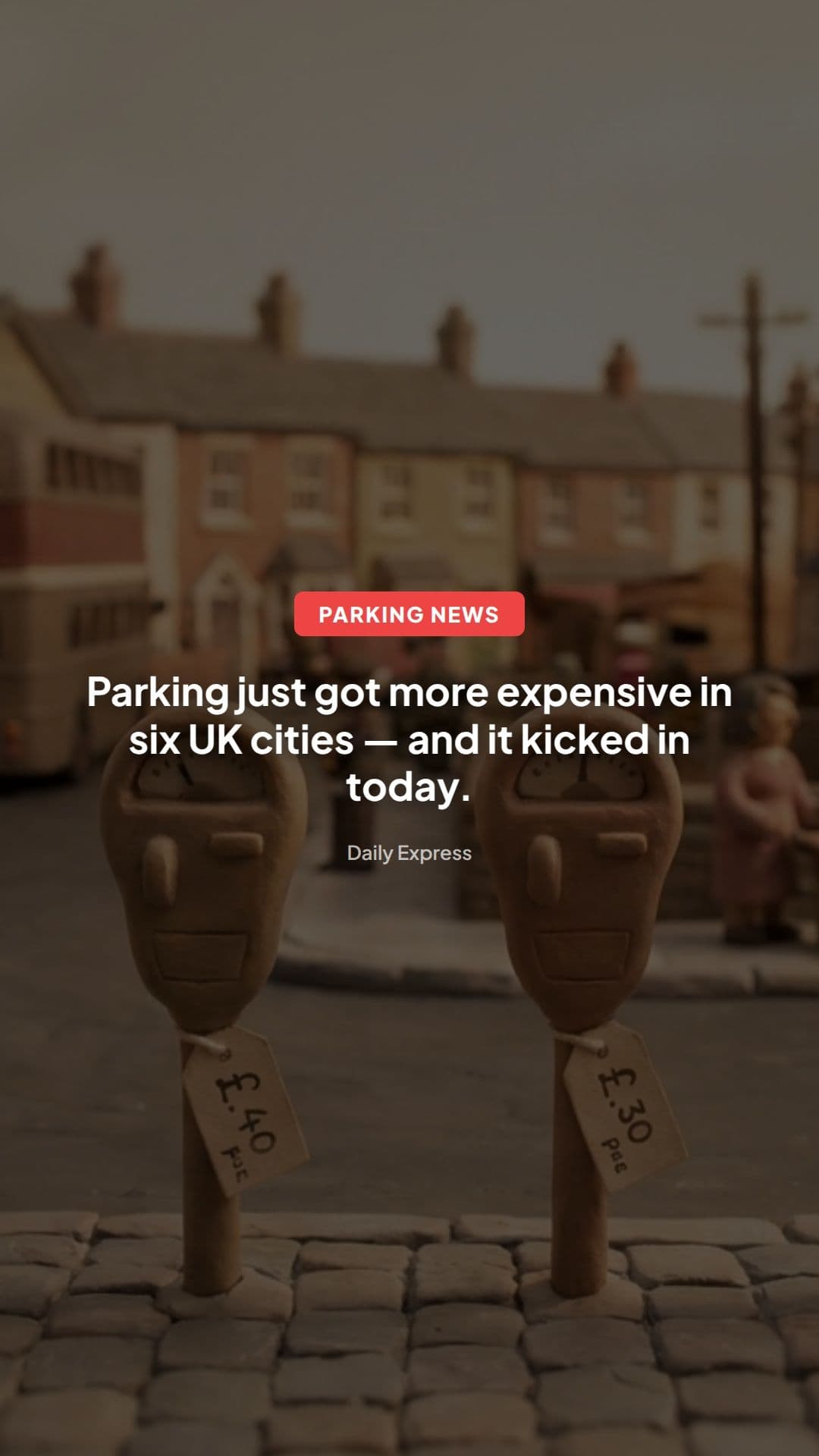
UK Parking Charges Rise Across Six Regions: What Every Driver Must Know Before Tuesday
Millions of drivers across England are about to feel the pinch at the pay-and-display machine. From Tuesday, councils in Nottingham, Bristol, Brighton, Leeds, Birmingham, and Ipswich are implementing sweeping increases to parking charges — hitting everything from hourly on-street rates to annual resident permits. If you park in any of these cities, the rules of the road have just changed, and the cost of getting it wrong has gone up considerably.
What's Actually Happening — and Where
As reported by the Daily Express, at least six English councils are rolling out new parking tariffs as part of their April 2026 budget measures. These aren't minor tweaks. The increases span:
- Hourly on-street parking rates in city centres and controlled zones
- Daily maximum charges in council-operated off-street car parks
- Resident permit costs, which in some areas are rising significantly above inflation
The councils involved — Nottingham, Bristol, Brighton, Leeds, Birmingham, and Ipswich — collectively serve millions of residents and attract vast numbers of commuters, shoppers, and visitors daily. The timing is deliberate: April marks the start of the new financial year, making it the traditional moment for councils to adjust fees, rates, and charges across their services.
Councils have justified the hikes on two main grounds. First, they point to inflation and rising operational costs — enforcement staff, ANPR camera maintenance, civil parking enforcement administration, and pay-and-display infrastructure have all become more expensive. Second, they cite budget shortfalls that have left local authorities searching for revenue streams that don't require central government approval. Parking income, unlike many council services, sits within their direct control.
A third justification — reducing city-centre congestion — is politically convenient but worth scrutinising, as we'll explore below.
Why This Matters Beyond the Price Tag
The Bigger Picture: Councils Under Financial Pressure
Local authorities across England are in a genuinely difficult financial position. Several have issued Section 114 notices in recent years — the municipal equivalent of declaring insolvency — and many more are quietly running structural deficits. Parking charges are one of the few levers councils can pull without needing ministerial sign-off, and they've been pulling it hard.
Under the Road Traffic Regulation Act 1984, councils have the power to set charges for on-street parking in controlled zones, and under the Traffic Management Act 2004, they manage civil parking enforcement. Crucially, the legislation permits councils to generate a surplus from parking operations — but only if that surplus is ringfenced for specific transport purposes, including road maintenance, public transport subsidies, and cycling infrastructure.
This legal requirement is frequently overlooked in the public debate. When a council raises parking charges, it is not simply pocketing the money. Surpluses must, by law, be reinvested in local transport. Whether that actually happens in practice — and whether the investment is meaningful — is a legitimate question for local scrutiny committees and residents to press.
The Congestion Argument: Genuine Policy or Convenient Cover?
The claim that higher parking charges reduce congestion has some academic support. Demand for city-centre parking is price-sensitive, and studies from cities including Bristol and Leeds have shown that incremental price increases do shift some journeys to public transport or cycling. However, the effect depends heavily on whether viable alternatives actually exist.
In many parts of Birmingham and Leeds, public transport links to suburban areas remain patchy. For residents who rely on their car to reach work, healthcare appointments, or care responsibilities, a price increase isn't a nudge — it's a penalty. Critics, including motoring groups such as the RAC and the AA, have consistently argued that pricing people out of driving before adequate alternatives are in place is regressive, disproportionately affecting lower-income workers who cannot afford to live close to city centres.
The Legal Angle: What Rights Do Drivers Actually Have?
Challenging a Penalty Charge Notice
If you overstay, underpay, or park in a location affected by the new tariffs without realising the charges have changed, you may receive a Penalty Charge Notice (PCN). Under the Traffic Management Act 2004 and the Civil Enforcement of Parking Contraventions (England) Regulations 2007, you have a structured right of appeal:
- Informal representation — made within 14 days of the PCN being issued, which preserves the 50% discount if your appeal fails
- Formal representation — made after a Notice to Owner is served, if your informal appeal is rejected
- Independent appeal — to the Traffic Penalty Tribunal (outside London) if your formal representation is refused
Councils must respond to formal representations within 56 days. If they fail to do so, the PCN is cancelled by default.
Signage and Notice Requirements
Here's a point many drivers miss: a council cannot lawfully charge you a rate that isn't clearly displayed on the relevant signage or pay-and-display equipment. If charges have increased but the signs or machines haven't been updated in time, that creates a genuine ground of appeal. The legal principle is that a driver must be able to ascertain the applicable charge from the information available at the point of parking.
Under the Traffic Signs Regulations and General Directions 2016 (TSRGD 2016), parking restriction signs must meet prescribed standards of clarity and visibility. If a council has changed its tariff but the signage lags behind — which is not uncommon during a transition period — drivers who paid the old rate in good faith have a strong argument that no contravention occurred.
Resident Permit Increases: Are There Limits?
For residents facing permit cost increases, there is no statutory cap on what councils can charge. However, permit schemes must be authorised under a Traffic Regulation Order (TRO), and any change to charges technically requires the TRO to be amended or a new one made. This process includes a statutory consultation period, during which residents can formally object. If your council has raised permit costs without following the correct TRO amendment procedure, that increase may be challengeable.
What Drivers Should Do Right Now
If you regularly park in Nottingham, Bristol, Brighton, Leeds, Birmingham, or Ipswich, here is what you should do before Tuesday:
- Check the new rates before you travel. Each council publishes its current parking tariffs on its website. Don't assume the rate you paid last month still applies.
- Photograph the signage when you park. If you believe a sign is displaying outdated charges, take a timestamped photograph. This is your evidence if a PCN follows.
- Keep your payment receipts. Whether you use a pay-and-display machine, a parking app, or a contactless terminal, retain proof of what you paid and when. App-based payments generate a digital record — make sure the transaction completed successfully.
- Check your resident permit renewal date. If your permit is due for renewal, the new fee will apply. Budget accordingly and don't let your permit lapse — parking in a resident bay without a valid permit is a contravention regardless of whether you previously held one.
- If you receive a PCN, act quickly. The 14-day window for an informal representation — which preserves the 50% discount — starts from the date of issue, not the date you receive the notice through the post.
- Scrutinise the PCN itself. Errors in the vehicle registration number, location code, or contravention description can provide grounds for cancellation. Councils are required to issue PCNs accurately.
Looking Ahead: A Pattern That Won't Stop Here
These six councils are not outliers. They are part of a broader national trend. Local government finance in England is under structural strain, and parking income — legal, controllable, and requiring no new legislation — is an attractive revenue source.
The government has been reviewing the framework for civil parking enforcement, and there have been calls from motoring organisations for greater transparency in how parking surpluses are spent. The National Parking Platform, which aims to create a unified payment infrastructure across councils, is gradually rolling out — but standardisation of charges remains a distant prospect.
What seems certain is that parking will continue to get more expensive in urban areas throughout 2026 and beyond. Councils facing a choice between cutting services and raising parking fees will frequently choose the latter. For drivers, the practical response is to treat parking costs as a variable that requires active management — checking rates before every visit to an unfamiliar area, using council websites or apps to verify current charges, and knowing the appeal process well enough to use it effectively when things go wrong.
The drivers who fare worst in this environment are those who assume nothing has changed. From Tuesday in these six cities, quite a lot has.
Source: Daily Express, "UK drivers face new parking charges in 6 regions from Tuesday."
Written by
Isabella Romano
Civil Enforcement Officer
Ready to Challenge Your Ticket?
Let our AI analyse your PCN and generate a professional appeal letter in minutes.
Start Free Appeal