Paid for parking? Euro Car Parks debt threats explained
Drivers with valid Euro Car Parks tickets say they’re still chased by debt collectors. What to do next, your appeal rights and key evidence to keep.

Sarah Mitchell
6 April 2026
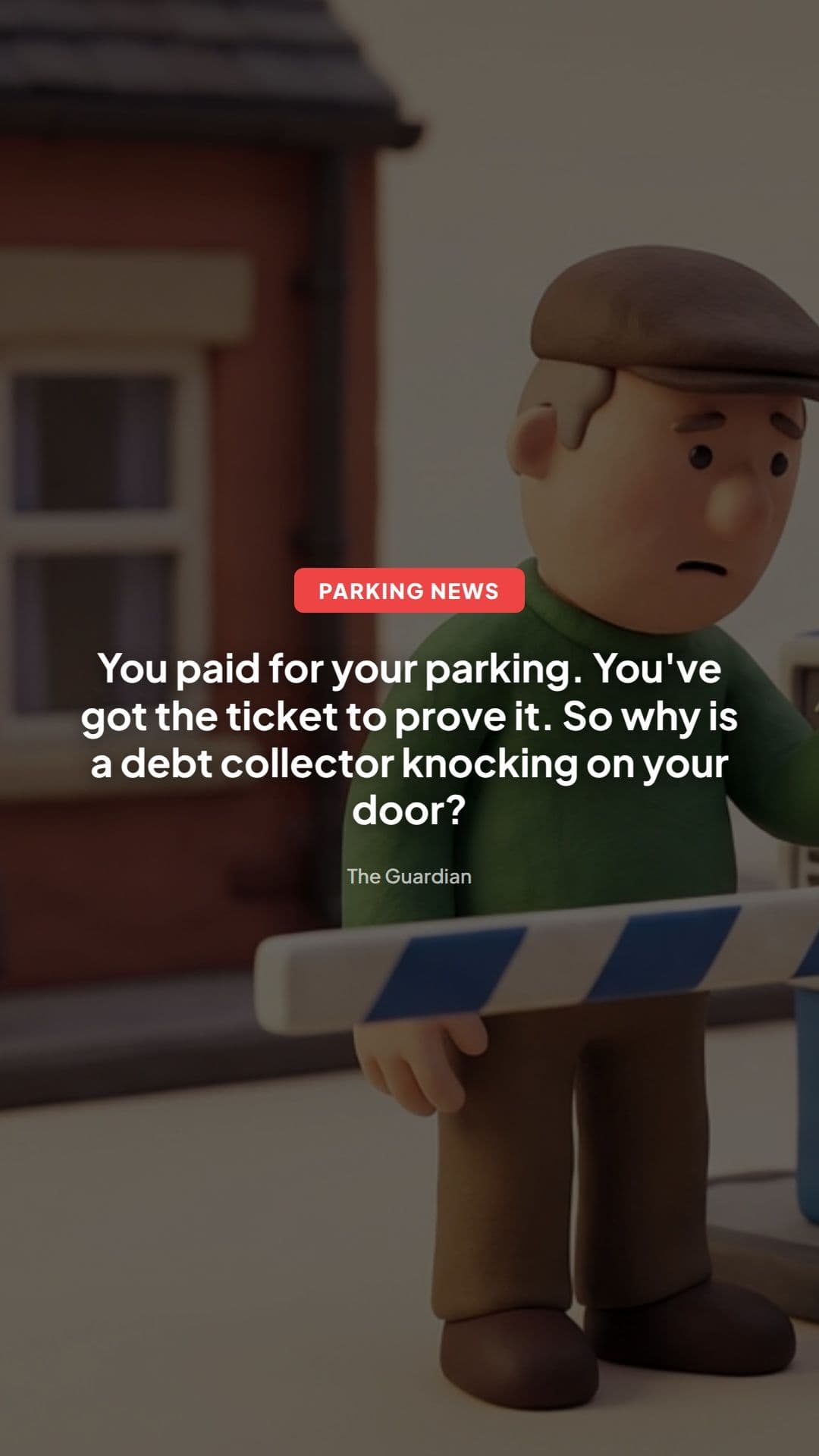
Paid and Still Pursued: The Scandal of Euro Car Parks Chasing Drivers Who Did Nothing Wrong
Imagine paying for your parking, keeping your ticket, walking back to your car without a care in the world — and then, weeks later, receiving a threatening letter from a debt collection agency demanding money you simply do not owe. That is the reality facing a growing number of drivers who used Euro Car Parks facilities across the UK, and it raises deeply uncomfortable questions about the integrity of private parking enforcement.
A recent investigation by The Guardian has shone a spotlight on a troubling pattern: drivers with valid proof of payment being pursued for alleged non-payment, their evidence apparently ignored, and the pressure escalating all the way to debt collectors. It is not an isolated glitch. It is a systemic failure — and it matters to every driver who has ever trusted a pay-and-display machine or a parking app.
What Is Actually Happening?
The core allegation is straightforward but alarming. Drivers who paid legitimately for their parking at Euro Car Parks sites are receiving Parking Charge Notices (PCNs) — effectively private fines — claiming they failed to pay or overstayed their allotted time. When drivers attempt to challenge these notices with proof of payment, including receipts, bank statements, and app confirmation screenshots, their appeals are reportedly being dismissed or ignored.
What makes this particularly egregious is the next step: the involvement of debt collection agencies. Rather than acknowledging payment and cancelling the charge, Euro Car Parks appears — according to victim accounts reported by The Guardian — to be escalating these disputed charges through third-party debt collectors. These agencies then contact drivers with increasingly aggressive correspondence, threatening adverse credit impacts and further legal action.
For many drivers, especially those unfamiliar with how private parking enforcement actually works, this pressure is enough to make them pay up — even when they owe absolutely nothing.
Why This Matters Beyond Individual Cases
This story is not simply about one company making administrative errors. It sits within a much broader, deeply problematic landscape of private parking enforcement in the UK.
The private parking industry issues tens of millions of PCNs every year. Unlike council-issued Penalty Charge Notices — which are backed by statute and subject to independent adjudication — private PCNs are civil invoices. They are not fines in any legal sense. A private parking company cannot send you to prison for non-payment. They cannot automatically access your wages. Their power is largely psychological, and it depends heavily on drivers not knowing their rights.
The business model of some operators has long been criticised as predatory. Charging notices are issued at scale, often using Automatic Number Plate Recognition (ANPR) cameras. If even a fraction of recipients pay without questioning the charge, the revenue generated is substantial. When legitimate payment records fail to be cross-referenced properly — whether through technical failure, poor data management, or something more deliberate — innocent drivers become caught in a machine that is not designed to easily let them out.
Euro Car Parks is one of the UK's largest private parking operators, managing thousands of sites across retail parks, hospitals, airports, and commercial premises. The scale of its operation means that even a small error rate produces a very large number of wrongly pursued drivers.
The Legal Angle: What Rights Do Drivers Actually Have?
This is where it gets important. Private parking companies derive their authority from contract law, not statute. When you enter a private car park and pay for parking, you enter into a contract. If you have fulfilled the terms of that contract — i.e., paid the correct amount for the time you used — there is no breach, and therefore no legitimate basis for a charge.
The Protection of Freedoms Act 2012 is the key piece of legislation here. It transferred liability for private parking charges from the driver to the registered keeper of the vehicle, but crucially, it also established that operators must follow a strict Code of Practice if they want to enforce against a keeper. Operators must be members of an Accredited Trade Association — either the British Parking Association (BPA) or the International Parking Community (IPC) — and must adhere to their respective codes.
Both codes require operators to:
- Consider genuine evidence of payment during the appeals process
- Provide a fair and transparent appeals procedure
- Offer access to an independent appeals service (POPLA for BPA members, IAS for IPC members)
If Euro Car Parks is dismissing valid proof of payment and escalating to debt collectors without offering a proper appeals pathway, it may be in breach of its own trade association's code of conduct — which could jeopardise its accreditation and, with it, its ability to obtain keeper details from the DVLA.
The DVLA only releases registered keeper information to parking operators who are accredited members in good standing. Misuse of this data — or obtaining it under false pretences — can result in accreditation being revoked. The DVLA has previously suspended data access to operators found to be acting improperly, and this remains a significant lever of accountability.
Additionally, the Consumer Rights Act 2015 is relevant. Any term in a parking contract must be fair and transparent. Pursuing a consumer for a debt they demonstrably do not owe, using aggressive third-party tactics, could arguably constitute unfair commercial practice under the Consumer Protection from Unfair Trading Regulations 2008.
What Drivers Should Do Right Now
If you have received a PCN from Euro Car Parks — or any private parking operator — and you have evidence of valid payment, do not panic, and crucially, do not simply pay to make it go away. Here is what to do:
1. Gather every piece of evidence immediately
- Payment receipts (physical or digital)
- Bank or credit card statements showing the transaction
- Screenshots from parking apps (PayByPhone, RingGo, JustPark, etc.) with timestamps
- Photos of your vehicle in the car park, if available
2. Submit a formal appeal at the first stage Respond in writing to Euro Car Parks directly, clearly stating that you paid, attaching all evidence. Keep a copy of everything you send. Use recorded post or email with read receipts.
3. Escalate to the independent appeals service if your appeal is rejected Euro Car Parks is a BPA member, which means POPLA (Parking on Private Land Appeals) is your independent adjudicator. POPLA is free to use and its decisions are binding on the operator. An adjudicator reviewing clear payment evidence should find in your favour.
4. Do not be intimidated by debt collector letters Debt collectors pursuing a disputed private parking charge have very limited powers. They cannot enter your home, seize your goods, or take court action without first obtaining a County Court Judgement (CCJ). If you receive a CCJ claim form, respond to it — do not ignore it — and use your payment evidence as your defence.
5. Report the conduct If you believe you have been wrongly pursued, report the operator to:
- The BPA (British Parking Association) via their complaints process
- The DVLA, flagging potential misuse of keeper data
- Trading Standards via Citizens Advice if you believe unfair trading practices are involved
Looking Ahead: Is Change Coming?
The Euro Car Parks situation is unlikely to be an anomaly, and it arrives at a moment when the private parking industry is under more regulatory scrutiny than at any point in its history. The Code of Practice for Private Parking — developed following a government review — has been in development for some time, with the aim of creating a single, statutory framework with genuine teeth.
Until that framework is fully implemented and enforced, however, drivers remain vulnerable to exactly the kind of conduct described here. The current system relies too heavily on operators self-policing through trade association membership, and the consequences for bad actors have historically been insufficient to deter aggressive enforcement strategies.
What the Euro Car Parks story illustrates most starkly is this: the burden of proof is being placed on the wrong party. Innocent drivers are forced to fight to prove their innocence, navigate appeals systems, and withstand debt collection pressure — all because an operator's systems failed or, worse, were never designed to catch legitimate payments in the first place.
The private parking industry has long argued it provides a necessary service, managing limited parking space fairly. That argument becomes very difficult to sustain when drivers who played by the rules entirely find themselves being hounded for money they do not owe. Regulators, trade associations, and ultimately Parliament need to take note — because until the system is fixed, every driver who parks on private land is one administrative error away from the same nightmare.
Written by
Sarah Mitchell
Parking Rights Advocate
Ready to Challenge Your Ticket?
Let our AI analyse your PCN and generate a professional appeal letter in minutes.
Start Free Appeal