
Over-70s Driving Licence Eye Tests: What Could Change
Over-70s could face mandatory eyesight checks every three years to keep a driving licence. Find out what the proposed UK road-safety rules mean.

The Parking Ticket Pal Editorial Team
26 November 20269 min read
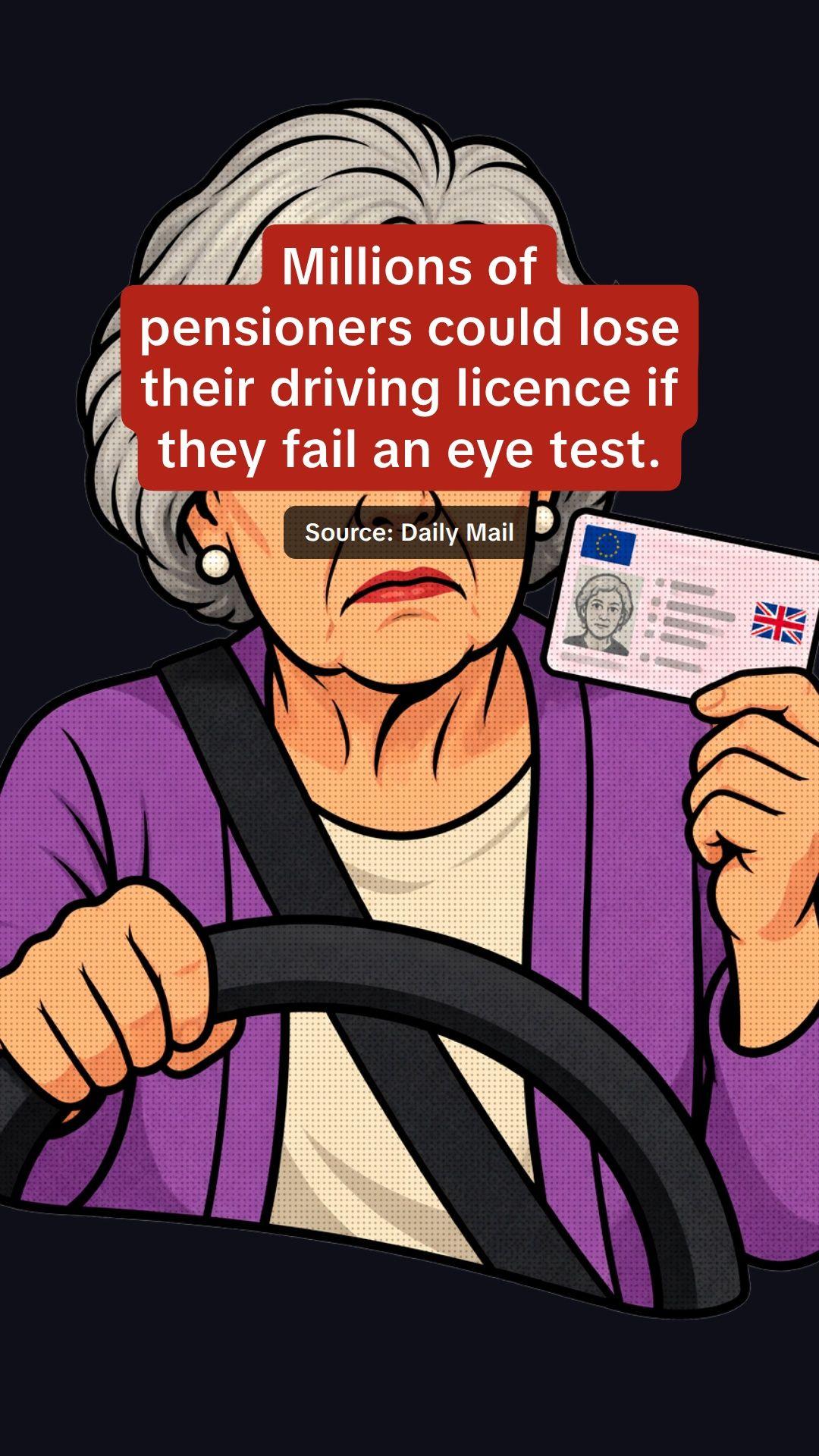
Most drivers have a quiet, slightly awkward secret about their eyesight: nobody ever checks it. Pass your driving test at 17 or 40 and, in Great Britain, you are broadly trusted to stay fit to drive for the next half century. A reported proposal would change that for older motorists. If it goes ahead, millions of people could find themselves booking regular eye checks just to keep their licence.
What has been reported
The Daily Mail reports that drivers aged 70 and over could be required to prove their eyesight meets the minimum legal standard every three years. Its headline says millions of over-70s would be affected, and that those who fail would lose their licence. The paper says the road-safety change was expected to be announced within weeks.
That is the extent of what the source gives us. The article is a report of a proposal, not a confirmed law. Key details, such as who would carry out the checks, whether they would be free, and how the evidence would be submitted to the DVLA, are not set out in the summary. Anyone who tells you exactly how it will work is guessing, so treat the finer points as open until the government publishes its plans.
How it works now
To see why the proposal is a big shift, it helps to know the current system, which relies heavily on honesty.
- You must renew your licence at 70, and every three years after that. Renewal is free through GOV.UK or by post.
- Renewal is a self-declaration. You confirm that you meet the medical standards for driving, including eyesight. There is no mandatory test at this point, and you do not have to send in an optician's report.
- Responsibility sits with you. The law expects you to stop driving and tell the DVLA if your vision, or any medical condition, affects your ability to drive safely.
So the three-yearly renewal date already exists for over-70s. The reported change appears to turn that date from a declaration into something closer to verification.
Why it matters
The standard is simple, and many people do not know it
The legal minimum for car drivers is not complicated. You must be able to read a number plate from 20 metres away, wearing glasses or contact lenses if you need them. You must also meet a minimum level of visual acuity, which an optician measures on a standard chart, and have an adequate field of vision. That is the same for a 25-year-old and a 75-year-old.
The "number plate test" is an easy roadside check, but it is a blunt instrument. It does not capture peripheral vision, glare sensitivity or how well someone copes at night, all of which can deteriorate before anyone notices. Eyesight often changes slowly, and people adapt without realising how much they have lost. That is the usual argument for scheduled checks: the person with the problem is often the last to spot it.
The fairness question
Supporters of regular testing will say vision is a measurable, objective safety factor, and that checking it is less intrusive than judging someone's overall competence. Critics will point out that a blanket age threshold treats a sharp-eyed 80-year-old the same as someone with a known problem. Others will stress that for many older people, especially in rural areas, driving is a lifeline to shops, appointments and social contact. Losing a licence can mean a real loss of independence.
Both views have weight, and neither is a simple answer. The details of any scheme will decide whether it feels like sensible safety or a hurdle.
We have looked at the wider debate in our earlier post, "Over-70 driver eye tests: what the new rules could mean". This piece focuses on the legal footing and the practical steps.
The legal angle
Several existing laws are relevant, whatever happens with the proposal.
Driving with defective eyesight is already an offence. Under the Road Traffic Act 1988, it is an offence to drive with uncorrected defective eyesight. Penalties can include a fine of up to £1,000, and an endorsement of up to three penalty points. A police officer who suspects poor vision can request a roadside eyesight test, and a failure is reported to the DVLA, which can revoke your licence. Check GOV.UK for the current position, as penalties can change.
There is a duty to tell the DVLA. If you have a medical condition that could affect your driving, you are legally required to notify the DVLA. Failing to do so can lead to a fine of up to £1,000, and, in the event of a collision, it can have serious consequences for your insurance and potentially for criminal liability.
Insurance matters. Insurers expect you to be legally entitled to drive. If your licence has been revoked because you fall below the eyesight standard, or you are driving in breach of it, a claim could be affected. If you have any doubt, speak to your insurer and your optician.
A new regime would need legal underpinning. Compulsory three-yearly evidence would require changes to the licensing rules, and the government would need to set out the process, exemptions and appeal routes. Those would matter a great deal. For example, what happens if a driver fails, can they re-test after getting new glasses, and how long does a revocation last? None of this is confirmed in the source article.
This is general information, not legal advice. If you are worried about a specific situation, speak to the DVLA, your optician or a qualified adviser.
What drivers should know
You do not need to wait for new rules to look after your eyesight and your licence. These steps make sense now.
- Book a regular sight test. Opticians commonly recommend one every two years for most adults, and sooner if you notice changes. NHS-funded sight tests are available to people aged 60 and over in England, and the rules differ in Scotland, Wales and Northern Ireland, so check your local eligibility.
- Tell the optician you drive. Ask directly whether you meet the driving standard. They can tell you, and they can advise on night driving and glare.
- Wear your prescription. If your licence says you need corrective lenses, you must wear them whenever you drive. Keep a spare pair in the car.
- Do the number plate check yourself. In good light, see whether you can read a plate from around 20 metres, roughly five car lengths. Do not rely on this alone, because it is only a rough guide, but if you struggle, get tested promptly.
- Know the conditions you must report. Eye conditions such as glaucoma, and certain cases of cataracts, macular degeneration or diabetic eye disease, can affect your licence. The DVLA's guidance on GOV.UK lists the conditions and what to do. If you are unsure, ask your GP or eye specialist.
- Watch for the warning signs. Struggling with dazzle from oncoming headlights, missing road signs until the last moment, misjudging distances, or feeling uneasy driving at dusk are all signs to get checked. Our post on bright headlight glare explains why this is such a common complaint.
- Renew your licence on time. Whatever changes, the three-year renewal at 70 and beyond already exists. Use the official GOV.UK service, which is free, and beware of third-party websites that charge a fee for something you can do at no cost.
- Keep evidence. If a test is ever required, having a recent optician's report to hand may save time. Keep your records tidy.
If you or a relative fail a test
Do not panic. Many vision problems are correctable with a new prescription or treatment, such as cataract surgery. If the DVLA does revoke a licence, you can usually reapply once you meet the standard again, although the process and evidence required vary. If you rely on your car, look into alternatives, such as local community transport, taxis or lifts, while the issue is resolved.
If you are worried about an older relative, raise it kindly and early. Suggesting an eye test is less confrontational than a debate about whether they should drive at all.
Looking ahead
If the proposal is announced, the devil will be in the detail. The questions worth watching are:
- Who does the check? Would drivers use their own optician, a designated provider or a roadside-style test?
- Who pays? A free NHS test for over-60s in England is not the same as a mandatory fee elsewhere.
- How is it recorded? Will opticians report directly to the DVLA, or must the driver submit the evidence?
- What is the timetable? Are there transition arrangements for people who are about to renew?
- What support exists for people who lose their licence?
- Does it go further? Eyesight is one part of fitness to drive, and some campaigners will push for broader checks. That would be a separate and more contentious debate.
Our guide to potential changes to the driving licence system, "UK driving licence shake-up: what could change for you", gives wider context on how licensing rules might evolve.
For now, the sensible position is calm preparation. The legal requirement to be able to see properly while driving is nothing new, and it applies to every driver, not just pensioners. Whatever the government decides, a regular eye test is cheap, quick and one of the best things you can do for your safety and everyone else's. Keep an eye on GOV.UK and the DVLA for confirmed announcements, rather than relying on headlines alone.
Written by
The Parking Ticket Pal Editorial Team
Source-checked parking guidance