Nokia Parking App Fine: What Drivers Can Challenge
An 89-year-old driver was fined after an app-only Haverhill car park rejected cash. We examine payment rights, PCN appeals and fair parking enforcement.

The Parking Ticket Pal Editorial Team
25 August 2026
When "Convenience" Locks Out the People Who Need Parking Most
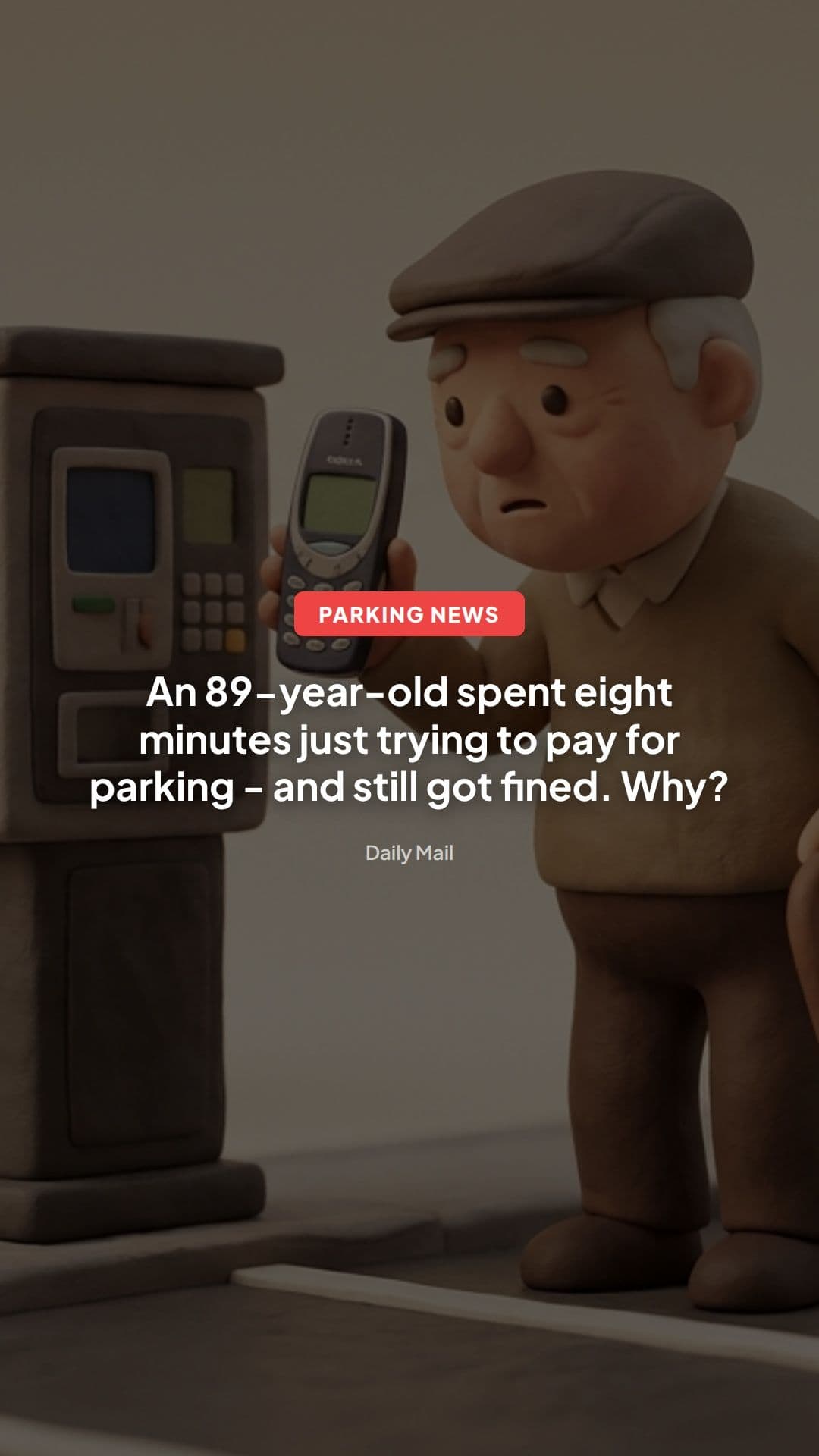
Picture this: you pull into a car park, plan to pop in for a few minutes, and find there is no ticket machine, no attendant, and no way to pay with the coins in your pocket. The only option is a smartphone app you have never heard of, and your phone is a battered Nokia that has faithfully made calls and sent texts for two decades but has never downloaded anything in its life. That is exactly the situation an 89-year-old driver found himself in at a car park in Haverhill, Suffolk, and it ended with him receiving a parking fine after spending eight minutes trying, and failing, to pay.
It sounds like a minor local story. In reality, it is a snapshot of a much bigger problem playing out in car parks across the UK.
What Happened in Haverhill
According to the report, the driver arrived at the car park expecting to pay in the usual way, with cash. Instead, he discovered that cash payment simply was not available. The car park operator required drivers to pay via a smartphone app. He does not own a smartphone. His phone, reportedly around 20 years old, is a basic Nokia handset built for calls and texts, not for downloading apps, entering card details, or navigating a payment portal.
He spent eight minutes trying to find a way to pay before giving up and driving away. Shortly afterwards, he was hit with a parking fine, seemingly for failing to pay for his stay, despite the fact that he had genuinely attempted to do so and left the car park once it became clear he could not.
For anyone who has ever fumbled with a temperamental parking app while a queue forms behind them, the frustration is instantly recognisable. For an 89-year-old with no realistic means of using that app at all, the situation was effectively impossible from the moment he arrived.
Why This Story Matters Beyond One Fine
This case matters because it is not really about one elderly driver or one car park in Suffolk. It is about a rapid, largely unregulated shift away from cash and toward app-only payment systems in car parks up and down the country.
Councils and private operators have increasingly moved to cashless systems, citing lower costs, reduced vandalism and theft of coins, and easier enforcement. From a business perspective, the logic is understandable. From the perspective of a driver who does not own a smartphone, cannot get a signal, has a flat battery, or simply cannot download and register for an app in the few minutes before a warden or camera logs their arrival, it can turn a routine errand into a legal headache.
Elderly drivers are far from the only group affected. Digital exclusion touches disabled drivers, those in rural areas with poor mobile coverage, and simply anyone whose phone dies at the wrong moment. But older drivers are disproportionately likely to own basic handsets or no smartphone at all, and are often the least comfortable creating app accounts and inputting card details under time pressure in a car park.
There is also a fairness question at the heart of this. A parking fine is, in essence, a penalty for breaking the terms of a contract (in a private car park) or a traffic regulation (in a council-run one). But if a driver genuinely cannot access the only payment method on offer, through no fault of their own, is it reasonable to penalise them for failing to pay?
The Legal Angle: What the Rules Actually Say
The legal position depends heavily on whether the car park in question is council-operated or run by a private company, since different frameworks apply.
If it is a council car park, enforcement usually falls under the Traffic Management Act 2004, and the local authority has a duty to operate a fair and transparent enforcement regime. Councils are expected to provide reasonable means of payment and to consider genuine mitigating circumstances when a Penalty Charge Notice is challenged.
If it is a privately operated car park, the relevant framework is the Protection of Freeholders and Occupiers Act, more commonly discussed alongside the Protection of Freehold and Leasehold in parking contexts, but in practice the key legislation is the Protection of Freeholders and Occupiers rules under the Protection of Freeholders and Occupiers Act... actually the operative law here is contract law combined with the Protection of Freeholders and Occupiers of Land Act. To keep it simple: private parking charges are governed by contract law and the Protection of Freeholders (Occupiers) provisions found in the Protection of Freeholders and Occupiers Act, alongside the Protection of Freeholders and Occupiers of Land (POFA) 2012, which sets out how keeper liability works when a driver cannot be identified.
Crucially, both the British Parking Association (BPA) and the International Parking Community (IPC), the two main trade bodies that private operators must belong to, require members to follow codes of practice. Those codes generally expect operators to make payment "reasonably accessible" and to offer more than one payment channel where practical. An app-only system with no cash, card machine, or phone-line alternative sits awkwardly against that expectation, particularly where a driver can demonstrate they tried in good faith to pay and could not.
There is also a broader consumer protection angle. Under general consumer law, a business offering a service, including parking, is expected to deal fairly with customers. A driver who attempted to pay, was thwarted entirely by the payment system, and left the car park promptly once they realised payment was impossible, has a reasonably strong argument that no debt was ever properly incurred, because they derived no benefit from overstaying and made every reasonable effort to comply.
None of this guarantees success in every case. Outcomes depend heavily on the specific signage, the operator's own terms, and the evidence a driver can produce. This is general information, not a guarantee of how any individual appeal will be decided, and anyone facing a similar fine should seek proper advice on their own circumstances.
What Drivers Should Know and Do
If you find yourself unable to pay because of a cashless-only system, a few sensible habits can make a real difference if a fine follows:
- Note the time you arrived and the time you left. A short window between arrival and departure, especially if it closely matches the time spent trying to pay, is strong evidence you did not benefit from free parking.
- Take photographs of the signage, particularly anything showing (or failing to show) the payment methods available, and the absence of a cash option or ticket machine.
- Try every available method before giving up, and keep a record. Screenshots of app error messages, screenshots of "no signal" indicators, or a note of a failed download attempt can all support a later challenge.
- Leave promptly once it is clear payment is not possible. Staying and using the space without payment weakens your position considerably.
- Challenge the fine formally, rather than ignoring it. Ignoring a PCN, whether council or private, rarely makes it go away and can increase costs. Setting out clearly what happened, when, and why payment was genuinely not possible gives the operator or council the chance to use discretion.
Drivers who are unsure how to structure that challenge may find it useful to look at guidance on writing an informal appeal, or the more detailed process for formal representations against a council-issued penalty charge notice, both of which explain what evidence tends to carry weight.
It is also worth checking, before you even set off, whether a car park has moved to app-only or cashless payment. Council and retailer websites increasingly list payment methods for individual sites, and a quick check before a hospital appointment, shopping trip, or visit to an unfamiliar town can save a great deal of stress.
Looking Ahead
Cases like this are likely to keep surfacing as more car parks abandon coin machines and ticket booths in favour of apps and contactless-only payment. There is a growing push, from consumer groups and some politicians, for operators to retain at least one non-digital payment option, precisely because of stories like the one from Haverhill.
There is also movement toward a more standardised approach to parking payment nationally, which could eventually reduce the confusing patchwork of different apps that drivers currently have to navigate from one car park to the next. Until that materialises fully, however, the practical reality is that drivers, especially those less comfortable with smartphones, need to plan ahead, keep evidence, and know their right to challenge a fine when the payment system itself is the thing that failed them, not their willingness to pay.
An 89-year-old man trying to pay for eight minutes of parking and ending up with a fine is not just a quirky headline. It is a warning sign about how quickly convenience for some can become exclusion for others, and a reminder that the burden of proving genuine intent to pay increasingly falls on the driver, not the machine.
Written by
The Parking Ticket Pal Editorial Team
Source-checked parking guidance
Ready to Challenge Your Ticket?
Let our AI analyse your PCN and generate a professional appeal letter in minutes.
Start Free Appeal