New Road Safety Measures: What UK Drivers Need to Know
Proposed UK road safety measures could lower drink-drive limits, add eyesight checks and raise penalties. See how the changes may affect motorists nationwide.

Hannah MacLeod
24 July 2026
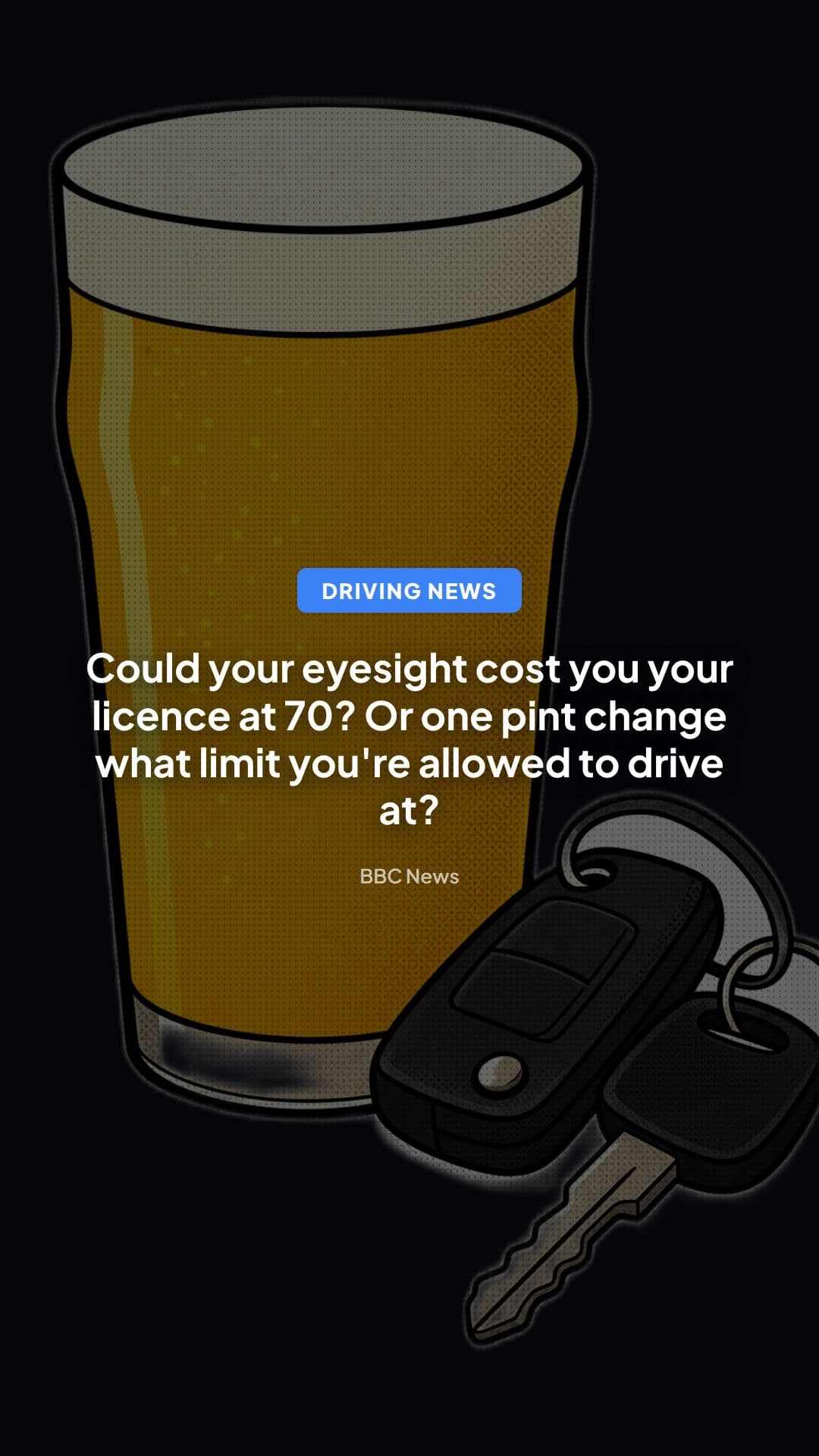
How the New Road Safety Measures Could Affect You
Picture this: you're driving home after a couple of glasses of wine at a friend's dinner party, confident you're under the limit. Under a proposed shake-up of UK road safety rules, that confidence might no longer be justified. A new package of measures reportedly being considered by ministers could tighten drink-drive limits, introduce eyesight checks for older drivers, toughen penalties for dangerous driving, and crack down on everything from unbuckled seatbelts to cloned number plates.
It's a broad and, in places, genuinely significant set of proposals. Here's what's actually on the table, why it matters, and what it could mean for your licence, your wallet and your daily driving habits.
What Happened
According to reporting from BBC News, the government is considering a package of road safety reforms that would touch almost every type of driver in the country. The headline elements include:
- Tighter drink-driving limits, potentially bringing England and Wales closer to the stricter limit already in force in Scotland
- Eyesight checks for older drivers, addressing long-standing concerns about vision deteriorating unnoticed as motorists age
- Tougher penalties for unsafe driving, likely covering dangerous and careless driving offences
- Changes to learner-driver rules, which could affect how people progress from learning to full licence status
- Stricter seatbelt enforcement, targeting an offence that remains stubbornly common despite decades of awareness campaigns
- Action against illegal number plates, including cloned or non-compliant plates used to dodge cameras and enforcement
At this stage, these are proposals rather than confirmed law. But the fact they're being discussed together, as a package, suggests ministers see road safety as an area ripe for a coordinated overhaul rather than piecemeal tweaks.
Why It Matters
Britain has long prided itself on having some of the safest roads in the world, but that record has been under pressure. Road deaths and serious injuries haven't fallen as consistently in recent years as safety campaigners would like, and enforcement gaps have widened in several areas, from underused breath tests to patchy seatbelt checks.
Each element of this package tackles a different long-standing frustration for road safety advocates.
Drink-driving limits are a particularly emotive issue. England and Wales currently allow a blood alcohol limit of 80mg per 100ml of blood, one of the most lenient limits in Europe. Scotland reduced its limit to 50mg back in 2014, bringing it in line with much of the continent. Campaigners have argued for years that England and Wales should follow suit, and this proposal suggests that argument may finally be gaining traction in Westminster.
Eyesight checks for older drivers address an issue that has quietly worried road safety experts for years. Currently, the DVLA relies largely on self-declaration when it comes to vision problems, drivers are trusted to tell the authorities if their eyesight no longer meets the required standard. There is no routine, mandatory eye test built into licence renewals for older drivers, even though vision naturally deteriorates with age. Introducing formal checks would mark a significant departure from this honesty-based system, and it's likely to prove one of the more contentious proposals given the potential impact on older drivers' independence and mobility.
Seatbelt enforcement might seem like old ground, but non-compliance remains a persistent problem, particularly among certain groups of drivers and passengers. Given that seatbelts remain one of the single most effective ways to prevent fatalities in a crash, tightening enforcement here is a relatively low-cost, high-impact move.
Illegal number plates tie into a wider and increasingly urgent problem: as automatic number plate recognition (ANPR) cameras play a bigger role in everything from speeding enforcement to congestion charging and low emission zones, cloned or doctored plates have become a growing route for drivers to dodge fines and prosecution altogether. If you want a sense of how disruptive this can be for innocent motorists, it's worth reading about drivers who've received PCNs and fines because their number plate was cloned by someone else entirely.
The Legal Angle
Several of these proposals would require primary legislation or amendments to existing regulations, so it's worth understanding the current legal landscape before assuming changes are imminent.
Drink-driving is currently governed by the Road Traffic Act 1988, which sets the prescribed alcohol limits and associated penalties, including disqualification, fines and potential imprisonment for the most serious offences. Any reduction in the legal limit for England and Wales would require secondary legislation, and past attempts to align with Scotland's lower limit have stalled amid debate over enforcement practicality and the impact on rural pub trade. If reintroduced now, expect renewed lobbying from both road safety groups and the hospitality sector.
Eyesight standards are technically already a legal requirement. Under the Road Traffic Act, drivers must be able to read a number plate from 20 metres away, and failing to meet the minimum eyesight standard while driving is itself an offence. The proposed change wouldn't create a new standard, but would shift enforcement from self-reporting to a formal testing regime, likely tied to licence renewal at a certain age.
Careless and dangerous driving offences are set out under the Road Traffic Act 1988 too, with maximum penalties already increased in recent years, including life sentences for causing death by dangerous driving. Any further toughening would likely focus on sentencing guidelines, minimum bans, or expanding what counts as an aggravating factor.
Cloned and illegal plates raise a separate legal issue entirely. Displaying a false or altered registration plate is already an offence under the Vehicle Excise and Registration Act 1994, but proving who was actually driving when a cloned plate is involved can be a nightmare for both enforcement authorities and innocent drivers wrongly issued penalty notices. If you receive a fine for an offence you didn't commit because your plate has been copied, there is a formal process for challenging it, and it's not something to ignore, unpaid PCNs and fines can escalate quickly regardless of who was actually responsible.
What Drivers Should Know
Even though these measures are still proposals rather than confirmed law, there are sensible steps drivers can take now.
- Don't assume you know your limit. If drink-drive limits do tighten, the margin for error shrinks considerably. The safest approach, regardless of what the law eventually says, remains not drinking at all before driving.
- Get your eyes tested regularly, ideally every two years as opticians already recommend, rather than waiting for a mandatory scheme to force the issue. Driving with uncorrected vision problems is already illegal and invalidates your insurance if you're involved in a collision.
- Check your seatbelt habits, including for rear passengers and children, since enforcement crackdowns often start with high-visibility campaigns before penalties increase.
- Keep an eye on learner driver rule changes if you or a family member are currently learning to drive, as reforms could affect minimum learning periods, test structures, or newly qualified driver restrictions. Younger, newly qualified drivers are statistically overrepresented in serious collisions, so any changes here are likely to be framed around reducing that risk.
- Report suspected cloned plates promptly if you receive a fine or PCN for a location or time you can prove you weren't present, gathering evidence such as fuel receipts, dashcam footage or work records early makes any later appeal considerably easier.
Looking Ahead
None of these measures have been confirmed as law yet, and the usual process of consultation, parliamentary debate and secondary legislation means any real change is likely to take months, if not years, to filter through. Governments have floated drink-drive limit reductions before without ultimately following through, so scepticism about the pace of reform is understandable.
That said, the fact these measures are being considered together, as a coordinated package rather than isolated announcements, suggests a genuine appetite in Whitehall to tackle road safety more holistically. For drivers, the sensible approach is to treat this as an early warning rather than settled law. Whatever the final shape of these reforms, the underlying message is consistent: enforcement around drink-driving, vision standards, seatbelts and vehicle identification is likely to tighten, not loosen, in the coming years.
Keep an eye on official channels such as GOV.UK and the DVLA for confirmed changes, and if you're ever unsure how a specific rule applies to your situation, particularly around penalties, licence points or eyesight requirements, it's worth seeking guidance from a qualified motoring solicitor rather than relying on assumptions. The cost of getting it wrong, in fines, points or worse, is considerably higher than the cost of checking first.
Written by
Hannah MacLeod
Traffic Law Specialist
Ready to Challenge Your Ticket?
Let our AI analyse your PCN and generate a professional appeal letter in minutes.
Start Free Appeal