
New Private Parking Rights: When Charges Must Be Cancelled
Proposed private parking rules could force firms to cancel charges after breakdowns, medical emergencies and faulty payment machines. Find out what could change

The Parking Ticket Pal Editorial Team
9 November 2026
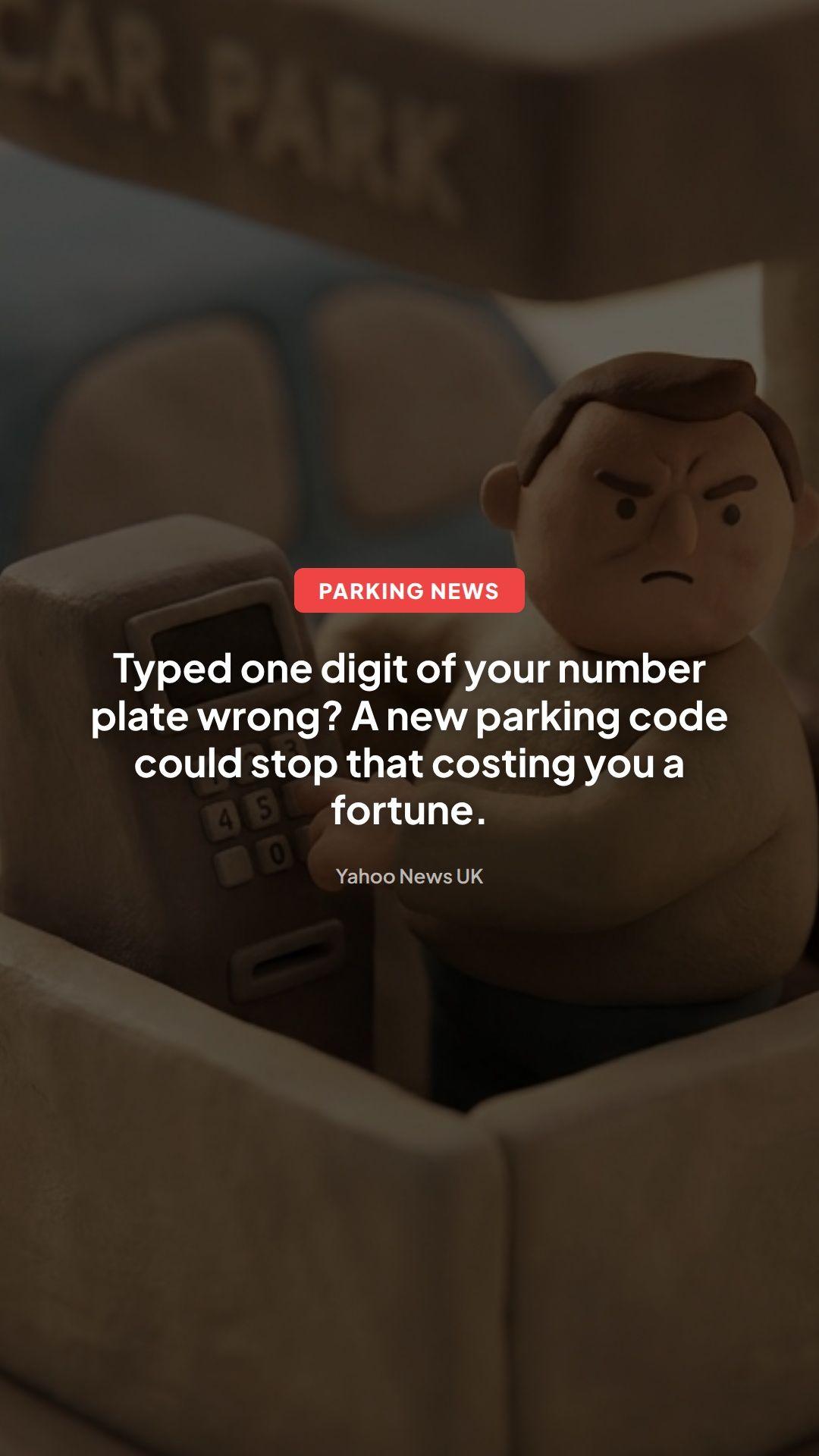
Drivers set for new parking rights: what a "cancel in emergencies" rule could really mean
Picture this. Your car dies in a supermarket car park, the recovery truck takes two hours, and a camera logs every minute. Or you rush a child to A&E, abandon the car in the first space you find, and come home to a parking charge. Or the pay machine swallows your coins, shows an error and keeps your money, but the signs still say you must pay.
These are the exact situations behind a recent Yahoo News UK report on a proposed private parking code. According to the report, an MP is backing a crackdown on unfair charges, and the code would require operators to cancel charges in specified circumstances, including medical emergencies, vehicle breakdowns and faulty payment machines.
That is a significant shift in thinking. This post looks at what the proposal could change, how it fits with the law as it stands, and what drivers can do now.
What the story says, and what it does not
The source summary gives us three named circumstances where cancellation would be required:
- Medical emergencies
- Vehicle breakdowns
- Faulty payment machines
The word that matters is required. At the moment, many operators have discretion in these cases. Some cancel generously. Others make the driver fight through an appeal, then a second appeal, and hope they give up.
A code that makes cancellation mandatory would flip the default. Instead of begging for mercy, the driver would be pointing to a rule.
Two cautions are worth stating clearly. First, this is a proposal. The wording of the final code, how "medical emergency" is defined and what evidence operators can demand are all details that will matter enormously. Second, nothing here changes your position today. Until a code is in force and operators are bound by it, the current rules apply.
Why a code, and why now?
Private parking enforcement in England, Scotland and Wales has long operated under a patchwork. Operators join an accredited trade association, either the British Parking Association (BPA) or the International Parking Community (IPC), and agree to follow that body's code of practice. Those codes differ, and the sanction for breaching them is ultimately losing access to DVLA keeper data.
Parliament tried to tidy this up with the Parking (Code of Practice) Act 2019, which requires the government to produce a single statutory code for private parking operators. That code has been a long time coming, and the proposals now in circulation are the latest chapter. If you want the bigger picture on where the code stands, our earlier piece on private parking code driver protections covers the ground. For the difference between the two trade bodies, see BPA vs IPC membership.
The reason these particular carve-outs attract attention is that they represent the sort of case where most people instinctively feel a charge is unfair. Nobody parks badly on purpose when an ambulance is needed or when a machine has taken their money and given nothing back.
The legal backdrop: why operators can charge at all
To understand how big a change mandatory cancellation would be, it helps to know why private charges are enforceable in the first place.
A contract, not a fine
A private parking charge is not a fine. It is an alleged breach of contract (or sometimes a claim in trespass) between the landowner's agent and the driver. The terms are on the signs. By parking, the driver is said to accept them.
The Beavis decision
In ParkingEye v Beavis [2015] UKSC 67, the Supreme Court held that a £85 charge for overstaying a free two-hour limit was not an unenforceable penalty. The court reasoned that the operator and landowner had a legitimate interest in managing the car park, and that the charge was not out of proportion to that interest. Crucially, the signage there was prominent and clear.
Beavis did not say every parking charge is valid. It said that a properly signed charge at a sensible level for a genuine breach can be enforced. It left plenty of room for challenges based on poor signage, wrong facts or unfair terms.
Keeper liability
Where the operator does not know who was driving, they can pursue the registered keeper only if they meet the conditions in Schedule 4 of the Protection of Freedoms Act 2012. These include strict rules on what the notice to keeper must say and when it must arrive. Operators that miss those requirements cannot rely on keeper liability, which is why many charges collapse on technicalities.
Consumer law
The Consumer Rights Act 2015 requires terms to be fair and transparent. A term that attempts to penalise a driver for something outside their control, such as a broken machine, is the kind of thing a court or adjudicator could treat as unfair. A statutory code could make that principle explicit and consistent rather than leaving each driver to argue it case by case.
How the three circumstances work today
Even without a mandatory rule, these scenarios are not hopeless for drivers. Here is how they are generally approached.
Faulty payment machines
If you tried to pay and could not because the machine was broken, the argument is that you did not breach the contract, or that the operator prevented you from complying. Operators often respond that you should have used an alternative, such as a payment app or phone line, if one was advertised.
What tends to matter:
- Whether there was a clear alternative method of payment
- Whether you can show you attempted to pay (photos of the error message, bank records of declined or failed transactions)
- Whether the operator has any record of the machine being out of order
Our guide to parking apps and broken meters goes deeper on this, and the piece on proving payment when an app goes wrong is useful if the fault was digital rather than mechanical.
Vehicle breakdowns
A genuine breakdown is not a choice to park. Appeals tend to succeed best where the driver can show a breakdown that was sudden and unavoidable, such as a recovery job number, a mechanic's invoice, or breakdown service records with timestamps. Operators tend to be sceptical where the car was driven away afterwards under its own power with no explanation.
Medical emergencies
These are often the most distressing cases. Adjudicators have in the past been sympathetic where evidence is strong, though outcomes depend on the facts and on whether the operator exercised discretion. We have covered related situations in a £120 charge overturned after a medical stop and a £100 charge following a vet emergency. Those are individual stories, not guarantees, but they show the type of evidence that gets attention.
The questions the code will have to answer
Rules that sound simple often become complicated in the drafting. A few issues are worth watching:
- Evidence. What proof can operators ask for? A hospital letter is easy for some drivers but not for those who took a relative to A&E and were never admitted. Too rigid a standard defeats the purpose.
- Definitions. Does "breakdown" include running out of fuel? Does "medical emergency" cover an emergency involving a pet, or a chronic condition flaring up?
- Timing. Must the driver raise the issue within a particular period?
- Who decides. If an operator refuses, does the independent appeals service apply the same rule? A mandatory duty is only meaningful if it binds the appeals process as well.
- Machine faults. How does an operator prove a machine was working? Does a driver need to report the fault, and how quickly?
None of these has a settled answer in the headline, which is why the final text matters more than the announcement.
Practical takeaways for drivers
Whatever happens with the code, good habits help now.
If a machine fails
- Photograph the machine, the error message and the signs, including any alternative payment instructions.
- Try the alternative, such as an app or phone payment, and keep the receipt.
- Note the time, the location and the operator's name.
If your car breaks down
- Keep your breakdown reference, the recovery operator's details and any garage paperwork.
- Tell the operator promptly if there is a contact method on the signs.
If there is a medical emergency
- Keep proof such as a hospital letter, appointment record or ambulance reference, if you can do so without adding to the stress of the moment.
- Write down the timeline while it is fresh.
For any charge
- Do not ignore letters. Deadlines for appeals and responses matter, and silence can lead to escalation.
- Check whether the notice meets the technical requirements before assuming you must pay.
- Use the operator's appeal first, and if refused, the independent appeals route attached to their trade body. Our POPLA step-by-step guide explains how that works for operators in the BPA scheme.
- Never be rushed by debt collection letters. They are often just a pressure tactic, though serious cases deserve proper advice.
This is general information, not legal advice. If you face a county court claim, or the sums involved are significant, consider speaking to Citizens Advice or a qualified solicitor.
Looking ahead
If the proposal becomes binding, its biggest effect may be cultural rather than legal. Operators who now treat each emergency as an invitation to negotiate would have to build a cancellation process into their systems. Drivers, in turn, would have a clear script: this is a listed circumstance, here is my evidence, please cancel.
There is a counterargument that operators will make: that mandatory cancellation invites abuse, and that landowners need to deter people who treat "emergency" as a loophole. Expect that debate to shape the final text, and expect the evidence rules to be where the real battle is fought.
For now, treat the story as a signal of direction rather than a change of rights. The pressure on the private parking industry to act more fairly is continuing, and the three scenarios named in the report are ones where most drivers feel the system should already bend. Until the code is in force, your best protection is the same as ever: keep evidence, meet deadlines and challenge a charge when the facts are on your side.
Source: Yahoo News UK report, "Drivers set for new parking rights as MP backs crackdown on unfair charges".
Written by
The Parking Ticket Pal Editorial Team
Source-checked parking guidance
Ready to Challenge Your Ticket?
Let our AI analyse your PCN and generate a professional appeal letter in minutes.
Start Free Appeal