New parking rules could disadvantage older UK drivers
Campaigners warn the National Parking Platform digital shift could disadvantage over-65s due to weak signal, poor signage and low smartphone use.

Yuki Tanaka
13 April 2026
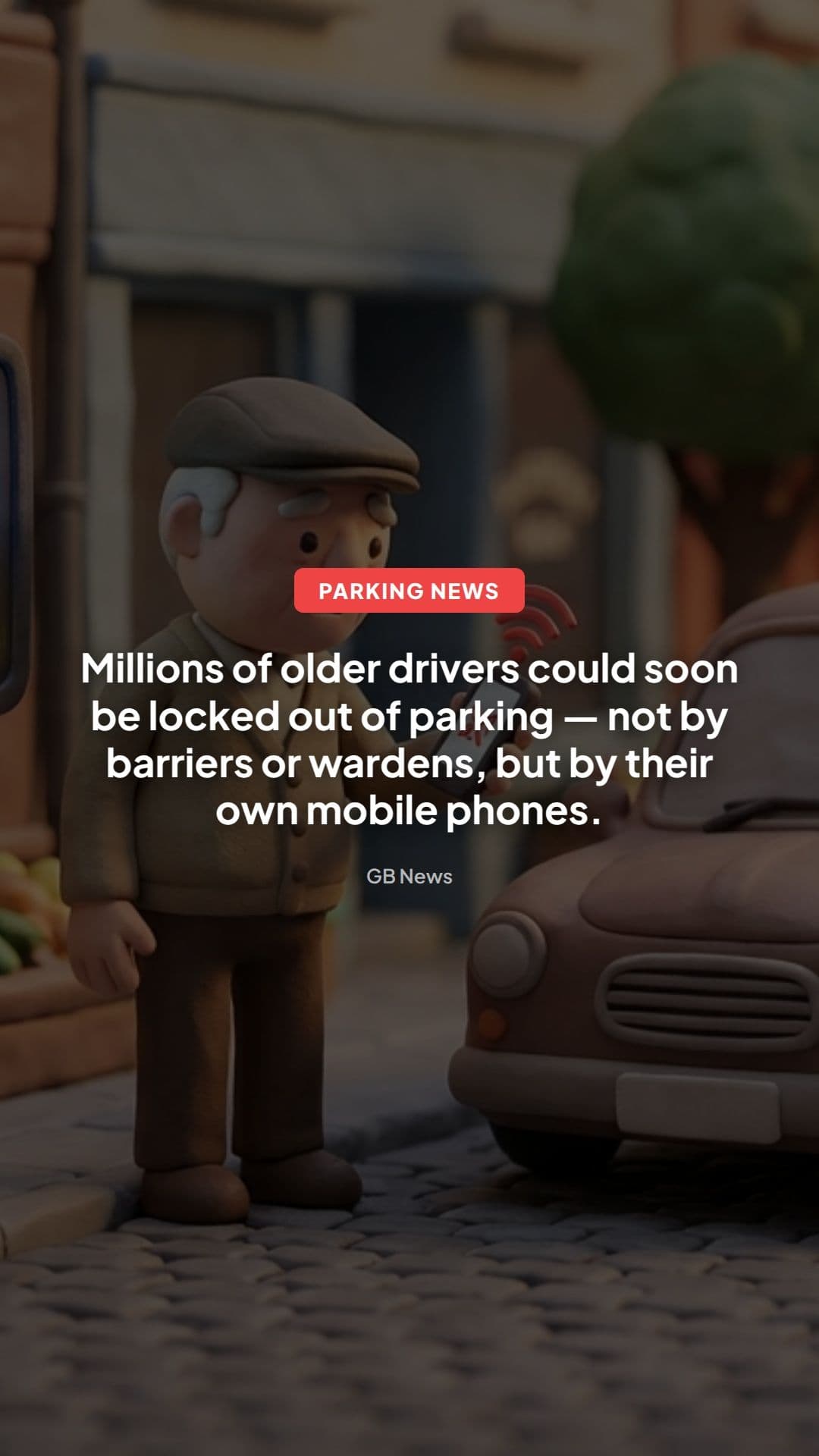
Are Elderly Drivers Being Left Behind by the Digital Parking Revolution?
The National Parking Platform promises to modernise how Britain parks — but for millions of older drivers, it risks creating a two-tier system where age determines access.
Imagine pulling into a car park after a long drive, only to find there's no pay-and-display machine, no attendant, and the only way to pay is through an app you've never heard of — on a phone that barely gets a signal. For younger, tech-savvy drivers, this might be a minor inconvenience. For a significant proportion of the UK's older motorists, it could mean the difference between parking legally and inadvertently landing a fine they had no realistic way of avoiding.
This is the reality that campaigners are now raising serious concerns about as the National Parking Platform (NPP) continues its rollout across England. According to reporting by GB News, older drivers — particularly those aged 65 and over — risk being systematically disadvantaged by a shift towards digital-first parking that doesn't adequately account for the practical realities of their lives. It's a story about technology, fairness, and whether the people designing our parking infrastructure have thought carefully enough about who actually uses it.
What Is the National Parking Platform — and Why Does It Matter?
The National Parking Platform is a government-backed initiative designed to create a single, unified digital system connecting parking operators, local councils, and payment providers across England. The ambition is admirable: rather than juggling multiple apps, payment methods, and accounts, drivers would theoretically access a standardised system that works across different car parks and operators.
The Department for Transport has been pushing the NPP forward as part of a broader modernisation agenda, with councils and private operators encouraged to align with the platform. Proponents argue it will reduce confusion, cut administrative costs, and make parking more efficient for the majority of motorists.
But here's where the problem begins. The NPP's architecture is fundamentally digital. It relies on smartphones, mobile data connectivity, and a degree of digital literacy that — while increasingly common — is far from universal. And the group most likely to be left out? Britain's older drivers.
Why Older Drivers Are Particularly Vulnerable
The numbers tell a stark story. According to Ofcom's 2023 Communications Market Report, around 35% of people aged 65–74 do not own a smartphone, and that figure rises significantly among those aged 75 and over. Even among older smartphone owners, comfort with downloading new apps, creating accounts, and navigating unfamiliar interfaces varies enormously.
Then there's the connectivity issue. Mobile signal in the UK remains patchy — particularly in rural areas, market towns, and even parts of major cities. If a driver cannot load a payment app because they have no signal, they are effectively unable to pay, through no fault of their own. Yet under many current enforcement regimes, the resulting parking contravention would still be valid.
Campaigners have also highlighted inadequate signage as a compounding problem. If a car park transitions to app-only or digital-first payment without clearly communicating alternative options, older drivers may not even realise they have a problem until a Penalty Charge Notice or private parking charge lands on their doormat days later.
This isn't a niche concern. There are approximately 12.7 million people aged 65 and over in the UK, and a substantial proportion of them drive regularly. Dismissing their needs as a fringe issue would be both statistically wrong and morally troubling.
The Legal Landscape: Rights, Obligations, and Gaps
This is where things get genuinely interesting from a legal standpoint — because the digital parking shift sits in a surprisingly murky area of law.
For council-operated (on-street and off-street) parking, local authorities are bound by the Traffic Management Act 2004 and associated regulations, which require that signage and payment methods be clearly communicated. The British Parking Association (BPA) and the International Parking Community (IPC) — the two main trade bodies governing private parking operators — both publish codes of practice that technically require operators to offer reasonable payment alternatives.
Crucially, under the Equality Act 2010, public bodies and service providers have a legal duty to make reasonable adjustments for people with protected characteristics. Age is a protected characteristic. If a parking system is designed in a way that disproportionately disadvantages older people without adequate mitigation, there is at least a credible argument that it falls foul of equality obligations — particularly where councils are involved.
This hasn't yet been tested in a landmark case specifically relating to digital parking exclusion, but the legal framework is there. A well-argued appeal to an Independent Appeals Service — or, for council-issued PCNs, to the Traffic Penalty Tribunal (outside London) or London Tribunals — could potentially succeed on grounds of inadequate provision of alternatives, particularly if the driver can demonstrate they made reasonable efforts to pay and were thwarted by connectivity or accessibility failures.
The Consumer Rights Act 2015 also has relevance for private parking operators: if a service is not reasonably accessible to the consumer, the enforceability of charges arising from that inaccessibility becomes questionable.
What Drivers Should Know: Practical Steps to Protect Yourself
Whether you're an older driver, a family member helping a parent navigate these changes, or simply someone who wants to understand their rights, here's what you need to know right now:
Before you park:
- Always photograph the signage at the entrance and at the payment point before you leave your vehicle. This is critical evidence if you later need to appeal.
- Check whether the car park offers multiple payment methods. Legally compliant operators should provide alternatives to app-only payment — look for phone payment numbers (PayByPhone, RingGo, etc.) which can be used without a smartphone app.
- If you're in an area with poor signal, note this. Screenshots showing "No Signal" or "No Service" on your phone at the time of parking can be powerful appeal evidence.
If you receive a fine you believe was unavoidable:
- Appeal immediately — don't wait. For council PCNs, you typically have 28 days to make an informal representation (at the discounted rate). For private charges, you have 28 days to appeal to the operator before escalating to POPLA (for IPC members) or the IAS (for BPA members).
- Cite the specific barriers you faced: no signal, no alternative payment method offered, inadequate signage, or inability to use the required technology. Be specific and factual.
- Reference the Equality Act 2010 if age-related accessibility was a factor — this is particularly relevant for council-issued penalties.
- Keep all correspondence in writing and retain copies of everything.
Longer-term protection:
- Consider carrying a basic note in your vehicle documenting any attempts to pay, including the time, location, and reason payment was not possible. This contemporaneous record can be invaluable in appeals.
- Familiarise yourself with phone-based payment options that don't require a smartphone app — many services still allow payment via a standard mobile call.
Looking Ahead: A System That Must Work for Everyone
The NPP isn't going away. Digital integration in parking is, broadly speaking, a direction of travel that will continue regardless of the concerns raised here. But the manner in which it is implemented matters enormously — and right now, there are legitimate reasons to worry that the rollout is prioritising efficiency over equity.
The government and local authorities need to do several things urgently. First, mandate that alternative payment methods remain available wherever digital-first systems are deployed — not as a temporary concession, but as a permanent requirement. Second, improve signage standards so that drivers of all ages and abilities clearly understand their options before committing to a parking space. Third, audit the NPP's rollout through an equality lens, specifically examining whether older and digitally excluded drivers are experiencing disproportionate enforcement.
Industry bodies, too, have a role to play. The BPA and IPC should update their codes of practice to explicitly address digital accessibility, with clear consequences for operators who fail to meet those standards.
The broader principle here is one that should be uncontroversial: a parking system that works for most people but systematically fails a large and identifiable group is not an acceptable system. Older drivers have paid road tax, fuel duty, and parking charges for decades. They deserve infrastructure that respects their needs — not one that treats digital fluency as a prerequisite for the basic act of leaving your car somewhere legally.
The digital revolution in parking can be a genuine improvement. But only if it brings everyone along for the ride.
Sources: GB News; Ofcom Communications Market Report 2023; Traffic Management Act 2004; Equality Act 2010; Consumer Rights Act 2015; BPA Code of Practice.
Written by
Yuki Tanaka
Urban Planning Researcher
Ready to Challenge Your Ticket?
Let our AI analyse your PCN and generate a professional appeal letter in minutes.
Start Free Appeal