
New Highway Code Guidance: What UK Drivers Need to Know
Labour could introduce new Highway Code guidance and road-safety campaigns. Discover what the changes may mean for UK drivers, cyclists and pedestrians.

The Parking Ticket Pal Editorial Team
25 September 2026
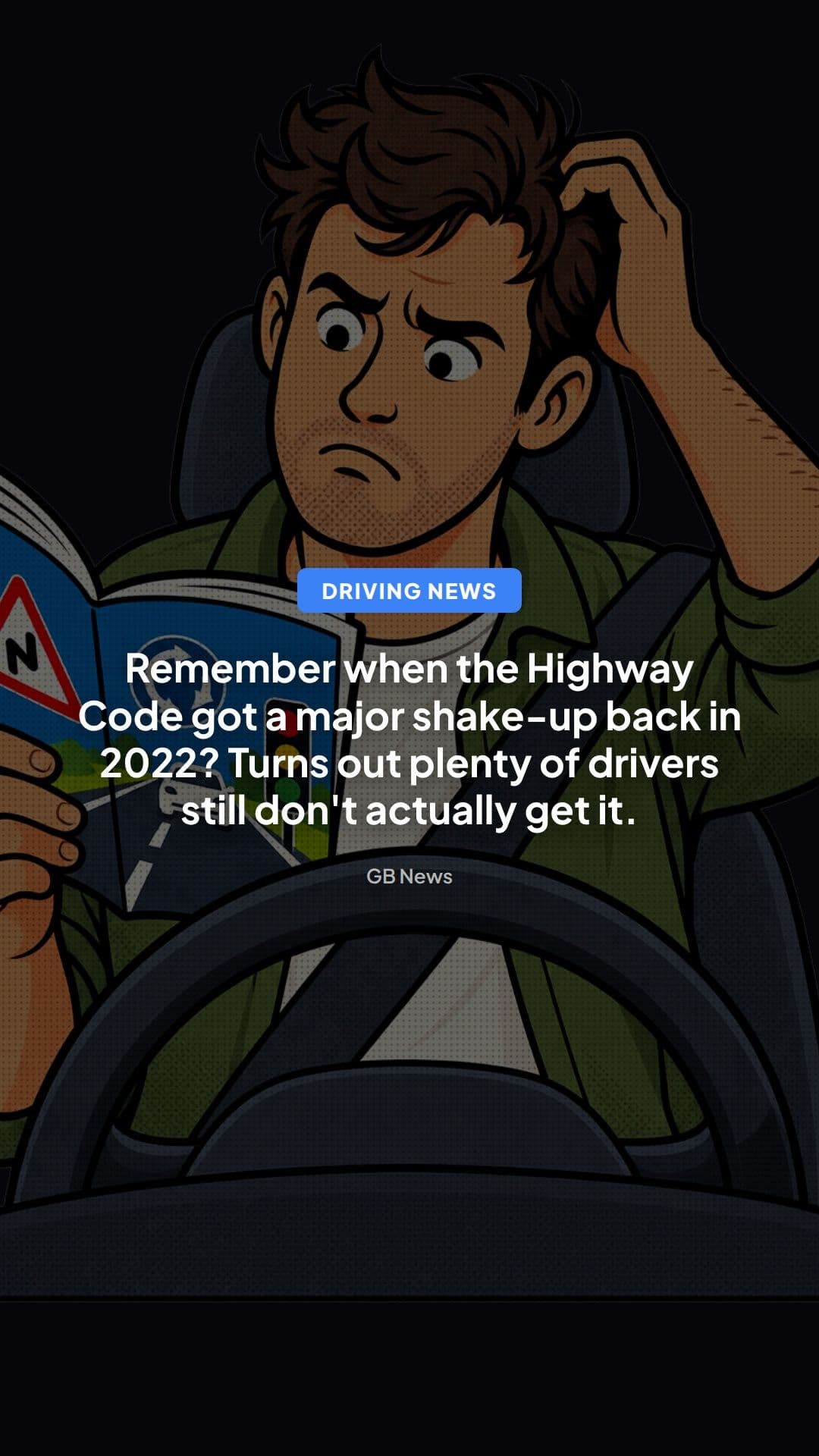
Highway Code Confusion: Why Labour's New Road Safety Push Could Finally Fix Three Years of Driver Bewilderment
Picture this: you're approaching a junction, and a cyclist is going straight ahead while you're turning left. Do you know, with total confidence, who has priority? If you hesitated even slightly, you're not alone, and that hesitation is precisely why the government is reportedly preparing a fresh wave of road safety guidance nearly three years after the biggest Highway Code shake-up in a generation left millions of drivers scratching their heads.
According to reports covered by GB News, Labour ministers are considering new guidance and education campaigns aimed at plugging the knowledge gap that's emerged since the 2022 changes. It's an admission, of sorts, that simply publishing new rules and hoping drivers absorb them by osmosis hasn't worked as well as anyone hoped.
What Actually Happened Back in 2022 (And Why It's Still Causing Problems)
To understand why this matters now, it's worth rewinding to January 2022, when the Department for Transport introduced sweeping amendments to the Highway Code. These weren't minor tweaks. They fundamentally rewrote the pecking order on Britain's roads through what became known as the "hierarchy of road users."
The core principle was simple in theory: those who can do the greatest harm to others bear the greatest responsibility to reduce risk. In practice, this meant several significant changes that many drivers still haven't fully absorbed:
Rule H2 introduced the idea that at junctions, drivers should give way to pedestrians who are crossing or waiting to cross a road into which you're turning, even if that pedestrian hasn't stepped onto the carriageway yet. This was a genuine departure from how many of us were taught to drive.
Rule H3 clarified that drivers should not cut across cyclists going straight ahead when turning into or out of a junction, or when changing lanes. Cyclists travelling in the same direction as you now effectively have priority over your turning manoeuvre.
The changes also refined guidance around the "Dutch Reach" (opening car doors with the opposite hand to check for cyclists), gave clearer priority to pedestrians on pavements when vehicles are crossing them (such as at entrances to car parks), and adjusted passing distances and speeds for overtaking cyclists and horse riders.
None of this was reflected in a change to the actual driving test syllabus at the time in any dramatic way, and crucially, the Highway Code itself is guidance rather than statute. But that doesn't mean it lacks legal teeth, which we'll come to shortly.
Why Ministers Are Worried Now
The reported concern driving this fresh push is straightforward: three years on, awareness levels among motorists remain patchy at best. This isn't entirely surprising when you consider how the changes were originally rolled out. There was no mass mailing to every licence holder, no compulsory refresher test, and no sustained national advertising campaign comparable to something like the THINK! drink-driving adverts of decades past.
Instead, awareness relied heavily on media coverage, driving instructors updating their teaching, and word of mouth. For the millions of drivers who passed their test years or decades before 2022, and who don't regularly consult the Highway Code, the changes may simply have never landed.
This matters enormously for road safety. If a driver genuinely doesn't know that a cyclist going straight on has priority when they're turning, the consequences of that knowledge gap aren't abstract. They can lead to close passes, collisions at junctions, and confrontations between road users who each believe they had the right of way.
There's also a broader pattern here worth noting: this wouldn't be the first time officials have flagged gaps in driver understanding of specific rule changes. It reflects a wider, ongoing challenge in UK road safety policy, namely that legislative or guidance changes are only as effective as the public's awareness of them.
The Legal Angle: Guidance, Not Law, But Not Toothless Either
Here's where things get interesting from a legal standpoint, and where a lot of driver confusion originates. The Highway Code is not, in itself, a piece of legislation. You cannot be prosecuted simply for breaching a Highway Code rule in isolation. However, that doesn't mean it's irrelevant in law.
Under the Road Traffic Act 1988, failure to observe a provision of the Highway Code can be used in evidence in any court proceedings to establish liability, whether that's a criminal prosecution for careless or dangerous driving, or a civil claim following a collision. In practice, this means that if you cause an incident by failing to give way to a pedestrian under Rule H2, or by cutting across a cyclist in breach of Rule H3, this can be cited to help establish that you were negligent or driving without due care and attention.
Insurers pay close attention to this too. Following a collision, insurance companies and their legal teams will often examine whether the Highway Code was followed, and a clear breach can significantly affect how liability, and therefore fault and premiums, is apportioned.
So while you won't receive a penalty notice purely for misunderstanding the hierarchy of road users, ignorance of these rules can absolutely come back to bite you if things go wrong on the road. This is a distinction many drivers still don't fully grasp, and it's precisely the kind of nuance that any new government education campaign would need to address clearly.
What Drivers Should Actually Know
Given the uncertainty around exactly what form this new guidance will take, the most sensible approach for UK motorists right now is to proactively close their own knowledge gaps rather than waiting for a government leaflet to arrive.
Revisit the current Highway Code rules directly. The full, current version is freely available on the GOV.UK website, and it takes considerably less time to skim the key changes than most people assume. Pay particular attention to rules H1 through H3, which set out the hierarchy of road users.
Understand that priority isn't the same as an automatic right of way. Even where the Code gives pedestrians or cyclists priority in a given scenario, safe driving still means being prepared to stop or give way if the situation demands it, regardless of who is technically "in the right."
Be aware this affects everyday driving decisions, not just rare scenarios. Left and right turns across pedestrians and cyclists happen dozens of times on an average commute. This isn't a rare edge case; it's a fundamental adjustment to how junctions should be approached.
Keep half an eye on official channels for updates. If new guidance or a public awareness campaign does materialise, it's likely to be published via GOV.UK and the DfT's official communications, rather than solely through news coverage. Bookmarking the official Highway Code page is a sensible, low-effort way to stay current.
Consider a refresher if you passed your test long ago. Many driving instructors offer short refresher lessons specifically covering the 2022 changes, which can be worthwhile if you've had your licence for many years and rarely think about formal road rules.
Looking Ahead
What's notable about this story is what it implicitly admits: that publishing new rules in the Highway Code, without a robust, sustained communication strategy behind them, leaves large numbers of drivers unaware of changes that directly affect their legal exposure and everyday safety.
If Labour does move forward with fresh guidance and education campaigns, the real test will be reach and repetition. A single announcement or a short-lived social media push is unlikely to shift deeply ingrained driving habits built up over years, or in many cases decades, behind the wheel. Sustained, visible campaigning, similar in scale to historic seatbelt or drink-driving messaging, would be needed to genuinely move the needle.
For now, the practical takeaway for drivers is simple: don't wait for the government to catch you up. The rules already exist, they already carry legal weight in the event of a collision, and the responsibility to know them sits with every licence holder today, not from whenever a new campaign eventually launches. Whether ministers deliver fresh guidance or not, brushing up on the current Highway Code remains one of the quickest, lowest-cost ways any driver can reduce their own risk on the road.
Written by
The Parking Ticket Pal Editorial Team
Source-checked parking guidance
Ready to Challenge Your Ticket?
Let our AI analyse your PCN and generate a professional appeal letter in minutes.
Start Free Appeal