New Forest Parking Charges Rise: What Drivers Will Pay
New Forest District Council parking charges are set to rise despite objections. Find out what this means for drivers, parking clocks and annual costs too.

Sarah Mitchell
26 July 2026
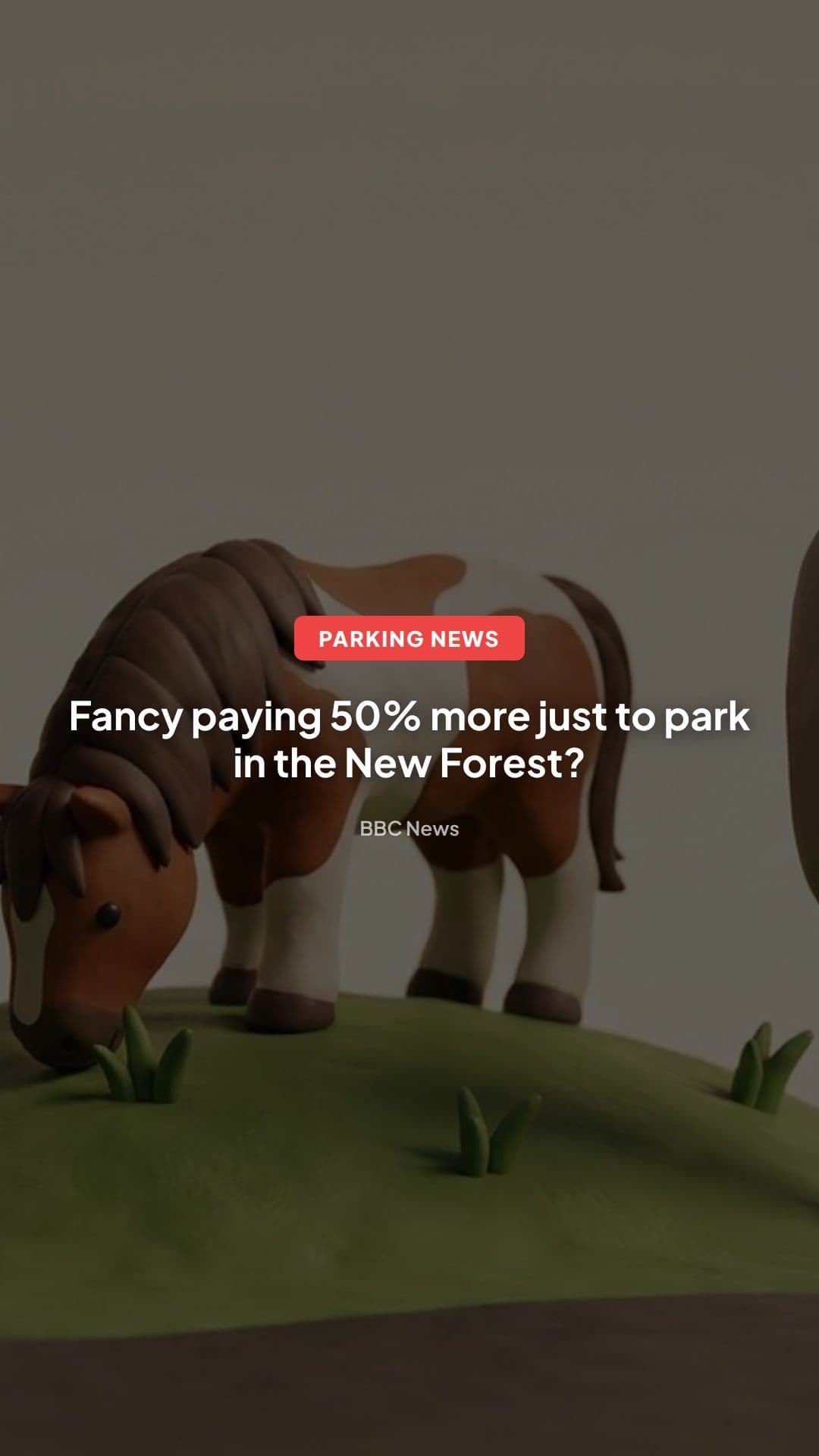
New Forest Parking Charges Set to Rise: What It Means for Visitors and Residents
Picture this: you've driven down to the New Forest for a weekend of pony-spotting and forest walks, only to find that popping your car in a National Park car park now costs noticeably more than it did last summer. For many drivers, that's about to become reality, as New Forest District Council presses ahead with plans to increase off-street parking charges and parking-clock fees, despite pushback from residents and visitors alike.
This isn't just a local story about a few pence on a ticket machine. It's part of a much bigger pattern playing out across England, where councils under financial pressure are turning to car parks as a reliable source of income, sometimes at the expense of public goodwill.
What Happened
According to BBC News, New Forest District Council has confirmed it will increase both off-street parking charges and the fees associated with parking clocks across the district. The council expects the changes to generate an extra £380,000 a year, a substantial sum for a local authority balancing budgets against rising costs and stretched services.
The decision has gone ahead despite opposition from those who use the car parks regularly, whether that's day-trippers visiting one of England's most popular National Parks, or locals who rely on convenient parking to access shops, services, and the coast. The New Forest is a huge draw for tourism, home to free-roaming ponies, ancient woodland, and miles of walking and cycling routes, so parking provision here isn't a minor administrative detail. It's central to how the whole area functions, both economically and practically.
While the BBC report doesn't detail every specific tariff change, the broad thrust is clear: parking in the New Forest is becoming more expensive, and the council has pushed the increase through in the face of public disagreement.
Why It Matters
This story fits into a pattern that's becoming very familiar to anyone following UK parking news. Local authorities across England are increasingly reliant on car parking income to plug gaps left by reduced central government funding and rising costs for statutory services such as adult social care and waste collection.
Off-street car parks, the ones owned and run directly by the council rather than private operators, are a particularly attractive target for this kind of revenue generation. Unlike Penalty Charge Notices issued for on-street contraventions, which are subject to strict rules about how surplus income can be used, off-street parking charges are more straightforward for councils to adjust. A change to a tariff board doesn't require the same regulatory process as, say, introducing a new on-street restriction.
For a district like New Forest, where tourism is a major economic driver, this creates a genuine tension. Charge too much, and you risk deterring visitors who might otherwise spend money in local cafes, pubs, and shops. Charge too little, and the council struggles to maintain the car parks, verges, and rural infrastructure that tourism itself puts under pressure. It's a difficult balancing act, and it's one many councils are getting wrong in the eyes of the people who actually use these facilities.
There's also a fairness question worth raising. Increases to parking-clock charges in particular tend to hit residents and regular local users hardest, people who might use a car park daily for work or errands, rather than the occasional visitor who pays once and moves on. When a council raises both off-street tariffs and clock charges together, it's effectively asking local residents to shoulder a good part of that £380,000 uplift, not just tourists.
The Legal Angle
It's worth understanding the legal framework that allows councils to do this, because it explains why opposition, however vocal, often doesn't stop a charge increase in its tracks.
Local authorities in England have powers under the Road Traffic Regulation Act 1984 to set and vary charges for both on-street and off-street parking within their area. Off-street car parks owned by the council are generally treated as a commercial or quasi-commercial operation, meaning the council has considerable discretion over pricing, much like a private landowner would.
This is different from on-street parking enforcement, where money raised from Penalty Charge Notices is technically ring-fenced. Under the relevant statutory guidance, surplus income from on-street parking enforcement must, in principle, be spent on transport-related purposes, such as highway maintenance or public transport improvements, not simply absorbed into general council coffers. Off-street car park charges don't carry quite the same restriction, which is part of why they're such an appealing lever for councils looking to raise revenue quickly.
Before a council can implement a change like this, it typically has to run a public consultation and, in many cases, publish a formal Traffic Regulation Order or equivalent notice for off-street charges, giving residents and stakeholders the opportunity to object. That process appears to have happened here, given the reported "opposition", but as is common across the country, consultation responses don't carry a legal veto. Councils are required to consider objections, not necessarily act on them.
For drivers who feel a charge increase is being pushed through unfairly or without proper process, the practical routes for challenge are limited. You can't "appeal" a general tariff rise the way you might challenge an individual Penalty Charge Notice. Instead, avenues tend to run through local democratic accountability: writing to councillors, engaging with scrutiny committees, or raising the issue through local media and public meetings.
What Drivers Should Know
If you're planning trips to the New Forest, or you live locally and rely on these car parks regularly, here's what's genuinely useful to keep in mind.
Check the tariff boards before you park. Charges can vary significantly between different car parks within the same district, and increases don't always apply uniformly across every site. What you paid last time might not reflect the current rate.
Keep your ticket or payment confirmation. Whether you're using a traditional pay-and-display machine, a parking clock, or a phone payment app, always retain proof of payment until you've left the area. If a machine has malfunctioned or a payment app has glitched, having evidence matters enormously if you end up disputing a charge.
Understand how parking clocks work. Parking clocks, sometimes called disc parking, typically require you to display a clock or disc showing your arrival time, allowing free or reduced-rate parking for a set period. Charges associated with these systems, whether that's the cost of the clock itself or penalties for non-display, are exactly the kind of "hidden" cost increase that can catch drivers out if they're used to an older, cheaper system.
Factor increased costs into regular journeys. If you commute or make frequent short trips into New Forest towns, it may be worth checking whether season tickets, permits, or resident discounts are available and whether the terms have changed alongside the general tariff increase.
Don't assume opposition means the charges won't happen. As frustrating as it is, public objection to a council decision doesn't automatically block implementation. If you want to challenge the principle of a charge increase, the more effective route is usually sustained engagement with your local councillors and formal consultation responses, rather than waiting to dispute it after the fact.
If you do receive a Penalty Charge Notice you believe is unfair, whether due to a broken machine, unclear signage, or a genuine payment issue, it's worth understanding the formal representations process before assuming you have no options.
Looking Ahead
The New Forest situation is unlikely to be an isolated case. With council budgets under sustained pressure nationwide, off-street parking charges and clock fees are proving to be one of the few revenue levers local authorities can pull relatively quickly, without requiring central government approval in the way that, say, council tax rises do.
For residents and visitors, the practical reality is that parking in popular tourist areas is likely to keep getting more expensive over the coming years, not less. Areas with significant seasonal footfall, National Parks, coastal towns, and historic market towns among them, are particularly exposed, because councils know that demand for parking there is relatively inelastic. People will still come to see the ponies and the ancient woodland, even if it costs a bit more to leave the car there while they do it.
The real question for drivers is less about whether these increases will happen (they generally do), and more about how transparent councils are in explaining where the money goes, and whether local voices genuinely shape how and where charges are applied. Councils that get this balance wrong risk real reputational damage in communities that depend heavily on tourism income, precisely the sort of income that a poorly handled parking charge increase could end up undermining.
For now, the sensible approach for anyone visiting or living in the New Forest is simple: check current charges before you travel, keep your payment evidence, and stay alert to further changes, because this almost certainly won't be the last increase the district sees.
Written by
Sarah Mitchell
Parking Rights Advocate
Ready to Challenge Your Ticket?
Let our AI analyse your PCN and generate a professional appeal letter in minutes.
Start Free Appeal