New coastal parking charges: will £5 fees deter visitors?
A seaside town has introduced promenade parking charges of £3.50 for two hours or £5 for four. We examine whether fees could cut footfall and trade.

Hannah MacLeod
18 May 2026
Are New Parking Charges Killing the Great British Seaside Day Out?
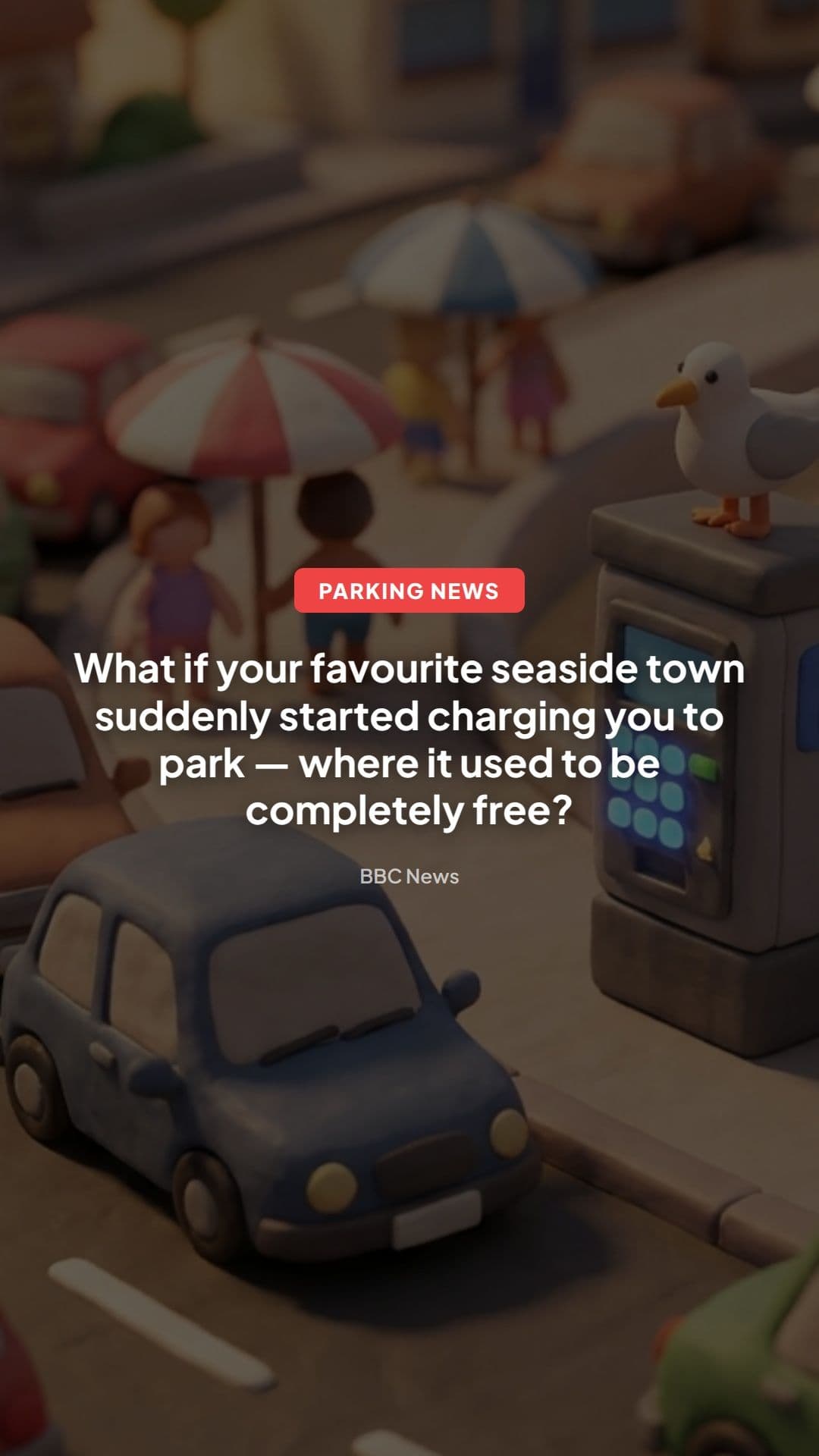
Picture this: it's a warm Saturday in July, the sun is actually doing something useful for once, and you've packed the car with towels, a cool box, and enough sun cream to coat a small army. You drive an hour to your favourite coastal town, turn onto the promenade — and find a pay-and-display machine where there used to be nothing but fresh sea air and free parking. Suddenly, the spontaneous seaside trip has a price tag attached.
This is the reality now facing visitors to one British coastal community, where newly-introduced parking charges on the promenade have sparked a fierce debate about tourism, local economies, and the rights of drivers to access public spaces. It's a story playing out in seaside towns across the UK, and it raises questions that go far deeper than the price of two hours by the beach.
What Happened
As reported by BBC News, a coastal town has introduced parking charges on its seafront promenade — an area that had previously been entirely free and unrestricted. Drivers now face charges of £3.50 for two hours or £5 for four hours if they want to park along the seafront.
Local councillors and business owners have raised the alarm, warning that the fees risk deterring the visitors upon whom many local shops, cafés, and attractions depend. The concern is straightforward: when somewhere has always been free, any charge — however modest it might seem in isolation — creates a psychological barrier. People weigh up the cost, consider alternatives, and sometimes simply don't bother making the trip at all.
This isn't a London car park or a busy city centre where parking charges have been the norm for decades. This is a seaside promenade, the kind of place that has long been associated with accessibility and the simple pleasure of a day out. The introduction of charges changes the character of the place, at least in the minds of potential visitors.
Why It Matters
The timing couldn't be more significant. The UK's coastal tourism economy has been under pressure from multiple directions: the cost-of-living crisis has squeezed household budgets, staycation enthusiasm has cooled slightly since the post-pandemic surge, and many seaside towns are still grappling with the long-term decline of traditional high streets.
Footfall is everything for coastal businesses. A visitor who parks for free and wanders along a promenade might pop into a café, buy an ice cream, browse a gift shop, and spend £30 or £40 without really thinking about it. That same visitor, faced with a parking charge upfront, begins the mental arithmetic differently. They're already "spending money" before they've arrived, and that changes behaviour.
Research consistently supports this concern. A 2019 study by the British Retail Consortium found that parking charges were among the top deterrents cited by shoppers choosing not to visit town centres. The British Parking Association has itself acknowledged that poorly implemented charging regimes can suppress economic activity in areas that depend on casual visitors.
There's also a social equity dimension that rarely gets discussed. Free parking at coastal areas has historically made seaside trips accessible to lower-income families who might not be able to afford the cumulative costs of a day out — fuel, food, entertainment, and now parking. When charges are introduced, those families are disproportionately affected. A family of four already spending £60 on a day trip doesn't experience a £5 parking fee the same way as a couple on comfortable incomes.
The Legal Angle
So what gives a local authority the power to introduce parking charges on a promenade in the first place? The answer lies primarily in the Road Traffic Regulation Act 1984, which grants local authorities wide-ranging powers to regulate parking on roads within their jurisdiction — including the ability to designate parking places and set charges for their use.
Crucially, councils are not required to hold a public referendum before introducing charges. However, they are required to follow a statutory Traffic Regulation Order (TRO) process, which includes:
- Formal public consultation — notices must be published in a local newspaper and displayed on-site
- A minimum 21-day consultation period during which objections can be submitted
- Consideration of all objections before the order is made final
- Publication of a notice of making once the order is confirmed
This process is important because it represents the primary opportunity for residents, businesses, and visitors to formally object. If the TRO process was not properly followed — for example, if consultation notices were inadequate or the objection period was shortened — the order itself could potentially be challenged.
Under the Traffic Management Act 2004, the revenue generated from parking charges and penalty charge notices must be ring-fenced. Councils cannot simply pocket the money; any surplus must be used for transport-related purposes, including road maintenance, public transport, and — significantly — further parking provision. This means that if the new charges generate significant income, there is at least a legal obligation to reinvest it in ways that benefit road users.
Drivers who receive a Penalty Charge Notice (PCN) for parking in the newly-charged area without paying should be aware that the standard 28-day window to pay at the discounted rate applies, along with the right to make an informal challenge within that period, followed by a formal representation if the PCN is not cancelled.
What Drivers Should Know
If you're planning to visit a coastal town — this one or any other that has recently introduced parking charges — here's what you need to keep in mind:
Before you go:
- Check the local council's website for up-to-date information on parking charges, hours of operation, and any free parking areas nearby. Charges often don't apply in the evenings or during the off-season, and this information isn't always prominently displayed on-site.
- Look for alternative free parking slightly further from the promenade. Many coastal towns have residential streets or car parks a short walk away where no charges apply — though always check for any restrictions carefully before leaving your vehicle.
- Download the relevant payment app in advance if the scheme uses cashless payment. Many newer parking schemes are app-only or have limited cash payment options, and discovering this on arrival wastes time and can lead to inadvertent non-payment.
On arrival:
- Read the signage carefully. Parking charges are only enforceable if the signs are clear, legible, and compliant with the Traffic Signs Regulations and General Directions 2016. If signs are obscured, damaged, or contradictory, this can form the basis of a successful appeal against any PCN.
- Note the exact times the charges apply. Many coastal parking schemes operate seasonally or only during peak hours. Parking outside those times is generally free, but make sure your vehicle is not still present when the charging period begins.
- Keep proof of payment. Whether you use an app, a pay-and-display machine, or a phone number, retain evidence of your transaction. Screenshot your app confirmation. Keep your ticket on the dashboard. If you're challenged, this evidence is essential.
If you receive a PCN:
- You have the right to challenge it. Start with an informal representation to the issuing authority within 28 days of the notice date.
- Grounds for challenge might include unclear signage, a malfunctioning payment machine, or procedural errors in how the charge was issued.
Looking Ahead
The debate in this coastal town is, in many ways, a microcosm of a much larger national conversation about how we balance the financial pressures facing local councils with the need to keep our towns and coastlines accessible.
The pressure on council budgets is real and well-documented. Many local authorities are in severe financial difficulty, and parking income — both from charges and from enforcement — has become an increasingly important revenue stream. But the risk of a short-term revenue gain producing a long-term economic loss is equally real. If visitors stop coming, the businesses that pay business rates suffer, and the council ultimately loses more than it gained from the parking charges.
What tends to work better is a nuanced approach: free or low-cost parking for shorter visits (encouraging the casual visitor who spends money locally), with higher charges for all-day parking that would otherwise clog up prime spaces. Some councils have also had success with dynamic pricing — lower charges in the shoulder season, higher in peak summer weeks — which manages demand without creating a blanket deterrent.
Whether this particular coastal town's approach strikes the right balance remains to be seen. The voices of local businesses and councillors raising concerns deserve to be taken seriously, not dismissed as resistance to change. Parking policy, when done thoughtfully, can genuinely support local economies. When done clumsily, it can quietly strangle them.
For drivers, the message is simple: know your rights, do your research before you travel, and don't let an unexpected parking charge ruin what should be a great day out. The great British seaside is worth fighting for — and so is the right to reach it without being penalised for trying.
Written by
Hannah MacLeod
Traffic Law Specialist
Ready to Challenge Your Ticket?
Let our AI analyse your PCN and generate a professional appeal letter in minutes.
Start Free Appeal