NCP to close 22 UK car parks: what drivers need to know
NCP confirms closure of 22 UK car parks after entering administration. Find affected sites, what changes for parking terms and paying on site.

Raj Patel
8 April 2026
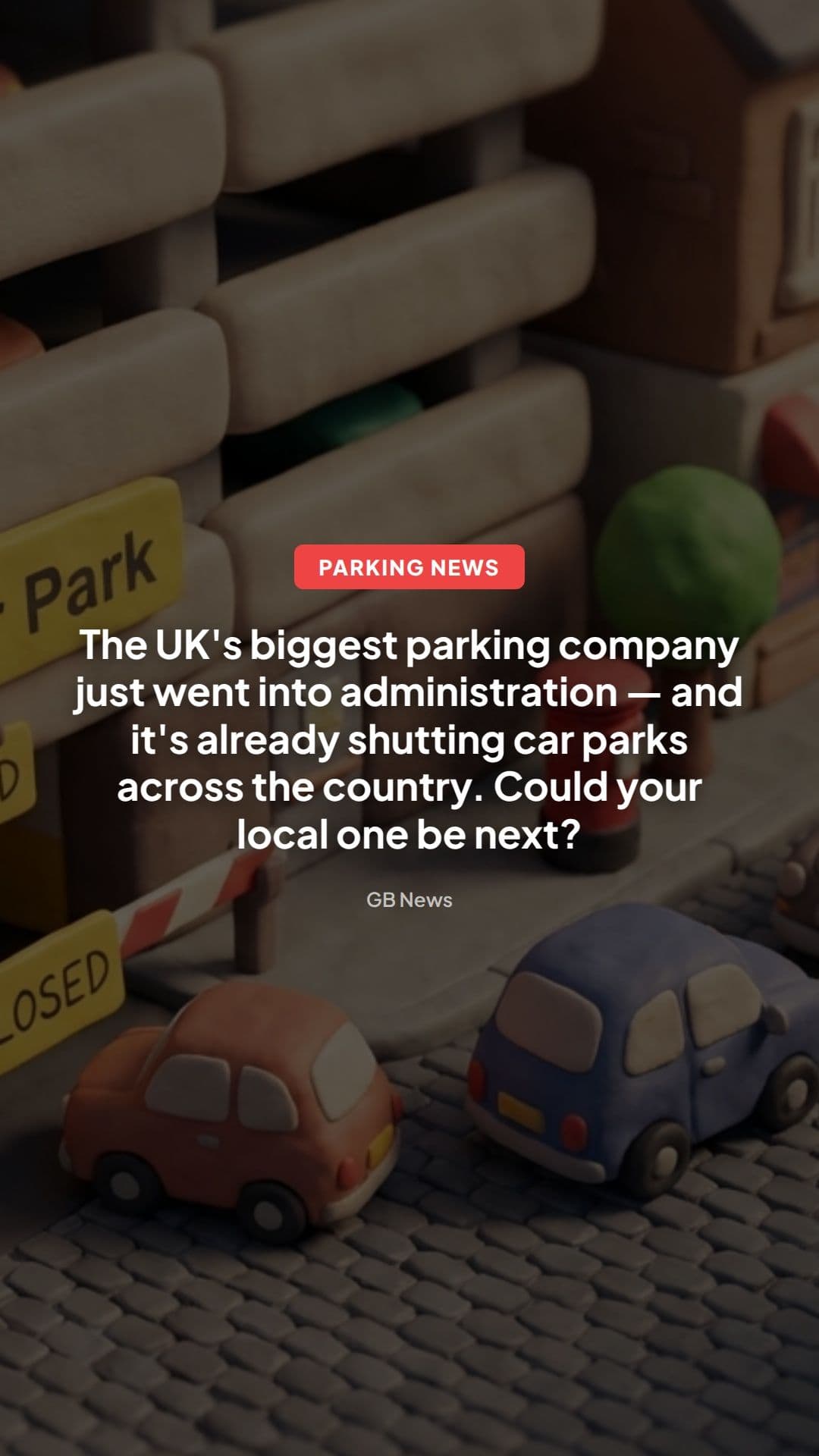
NCP's Collapse: What the Closure of 22 Car Parks Really Means for UK Drivers
When Britain's biggest parking operator enters administration, the ripple effects go far beyond a few empty concrete floors
Imagine turning up to your usual city centre car park on a busy Saturday morning — the one you've used for years, the one where you've got the app saved, the barrier code memorised, maybe even a monthly permit — only to find the gates locked, a notice taped to the barrier, and no indication of where you're supposed to go instead. For thousands of drivers across the UK, that scenario became a reality in 2026 when NCP, the country's largest parking operator, entered administration and confirmed the closure of 22 of its sites.
This isn't just a business story. It's a story about infrastructure, about the fragile economics of urban parking, and about what happens to ordinary drivers when the commercial machinery underpinning something as mundane as leaving your car somewhere begins to crack.
What Actually Happened
NCP — National Car Parks — entered administration in March 2026, marking one of the most significant shake-ups in UK parking history. The company, which has been a fixture on British high streets, airports, and city centres since the 1930s, operates hundreds of sites across England, Scotland, and Wales.
According to reporting by GB News, administrators confirmed the permanent closure of 22 commercially unviable car parks, while approximately 318 other sites remain operational as the administration process continues. The stated goal is to stabilise the business, explore restructuring options, and — where possible — find a buyer or facilitate a managed wind-down that protects as many jobs and services as possible.
The closures weren't random. They targeted sites where the numbers simply didn't add up: locations where footfall had declined, lease costs had become unsustainable, or where competition from cheaper alternatives had eaten into margins. In many cases, these will be sites in secondary town centres or locations where the post-pandemic shift in commuting patterns hit hardest.
Why This Matters Beyond the Headlines
NCP's troubles didn't emerge overnight. The UK's commercial parking sector has been under sustained pressure for the better part of a decade, squeezed from multiple directions simultaneously.
The post-pandemic footfall collapse reshaped city centre dynamics permanently. Office workers who once filled multi-storey car parks five days a week now commute two or three times at most. Retail footfall in many town centres remains below 2019 levels. The customers NCP depended upon simply aren't there in the same numbers.
Rising operational costs compounded the problem. Business rates on commercial car parks are notoriously high. Maintenance of ageing multi-storey structures — many built in the 1960s and 70s — is eye-wateringly expensive. Lift repairs, concrete restoration, lighting upgrades, CCTV compliance: the costs stack up fast on sites that generate relatively modest revenue per square foot.
Competition from councils and private rivals further squeezed margins. Many local authorities have invested heavily in their own off-street parking estates, often pricing NCP out of the market. Meanwhile, smaller private operators and landowners have entered the market with lower overheads, undercutting on price.
The result is a sector that looks, on the surface, like a licence to print money — but in reality operates on thin margins that are highly sensitive to changes in demand and cost.
The Legal Angle: What Are Drivers' Rights When a Car Park Closes?
This is where things get genuinely complicated, and where many drivers will find themselves in unfamiliar territory.
Outstanding Permits and Pre-Paid Parking
If you hold a monthly or annual permit for an NCP site that has closed or enters administration, you are an unsecured creditor of the company. Under the Insolvency Act 1986, unsecured creditors — which is what most permit holders will be — sit behind secured creditors (banks, lenders) and preferential creditors (employees) in the queue for repayment. In plain terms: you may not get your money back, and if you do, it could be pennies in the pound.
That said, if you paid by credit card, Section 75 of the Consumer Credit Act 1974 offers meaningful protection. For purchases between £100 and £30,000, your card issuer is jointly liable with the retailer if the goods or services aren't delivered. A permit for a car park that is now permanently closed is a textbook Section 75 claim. Contact your card provider promptly and document everything.
If you paid by debit card, the Chargeback scheme — while not a statutory right — is available through your bank and can recover payments made for services not rendered. Act quickly, as time limits typically apply (usually 120 days from the transaction or from when you became aware of the problem).
Vehicles Left on Site
A more urgent concern: what happens if your vehicle is on a site when it closes? Under UK law, a car park operator — even one in administration — cannot simply impound or dispose of your vehicle without following proper procedures. The Torts (Interference with Goods) Act 1977 governs the handling of goods left on another's premises. Administrators have a legal obligation to take reasonable steps to notify owners before any vehicle is moved or disposed of.
If your vehicle has been towed or clamped in connection with a site closure, this would almost certainly constitute unlawful interference with goods. Document everything, take photographs, and seek recovery through the small claims court if necessary.
Existing Parking Charge Notices
Here's a question many drivers won't have considered: what happens to outstanding PCNs issued by NCP for sites that are now closed? If NCP issued a private parking charge notice before entering administration, that debt technically still exists as a liability owed to the company — and administrators may pursue it as an asset. Do not assume that administration means your PCN disappears. If you receive correspondence about an outstanding charge, address it through the normal appeals process. The Independent Appeals Service (IAS) and POPLA continue to operate regardless of the operator's financial status.
What Drivers Should Do Right Now
Whether you're a regular NCP customer or simply someone who uses city centre parking from time to time, there are practical steps worth taking immediately.
- Check your permit status. Log into your NCP account and verify which site your permit is linked to. If it's one of the 22 closed sites, begin a Section 75 or Chargeback claim without delay.
- Don't assume open sites are stable. With 318 sites still operational, NCP continues to trade — but the situation remains fluid. If you rely on a specific NCP site for daily commuting, it's sensible to identify an alternative now rather than after a surprise closure.
- Keep payment records. Whether you use the NCP app, PayByPhone, or a physical ticket, retain evidence of all transactions. In an administration scenario, documentation becomes critical.
- Avoid long-term commitments. Until the administration process concludes and the future of the business becomes clearer, purchasing long-term permits at NCP sites carries financial risk. Monthly rolling arrangements are safer than quarterly or annual ones.
- Know your consumer rights. The Consumer Rights Act 2015 establishes that services must be provided with reasonable care and skill. If NCP closes a site you've paid to access, that's a failure to deliver the contracted service — grounds for a refund claim.
Looking Ahead: What NCP's Collapse Tells Us About Parking's Future
NCP's administration is, in many ways, a bellwether for the broader urban parking industry. The economics that made large commercial car park operators viable in the 20th century are eroding. Remote working, declining high street footfall, the gradual growth of electric vehicles (which can charge at home), and the expansion of active travel infrastructure are all chipping away at demand.
At the same time, the Levelling Up and Regeneration Act 2023 and ongoing planning reforms are encouraging local authorities to repurpose underused car parks for housing and mixed-use development. Several NCP sites in secondary towns may find their most valuable future use is not as car parks at all.
For drivers, the practical message is this: the parking landscape is changing, and the commercial certainties of the past — that there'll always be an NCP multi-storey nearby — can no longer be taken for granted. Urban drivers would do well to familiarise themselves with council-run alternatives, peer-to-peer parking apps, and the legal protections available when commercial operators fail.
NCP's story isn't over yet. Administrators are actively seeking to stabilise the business, and a sale or restructuring remains possible. But the 22 closed sites are a reminder that even the biggest names in an industry can stumble — and that when they do, it's ordinary drivers who need to be prepared.
Stay informed about your parking rights and keep your payment records safe. In an uncertain market, knowing where you stand legally is the best protection you have.
Written by
Raj Patel
Transport Policy Analyst
Ready to Challenge Your Ticket?
Let our AI analyse your PCN and generate a professional appeal letter in minutes.
Start Free Appeal