National Parking Platform: Will One App End the Hassle?
The National Parking Platform promises to cut parking app confusion. We examine how it works, why uptake is voluntary and what it means for UK drivers.

The Parking Ticket Pal Editorial Team
14 August 2026
One App to Rule Them All? Why the Parking Platform Handover Matters More Than It Sounds
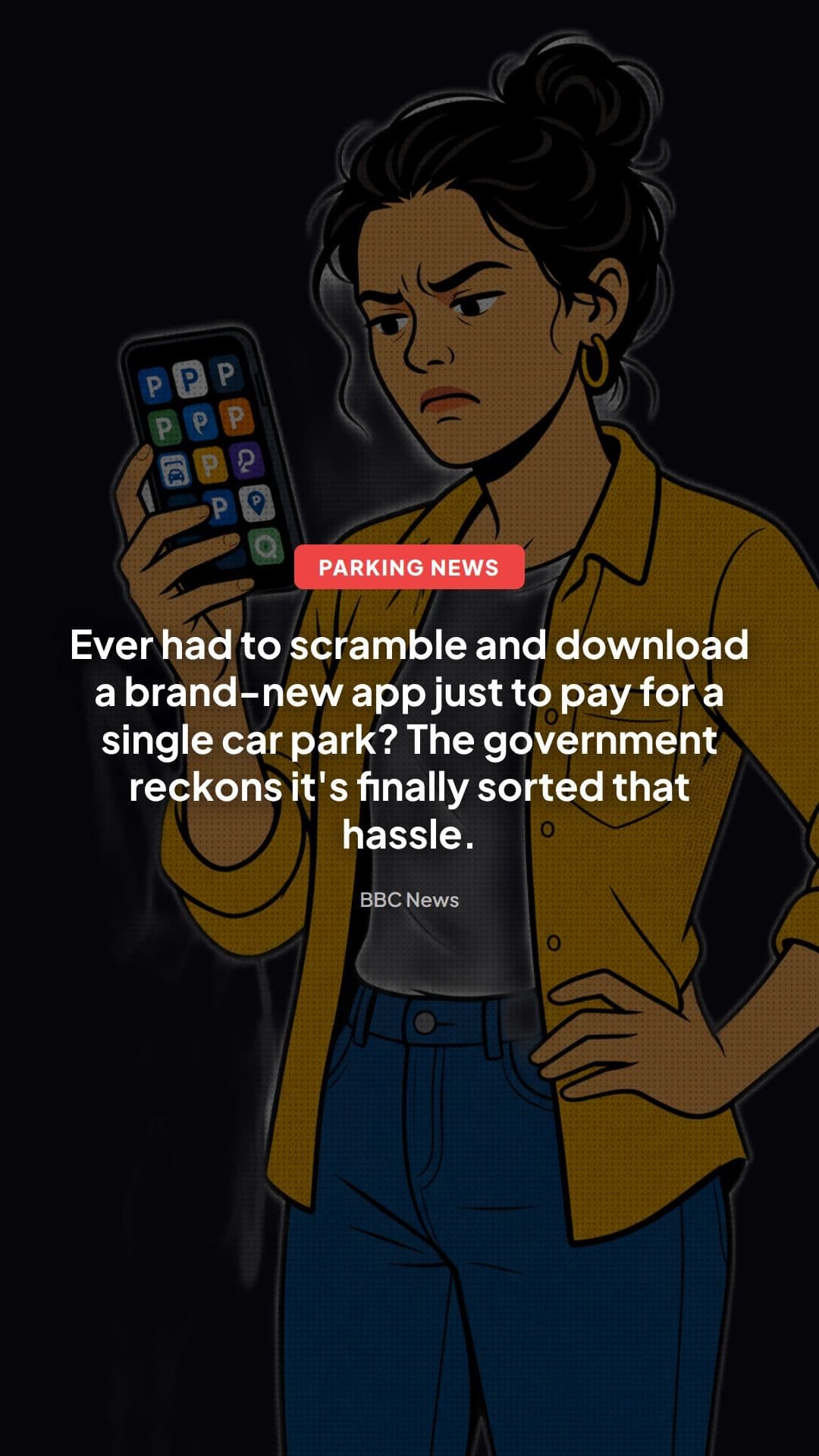
Anyone who has fumbled between three different parking apps in a single afternoon, one for the high street, another for the multi-storey, a third for the hospital car park, will know the particular flavour of frustration this causes. Miss a step, mistype a registration number, or simply give up trying to download yet another app before the meter runs out, and you could be looking at a penalty charge notice landing on your doormat weeks later. The government's latest move on the National Parking Platform is aimed squarely at that problem, and it deserves more attention than a single news cycle.
What Happened
According to BBC News, the government is backing the continued development of the National Parking Platform (NPP), a system designed to let drivers use whichever parking app they prefer across a range of participating car parks, rather than being forced to download a specific operator's app for every location they visit. The project is now moving into the hands of the British Parking Association (BPA) for further development. Crucially, participation in the scheme remains voluntary, meaning councils and car park operators can choose whether to join up rather than being compelled to do so.
This is not the first time the idea has surfaced. The NPP has been quietly developed for several years as a piece of digital infrastructure intended to sit behind the scenes, allowing different apps to "talk" to different car parks without drivers needing to know or care which backend system a particular council uses. Handing further development to the BPA, the trade body that already runs one of the two main private parking codes of practice alongside the International Parking Community (IPC), signals a shift from government-led pilot to industry-embedded standard.
Why It Matters
The multiple-app problem is not a trivial annoyance. It has real consequences for drivers, and those consequences are measured in penalty charge notices. If you park in a bay expecting to use a familiar app, only to discover that a particular council or site requires a different provider, the pressure to act quickly, often standing in the rain trying to register an account, enter card details, and select a duration, creates fertile ground for mistakes. A rushed registration can mean the wrong vehicle registration number is logged, and that single error is one of the most common reasons drivers end up appealing a PCN.
There is also a fairness dimension. Older drivers, or those less comfortable with smartphone technology, are disproportionately affected by a fragmented app landscape. Every additional app is another barrier, another password to remember, another moment where a driver might reasonably decide to risk it rather than fight with their phone. A single platform that lets one app work everywhere would, in theory, reduce that barrier significantly.
From the industry's perspective, a common platform also reduces duplication. Car park operators and councils currently have to either build relationships with multiple app providers or accept that drivers using an unsupported app simply cannot pay through their preferred method. Standardising the technical plumbing, while leaving the customer-facing app itself competitive, is a sensible middle ground.
That said, the voluntary nature of the scheme is the single biggest caveat here. A platform is only as useful as its coverage. If large numbers of councils or private operators decline to join, drivers will still face the same patchwork they do today, just with an additional system layered on top rather than replacing the old one. We've covered the question of whether councils might eventually be compelled to join such a scheme, and that tension between voluntary adoption and genuine nationwide consistency remains the key issue to watch.
The Legal Angle
It is worth being clear about what the National Parking Platform does and does not change from a legal standpoint. It is a payment and technology initiative, not a change to parking law itself. The rules governing penalty charge notices, whether issued by a local authority under the Traffic Management Act 2004 for on-street and some off-street contraventions, or issued by a private operator under the British Parking Association or International Parking Community codes of practice for private land, remain exactly as they were.
That distinction matters practically. If you are issued a PCN because of a payment app error, whether that's an app crashing, a lack of signal, or confusion over which app to use, the legal route to challenge it does not change simply because a new national platform exists. You would still need to gather evidence such as screenshots, bank statements showing an attempted payment, or timestamps demonstrating you tried to pay, and submit that through the appropriate channel. For council-issued PCNs, that means an informal challenge followed, if necessary, by formal representations and ultimately an appeal to the independent tribunal (the Traffic Penalty Tribunal in England outside London, London Tribunals for London, and equivalent bodies in Scotland and Wales). For private parking charges, it means following the operator's internal appeals process and, where applicable, an appeal to POPLA or the IAS depending on which trade body the operator belongs to.
We've written previously about how parking app and broken meter problems can be used as a defence against PCNs, and about specific app failures such as PayByPhone errors. Those principles remain entirely relevant regardless of whether the NPP eventually becomes widespread. Adjudicators generally want to see evidence that a genuine attempt to pay was made and thwarted by a technical failure outside the driver's control, rather than simple confusion over which app to download.
It is also worth noting that the government's wider push on private parking regulation, including proposals around capping charges and standardising grace periods, sits alongside this app initiative rather than being part of it. The two workstreams are related in spirit, both aimed at making parking fairer and less confusing, but they are legally distinct.
What Drivers Should Know
Until the National Parking Platform achieves meaningful coverage, the practical advice for drivers remains largely unchanged. A few points are worth bearing in mind:
- Check signage carefully before relying on an app you already have installed. Signs at the entrance to a car park or on nearby posts should specify which payment methods and apps are accepted. Do not assume your usual app will work.
- Keep evidence of any payment attempt. If an app fails, take a screenshot showing the error, note the time, and if possible try an alternative method such as a phone payment line or a card machine on site.
- Act quickly if a PCN arrives due to a technical failure. Informal challenges are often resolved faster than formal ones, and evidence is best gathered while it is fresh, such as bank app notifications showing a declined or pending transaction.
- Do not assume voluntary schemes mean universal coverage. Even as the NPP develops under the BPA, individual councils and operators will join at their own pace, so the fragmented landscape is likely to persist for some time yet.
- Be sceptical of unofficial third-party apps that sometimes appear in app store searches for parking payments. Always verify you are using the operator's genuine, endorsed app or payment channel.
Looking Ahead
Handing the National Parking Platform to the British Parking Association for further development is a sensible next step, moving the project from government initiative towards an industry-owned standard with the operational expertise to actually roll it out. But the voluntary framing means its success will be judged not by the technology itself, which by most accounts is sound, but by how many councils and operators actually sign up.
For now, drivers should treat this as a promising development rather than a solved problem. The multiple-app hassle that prompted the initiative in the first place will not disappear overnight, and the underlying legal framework around PCNs, appeals, and evidence remains exactly as demanding as ever. Anyone facing a genuine dispute over a parking charge, whether caused by app confusion or anything else, should still follow the proper formal channels, and seek independent advice where the financial stakes are significant, rather than relying on the promise of future technology to make the problem go away.
Written by
The Parking Ticket Pal Editorial Team
Source-checked parking guidance
Ready to Challenge Your Ticket?
Let our AI analyse your PCN and generate a professional appeal letter in minutes.
Start Free Appeal