National Parking Platform: One App to Pay at UK Councils
National Parking Platform rollout lets drivers use major parking apps across participating UK council car parks, cutting app clutter and simplifying payment.

Priya Sharma
16 July 2026
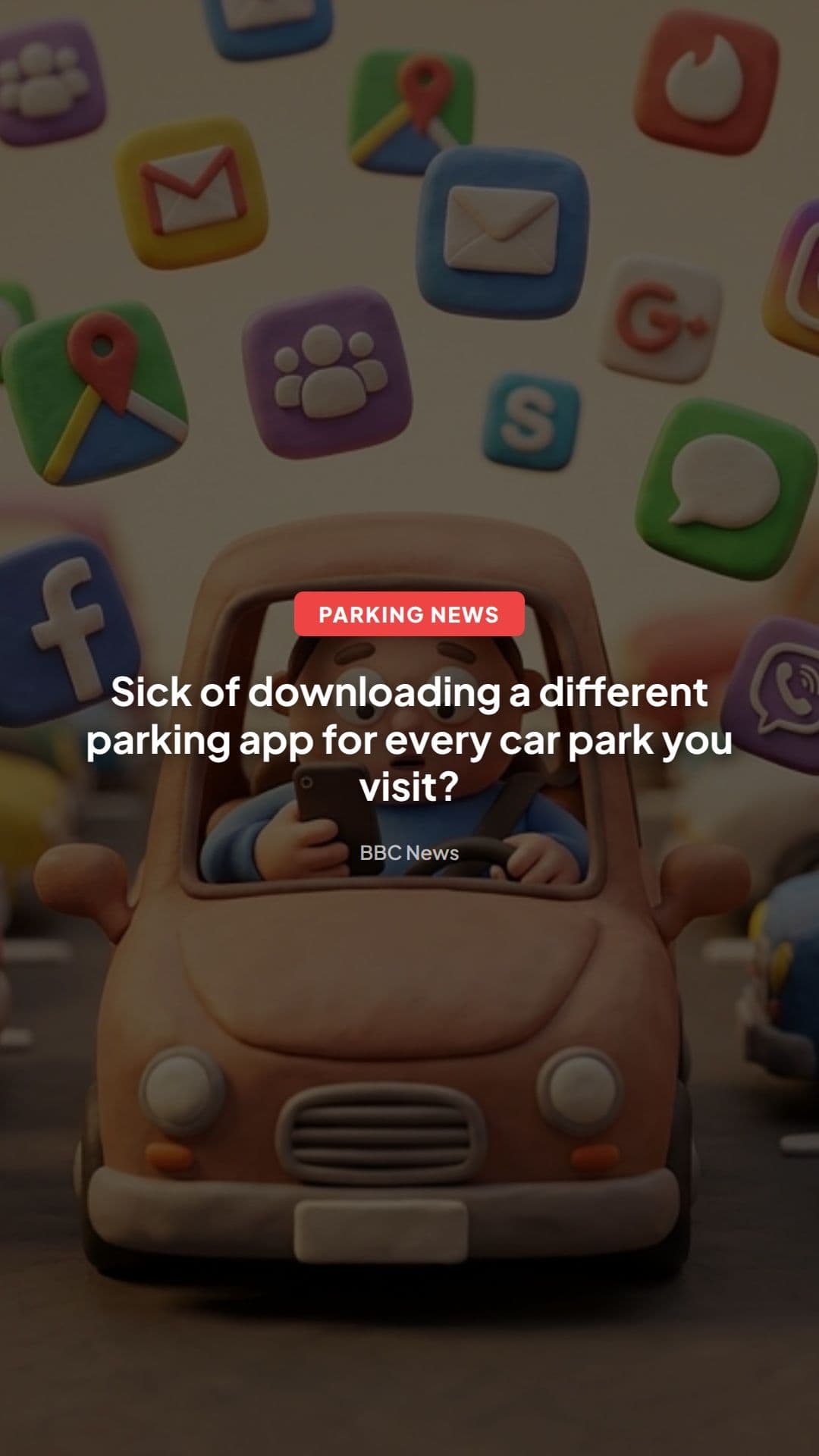
National Parking Platform: One App to Rule Them All, But What Does It Really Mean for UK Drivers?
Picture this: you pull into a council car park in an unfamiliar town, phone in hand, and instead of hunting for the local authority's obscure parking app, downloading it, registering your card details, and hoping it actually works before the warden arrives, you simply open the app you already use at home. Job done, ticket paid, no drama. That is the promise of the National Parking Platform, and for once, it is a piece of parking infrastructure news that genuinely deserves some excitement.
What Has Actually Happened?
The BBC has reported on the ongoing rollout of the National Parking Platform, known as the NPP, a government-backed initiative designed to allow drivers to pay for parking across participating council car parks using whichever mainstream parking app they already have on their phone. Instead of each council operating in its own digital silo, the NPP creates an interoperable layer beneath the various apps, so that RingGo, PayByPhone, JustPark, and others can all communicate with the same underlying system.
The scheme has been developed with support from the Department for Transport and is being rolled out progressively across local authorities in England. Councils that sign up to the NPP effectively open their parking estate to any app that connects to the platform, rather than locking drivers into a single provider. The practical result is that a driver who uses one app in their home borough can, in theory, use that same app in a participating council's car park hundreds of miles away.
This is not a single government-run app. The NPP is infrastructure, a shared data and payment backbone, rather than a consumer-facing product. The apps drivers already know and use become the front end, and the NPP handles the connection to the council's back-end payment and enforcement systems.
Why This Matters More Than It Might Seem
The fragmentation of digital parking payments in the UK has been a genuine nuisance for drivers for years. As councils moved away from cash machines and pay-and-display tickets, many chose their own preferred app provider, sometimes exclusively. A driver visiting several different towns in a week could theoretically need multiple apps, each requiring separate registration, each storing card details, and each carrying its own terms and conditions.
This fragmentation also created a quiet but serious access problem. Older drivers, people with limited data plans, and those less comfortable with smartphones faced a disproportionate burden. If the only way to pay in a given car park was through a specific app, and you did not have that app, you were left with a difficult choice: risk a penalty charge notice, or leave.
The NPP addresses this by shifting the burden from the driver to the system. Rather than asking every driver to adapt to every council's preferred technology, it asks the technology to adapt to the driver's existing habits.
There is also a competition dimension worth noting. When a council ties its car park exclusively to a single app provider, that provider gains significant leverage. Drivers have no choice but to use it, and the council has limited incentive to negotiate hard on fees or service standards. A platform that enables genuine interoperability changes that dynamic, at least in principle, by making it easier for councils to switch providers or run multiple providers simultaneously.
The Legal and Regulatory Landscape
Parking payment systems in council-operated car parks are governed primarily by the Road Traffic Regulation Act 1984, which gives local authorities the power to provide and manage off-street parking places and to set charges. The Traffic Management Act 2004 extended and refined civil parking enforcement powers, transferring responsibility for most parking enforcement away from the police to local authorities.
When a council moves to cashless-only or app-only payment, it does so under these powers, but there are obligations attached. The Equality Act 2010 is relevant here: councils have a public sector equality duty, which means they must consider whether their parking payment systems are accessible to people with disabilities, including those who may struggle with smartphone-based payment. There is no specific statutory requirement to offer a particular payment method, but a council that makes parking effectively impossible for certain groups without reasonable alternatives could face challenge.
The NPP does not change these legal obligations, but it does make compliance somewhat easier. A broader range of compatible apps, and potentially a more familiar interface for more drivers, reduces the risk of a system that inadvertently excludes people.
Drivers who receive a PCN because they were unable to pay due to app failure or lack of a compatible payment method do have grounds to challenge. If you can show that the only available payment method was unavailable or inaccessible at the time, that is a legitimate basis for an informal appeal to the council, and if that fails, a formal representation. The NPP, by increasing the number of compatible apps, should reduce the frequency of these situations, though it will not eliminate them entirely.
What Drivers Should Know Right Now
The NPP rollout is ongoing, which means not every council car park is participating yet. Before you rely on your usual app in an unfamiliar location, it is worth checking a few things.
Before you travel:
- Check whether the car park you intend to use is in a participating council area. Many councils now list their accepted payment methods on their websites and on signage at the car park entrance.
- If you use a less mainstream parking app, verify whether it is connected to the NPP. The major providers are integrating, but smaller or regional apps may not yet be part of the network.
- Do not assume that because a car park accepts your app at home, it will accept it everywhere. Until the rollout is complete, there will be gaps.
At the car park:
- Always check the signage carefully. Council car parks are legally required to display clear information about permitted payment methods, tariffs, and restrictions. If the signage is unclear or contradictory, photograph it before you pay or before you leave. This evidence can be invaluable if a dispute arises later.
- If your preferred app fails to connect or process payment, do not simply leave. Try an alternative method if one is available, and if not, document your attempts. Screenshots with timestamps showing failed payment attempts have been accepted as mitigating evidence in PCN appeals.
- Keep a record of your payment confirmation. Most apps send an email or in-app receipt. Save these, because if an enforcement officer records your vehicle as unpaid, you will need to demonstrate that payment was made and at what time.
If you receive a PCN despite paying:
- Contact the app provider first to obtain a payment record with a timestamp and transaction reference.
- Submit an informal appeal to the issuing council promptly, ideally within 14 days of the PCN date, to benefit from the discounted penalty amount while the appeal is considered. Include your payment evidence clearly.
- If the informal appeal is rejected, you have the right to make a formal representation, and if that fails, to appeal to an independent adjudicator through the Traffic Penalty Tribunal in England outside London, or London Tribunals within the capital.
Looking Ahead: The Bigger Picture
The NPP represents a meaningful step towards a more coherent national parking infrastructure, but it is worth being clear-eyed about what it is and what it is not. It is not a solution to the broader tensions around parking policy, enforcement revenue, or the cost of parking in UK towns and cities. It does not cap charges, standardise tariffs, or change the rules around PCNs. What it does is remove a layer of unnecessary friction from the payment process, and that is genuinely worthwhile.
The longer-term question is whether the NPP can become truly universal. Local authority adoption in England is progressing, but Scotland, Wales, and Northern Ireland operate under different devolved frameworks, and parking policy diverges accordingly. A driver who travels across borders within the UK may still encounter gaps.
There is also the question of what happens as payment technology continues to evolve. Contactless card readers, licence plate recognition linked to pre-registered accounts, and in-car payment systems are all part of the landscape. The NPP's architecture will need to remain flexible enough to accommodate these developments without becoming another silo.
For now, though, the direction of travel is positive. Fewer apps to download, fewer accounts to manage, and fewer opportunities for a perfectly innocent driver to end up with a penalty charge notice simply because they did not have the right app installed. In the world of UK parking, that counts as progress.
If you are dealing with a PCN that arose from a payment dispute, the guidance on our site around appealing parking fines and understanding the evidence you need to support your case is a good starting point for navigating the process.
Written by
Priya Sharma
Legal Aid Coordinator
Ready to Challenge Your Ticket?
Let our AI analyse your PCN and generate a professional appeal letter in minutes.
Start Free Appeal