Muscle car fire at Tesco petrol station: what happened
A 1979 Pontiac Firebird reportedly erupted into flames at a Tesco petrol station in Abingdon. What happened, emergency response, and driver safety advice.

Mohammed Al-Hassan
3 June 2026
When Classic Cars Catch Fire: What the Pontiac Firebird Blaze Tells Us About Forecourt Safety, Vehicle Insurance, and Driver Responsibilities
A vintage American muscle car erupting in flames at a busy Tesco petrol station is the stuff of nightmares — but it raises serious questions every UK driver should consider
The Moment a Legend Went Up in Flames
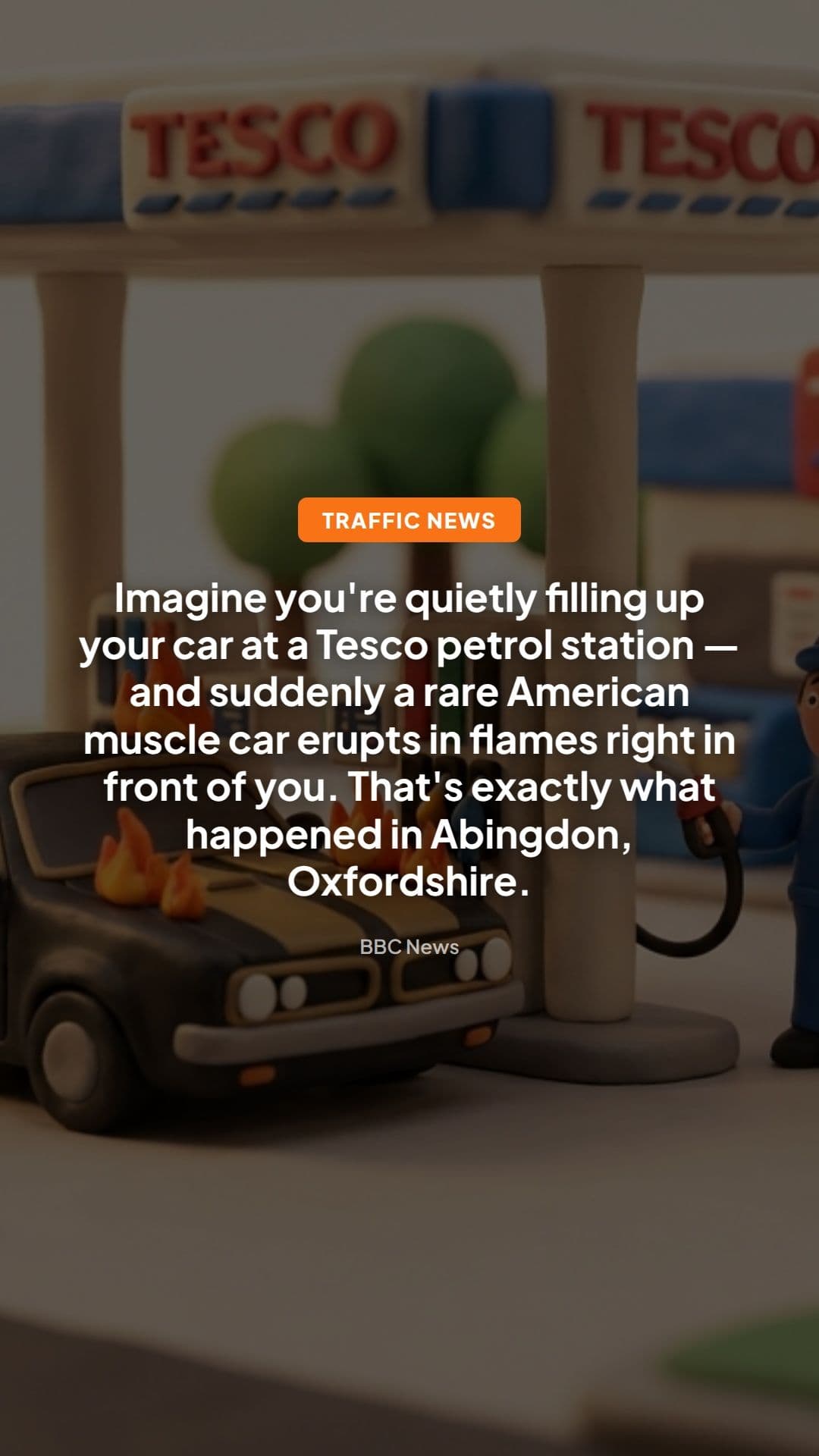
Picture this: a gleaming 1979 Pontiac Firebird — one of the most iconic American muscle cars ever built — pulls onto a Tesco petrol station forecourt in Abingdon, Oxfordshire. Within moments, the car that once symbolised freedom, power, and the open road is consumed by fire, flames tearing through its vintage bodywork as bystanders scramble clear and emergency services race to the scene.
According to the BBC, which reported the incident, the classic car "erupted" in flames at the forecourt, causing significant disruption to the busy supermarket fuel station. Fire crews attended, the forecourt was closed, and what had been an ordinary afternoon in an Oxfordshire market town became anything but.
Nobody expects to watch a car burn. But when it happens at a petrol station — surrounded by fuel pumps, underground storage tanks, and dozens of other vehicles — the stakes are extraordinarily high. This incident, dramatic as it sounds, is far more than a quirky news story. It is a sharp reminder of the risks that come with running older, classic vehicles on UK roads, and the legal and practical responsibilities that fall squarely on every driver's shoulders.
What Happened in Abingdon
The 1979 Pontiac Firebird is no ordinary car. Built by General Motors during the heyday of American muscle, the Firebird was a cultural icon — immortalised in Smokey and the Bandit and beloved by car enthusiasts worldwide. A well-maintained example today commands serious money at auction, with good specimens fetching anywhere from £15,000 to well over £40,000 depending on specification and condition.
Which makes what happened in Abingdon all the more striking. The vehicle caught fire on the forecourt, prompting an emergency response from Oxfordshire Fire and Rescue Service. The forecourt was closed as crews worked to bring the blaze under control, causing disruption to local traffic and, inevitably, to the Tesco customers who suddenly found themselves unable to fill up.
The precise cause of the fire had not been confirmed at the time of reporting. However, vehicle fires in classic and vintage cars are far from uncommon — and the reasons why are worth understanding in detail.
Why Classic Cars Are Particularly Vulnerable to Fire
Modern vehicles are engineered with fire risk baked into every design decision. Fuel lines use reinforced, heat-resistant materials. Electrical systems are protected by sophisticated fusing and circuit-breaker technology. Engine bays are designed to contain and manage heat. Regulatory frameworks — including UN Regulation No. 34, which governs fuel system safety — mean that any new car sold in the UK must meet rigorous fire-prevention standards.
A 1979 Pontiac Firebird was built to entirely different standards. Its wiring harness is now over 45 years old. Rubber fuel lines degrade over decades, becoming brittle and prone to cracking. Carburettors — which the Firebird would have used, predating fuel injection — can suffer from "carburettor fires," where fuel floods back into the intake and ignites. Aged electrical insulation can fail, creating short circuits that generate enough heat to ignite surrounding materials.
Classic car owners are, of course, often deeply knowledgeable about these risks. Many invest heavily in maintenance and restoration. But the fundamental truth is that no amount of loving care entirely eliminates the heightened fire risk that comes with a vehicle of this age. Fuel, heat, and aged components are a combination that demands constant vigilance.
The Legal Angle: What UK Law Says About Vehicle Roadworthiness and Liability
This is where things get genuinely important for drivers — not just classic car enthusiasts, but anyone running an older vehicle on British roads.
The Road Traffic Act 1988 and Vehicle Condition
Under the Road Traffic Act 1988, it is an offence to use a vehicle on a public road in a dangerous condition. Section 40A specifically prohibits the use of a motor vehicle in a condition likely to cause danger to any person. If a vehicle fire is later found to result from a known mechanical defect — a cracked fuel line, a faulty electrical connection — the owner could, in theory, face prosecution.
MOT Exemptions: A Double-Edged Sword
Here is something many people do not realise. Vehicles manufactured before 1 January 1980 are exempt from the annual MOT test under regulations introduced in 2018. The Pontiac Firebird, built in 1979, falls precisely within this exemption.
The logic behind the exemption is broadly sound: classic vehicles are typically driven fewer miles, maintained by enthusiasts, and preserved rather than used as daily transport. However, the exemption does not remove the legal obligation to keep the vehicle in a roadworthy condition. It simply removes the mandatory annual check that would otherwise catch deteriorating components.
For owners of MOT-exempt classics, this places the entire burden of safety assessment on the individual. There is no annual inspection to act as a safety net. The responsibility to identify and repair dangerous defects rests entirely with the owner.
Insurance Implications
Classic car insurance in the UK typically operates under agreed-value policies — where the insurer and owner agree the car's worth upfront — rather than the market-value policies used for modern vehicles. Specialist insurers such as Hagerty, Adrian Flux, and Lancaster Insurance dominate this market.
However, if a fire is found to result from a mechanical defect that the owner knew about or should reasonably have identified, insurers may challenge a claim. Most UK motor insurance policies contain clauses requiring the vehicle to be maintained in roadworthy condition. A fire caused by a neglected fuel system could, in the most serious cases, give an insurer grounds to dispute liability.
There is also the question of third-party liability. If a vehicle fire spreads to other cars, causes property damage, or injures bystanders, the vehicle owner's insurance must cover those claims. At a busy petrol station forecourt, the potential for consequential damage is significant.
The Forecourt Operator's Position
Petrol station operators in the UK are governed by the Petroleum (Consolidation) Regulations 2014, which impose strict duties around fire safety and emergency procedures. Tesco, as the forecourt operator, would be expected to have emergency protocols in place — and by all accounts, the response in Abingdon was swift. The Health and Safety at Work Act 1974 also imposes general duties on operators to ensure the safety of those on their premises.
What Drivers Should Know: Practical Advice for Classic and Vintage Car Owners
Whether you own a 1979 Firebird or a 1990s British classic, these steps are essential:
- Inspect your fuel system regularly. Rubber hoses, carburettor gaskets, and fuel pump connections should be checked for cracking, weeping, or deterioration. Replace aged rubber components proactively — do not wait for failure.
- Upgrade your electrical system where possible. Rewiring a classic car with modern, properly fused wiring is one of the most effective fire-prevention measures available. Many specialists offer partial or full rewire services.
- Carry a fire extinguisher. There is no legal requirement to carry one in a private vehicle in the UK, but for classic car owners it is simply sensible. A BS EN 3-rated dry powder or CO₂ extinguisher suitable for Class B fires (flammable liquids) should be within reach.
- Know your MOT status. If your vehicle is MOT-exempt, you bear full responsibility for its roadworthiness. Consider voluntary annual inspections by a qualified classic car specialist.
- Review your insurance policy. Ensure your classic car policy covers agreed value, check the maintenance clauses, and confirm you have adequate third-party liability cover.
- Be cautious on forecourts. If your car is running rough, smelling of fuel, or showing any warning signs, do not drive it onto a petrol station forecourt. Pull over safely away from fuel sources and investigate.
Looking Ahead: What This Incident Means for Classic Car Culture in the UK
The UK has one of the most vibrant classic car communities in the world. The Historic Vehicle sector contributes an estimated £7.2 billion annually to the British economy, according to the Historic and Classic Vehicles Alliance. Hundreds of thousands of vehicles over 40 years old are registered and driven on UK roads.
The Abingdon incident is unlikely to trigger sweeping regulatory change on its own. But it adds to a growing conversation about whether the blanket MOT exemption for pre-1980 vehicles strikes the right balance between preserving motoring heritage and ensuring public safety. Some industry voices have called for voluntary safety inspections to be more actively promoted; others argue that classic car owners are, as a group, more conscientious about maintenance than the average motorist.
What is clear is that the law places real and enforceable responsibilities on classic vehicle owners — responsibilities that do not disappear simply because a car is exempt from the MOT regime. Maintaining a piece of automotive history is a privilege, but it is one that comes with obligations to other road users and to the public.
The Pontiac Firebird was built to turn heads. On that forecourt in Abingdon, it certainly did — just not in the way anyone would have wanted.
Based on reporting by BBC News. Additional analysis and legal context by Parking Ticket Pal editorial team.
Written by
Mohammed Al-Hassan
Appeals Tribunal Specialist
Ready to Challenge Your Ticket?
Let our AI analyse your PCN and generate a professional appeal letter in minutes.
Start Free Appeal