MP Backs Higher Illegal Parking Fines: What It Means
An MP has backed tougher illegal parking fines after 20 years without change. Find out what proposed penalty rises could mean for UK drivers and coastal towns.

Hannah MacLeod
28 July 2026
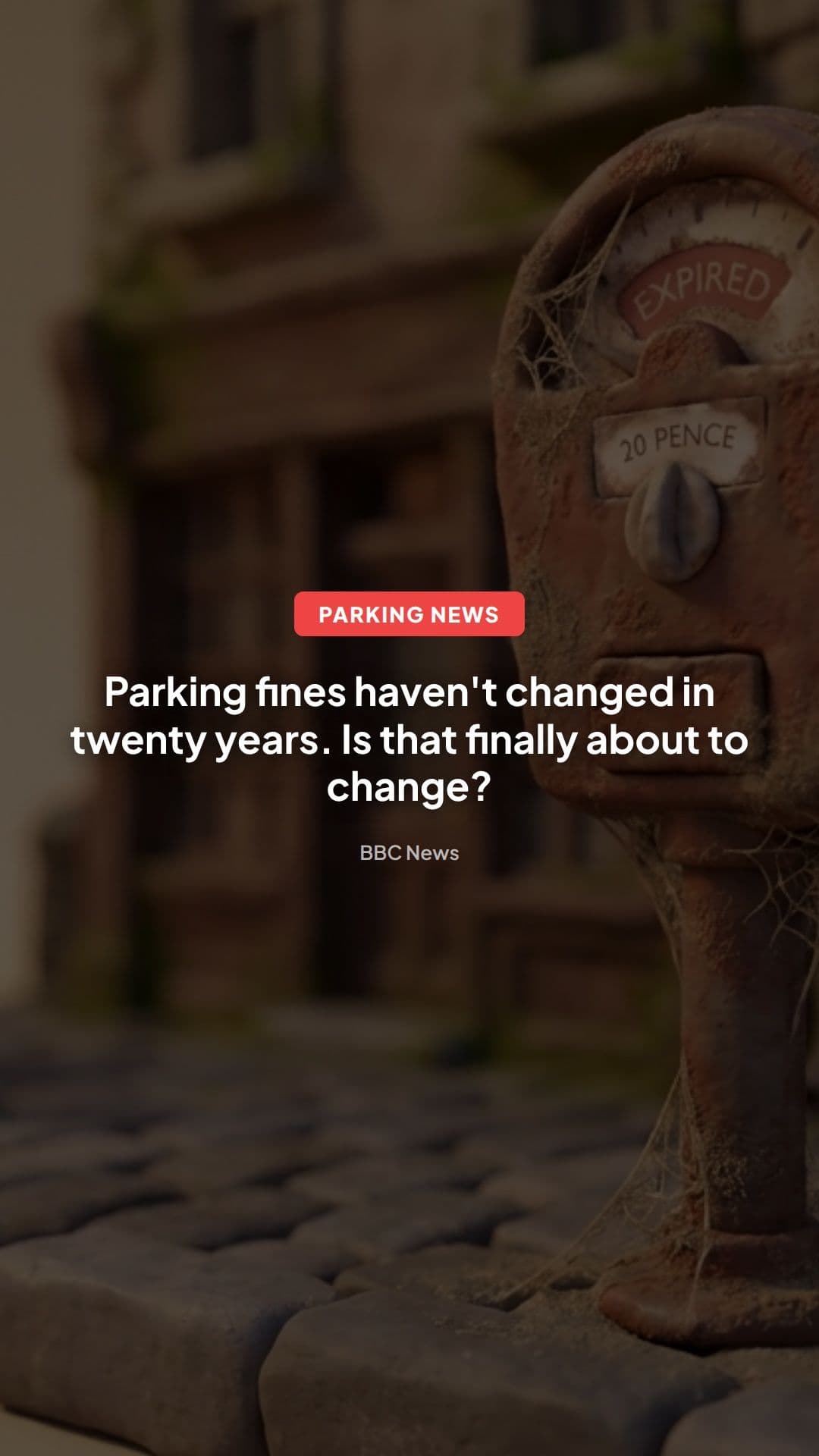
Two Decades, No Change: Why One MP Wants Parking Fines to Finally Catch Up
Imagine a fine that has stayed exactly the same price since the early 2000s, back when you could still buy a pint for under two pounds in most of the country and dial-up internet was standard. That is essentially the argument put forward in a recent Commons debate, where an MP backed a motion calling for tougher penalties for illegal parking, pointing out that current fine levels have not moved in twenty years. The debate, sparked by concerns over obstructive parking in coastal communities, has reignited a question that many drivers and residents alike have been asking for years: are UK parking fines actually working as a deterrent, or have they simply become background noise?
What Happened
According to reporting from BBC News, an MP used a parliamentary debate to support a motion pushing for higher penalties for unlawful parking. The core argument was straightforward: penalty levels set two decades ago have not kept pace with inflation, wage growth, or the changing nature of how and where people park. The debate specifically referenced obstructive parking in coastal neighbourhoods, the kind of scenario familiar to anyone who has tried to navigate a narrow seaside street in August, only to find cars mounted on pavements, blocking driveways, or straddling double yellow lines because visitors could not find a legitimate space.
This is not simply a case of MPs wanting to squeeze more money out of motorists. The argument centres on deterrence. If a fine has not changed in value since it was introduced, then in real terms it has become progressively cheaper to break the rules. A penalty that felt like a meaningful consequence in 2004 may now be viewed by some drivers as an acceptable cost of convenience, particularly in tourist hotspots where the alternative might be a long walk from an official car park.
Why It Matters
Parking enforcement in England, Wales, and Scotland operates on two broad tracks: civil enforcement by local councils (and Transport for London in the capital) and criminal enforcement by police for certain obstructive or dangerous parking offences. The fines being discussed here fall largely into the civil arena, specifically Penalty Charge Notices (PCNs) issued under frameworks such as the Traffic Management Act 2004.
Under current rules, councils outside London can issue PCNs at two tiers, with higher penalties reserved for more serious contraventions. These figures have periodically been reviewed, but the MP's argument in this debate suggests that in practice, many penalty bands have remained static for far longer than is sensible given inflation and cost-of-living changes. That stagnation matters because fines are meant to do two jobs at once, they should discourage bad parking behaviour and they should fund the enforcement infrastructure that keeps roads safe and accessible. If the deterrent effect weakens, both objectives suffer.
Coastal and rural tourist destinations feel this acutely. Obstructive parking in these areas is not just an inconvenience, it is a genuine safety issue. Emergency vehicles need clear access on narrow lanes. Pedestrians, particularly those with pushchairs or mobility aids, need functioning pavements. When enforcement fails to deter, the burden falls on residents who live with the consequences all year round, long after the summer visitors have gone home.
This debate arrives against a backdrop of broader scrutiny of parking charges across the country. There has already been significant movement on the private parking sector, where new rules are being introduced to cap charges and standardise grace periods. Council-issued fines are a different beast entirely, governed by separate legislation, but the direction of travel across the parking landscape suggests that penalty levels generally are under fresh scrutiny after years of relative stability.
The Legal Angle
It is worth understanding how parking penalties are actually set, because this is where the "two decades" claim carries real legal weight.
Civil parking enforcement outside London is governed primarily by the Traffic Management Act 2004, with penalty levels set through secondary legislation and guidance from the Department for Transport. Councils are grouped into bands, and the maximum penalty they can charge depends on that banding, alongside whether the contravention is classed as more or less serious. London operates under its own framework rooted in the Road Traffic Act 1991 and subsequent London-specific orders, which is part of why penalty levels there can differ from those elsewhere in England.
Crucially, changing these figures is not something any single council can do unilaterally. It typically requires central government to amend the relevant regulations or issue updated guidance, which is precisely why fine levels can remain frozen for such long stretches. Political will, parliamentary time, and public consultation all need to align before penalty charge levels shift nationally. That is the mechanism this MP is attempting to set in motion, using a Commons debate to build momentum for a formal review.
Separately, obstructive parking, particularly parking that blocks a public right of way, endangers pedestrians, or obstructs emergency access, can in more serious cases fall under different legal provisions entirely, including obstruction offences enforced by police rather than councils. This dual system, civil PCNs for routine contraventions and criminal obstruction offences for the most serious cases, is often misunderstood by drivers, and it is one reason why obstructive coastal parking generates such strong feelings locally. Residents frequently feel that civil fines alone are not proportionate to the disruption caused, especially when a vehicle is blocking a pavement or a driveway for hours at a time.
What Drivers Should Know
For ordinary motorists, this debate is a useful prompt to revisit some parking fundamentals rather than a sign that fines are about to double overnight. Nothing has been legislated yet, this is a motion and a debate, not a change in law. But it is a reasonable moment to brush up on a few practical points.
Know the difference between council PCNs and private parking charges. They are governed by entirely different legal frameworks, have different appeal routes, and carry different consequences. If you are unsure which type of notice you have received, our guide on understanding PCN codes is a good starting point for decoding what a notice actually means.
Coastal and rural parking is often more restrictive than it looks. Narrow lanes near beaches, harbours, and villages frequently have restrictions that are easy to miss, particularly where signage is inconsistent or partially obscured by hedges and parked vehicles. If you are heading somewhere unfamiliar, it is worth checking local council websites in advance for restricted zones rather than relying on visual cues alone.
Obstruction is treated seriously, even without a formal ticket. Blocking a driveway, dropped kerb, or narrow pavement can trigger enforcement action beyond a standard PCN in some circumstances, and persistent obstruction is more likely to attract attention from both councils and police, particularly in areas where complaints have already been logged.
If penalty levels do rise, appeals processes will matter more than ever. Higher fines make it more important to understand your rights if you believe a PCN was issued incorrectly, whether that is due to unclear signage, a legitimate exemption, or a procedural error by the council. Anyone facing a fine they believe is unfair should look into the formal representation process before simply paying up.
Looking Ahead
This debate is unlikely to result in immediate legislative change, Commons motions of this kind typically serve as a signal of parliamentary appetite rather than an instant policy shift. But it does add to a growing chorus of pressure on the government to revisit parking penalty structures more broadly, particularly as living costs have shifted dramatically since many of these figures were last set.
For residents of coastal and tourist-heavy areas, the practical concern remains the same regardless of what happens in Westminster: obstructive parking is a daily reality during peak season, and current deterrents may simply not be strong enough to change driver behaviour. Whether the answer is higher fines, better signage, more enforcement officers, or additional parking provision is likely to remain a live debate for some time yet.
For drivers, the sensible approach is to stay informed rather than alarmed. Keep an eye on how any formal proposals develop, understand the difference between civil and criminal parking enforcement, and if you do find yourself with a disputed PCN, know that there are established, legitimate routes to challenge it rather than simply accepting a charge at face value.
Written by
Hannah MacLeod
Traffic Law Specialist
Ready to Challenge Your Ticket?
Let our AI analyse your PCN and generate a professional appeal letter in minutes.
Start Free Appeal