MOT Test Fee Could Rise to £95: What Drivers Need to Know
Motoring industry bodies want the MOT test fee cap raised from £54.85 to £95. Explore the case for change and what it could mean for UK drivers and motorists.

Sarah Mitchell
17 August 2026
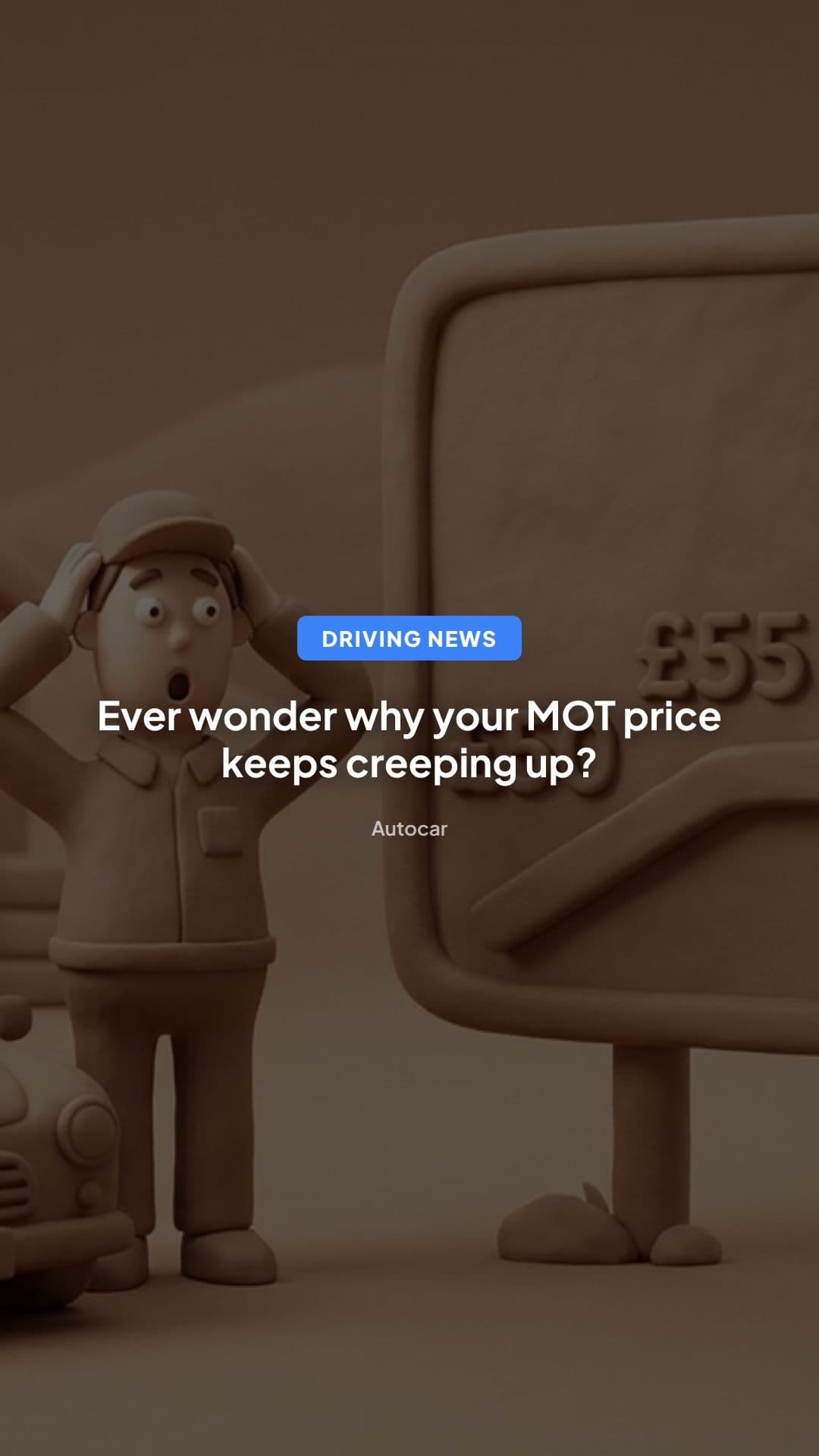
Calls for MOT Test Cap to Be Raised from £54.85 to £95: What It Could Mean for Your Wallet
Every driver in Britain knows the MOT test. It's the annual ritual of nervously waiting for a phone call from the garage, hoping the words "advisory" don't turn into "failure". But while the test itself hasn't changed much in decades, the economics behind it might be about to shift dramatically. Motoring industry representatives are now pushing for the maximum fee garages can charge for an MOT to rise from £54.85 to £95, according to a report from Autocar. That's an increase of nearly 75%, and if it goes ahead, it could change how much every car owner in the country pays each year.
What Happened
The story, as reported by Autocar, is straightforward on the surface: representatives from the motoring and garage industry are calling on the government to raise the statutory cap on MOT test fees. Currently, the maximum a garage is legally permitted to charge for a standard car MOT (Class 4) sits at £54.85. The proposal on the table would push that ceiling up to £95.
It's worth being precise about what this cap actually is. The £54.85 figure isn't a fixed price, it's a legal maximum set by the Driver and Vehicle Standards Agency (DVSA). Garages are free to charge less, and many do, often as a loss-leading service to bring customers through the door for other repair work. What the industry is arguing, in essence, is that the ceiling itself is now too low to reflect the real cost of running an MOT testing station in 2025's economic climate.
Why It Matters
To understand why this matters, you need to understand how long that cap has sat largely untouched while everything around it, wages, energy bills, equipment costs, calibration fees, has crept steadily upward. Garages that operate MOT testing bays face significant fixed costs: specialist equipment that must be regularly calibrated and inspected, insurance, business rates, and increasingly expensive skilled labour. Independent garages in particular have been vocal for years about the squeeze between rising overheads and a fee cap that hasn't kept pace.
There's also a wider context here. The MOT test itself has become more complex over time. Modern vehicles are packed with electronics, sensors, emissions systems and safety features that simply didn't exist when the fee structure was last seriously reconsidered. Testing a car properly now often takes longer and requires more sophisticated diagnostic kit than it did a generation ago. Industry voices argue that the fee cap should reflect that added complexity, not just inflation.
For drivers, though, the immediate concern is simpler: would this actually mean paying more? In theory, yes, the ceiling would rise. In practice, market competition means many garages currently charge well under the existing £54.85 cap, and that competitive pressure wouldn't disappear overnight even if the legal maximum increased. But there's a legitimate worry that a higher cap gives garages more room to raise prices across the board, particularly in areas with fewer testing centres and less competition.
This isn't a small issue either. Millions of MOT tests are carried out in the UK every year, since every car over three years old needs one annually to remain legally roadworthy. Even a modest average increase per test, multiplied across the entire national fleet, represents a meaningful transfer of cost from garages back to drivers' pockets.
The Legal Angle
The MOT test exists because of the Road Traffic Act 1988, which makes it a legal requirement for most vehicles over three years old to hold a valid test certificate confirming they meet minimum safety and environmental standards. Driving a vehicle that should have a valid MOT but doesn't is a criminal offence, and it can result in a fine of up to £1,000. It's also worth remembering that using a car without a valid MOT can invalidate your car insurance too, since insurers generally expect vehicles to be roadworthy and legally compliant.
The DVSA is the government body responsible for setting and regulating the maximum fee, and it does so through statutory instruments rather than leaving it purely to market forces. This is deliberate. Because the MOT is compulsory, not optional, the government has historically capped what can be charged to prevent testing stations exploiting a captive market. Any change to that cap requires a formal review and, typically, a period of consultation with the industry.
It's also worth noting that the fee structure varies by vehicle class. Class 4 vehicles, essentially cars and light vans, sit at £54.85. Motorcycles have a lower cap, and larger vehicles like minibuses or heavier vans have their own separate fee ceilings. Any change to the car test cap wouldn't automatically apply uniformly across every category, so the detail of any final decision will matter enormously.
If the government does move on this, it would almost certainly come with updated guidance from the DVSA, and possibly changes to how testing stations are inspected or accredited, since this sort of reform is often bundled with wider efforts to maintain quality and consistency across the network of roughly 20,000 MOT testing stations in the UK.
What Drivers Should Know
If you're wondering how to protect yourself while this debate plays out, there are a few sensible, practical steps worth taking.
Shop around. The fee cap is a maximum, not a fixed price. Many garages, particularly larger chains and dealerships running MOT testing as a loss-leader, charge significantly less than £54.85 already. That competitive dynamic is unlikely to vanish even if the ceiling rises, so it remains worth comparing prices locally rather than assuming every garage charges the maximum.
Book ahead rather than waiting until the last minute. Vehicles can be tested up to a month (minus a day) before the current MOT expires, while keeping the same renewal date going forward. This gives you time to shop around and avoid the panic-booking that sometimes leads drivers to accept the first available slot at whatever price is quoted.
Understand what you're paying for. An MOT covers a defined checklist, including brakes, tyres, lights, emissions, steering, and structural condition. If a garage tries to charge significantly above the cap or bundles in unnecessary extras, you're entitled to ask for a breakdown. Genuine additional work, such as repairs needed to pass a retest, is separate from the test fee itself and should be quoted and agreed separately.
Keep an eye on retest rules. If your car fails and needs work, many testing stations offer a free or discounted retest within ten working days, provided the repair is done at the same garage. This is worth checking before agreeing to have the failure work carried out elsewhere.
Stay alert to scams. As MOT costs and rules attract more attention, so does the temptation for some unscrupulous operators to cut corners. Drivers should be cautious of anything resembling a "ghost MOT", where a certificate is issued without a proper test being carried out. This isn't just a financial risk, it's a genuine safety and legal issue.
Looking Ahead
Whether the cap actually rises to £95, sits somewhere in between, or stays put for now remains to be seen. Any change of this scale would typically go through a period of government consideration, and possibly public consultation, before being implemented. Given how politically sensitive cost-of-living issues remain, ministers will likely tread carefully before approving a near-75% jump in a fee that touches almost every car owner in the country at least once a year.
What's clear is that this debate sits within a much broader pattern. UK drivers are already grappling with rising running costs across the board, from fuel prices to insurance premiums to council parking charges. An increase in the MOT fee cap, even if partially absorbed by competition, adds another line item to the annual cost of car ownership.
For now, the sensible approach for drivers is simply to stay informed. Keep track of when official guidance changes, compare prices when booking your test, and don't assume that a higher legal cap automatically means a higher bill at your local garage. The gap between what garages are allowed to charge and what they actually charge has historically been wide, and that competitive buffer is likely to remain your best protection whatever the government eventually decides.
Written by
Sarah Mitchell
Parking Rights Advocate
Ready to Challenge Your Ticket?
Let our AI analyse your PCN and generate a professional appeal letter in minutes.
Start Free Appeal