Met Police ULEZ and bus lane blitz: what it means
Met Police ANPR crackdown issued thousands of ULEZ and bus lane PCNs in a week. See how enforcement works, hotspots and how to challenge a notice.

Mohammed Al-Hassan
7 May 2026
Met Police ULEZ and Bus Lane Blitz: What Every London Driver Needs to Know
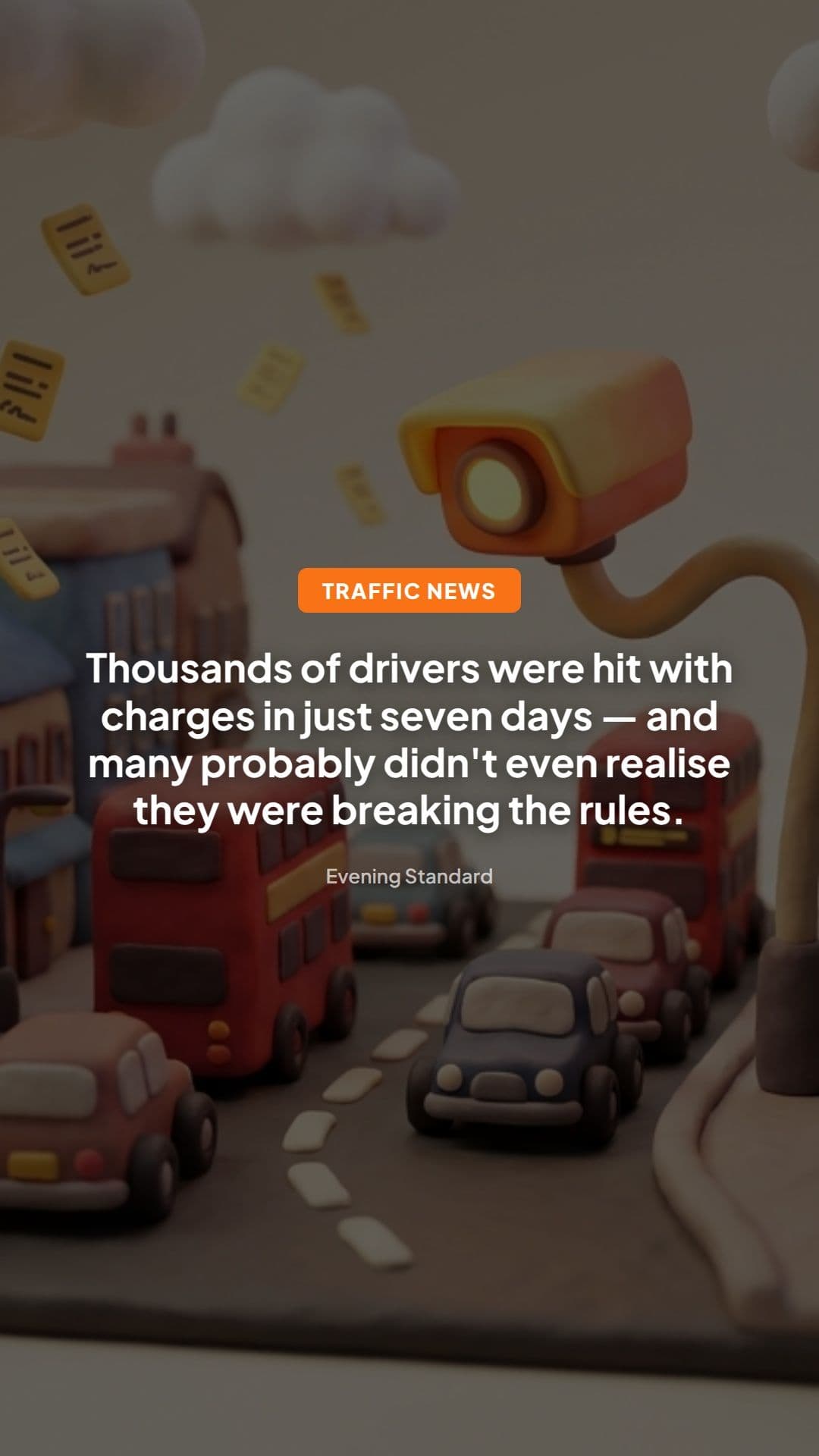
If you drive in London, the past week may have felt like the roads suddenly grew eyes. That's because they did — thousands of them. A major Metropolitan Police enforcement operation, reported by the Evening Standard, deployed Automatic Number Plate Recognition (ANPR) cameras across the capital in a week-long crackdown targeting both Ultra Low Emission Zone (ULEZ) non-compliance and bus lane contraventions. Thousands of charges were issued. And if you think this was a one-off, think again.
What Actually Happened
The Met Police operation — coordinated with Transport for London (TfL) — focused on what authorities describe as "priority areas": routes where ULEZ non-compliance and bus lane abuse are most persistent and where the impact on congestion and air quality is measurable. ANPR cameras, which can read and cross-reference number plates against vehicle databases in milliseconds, were central to the operation.
The scale is significant. Thousands of penalty charge notices (PCNs) and fixed penalty notices (FPNs) issued in a single week represents a substantial enforcement surge. It signals a deliberate shift in posture — from passive monitoring to active, high-volume prosecution.
This isn't simply about revenue. The stated aims were twofold: improving compliance with emissions standards and reducing congestion caused by private vehicles using bus lanes. Whether you accept those justifications at face value or view them with scepticism, the practical consequences for drivers are very real.
Why This Matters: The Bigger Picture
London's ULEZ has been one of the most politically contentious transport policies in recent memory. Originally covering just central London, it was expanded in August 2023 to cover all 33 London boroughs — a move that triggered significant backlash, legal challenges, and even camera vandalism. The scheme charges non-compliant vehicles £12.50 per day, with failure to pay resulting in a penalty of £180, reduced to £90 if paid within 14 days.
Bus lane enforcement has a longer history but has similarly intensified. With London's bus network carrying approximately six million passenger journeys per day, keeping bus lanes clear is a genuine operational priority — not merely a revenue exercise. Every car that drifts into a bus lane slows services, increases journey times, and undermines the case for sustainable urban transport.
What makes this particular operation notable is the police involvement. Day-to-day ULEZ enforcement is typically handled by TfL using civil penalty mechanisms. Bus lane contraventions are similarly a civil matter in most cases. When the Met steps in with a dedicated operation, it elevates the enforcement profile considerably — and it suggests that the volume of non-compliance has reached a level that authorities feel demands a more visible response.
There's also a political dimension. With ongoing debates about the future of London's transport charging landscape, including discussions about a potential vehicle levy targeting larger vehicles, enforcement operations like this serve as a public signal: the rules are being taken seriously, and the cameras are watching.
The Legal Angle: Know What You're Actually Dealing With
Understanding the legal framework here is crucial, because ULEZ charges and bus lane PCNs are fundamentally different types of penalty, and they carry different rights and appeal routes.
ULEZ Charges
The ULEZ operates under the Road User Charging (Enforcement and Adjudication) (London) Regulations 2014, alongside the Transport for London Act 2008 and associated secondary legislation. Non-payment of the daily charge triggers a Penalty Charge Notice issued by TfL — this is a civil matter, not a criminal one.
Crucially, liability falls on the registered keeper of the vehicle, not necessarily the driver. This mirrors the approach used for congestion charge enforcement. If you lend your car to someone who drives it into the ULEZ without paying, the PCN lands with you.
Exemptions do exist. Vehicles that qualify include those meeting Euro 6 diesel or Euro 4 petrol standards, as well as all electric vehicles. Certain categories of vehicle — including military vehicles, historic vehicles over 40 years old, and some specialist vehicles — are also exempt. Critically, disabled tax class vehicles and those with a valid disabled driver exemption may qualify for a 100% discount, but this must be registered in advance with TfL. Simply assuming your vehicle qualifies is a common and costly mistake.
Bus Lane PCNs
Bus lane contraventions are governed by the Traffic Management Act 2004 and enforced under civil parking enforcement powers. In London, TfL and the relevant London borough councils can issue PCNs for bus lane violations captured on camera. The standard penalty is £160, reduced to £80 if paid within 14 days — though in some cases the higher Band A rate of £130/£65 applies depending on the specific contravention.
The Met Police involvement in this operation adds an interesting layer. If officers were physically present at locations and observed contraventions in real time, there is a possibility that some offences could be treated as moving traffic offences under the Road Traffic Act 1988, which carry criminal rather than civil consequences — including potential prosecution, fines, and points on your licence. However, the bulk of charges issued during camera-based operations of this kind are civil PCNs.
Your Right to Appeal
Both ULEZ charges and bus lane PCNs carry a formal right of appeal. For TfL-issued penalties, the process runs:
- Informal challenge to TfL within 28 days of the PCN
- Formal representation if the informal challenge is rejected
- Independent adjudication at the London Tribunals (formerly PATAS) if the formal representation fails
London Tribunals adjudicators are independent of TfL and the councils. They have a strong track record of overturning penalties where procedural errors exist, signage is inadequate, or the registered keeper can demonstrate they were not the driver and took reasonable steps to identify who was.
What Drivers Should Know: Practical Takeaways
Whether you received a charge during this blitz or simply want to avoid one in future, here's what actually matters:
Check your vehicle's compliance status now. TfL's ULEZ compliance checker at tfl.gov.uk accepts your registration number and tells you instantly whether your vehicle meets the standard. Don't assume — check. Vehicles that look modern can still fail if they're older diesel models.
Register any exemptions before you drive. Disabled exemptions, grace periods for recently purchased vehicles, and certain other discounts must be actively registered with TfL. They are not applied automatically, even if you're entitled to them.
Understand where bus lanes operate and when. Many bus lanes in London are not restricted 24 hours a day. Signage will show the hours of operation — outside those hours, any vehicle can legally use the lane. However, ANPR cameras don't always make this distinction obvious to drivers in the moment. Know your route.
Don't ignore a PCN. Whether it's a ULEZ charge or a bus lane penalty, ignoring it will cause the fine to escalate significantly. A £90 ULEZ penalty that goes unpaid can ultimately result in a charge certificate and debt recovery action.
If you believe a charge is wrong, challenge it. Common valid grounds include: your vehicle was exempt but not registered as such (act quickly to rectify this), the signage at the location was inadequate or obscured, you were not the registered keeper at the time of the contravention, or there was a genuine emergency. Keep any evidence — photographs, receipts, medical records — that supports your case.
Be aware of hire and lease vehicles. If you drive a company car or lease vehicle, the PCN will go to the registered keeper first. Most fleet operators will pass the liability to the driver, but there can be delays. Check with your employer or leasing company about their process.
Looking Ahead: This Is the New Normal
The Metropolitan Police operation is best understood not as a one-off blitz, but as a preview of the enforcement environment London drivers will increasingly face. ANPR technology is becoming cheaper, more accurate, and more widely deployed. The data infrastructure that allows a camera to check a plate against ULEZ compliance records, insurance databases, and MOT status in real time is only going to become more sophisticated.
TfL has been explicit that ULEZ enforcement will remain a priority, and the political will to maintain bus lane integrity shows no sign of weakening. If anything, as London continues to develop its transport charging framework — with vehicle levies and potential road pricing schemes on the horizon — the enforcement apparatus will grow alongside the regulatory complexity.
For drivers, the message is clear: the era of low-risk non-compliance in London is over. The cameras are everywhere, they're accurate, and the penalties are substantial. Understanding the rules, checking your vehicle's status, and knowing your rights when things go wrong isn't optional anymore — it's essential.
The road ahead is monitored. Drive accordingly.
Written by
Mohammed Al-Hassan
Appeals Tribunal Specialist
Ready to Challenge Your Ticket?
Let our AI analyse your PCN and generate a professional appeal letter in minutes.
Start Free Appeal