Medway Hospital Parking Charge Rise: Staff May Quit
Medway Maritime Hospital has raised daily parking from £9.20 to £15. Staff warn the 60% increase could harm recruitment, retention and patient care locally.

The Parking Ticket Pal Editorial Team
9 September 2026
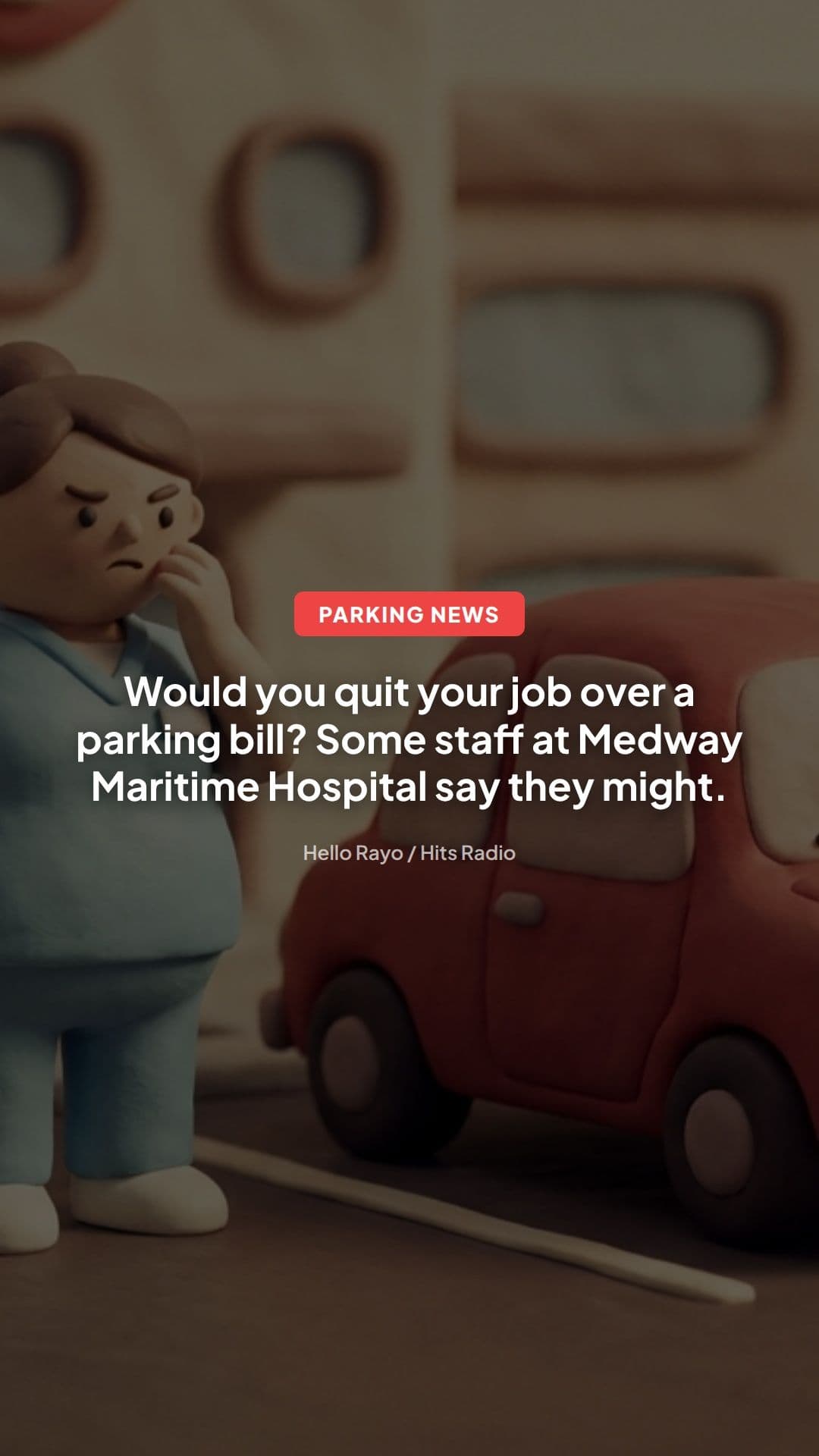
Medway Hospital Staff Say They're Considering Leaving Following Parking Charge Rise
When Getting to Work Costs More Than a Tank of Fuel
Imagine clocking in for a twelve hour shift on a hospital ward, only to discover that simply parking your car near your workplace now costs more than lunch, fuel and a coffee combined. That's the reality facing staff at Medway Maritime Hospital in Gillingham, Kent, after the site's standard daily parking charge jumped from £9.20 to £15. For many employees, that's not a minor inconvenience. It's a genuine factor in whether they stay in their jobs.
According to reporting by Hello Rayo and Hits Radio, staff at the hospital, which is run by Medway NHS Foundation Trust, say the 60% increase could damage recruitment and retention at a time when the NHS is already struggling to keep hold of experienced workers. It's a story that sounds small on the surface, a car park price hike, but it taps into much bigger questions about how hospitals fund themselves, how fairly staff are treated, and what rights drivers actually have when they park on NHS land.
What Happened at Medway Maritime Hospital
The headline figure is straightforward. The standard daily parking rate at Medway Maritime Hospital rose from £9.20 to £15, an increase of roughly 60% in one move. For staff who drive to work regularly, that's not a one-off cost. It's a recurring daily expense that adds up fast.
To put it in perspective, if a member of staff works around 220 shifts a year and pays the full daily rate each time, the difference between the old and new charge works out to somewhere in the region of an extra £1,200 annually, money that comes straight out of take-home pay for the privilege of turning up to work. That's a rough illustrative calculation rather than a figure quoted in the original report, but it helps explain why staff are reportedly framing this as a retention issue rather than a minor gripe.
Medway Maritime Hospital isn't operating in isolation here. Other NHS trusts around the country have also been raising parking charges in recent times, part of a wider pattern of hospitals leaning on car parking income as budgets tighten. Similar rows have played out elsewhere, including concerns raised over parking charge increases at Northumbria's NHS sites and long running disputes about fairness in hospital car parks more generally.
Why This Matters Beyond the Car Park Barrier
Hospital parking charges have been a sore point in the UK for years, and for good reason. Unlike an office worker who might choose their employer partly based on commuting costs, NHS staff often have limited flexibility. Shift patterns rarely align with public transport timetables, particularly for night shifts or early starts, and many hospital sites, Medway Maritime Hospital included, sit in areas where buses and trains don't run conveniently around the clock. For a huge proportion of staff, driving isn't a lifestyle choice. It's the only realistic way to get to work.
That's precisely why a 60% jump in charges lands so heavily. Nurses, healthcare assistants, porters, cleaners and administrative staff are already contending with a cost of living squeeze, ongoing pay disputes across the NHS, and a workforce crisis that has left many departments stretched thin. Adding a substantial new cost to simply arriving at work risks pushing some staff towards trusts, or entirely different careers, where that cost doesn't exist.
There's also an equity dimension. Lower paid staff, who are disproportionately likely to work irregular shifts, are hit hardest by parking charges as a proportion of their income. A senior consultant on a six figure salary barely notices a £15 daily charge. A porter or healthcare assistant on a fraction of that salary feels it acutely. Unions and staff representative groups have long argued that hospital parking charges effectively act as a tax on the lowest paid members of the NHS workforce, and this increase will only sharpen that argument.
The Legal Angle: What Rules Actually Govern Hospital Parking
It's worth understanding how hospital car parks differ legally from the roadside parking most drivers are familiar with. A charge issued on a public highway for a parking contravention is a Penalty Charge Notice, backed by traffic legislation and local authority enforcement powers. Hospital car parks, by contrast, are private land. Any charge for staying beyond your paid time, or for not paying at all, is a Parking Charge Notice, which is a contractual matter rather than a statutory penalty.
This distinction matters because it means the trust, or whichever operator runs the car park on its behalf, is relying on the terms displayed on signage to form a contract with anyone who parks there. If a hospital uses a private parking company to enforce its car park, that company must comply with the relevant trade body code of practice, either through the British Parking Association or the International Parking Community, and with the keeper liability provisions set out in the Protection of Freedoms Act 2012. Anyone who believes they've been unfairly charged in a hospital car park still has the right to challenge it through the operator's internal appeals process and, if necessary, through POPLA or the Independent Appeals Service.
Separately, there's a policy layer that's specific to the NHS. The Department of Health and Social Care has issued guidance to trusts in England setting out groups who should not be charged for hospital parking, including Blue Badge holders, frequent outpatient attenders, parents of children staying overnight, and staff working night shifts. Trusts have discretion over exactly how this is implemented locally, which is why concessions and eligibility criteria can vary from one hospital to the next. Staff who feel they may qualify for a reduced or waived charge, particularly those on night rotations, should check what Medway NHS Foundation Trust's own policy says rather than assuming the standard rate automatically applies to them.
It's important to stress that a car park price increase itself isn't something drivers can challenge on legal grounds. A trust, like any private landowner, is generally entitled to set its own tariffs. Where legal protection kicks in is around how charges are enforced, how clearly they're signposted, and whether contractual terms have been properly brought to a driver's attention before they park.
What Staff and Visitors Should Know
If you're affected by a rise like this, either as staff or as a visitor to the hospital, there are a few practical steps worth taking.
- Check for concessions. Ask your trust's HR or estates team whether you qualify for reduced or free parking as a night shift worker, Blue Badge holder, or frequent attender. Eligibility isn't always publicised clearly.
- Look into salary sacrifice or discounted permit schemes. Some trusts offer staff parking permits at a reduced monthly rate compared with paying the daily rate every shift. It's worth asking whether Medway offers anything similar.
- Explore alternative arrangements. Car sharing with colleagues, off-site parking further from the hospital, or local park and ride style options can sometimes cut costs significantly, even if they add a short walk.
- Keep evidence of payment. Whether paying via an app, machine or permit, keep proof. If you're mistakenly issued a charge despite paying, this evidence is essential for an appeal.
- Understand your appeal rights. If you believe a parking charge notice has been issued unfairly, whether due to a payment system error or unclear signage, you can challenge it through the operator's appeals process, and escalate to POPLA or the IAS if it's rejected.
If you're a doctor or clinician wondering about specific permit arrangements, it's worth reading up on how doctors' parking permits work more broadly across the UK, since eligibility and application processes differ by trust.
Looking Ahead
The situation at Medway Maritime Hospital is unlikely to be an isolated case. As NHS trusts face mounting financial pressure, car parking income remains an easy, if unpopular, lever to pull. But the risk is real: if staff genuinely start leaving over parking costs, trusts could find themselves spending far more on recruitment and agency staff than they ever recouped from car park tariffs.
Expect continued pressure from unions and staff groups for a more standardised, fairer approach to NHS parking charges, potentially including calls for national caps or clearer concession rules. For now, staff and patients alike would do well to check exactly what they're entitled to, because in the world of hospital parking, the fine print often matters just as much as the headline price.
Written by
The Parking Ticket Pal Editorial Team
Source-checked parking guidance
Ready to Challenge Your Ticket?
Let our AI analyse your PCN and generate a professional appeal letter in minutes.
Start Free Appeal