Medway ANPR Cameras: What Drivers Need Before Fines
Medway's new ANPR cameras will target yellow boxes, no-entry and right turns at 17 sites. Find out when warning letters could lead to penalty charge notices.

The Parking Ticket Pal Editorial Team
9 September 2026
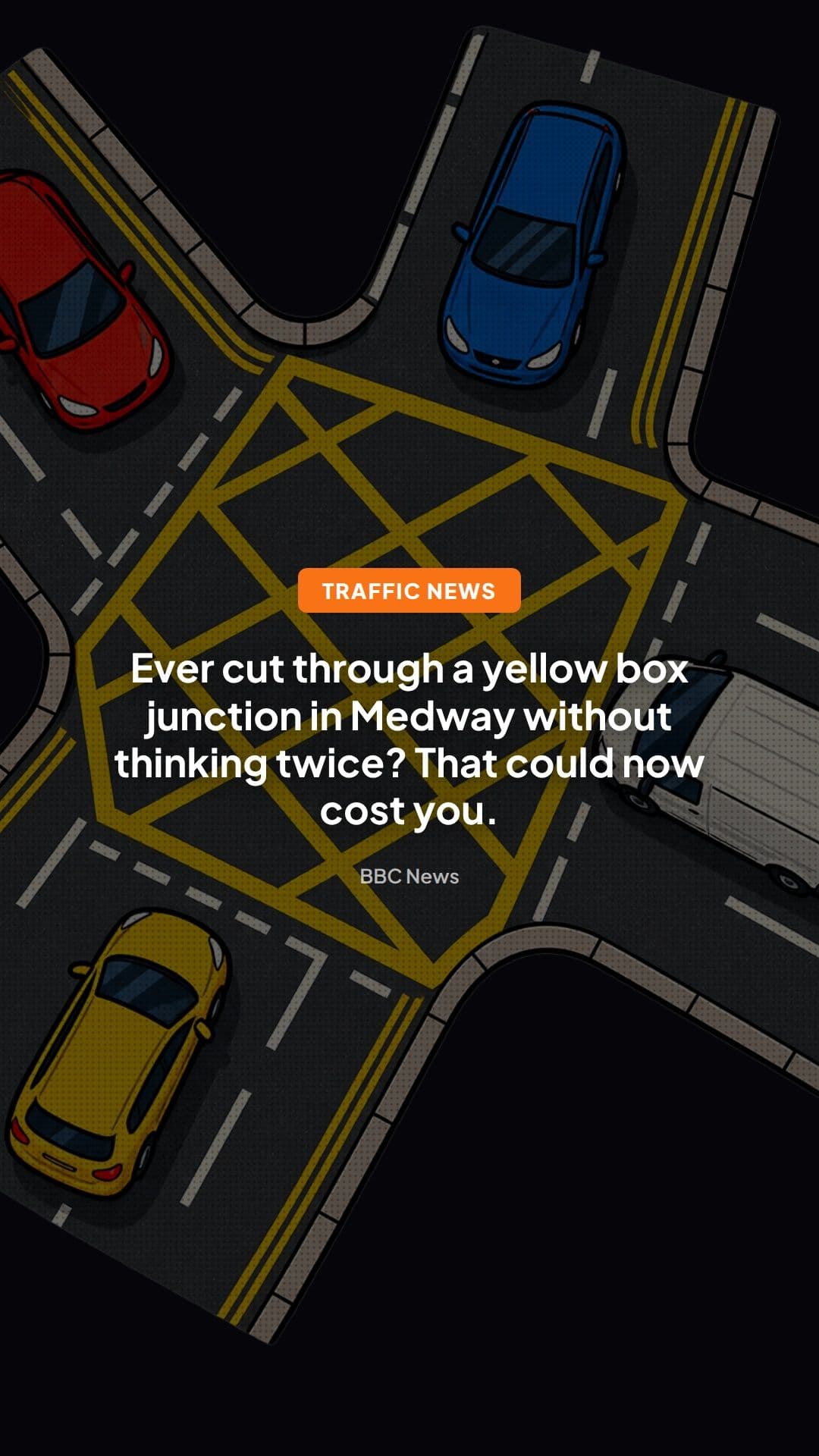
New Eyes on Medway's Roads: What the ANPR Camera Rollout Really Means for Drivers
Picture this: you're navigating the one-way maze around Chatham or nipping through Rochester on your daily commute, and you cut the corner at a box junction because the car in front stalled, or you sneak a right turn you've made a hundred times before. Until now, unless a traffic warden happened to be standing there with a notebook, you'd likely get away with it. That's about to change across Medway, and it's a shift that mirrors what's already happened in dozens of towns and cities across England.
Medway Council is switching on Automatic Number Plate Recognition (ANPR) cameras at 17 locations to catch drivers who ignore yellow-box junction rules, banned turns and no-entry restrictions. It sounds like a small local story, but it actually taps into a much bigger, ongoing transformation in how moving traffic offences are policed in the UK, and it's worth understanding properly before you find a penalty charge notice landing on your doormat.
What's Actually Happening in Medway
According to reporting from BBC News, the new camera network will monitor 17 sites across the Medway area, targeting three specific types of contravention: entering or stopping in a yellow box junction when your exit isn't clear, making a prohibited right turn, and driving through a no-entry restriction.
Crucially, the council isn't going straight for the jugular. Drivers caught by the cameras for the first time will reportedly receive a warning letter rather than an immediate penalty. It's only repeat offences, after that warning has been issued, that will trigger an actual fine. This "one free pass" approach isn't unique to Medway. Several other local authorities have adopted similar phased introductions when bringing in new camera enforcement, partly to build public awareness and partly to blunt the inevitable backlash that comes with any expansion of automated enforcement.
The locations themselves haven't all been detailed publicly, but the contravention types point to Medway's chronic pinch points: junctions where impatient drivers block the box during rush hour, and streets where banned turns exist to manage traffic flow around residential areas or town centres.
Why This Matters Beyond Medway
It's tempting to see this as a purely local story, but it fits into a much wider pattern that's been reshaping British roads since 2022. Before then, councils outside London were largely unable to use camera evidence to enforce moving traffic contraventions such as box junctions, banned turns and no-entry zones. That power was historically reserved for the police, and enforcement in practice was patchy at best, since officers have far bigger priorities than watching a single junction all day.
Everything changed with legislative reforms that allowed local authorities in England to apply to the Department for Transport for powers to enforce these offences themselves using ANPR. Since then, council after council has taken up the option, and Medway now joins that growing list.
For residents, this matters because it fundamentally changes the odds. A contravention that might previously have gone unnoticed nine times out of ten will now be captured reliably, every time, by a camera that doesn't get distracted, doesn't need a tea break and doesn't care whether you're in a hurry. The behavioural logic behind this is straightforward: cameras change driver habits far faster than the occasional police patrol ever could, because the perceived risk of being caught rises sharply.
There's also a financial dimension that local authorities won't shy away from, even if it's rarely the headline reason given. Penalty Charge Notices generate revenue for councils, and moving traffic enforcement has become an increasingly significant income stream since the 2022 changes. That doesn't make the enforcement illegitimate. Yellow box junctions and no-entry restrictions exist for genuine safety and congestion reasons. But it's a factor worth keeping in mind when assessing why a council might prioritise a rollout like this.
The Legal Framework Behind the Cameras
The legal basis for this kind of enforcement sits within the Traffic Management Act 2004, which governs civil enforcement of parking and moving traffic contraventions in England. Local authorities outside London gained the ability to enforce a defined list of moving traffic offences using camera evidence following secondary legislation that came into force in 2022, extending powers that London boroughs had already held for years.
For a PCN issued under this camera enforcement to be valid, the council must comply with strict procedural rules. The signage and road markings at each site must meet the standards set out in the Traffic Signs Regulations and General Directions 2016. This is not a minor technicality. If a yellow box junction's markings have faded, or a no-entry sign isn't positioned or sized correctly, that can form a legitimate ground for challenging a penalty.
Once a PCN is issued, drivers have the right to make formal representations to the council under the Traffic Management Act 2004, setting out why they believe the penalty shouldn't stand. If the council rejects those representations, the next step for Medway drivers, since Medway sits outside London, is an appeal to the Traffic Penalty Tribunal, an independent body that adjudicates on these disputes. This is different from London, where appeals go through London Tribunals. It's a distinction that matters if you're trying to find the right process to follow.
Drivers should also be aware of the standard timelines: there's typically a 28-day window to pay or challenge a PCN, often with a reduced payment available if you settle within the first 14 days. Ignoring a PCN entirely doesn't make it disappear. It escalates, potentially through a Notice to Owner, registration of the debt, and ultimately enforcement action.
What Drivers Should Know
If you regularly drive through Medway, a few practical steps are worth taking now, before the cameras start generating penalties in earnest.
Learn the specific junctions. Even if the full list of 17 locations isn't widely publicised yet, keeping an eye on local council communications and road signage will help you identify exactly where the new enforcement zones are.
Don't rely on the warning letter as a safety net. It's designed as a one-off grace period, not a standing invitation to make the same mistake twice. Treat any warning letter as a serious signal to change your driving habits at that location immediately.
Photograph unclear or faded signage if you're ever issued a penalty. Poor signage or worn-out box junction markings are among the most successful grounds for a successful challenge, but you need evidence at the time, since councils can and do repaint or replace signs after a complaint is made.
Understand what "clear exit" really means at box junctions. You're only entitled to enter a yellow box if your exit road is clear, or if you're turning right and only prevented from doing so by oncoming traffic or other vehicles waiting to turn right. Many genuine contraventions happen because drivers misjudge this rule under pressure, particularly in slow-moving queues.
Check your vehicle's paperwork if you sell a car. If you dispose of a vehicle around the time these cameras go live, make sure the DVLA has an up-to-date record, since a PCN issued after a sale can otherwise land on the wrong person's desk and cause unnecessary stress to resolve.
Take formal representations seriously and act promptly. If you believe a penalty was wrongly issued, whether due to genuine confusion at a new junction layout, unclear signage, or an ANPR misread of your number plate, don't simply ignore the notice. Respond within the timeframes given and keep copies of everything you submit.
Looking Ahead
Medway's rollout is unlikely to be the last of its kind in the region or nationally. As councils face ongoing pressure over congestion, road safety and enforcement budgets, ANPR-based moving traffic enforcement is likely to keep expanding into towns that previously relied on stretched police resources or simply tolerated low-level rule-breaking at junctions.
For drivers, the sensible response isn't panic, it's adaptation. Learning the layout of your regular routes, paying close attention to road markings, and treating warning letters as genuine final notices rather than empty threats will keep most people well clear of any penalty. But if you do receive a PCN you believe is unfair, whether because of confusing signage, a genuine ANPR error, or a technicality in how the contravention was recorded, it's worth taking the formal representation process seriously rather than assuming a camera-issued fine is automatically unchallengeable. Camera enforcement has expanded the reach of traffic rules considerably, but it hasn't removed a driver's right to a fair and properly evidenced case against them.
Written by
The Parking Ticket Pal Editorial Team
Source-checked parking guidance
Ready to Challenge Your Ticket?
Let our AI analyse your PCN and generate a professional appeal letter in minutes.
Start Free Appeal