
Manchester Parking Charges Generate £17m Council Surplus
Manchester City Council made a reported £17m surplus from parking charges in 2025–26. Our analysis examines income, costs and what it means for drivers.

The Parking Ticket Pal Editorial Team
3 October 2026
Manchester City Council's £17m Parking Profit: What It Means For Drivers
Picture this: you pop into the city centre for a couple of hours, feed the meter, dash back to avoid a ticket, and head home slightly poorer. Multiply that frustration by hundreds of thousands of drivers across Greater Manchester, and you start to understand how a council can turn kerbside space into a genuine cash cow. New figures reveal that Manchester City Council banked a surplus of around £17 million from parking in the 2025–26 financial year. That is not loose change. It is the kind of money that funds buses, fixes potholes, or props up budgets that would otherwise be under serious strain.
What Happened
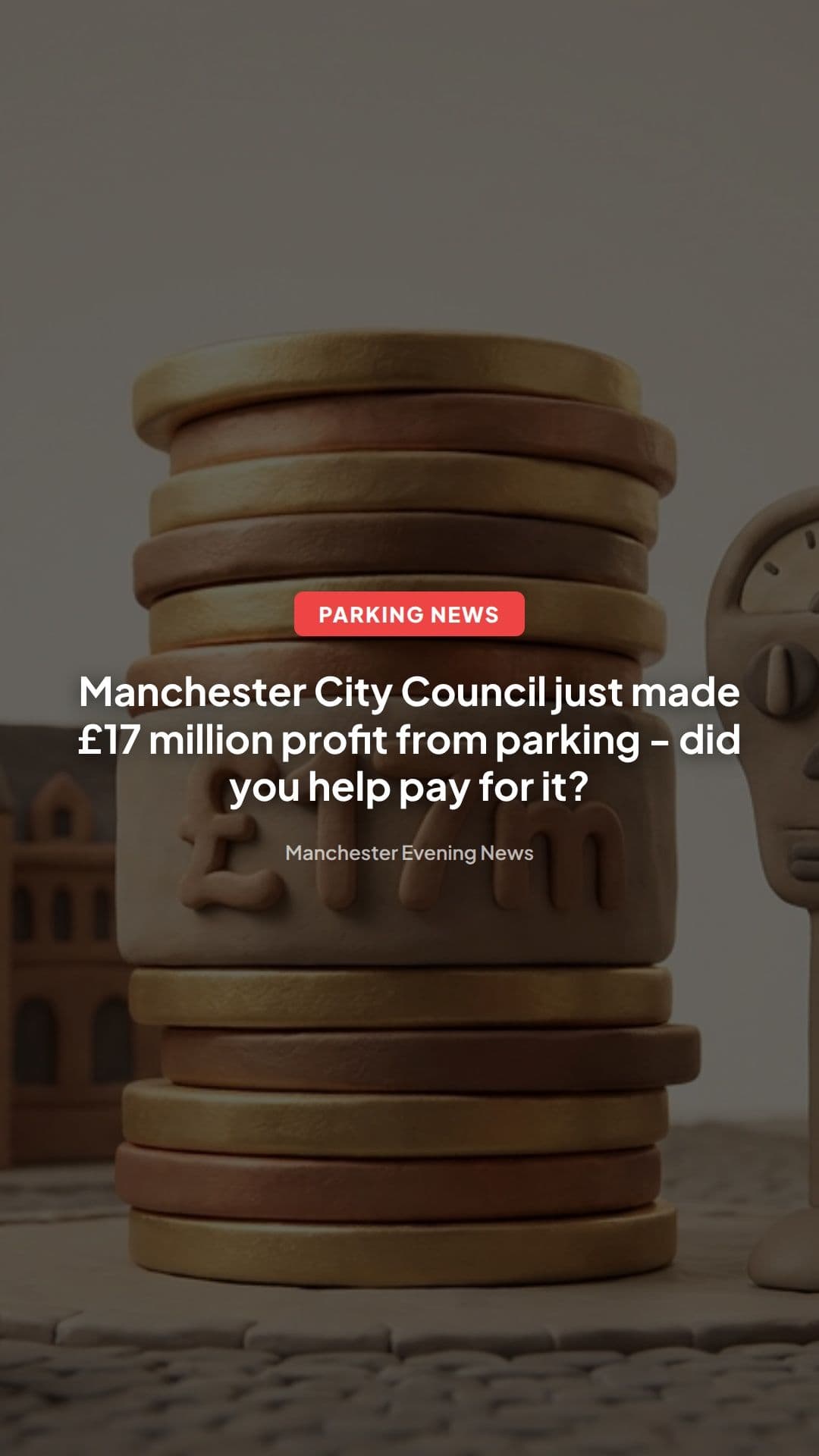
According to reporting by the Manchester Evening News, Manchester City Council generated £39.1 million in parking income during 2025–26. Against that, the authority recorded operating costs of £22.1 million, leaving a surplus of roughly £17 million.
That income figure covers the full spread of parking revenue streams a local authority typically relies on: on-street pay and display charges, resident and business permits, penalty charge notices (PCNs) for overstays or parking violations, and off-street car park fees where the council operates its own sites. The £22.1 million in costs reflects what it actually takes to run that operation: staffing for civil enforcement officers, back-office processing, signage, bay maintenance, appeals handling, and the technology behind cashless payment and enforcement systems.
Strip away the jargon and the headline is simple. Manchester's parking operation made significantly more money than it cost to run, and the gap between the two numbers is substantial enough to make headlines on its own.
Why It Matters
Councils up and down England have been generating eye-watering parking surpluses for years, and Manchester's figures sit within that wider pattern rather than as an outlier. What makes this story worth unpacking is not just the size of the number, but what it says about how parking has quietly become one of the more dependable revenue lines in local government, at a time when councils are under relentless financial pressure elsewhere.
Local authorities have faced years of squeezed central government funding, rising demand for social care, and inflation eating into budgets. Parking income, unlike council tax or business rates, is relatively flexible. Charges can be adjusted, enforcement can be stepped up, and zones can be expanded, all without needing a referendum or the kind of political battle that comes with raising core taxes. It is, in effect, one of the few levers councils can pull with relative speed.
For residents and visitors, though, that flexibility cuts the other way. Every tweak to charges, every new restriction, and every enforcement camera represents a potential cost landing on ordinary drivers who are simply trying to get to work, see family, or run errands in a city that, like most of Britain's major urban centres, was not built with modern traffic volumes in mind.
It is also worth setting this in the context of Manchester's wider transport strategy. The city has been pushing hard on reducing car dependency, expanding the Bee Network, and introducing a Clean Air Zone framework in Greater Manchester, even if the CAZ itself has had a turbulent and much-delayed rollout. Parking charges and enforcement sit comfortably alongside that agenda: the more expensive and inconvenient it is to drive and park, the stronger the incentive to use public transport instead. Whether that is good policy or an unfair squeeze on drivers who have no realistic alternative depends very much on where you live and what your daily commute actually looks like.
The Legal Angle
It is a common misconception that councils can simply pocket parking profits and spend them however they like. In England, that is not the case. Section 55 of the Road Traffic Regulation Act 1984 (as amended) places restrictions on how local authorities can use surplus income from on-street parking and PCNs. In broad terms, any surplus must be ring-fenced for transport-related purposes, which can include highway maintenance, public transport improvements, road safety schemes, and environmental initiatives connected to transport. Councils are required to report annually on how this income is spent, and the Department for Transport publishes guidance setting out what counts as a legitimate use of the money.
This matters because it undercuts the simplistic framing of parking charges as pure profiteering. In theory, at least, that £17 million surplus cannot be funnelled into unrelated council services such as libraries or leisure centres. It is meant to stay within the transport ecosystem. Whether every pound is spent exactly as intended, and whether the public feels the benefit of it, is a separate and much more contentious question, but the legal framework itself is reasonably clear.
It is also worth remembering the distinction between council-issued PCNs and private parking charges. Council enforcement, whether through civil enforcement officers or ANPR cameras, falls under the Traffic Management Act 2004 and the decriminalised parking enforcement regime, meaning disputes go through an independent adjudication system such as the Traffic Penalty Tribunal rather than the criminal courts. Private parking operators on retail or leisure sites operate under a completely different contractual framework governed by the British Parking Association or International Parking Community codes of practice, and disputes there follow a different appeals route entirely. If you are unsure which category a ticket falls into, our guide to understanding PCN codes is a useful starting point for working out exactly what you are dealing with.
What Drivers Should Know
If you drive in or around Manchester regularly, there are a few practical things worth bearing in mind given how central parking income has become to council finances.
Check signage carefully before you leave the car. Councils are entitled to enforce restrictions strictly, and ambiguous or poorly maintained signs are one of the few genuine weak points in an otherwise robust enforcement system. If you ever find yourself contesting a PCN, the condition and clarity of signage at the time can be a legitimate basis for appeal.
Understand the difference between a council PCN and a private parking charge. They look similar on paper but carry very different legal weight and different appeals processes. Getting this wrong at the outset can waste valuable time.
Don't assume a ticket is correct just because it was issued by ANPR. Automatic number plate recognition systems are not infallible, and errors in timing, vehicle recognition, or bay markings do occur. If something looks wrong, it is worth challenging through the proper channel rather than simply paying up out of inconvenience.
If you live in a controlled parking zone, keep your permit situation watertight. Resident and visitor permit schemes are a significant slice of council parking income, and enforcement around permit bays tends to be rigorous. Our guide on residents parking permit rules and common traps covers some of the pitfalls that catch people out, from expired permits to parking fractionally outside a permitted bay.
Act quickly if you intend to appeal. Both informal representations to the council and formal appeals to the Traffic Penalty Tribunal operate on strict deadlines. Missing them can close off options that would otherwise have been available.
None of this amounts to legal advice for any individual situation. If you are facing a specific dispute with significant money or points at stake, it is worth seeking guidance tailored to your own circumstances rather than relying solely on general commentary.
Looking Ahead
Manchester's £17 million parking surplus is unlikely to be a one-off. With council budgets remaining tight and transport strategy increasingly geared towards reducing car use in city centres, parking income looks set to stay an attractive and growing revenue stream for local authorities across the country. Expect continued investment in enforcement technology, further scrutiny of how ring-fenced surpluses are actually spent, and ongoing public debate about whether charges are calibrated to manage traffic or simply to raise money.
For drivers, the practical takeaway is straightforward even if the politics are not: parking in major UK cities is only going to become a more carefully monitored, more strictly enforced, and more costly part of daily life. Knowing the rules, keeping paperwork in order, and understanding your right to challenge a ticket when something genuinely looks wrong has never mattered more.
Written by
The Parking Ticket Pal Editorial Team
Source-checked parking guidance
Ready to Challenge Your Ticket?
Let our AI analyse your PCN and generate a professional appeal letter in minutes.
Start Free Appeal