Manchester Airport £170 Parking Fine: What Drivers Can Do
A mum faced a £170 Manchester Airport parking charge after a five-minute drop-off. Learn how private parking appeals, deadlines and driver rights work.

The Parking Ticket Pal Editorial Team
7 September 2026
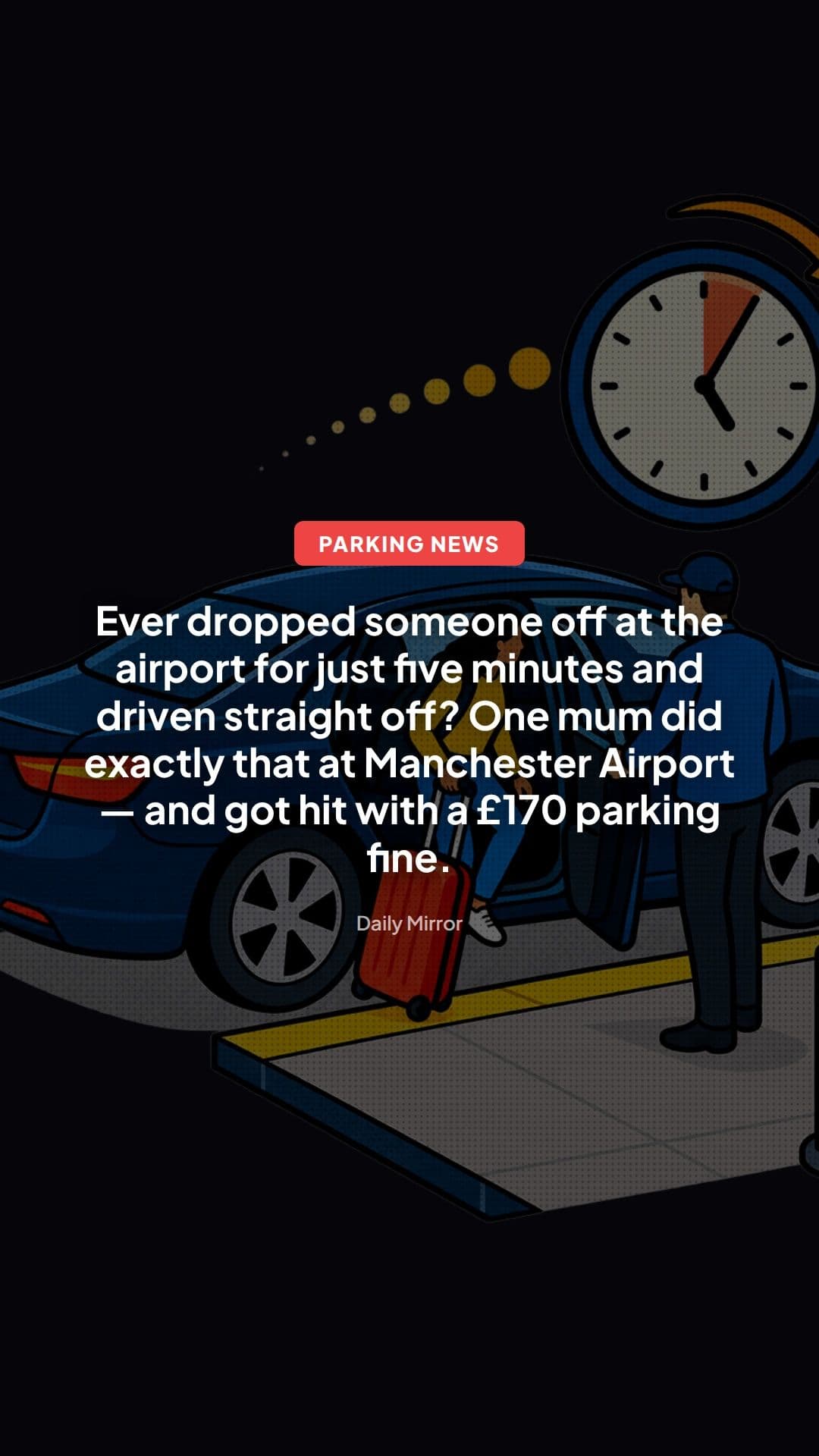
Mum handed 'ridiculous' £170 Manchester Airport parking fine after five-minute drop-off
Picture the scene: you pull into an airport drop-off zone, help an elderly relative or a nervous first-time flyer out with their luggage, wave them off through the terminal doors, and drive away. Total time elapsed? Maybe five minutes. It sounds like the most mundane moment imaginable. Yet for one mum, that brief pause turned into a £170 parking charge, a stressful appeal, and a sharp lesson in how private parking enforcement at UK airports actually works.
What happened
According to a report in the Daily Mirror, a driver was hit with a parking charge notice after a five-minute stop at Manchester Airport to drop someone off. The original charge was £60, a figure that already raises eyebrows for a stop lasting a matter of minutes, but by the time it reached her it had ballooned to £170. That's the kind of escalation drivers see when an initial charge goes unpaid within the discount window and then attracts additional fees as it moves through the enforcement process.
She challenged it, describing the fine as "ridiculous" given how briefly she'd been on site. Eventually, the parking operator backed down, at least partially, agreeing to let her pay the original £60 amount rather than the inflated £170. It's a partial win, but it's hardly a triumphant vindication. She still had to pay a significant sum for what most people would consider an entirely reasonable act: dropping a passenger off at an airport.
This isn't an isolated quirk. Airport drop-off charging has become one of the most contentious corners of UK motoring, with terminals across the country installing camera-monitored zones that charge for even the briefest of stops, and private parking firms circling to enforce them.
Why it matters
The core issue here isn't really about one driver or one airport. It's about how normalised it has become for airports to treat a functional, everyday act like dropping off a passenger as a chargeable, monitored transaction, often with very little room for error.
Airports argue these fees fund terminal operations and encourage the use of designated drop-off zones rather than chaotic kerbside stopping outside departures. That's a reasonable enough rationale in principle. But the practical experience for drivers is often very different: unclear or easily missed signage, automatic number plate recognition (ANPR) cameras that log every second you're on site, and charges issued automatically without any human weighing up whether five minutes constitutes a genuine breach worth pursuing.
The gap between the "reasonable" justification and the "ridiculous" reality, to use this driver's own word, is where public frustration lives. Airports up and down the country, including Gatwick, Stansted, and East Midlands, have all faced scrutiny for drop-off charges that seem disproportionate to the brief window drivers actually spend there. Manchester Airport itself has previously had to defend its drop-off pricing structure publicly after complaints about steep fees for what amounts to a few minutes of kerbside time.
There's also a wider pattern worth noting: charges that start relatively modest, in this case £60, can escalate rapidly if a driver doesn't pay within the initial window, misses a letter, or simply doesn't realise a charge has been issued until it's already increased. That escalation from £60 to £170 in this story illustrates exactly how quickly these things can spiral, turning an already questionable charge into something far more painful.
The legal angle
It's worth understanding the legal framework that sits behind these charges, because it explains both why they're issued and why challenging them can work.
Airport drop-off and set-down zones are almost always private land, meaning any charge notice issued is a Parking Charge Notice (PCN) governed by contract law, not a council-issued penalty backed by traffic law. When you drive into a zone with clearly displayed terms and conditions, whether that's a maximum stay time or a payment requirement, you're deemed to have entered into a contract with the landowner or their managing agent. Overstay or fail to pay, and you're technically in breach of that contract, which is the legal basis for the charge.
The key protections for drivers come from the Protection of Freedoms Act 2012, which sets out the rules private parking companies must follow if they want to pursue the registered keeper (rather than the driver) for an unpaid charge, and from the various codes of practice operated by the trade bodies that private parking firms must belong to, such as the British Parking Association (BPA) and the International Parking Community (IPC). These bodies set rules around signage clarity, notice periods, and how charges can be escalated.
Crucially, for a charge to be enforceable, signage has to be clear, prominent, and give drivers a genuine opportunity to understand the terms before they're bound by them. If the signage at an airport drop-off zone is ambiguous, poorly lit, or easy to miss when you're focused on unloading bags and shepherding a passenger to the terminal, that can form the basis of a legitimate challenge. Unclear signage remains one of the strongest and most commonly successful defences against private parking charges.
There's also the question of proportionality. While private operators can set their own tariffs, a charge that appears wildly disproportionate to the actual "offence", such as a modest overstay of a minute or two, can sometimes be challenged on fairness grounds, particularly through the Independent Appeals Service or POPLA (the Parking on Private Land Appeals service), where BPA-affiliated firms' charges can be independently reviewed.
It's worth flagging that new rules on private parking are also on the horizon, with government proposals aimed at capping charges and introducing standardised grace periods across the sector. Until those changes are fully in force, though, drivers are still navigating a patchwork system where enforcement practices vary significantly between operators and sites.
What drivers should know
If you're dropping someone off at an airport, or facing a charge after doing so, there are some practical steps worth keeping in mind.
Know before you go. Check the specific airport's drop-off policy before you travel. Many now offer a short free window, but it's often shorter than you'd expect, sometimes as little as a couple of minutes, and free zones may be located further from the terminal than paid ones.
Read the signage properly. It sounds obvious, but signs at busy drop-off zones are often glanced at rather than read. Note the maximum stay time and whether payment is required immediately or only if you exceed a threshold.
Keep evidence. If you believe you were only on site for a few minutes, hold onto any evidence that supports this: satnav timestamps, phone location history, receipts from nearby purchases, or dashcam footage. This can be invaluable if you need to challenge a charge later.
Don't ignore the notice. Charges that go unpaid or unchallenged within the initial window tend to increase, exactly as happened in this case. If you intend to dispute a charge, do so promptly and in writing, setting out clearly why you believe the charge is unfair or shouldn't apply.
Understand who you're dealing with. Check which trade body the parking operator belongs to, as this determines your appeal route if an informal challenge doesn't succeed. An informal appeal is often worth attempting first, and a clear, factual template letter can go a long way before matters escalate to a formal tribunal stage.
Don't assume a reduction is a win. As this case shows, even a "successful" challenge may only get you back to the original charge, not a full cancellation. It's still worth asking whether that original charge was fair in the first place.
Looking ahead
Stories like this one are becoming a familiar feature of UK motoring journalism, and it's clear the pressure on airport operators and private parking firms to reform their drop-off charging practices isn't going away. Campaigners and some MPs have already called for tighter controls over airport set-down fees, and broader reforms to private parking enforcement are working their way through government consultation.
For now, though, drivers heading to Manchester or any other UK airport need to treat the drop-off zone with the same caution they'd apply to any unfamiliar car park: read the signs, know your time limit, and don't assume that a quick favour for a loved one is risk-free. Until the rules catch up with public expectations, a five-minute good deed can still come with a very unwelcome bill attached.
Written by
The Parking Ticket Pal Editorial Team
Source-checked parking guidance
Ready to Challenge Your Ticket?
Let our AI analyse your PCN and generate a professional appeal letter in minutes.
Start Free Appeal