Luxury Cars Seized in West End Crackdown: What It Means
Police seized 72 luxury cars worth over £6m in London’s West End. We examine the anti-social driving crackdown, false plates and uninsured vehicle risks.

The Parking Ticket Pal Editorial Team
20 August 2026
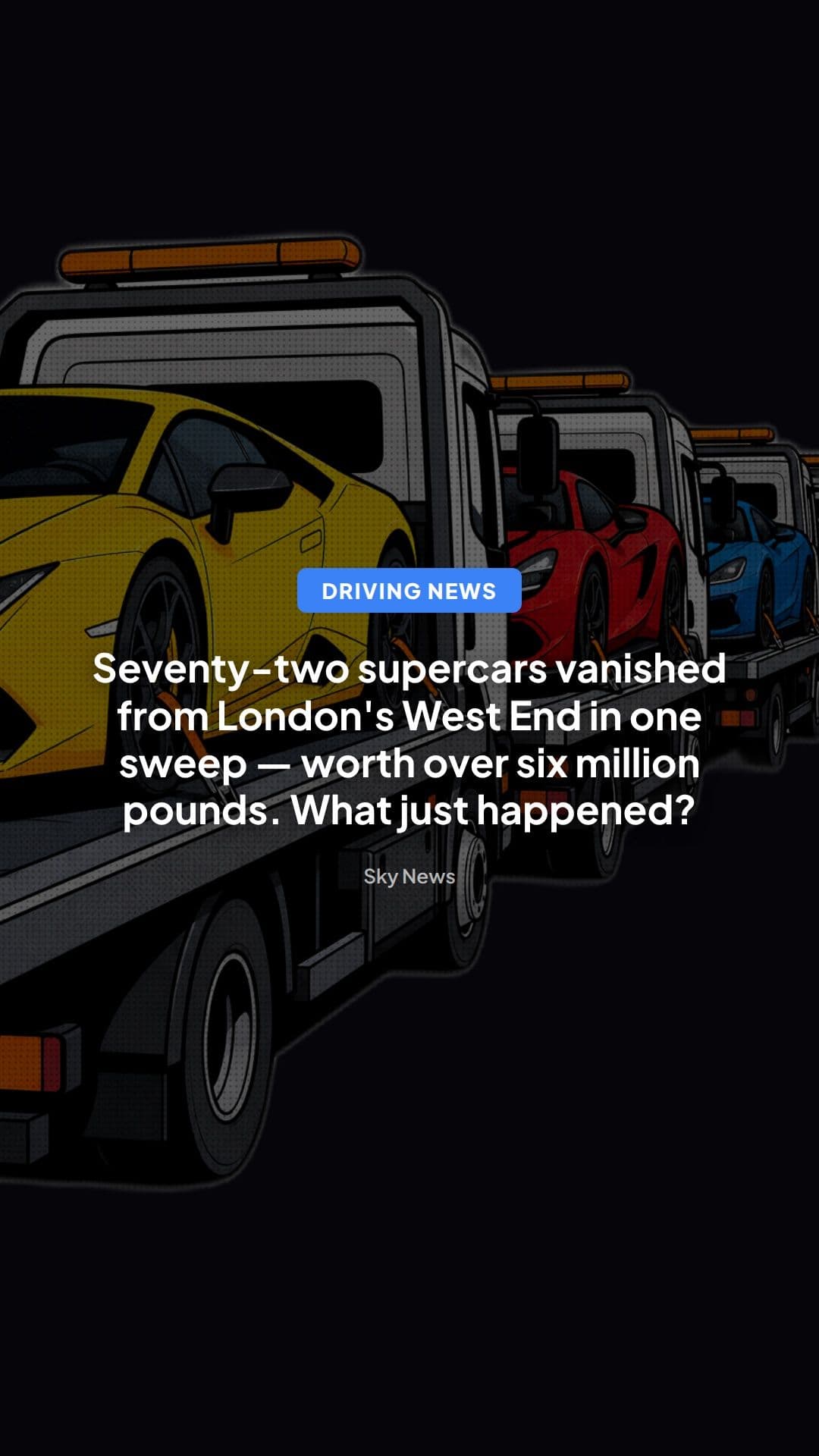
Police Seize 72 Luxury Cars Worth £6m in London's West End: What It Means for UK Drivers
Picture a Lamborghini, a Range Rover and a handful of high-spec supercars, all lined up on a low-loader outside some of London's most exclusive postcodes. That was the scene during a recent Metropolitan Police operation targeting anti-social driving in the West End, which saw 72 vehicles worth a combined total of more than £6 million taken off the road in one sweep.
It's a dramatic image, and one that plays neatly into the popular narrative of reckless supercar owners revving engines outside Harrods. But behind the headline numbers lies a far more interesting story about insurance fraud, forged documents, cloned number plates and the legal machinery that lets police simply take your car away, sometimes permanently.
What Happened
According to Sky News, the operation formed part of an ongoing crackdown on anti-social driving in central London, an area long plagued by convoys of modified supercars, illegal street meets and drivers treating Knightsbridge and Mayfair like a private racetrack. Officers seized 72 vehicles during the operation, with a combined value exceeding £6 million.
Crucially, this wasn't simply a case of clamping down on noisy exhausts or dangerous overtaking. The offences cited include driving without insurance or a valid licence, the use of false documents, and fraudulent number plates. In other words, alongside the anti-social driving element, police uncovered a web of underlying legal violations that go well beyond a bit of showing off on Park Lane.
This matters because it reveals something important: many of these seizures weren't about the driving itself at all. They were about vehicles being used entirely outside the legal framework that every other motorist has to operate within, uninsured, undocumented, and in some cases wearing plates that didn't belong to them.
Why It Matters
London's West End has become something of a magnet for wealthy visitors and residents who bring high-performance cars into the city, often for short periods. Some of these vehicles are legitimately owned and properly insured. Others, as this operation shows, are not.
The scale of the seizure, 72 cars in a single operation, suggests this is not a fringe problem. It points to an organised pattern of behaviour: vehicles imported or hired without proper insurance, plates swapped to avoid detection by number plate recognition cameras, and documents forged to make it look like everything is above board.
This has real consequences beyond the "hooligan supercar" stereotype. Fraudulent number plates and false documents are frequently linked to wider criminal activity, including avoiding congestion charge and ULEZ fines, evading speeding penalties, and in some cases far more serious offending. When a car is cloned, it isn't just the fraudster who suffers if things go wrong. The innocent owner of the genuine plate can find themselves receiving penalty notices, insurance queries or even police attention for offences committed by someone else entirely. If you've ever wondered how that happens and what to do about it, it's worth reading our guide on how to prove a cloned number plate PCN wasn't your vehicle.
There's also a public safety dimension. Anti-social driving crackdowns exist because convoys of high-powered cars doing donuts near tourist crowds, or drag racing along residential streets, put pedestrians and other road users at genuine risk. Seizing the vehicles is one of the few tools police have that produces an immediate, visible deterrent.
The Legal Angle
The police's power to seize vehicles in these circumstances comes from a combination of long-standing road traffic law and more specific anti-social behaviour powers.
Driving without insurance is an offence under section 143 of the Road Traffic Act 1988. It carries an unlimited fine, penalty points, and potentially a driving ban. Crucially, it also gives police the power to seize the vehicle on the spot under section 165A, which allows an officer to seize any vehicle being driven without insurance where the driver cannot immediately produce evidence of cover.
Driving without a valid licence is covered separately, but often overlaps with insurance offences, since a policy is frequently invalidated if the named driver wasn't legally entitled to be behind the wheel in the first place.
Fraudulent number plates raise different legal issues entirely. Displaying false or altered registration plates is an offence under the Vehicle Excise and Registration Act 1994, and using a cloned plate to disguise a vehicle's identity can also amount to fraud under the Fraud Act 2006, depending on the intent behind it. Where plates are used to dodge congestion charges, ULEZ fees or speeding fines, additional offences can apply.
False documents, meanwhile, whether forged insurance certificates, doctored logbooks or fake MOT certificates, can fall under the Forgery and Counterfeiting Act 1981, and increasingly under wider fraud legislation given how sophisticated some of these documents have become.
Once seized, a vehicle doesn't automatically come back. Under section 165A, police can retain it, and if the owner can't produce a valid licence and insurance within a set period, or if the vehicle is linked to fraud, it can ultimately be destroyed or sold. Recovering a seized car typically involves proving valid insurance and licensing, paying a release fee, and in many cases, ongoing storage charges that accumulate daily. For cars in the six and seven figure bracket, that can turn into an extremely expensive problem very quickly.
What Drivers Should Know
Most readers of this piece won't own a Lamborghini, but the underlying legal issues at play here apply just as much to ordinary drivers, and that's exactly why this story is worth paying attention to.
Insurance gaps are more common than people think. Whether it's a lapsed policy, a change of named driver that wasn't updated, or cover that doesn't match the vehicle actually being driven, insurance problems are one of the easiest ways to find yourself facing a seizure, a fine, or a voided claim after an accident. It's always worth double checking the details on your policy match your actual circumstances exactly.
Number plate fraud can happen to you without you doing anything wrong. If your genuine plate gets cloned onto another vehicle, you could receive parking or speeding penalties for offences you didn't commit. Keeping evidence of your vehicle's whereabouts, dashcam footage, fuel receipts, or ANPR data from car parks, can be vital if you ever need to challenge a penalty on these grounds.
Buying or importing a high-value vehicle comes with extra scrutiny. If you're bringing a car into the UK, whether permanently or temporarily, ensure registration, insurance and MOT documentation are genuine and up to date before it ever touches a public road. Falling foul of these rules, even unintentionally through a dodgy dealer or import agent, can still result in seizure.
Police seizure powers are broad and immediate. Officers don't need a court order to take your car if you can't produce evidence of insurance at the roadside. This is a stark contrast to civil enforcement processes like clamping, which operate under a different, more restricted legal regime. It's worth understanding the difference, and our guide to UK vehicle clamping laws sets out how that separate system works.
Looking Ahead
Operations like this one are likely to become more frequent, not less. The Metropolitan Police has increasingly focused on anti-social driving in central London as a visible, high-profile problem that affects residents, businesses and tourists alike. Seizing expensive vehicles generates headlines and, more importantly, sends a clear signal that flouting insurance and registration law carries real financial consequences, not just a fine that a wealthy owner can shrug off.
There's also a broader trend worth watching: as automatic number plate recognition technology becomes more sophisticated and more widely deployed across London, fraudulent plates and forged documents are likely to become easier to detect, not harder to hide. That cuts both ways for ordinary drivers. Better detection means offenders get caught faster, but it also means the stakes for getting your own paperwork wrong, even through an honest mistake, are rising too.
For most drivers, the lesson from this story isn't about supercars at all. It's a reminder that insurance, licensing and registration compliance aren't just bureaucratic box-ticking. They're the legal foundation that keeps you on the right side of the road, and increasingly, on the right side of a police seizure order.
Written by
The Parking Ticket Pal Editorial Team
Source-checked parking guidance
Ready to Challenge Your Ticket?
Let our AI analyse your PCN and generate a professional appeal letter in minutes.
Start Free Appeal