London ULEZ Three Years On: Costs, Anger and Health
Three years after London’s ULEZ expansion, businesses report customer frustration while campaigners cite cleaner-air health gains. Explore evidence and impact.

The Parking Ticket Pal Editorial Team
27 August 2026
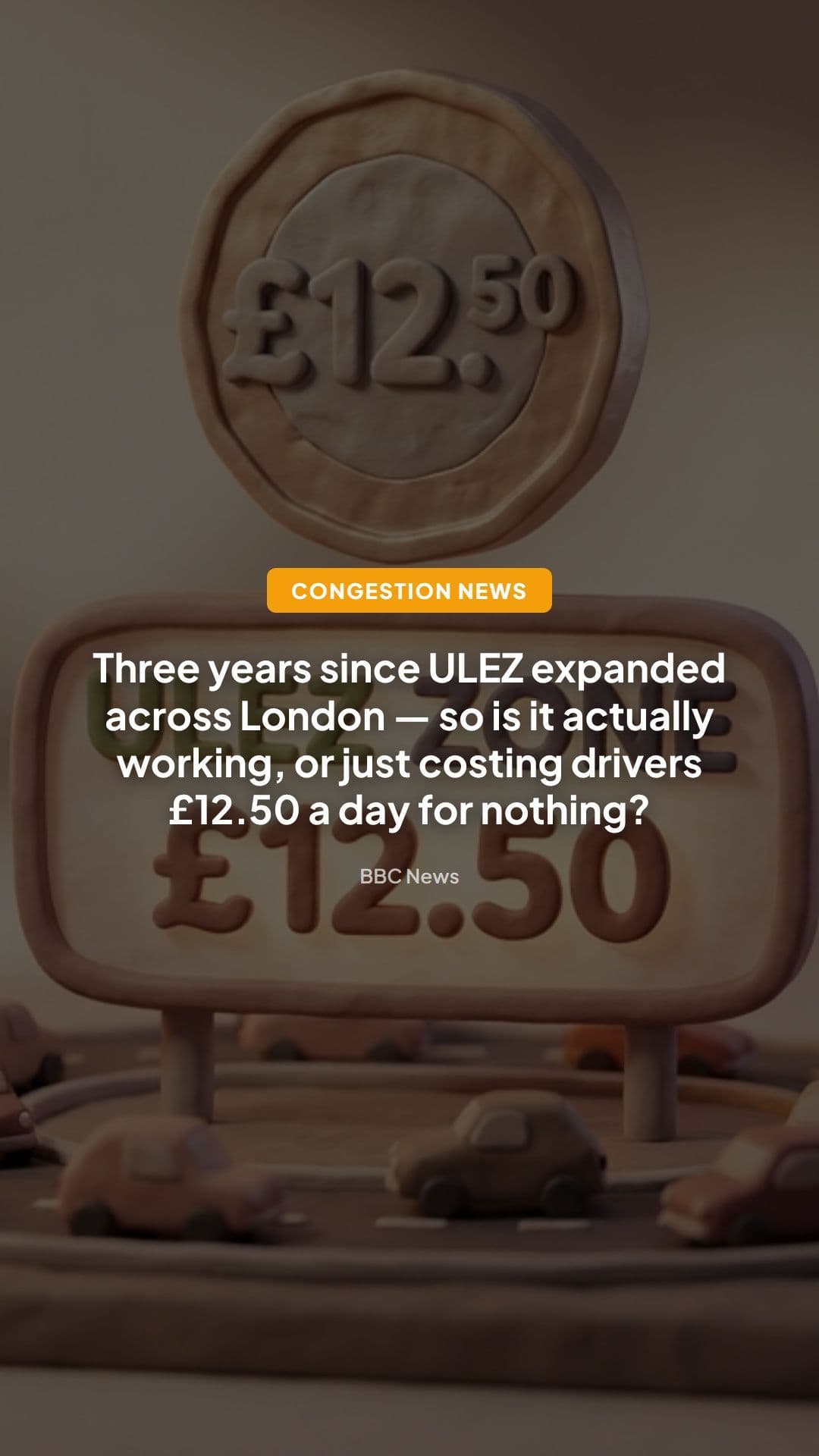
ULEZ Turns Three: Why London's Clean Air Zone Still Divides Opinion
Three years is a long time in politics, but apparently not long enough to settle an argument. As London's Ultra Low Emission Zone marks another anniversary, the same battle lines that formed before its 2023 expansion are still very much intact. On one side, shopkeepers and small business owners say they're fielding daily complaints from furious customers. On the other, clean air campaigners point to mounting evidence that Londoners are breathing measurably better air. Both things, it turns out, can be true at once, and that's precisely why the ULEZ debate refuses to die down.
What's Actually Being Reported
According to the BBC, businesses across London are still describing ongoing customer anger over the expanded ULEZ scheme, three years after it first widened its reach. Meanwhile, campaigners continue to highlight evidence pointing to genuine health benefits from reduced vehicle emissions. It's a familiar split: economic frustration versus public health gain, playing out street by street.
This isn't a new argument, but the fact it's still simmering three years on tells us something important. ULEZ was never going to be a policy that quietly faded into the background once implemented. It touches something Londoners feel strongly about, namely, the cost and freedom of driving in their own city, and it collides with an equally strong public interest in cleaner air. Neither side is going away, and neither is likely to declare victory any time soon.
Why This Argument Refuses to Go Away
To understand why tempers are still fraying at the till, it helps to remember what actually happened. The Ultra Low Emission Zone launched in central London in April 2019, then expanded to inner London boroughs in October 2021. The really controversial move came in August 2023, when it expanded again to cover the whole of Greater London, sweeping in outer boroughs where car dependency is higher and public transport links are often patchier.
That expansion became a genuine political flashpoint. It featured heavily in the 2023 Uxbridge and South Ruislip by-election, where opposition to ULEZ was widely credited with helping the Conservatives hold the seat against national polling trends. It also triggered legal challenges from several outer London councils, who argued the scheme unfairly penalised residents with limited alternatives to driving.
Three years later, the arguments haven't fundamentally changed, they've just matured. Business owners near the outer boundary say non-compliant vehicle owners are less likely to visit, spend, or return, particularly for high streets that rely on cross-borough footfall. That's a genuinely difficult thing to quantify precisely, because footfall is affected by dozens of factors including online shopping, rents, and general economic conditions, but the anecdotal frustration described in the BBC's reporting is clearly real and persistent.
At the same time, campaigners aren't inventing their case out of thin air. Emissions-based road charging schemes exist specifically because vehicle pollution, particularly nitrogen dioxide and particulate matter, has well-established links to respiratory illness, cardiovascular problems, and reduced life expectancy in urban populations. The logic behind ULEZ has always been that removing the most polluting vehicles from the roads should, over time, produce cleaner air and better health outcomes. Whether that trade-off is worth the financial and practical burden placed on some drivers and businesses is where the disagreement genuinely lies.
This isn't just a London issue either. Similar clean air zones now operate in cities such as Bristol and Manchester, and the same tensions around cost, compliance and business impact tend to surface wherever these schemes are introduced. London's experience is effectively a bellwether for how the rest of the country manages this transition.
The Legal Framework Behind ULEZ
ULEZ isn't a parking scheme, and it's worth being clear about that distinction because the legal mechanics differ from a typical PCN dispute over a bay or a yellow line. It's a road user charging scheme, operated by Transport for London under powers granted by the Greater London Authority Act 1999 and the Road User Charging (Charges and Penalty Charges) (London) Regulations. Vehicles that don't meet the required emissions standards, generally Euro 4 for petrol and Euro 6 for diesel, are liable for a daily charge if driven within the zone.
Fail to pay, and TfL can issue a Penalty Charge Notice, much like the ones issued for congestion charge non-payment. These are civil penalties enforced under the Traffic Management Act 2004, not criminal fines, which matters because it shapes how they can be challenged. Drivers who believe a PCN was issued incorrectly, perhaps due to a camera misread, a mistaken vehicle record, or a genuine exemption that wasn't applied, have the right to make representations to TfL, and if unsuccessful, to escalate an appeal to the independent London Tribunals service.
There are also statutory routes for drivers who never received the original notice or who missed deadlines through no fault of their own, using the TE7 and TE9 forms to file an out of time statutory declaration. These processes exist precisely because automated enforcement systems, however sophisticated, aren't infallible, and drivers shouldn't assume a PCN is unchallengeable simply because it arrived through an official channel.
Exemptions and discounts also play an important legal role in softening the scheme's edges. Blue Badge holders can access certain grace periods and support schemes, historic vehicles over 40 years old are automatically exempt, and various sunset grace periods have applied to specific vehicle categories over the years. Anyone unsure of their status should check their vehicle directly against TfL's checker rather than relying on assumptions, since compliance can depend on registration date technicalities that aren't always obvious from the outside.
What Drivers Should Actually Do
If you're driving into or around Greater London regularly, the practical steps haven't really changed in three years, but they're worth restating given how often confusion still causes unnecessary fines.
Check compliance before you travel, not after. TfL's vehicle checker tool will confirm whether your specific registration meets the required emissions standard, rather than relying on general assumptions about your car's age or engine type.
Understand that ULEZ charges are separate from the congestion charge. Driving through central London can mean liability for both, and the two schemes have different boundaries, different rules, and different payment windows.
Pay within the deadline. ULEZ charges must generally be paid by midnight on the third day following the journey, and missing that window is what triggers a PCN, not the act of driving a non-compliant vehicle itself.
Know your appeal rights if something looks wrong. Camera errors, incorrect vehicle records, and processing mistakes do happen, and drivers shouldn't simply pay a disputed penalty out of convenience if they have genuine grounds to challenge it.
Factor exemptions into your planning if they apply to you. Blue Badge holders, historic vehicle owners, and certain other categories may have entitlements worth confirming in advance rather than discovering after a fine has already landed.
For those running vehicles that fall outside the compliance standard, the maths genuinely does need doing. A daily £12.50 charge adds up quickly for regular commuters or delivery drivers, and for some businesses, upgrading to a compliant vehicle has been the more cost-effective long-term route, even accounting for upfront costs.
Looking Ahead
Three years on, ULEZ has settled into an uneasy equilibrium. It's neither been reversed nor has it silenced its critics. Business frustration over customer numbers and campaigner confidence in health outcomes are both entrenched positions, and neither is likely to shift dramatically without new, harder evidence one way or the other.
What seems more certain is that London's experience will keep shaping national policy conversations. As more UK cities weigh up their own clean air zones, and as debates about pay-per-mile road pricing gather pace, ULEZ remains the most closely watched test case in the country. Whatever your view of the scheme, its next three years are likely to be just as scrutinised as its first.
Written by
The Parking Ticket Pal Editorial Team
Source-checked parking guidance
Ready to Challenge Your Ticket?
Let our AI analyse your PCN and generate a professional appeal letter in minutes.
Start Free Appeal