London Self-Driving Taxis: What Uber Riders Need to Know
Uber’s Wayve self-driving taxis are now available in London. Learn how the 15-car pilot works, who can ride, and what it means for motorists and road safety.

The Parking Ticket Pal Editorial Team
4 September 2026
London’s Robot Taxis Have Arrived, But Who’s Actually Driving?
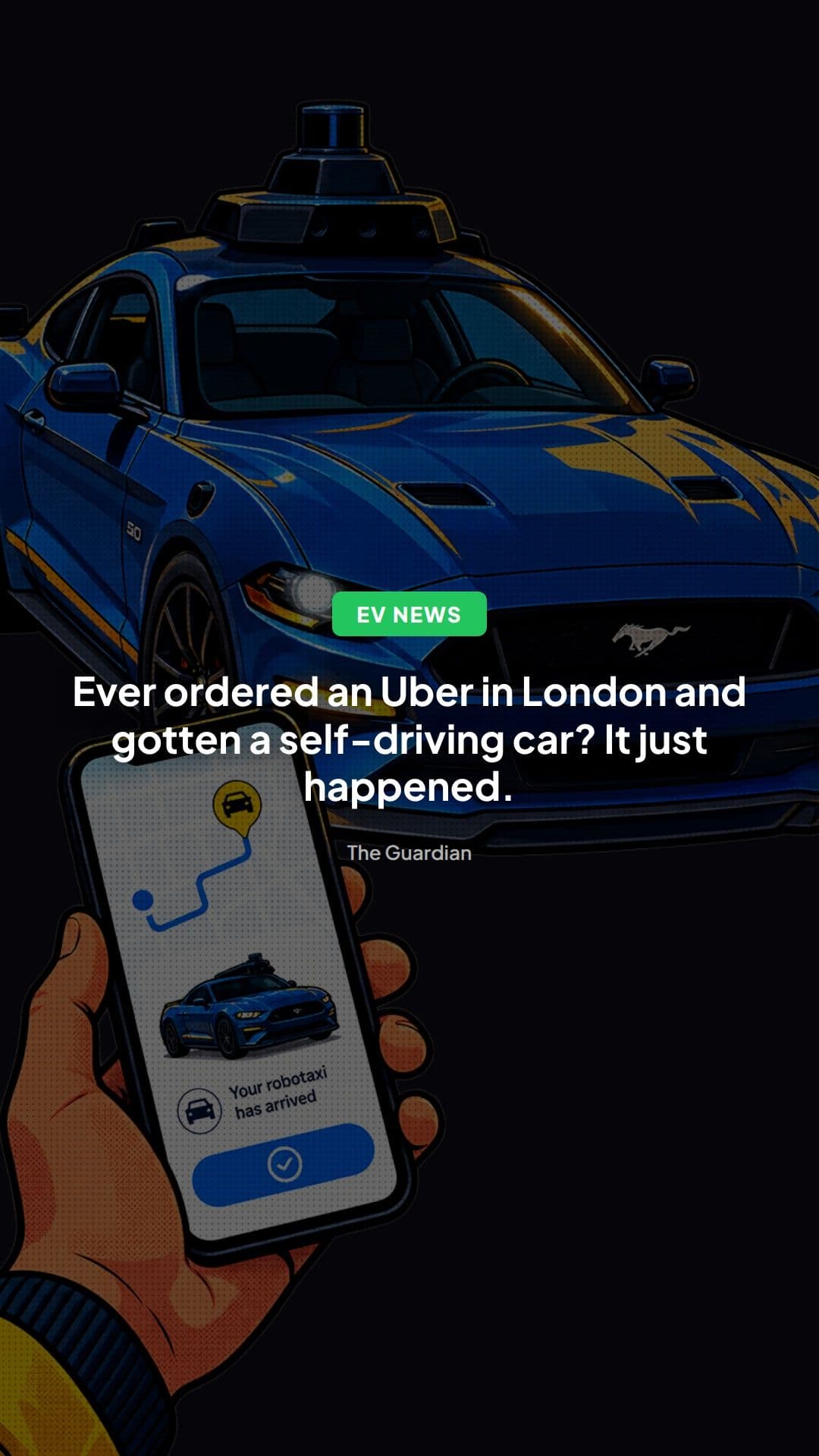
Picture this: you open the Uber app in central London, book a ride, and the car that pulls up has nobody behind the wheel making the decisions. Well, almost nobody. There is still a human in the driver’s seat, but for the first time on British public roads, that person isn’t the one actually steering, braking or accelerating for most of the journey. Welcome to London’s new era of robotaxis, courtesy of Wayve and Uber.
It sounds like science fiction lifted straight from a Silicon Valley pitch deck, but as of this month it’s a genuine, bookable service on London’s streets. And for UK drivers, commuters and anyone who has ever tangled with a parking ticket or a dodgy sat nav, this is a story worth paying close attention to.
What Happened
According to reporting from The Guardian, Wayve’s autonomous taxis have become available to hail through the Uber app in London. The initial rollout is deliberately modest: just 15 licensed vehicles are operating, each with a human safety operator sitting ready to take control if anything goes wrong. This isn’t a driverless free-for-all. It’s a carefully staged trial designed to prove the technology works in one of the most complex urban driving environments in the world.
London’s roads are notoriously unforgiving for any driver, human or artificial. Narrow lanes, cyclists weaving between vehicles, black cabs performing sudden U-turns, pedestrians stepping out from behind buses, and a road layout that has evolved organically over centuries rather than being planned on a grid. If an autonomous vehicle can cope here, the thinking goes, it can cope almost anywhere.
Wayve is a British company, headquartered in London, and has positioned itself as a homegrown challenger to American giants like Waymo. Its approach relies heavily on machine learning trained on real-world driving footage, rather than the more rigid, map-based systems some rivals use. Partnering with Uber gives it an immediate route to market and a customer base that doesn’t need to download a separate app or learn a new booking process.
Why It Matters
This isn’t just a novelty story about clever technology. It’s a genuine inflection point for how Britain regulates, insures and thinks about road transport.
For years, self-driving cars have felt like a “coming soon” promise that never quite arrived on UK roads, especially compared with the US, where Waymo has been running commercial robotaxi services in cities like Phoenix and San Francisco for a while now. London’s launch, even in this limited, safety-operator-assisted form, signals that the UK is finally moving from testing tracks and pilot schemes into live commercial deployment.
There’s also a bigger policy backdrop here. The UK government passed the Automated Vehicles Act 2024, which created a legal framework for self-driving vehicles to operate on British roads, including rules around who is legally responsible when something goes wrong. Before this Act, the legal position on autonomous vehicles was murky at best. Now there’s at least a statutory basis for classifying a vehicle as “self-driving” and determining liability, which is precisely what makes commercial services like this one possible.
For London specifically, this also plugs into wider debates about congestion, air quality and the future shape of the private hire industry. Black cab drivers and traditional minicab operators will be watching closely, both from a competition standpoint and because questions remain about licensing, insurance and long-term job security in the sector.
The Legal Angle
Here’s where things get genuinely interesting from a regulatory perspective, and where UK drivers should pay attention even if they never plan to hail one of these taxis themselves.
Under the Automated Vehicles Act 2024, a vehicle can only be classed as “self-driving” once it has passed a statutory safety assessment and been authorised by the Secretary of State for Transport. Crucially, the Act introduces the concept of an “Authorised Self-Driving Entity” (ASDE), essentially the company (in this case, presumably Wayve or a joint venture involving Uber) that takes on legal responsibility for the vehicle’s driving behaviour while it’s in self-driving mode. This is a significant shift. Rather than the human in the driving seat being automatically liable if the car does something wrong, responsibility can sit with the company behind the technology.
That said, the presence of a human safety operator in these initial 15 vehicles complicates the picture slightly. While the car is operating autonomously, the safety operator’s role and legal responsibilities need to be clearly defined, both in terms of when they’re expected to intervene and what happens if they fail to do so, or if the vehicle fails to hand back control in time. This is one of the areas the Act specifically tries to address, but real-world testing at scale will inevitably throw up scenarios lawmakers hadn’t fully anticipated.
There are also questions around licensing. Transport for London (TfL) regulates private hire vehicles operating in the capital, and any autonomous taxi service needs to satisfy TfL’s own licensing requirements alongside the national framework. Insurance is another critical piece. The Automated and Electric Vehicles Act 2018 (a precursor piece of legislation) already established that insurers can be held liable for accidents caused by a vehicle driving itself, provided it was insured and operating within its intended parameters. This effectively means passengers and third parties injured in an autonomous vehicle incident should still have a clear route to compensation, similar to a conventional car accident claim, just with the liability chain running through the vehicle’s insurer and potentially back to the manufacturer or software provider rather than a human driver’s personal policy.
For anyone concerned about how this might play out if something goes wrong, whether that’s a minor bump, a parking dispute, or something more serious, it’s worth remembering that this area of law is still evolving in practice, not just on paper. If you were ever involved in an incident with an autonomous vehicle, seeking advice from a solicitor experienced in road traffic law would be sensible rather than assuming standard rules apply without adjustment.
What Drivers Should Know
If you’re a regular driver in London, here’s what’s practically relevant to you right now, and what to keep an eye on as this expands.
Sharing the road with autonomous vehicles. With only 15 vehicles in operation, you’re unlikely to encounter one often, but it will happen. These vehicles are still learning real-world London driving, and while a safety operator is present, their reaction times and decision-making style may differ subtly from a typical human driver. Give them, as with any unfamiliar vehicle, a bit of extra space and patience.
Insurance and liability won’t work like a normal fender bender. If you’re ever involved in a collision with one of these taxis, understand that liability may sit with the vehicle’s insurer under the Automated and Electric Vehicles Act 2018, rather than following the usual process of establishing driver fault. Keep the same evidence-gathering habits you’d use in any accident, photos, dashcam footage, and witness details, as this will still matter enormously.
Parking and stopping rules still apply. Don’t assume an autonomous taxi gets special dispensation around loading bays, red routes or bus lanes. These vehicles are licensed private hire cars and, as with any minicab, remain bound by the same stopping and waiting restrictions as everyone else. If you spot one parked somewhere it shouldn’t be, TfL’s enforcement rules apply just as they would to a human-driven vehicle.
Watch the licensing and safety data as it emerges. As this trial expands beyond 15 vehicles, TfL and the Department for Transport are likely to publish safety performance data. This is worth following if you’re curious about how the technology is actually performing under London’s uniquely challenging conditions, rather than relying on manufacturer claims alone.
Looking Ahead
Fifteen vehicles is a tiny fraction of London’s private hire fleet, which numbers in the tens of thousands. But symbolically, this launch matters far more than its size suggests. It establishes a template, legally, commercially and technically, for how autonomous ride-hailing might scale in the UK’s largest city.
Expect scrutiny to intensify rapidly. Questions around job displacement in the private hire sector, safety operator training standards, and how TfL adapts its licensing regime for non-human-driven vehicles will all need answers sooner rather than later. The insurance industry, too, will be watching closely to see how claims involving these vehicles are actually settled in practice, since the theoretical framework under the 2018 and 2024 Acts hasn’t yet been thoroughly tested by real incidents at scale.
For now, London drivers should treat this as an interesting curiosity rather than a fundamental shift in their daily commute. But the direction of travel is clear. Autonomous taxis are no longer a distant promise. They’re on the streets, they’re bookable through an app millions of Londoners already use, and the legal and regulatory scaffolding to support their expansion is already in place. The next few years will determine whether this remains a niche trial or becomes the new normal for getting across town.
Written by
The Parking Ticket Pal Editorial Team
Source-checked parking guidance
Ready to Challenge Your Ticket?
Let our AI analyse your PCN and generate a professional appeal letter in minutes.
Start Free Appeal