London PCNs to rise by £30 in May 2026: what changes
London parking PCNs are set to rise in May 2026: higher-band up to £160 and lower-band £140, with the 50% early payment discount still available.

Raj Patel
9 May 2026
London Parking Fines Are Rising Again — Here's What Every Driver Needs to Know
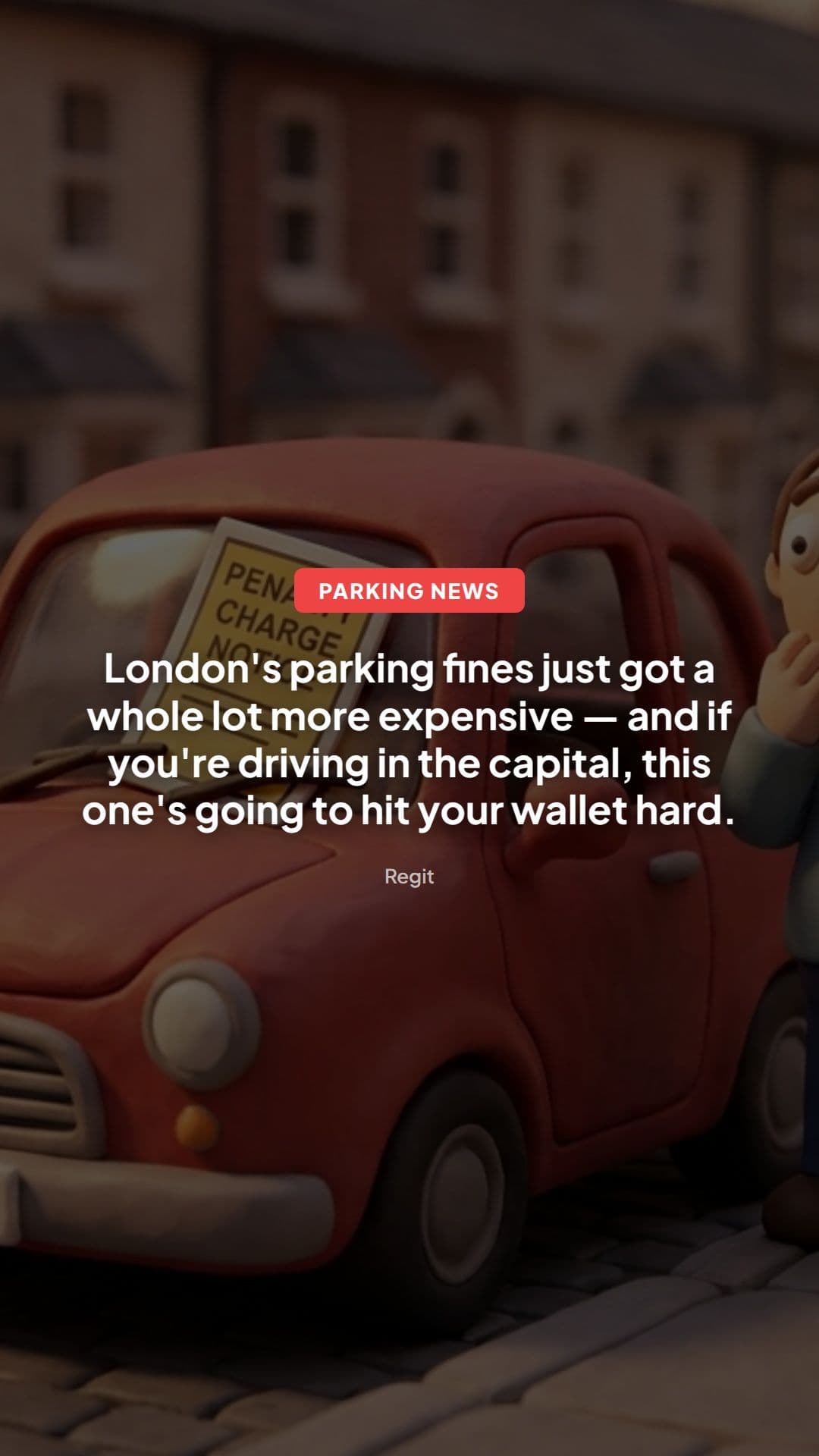
If you've ever winced at the sight of a yellow envelope tucked under your windscreen wiper in London, brace yourself. From May 2026, parking fines in the capital are getting significantly more expensive — and the increase isn't a modest tweak. Higher-band Penalty Charge Notices (PCNs) will jump from £130 to £160, whilst lower-band PCNs will rise from £110 to £140. That's a £30 hike across the board, and it arrives at a time when many drivers already feel squeezed from every direction.
But this isn't just a London story. It's part of a wider national trend that raises serious questions about how parking enforcement is used, who benefits, and what rights drivers actually have when they receive a fine they believe is unjust.
What's Actually Happening: The Detail Behind the Headlines
The increases, confirmed under plans backed by Mayor Sadiq Khan, will take effect in May 2026. London operates a two-tier PCN system — higher-band fines apply to more serious contraventions such as parking on yellow lines, in bus stops, or blocking dropped kerbs, whilst lower-band fines cover less severe infractions like overstaying a paid parking bay.
The good news, if you can call it that, is that the 50% early payment discount is being retained. This means:
- Higher-band PCNs: £160 full charge, or £80 if paid within 14 days
- Lower-band PCNs: £140 full charge, or £70 if paid within 14 days
So whilst the headline numbers are alarming, a driver who pays promptly will pay £80 for what was previously a £65 discounted fine. That's still a notable increase, but the early payment route remains the most financially sensible option for those who accept the charge.
London's Transport for London (TfL) and individual London boroughs are both affected by these changes. The rationale offered by councils and the Mayor's office centres on deterrence — the argument being that fines which haven't risen in line with inflation lose their power to discourage illegal parking. London's last significant PCN increase came in 2012, meaning the new rates are, in real terms, partly a catch-up exercise.
Why This Matters: The Bigger Picture
London is not acting in isolation. Across England and Wales, local authorities have been pushing for greater flexibility to raise parking charges, and several councils outside the capital have already moved to increase their own PCN rates in recent years.
The significance of the London increase is twofold. First, London sets a precedent. When the capital raises its fines, other authorities often follow — either because they're emboldened to make the case to central government, or because the regulatory framework shifts to accommodate higher national caps. Second, London processes an extraordinary volume of PCNs. With millions of penalty notices issued annually across the capital's boroughs and TfL's red routes, even a modest per-fine increase translates into tens of millions of pounds in additional revenue.
This raises a question that parking enforcement critics have long asked: is this about road safety and traffic flow, or is it about revenue generation?
Councils are legally required, under the Road Traffic Regulation Act 1984 and the Traffic Management Act 2004, to ringfence surplus parking income — it cannot simply be absorbed into general council funds. Surpluses must be used for transport-related purposes, including road maintenance, public transport improvements, and cycling infrastructure. In theory, this prevents parking enforcement from becoming a profit-driven exercise. In practice, however, the line between "deterrence" and "revenue" is frequently blurred, and the ringfencing rules are not always transparently reported.
The Legal Angle: Your Rights Haven't Changed
Here's something important that often gets lost in the noise around fine increases: the legal framework governing how PCNs are issued, challenged, and enforced has not changed. Higher fines do not mean fewer grounds for appeal. If anything, the increased financial stakes make it more worthwhile than ever to scrutinise any PCN you receive.
Under the Traffic Management Act 2004, local authorities in England and Wales must follow strict procedures when issuing PCNs. Key requirements include:
- The PCN must specify the contravention clearly, using the correct contravention code
- It must be served correctly — either affixed to the vehicle, handed to the driver, or (in certain circumstances) sent by post
- Signage and road markings in the area must be lawful, clear, and compliant with the Traffic Signs Regulations and General Directions 2016 (TSRGD)
If any of these elements are deficient, a PCN can be challenged successfully. The appeals process runs through a formal two-stage structure: first an informal representation to the issuing authority, then a formal representation if the informal one is rejected, and finally an independent appeal to the Traffic Penalty Tribunal (outside London) or London Tribunals (within the capital).
One important legal point worth emphasising: paying the discounted rate within 14 days waives your right to appeal. Once payment is made, the matter is settled. This means that if you have genuine grounds for challenge — faulty signage, incorrect vehicle details on the PCN, a legitimate exemption — you must decide quickly whether to pay or fight. The 14-day discount window creates pressure to pay, but it should never override a strong case.
What Drivers Should Know: Practical Steps to Protect Yourself
With fines now higher, the cost of getting caught out — whether fairly or unfairly — has risen. Here's what every London driver should be doing:
1. Document everything at the scene The moment you return to your vehicle and find a PCN, or if you're issued one in person, take photographs immediately. Capture the PCN itself, the surrounding signage, road markings, and any relevant context (such as an obscured sign or a bay marking that's faded). This evidence is invaluable if you appeal.
2. Check the PCN for errors Examine the notice carefully. Common errors include incorrect Vehicle Registration Marks (VRMs), wrong contravention codes, missing or incorrect dates and times, and PCNs issued outside the permitted hours for a restriction. Any factual error can be grounds for cancellation.
3. Know the timeline
- 14 days: Pay at the discounted rate, or begin your informal representation
- 28 days: If you don't pay or appeal, the charge increases to the full amount
- 56 days: A Notice to Owner is sent to the registered keeper; you then have 28 days to make formal representations
- Beyond this point, the matter can escalate to a Charge Certificate and ultimately to enforcement via bailiffs
Missing these deadlines is one of the most common — and costly — mistakes drivers make.
4. Understand the signage defence London's complex network of Controlled Parking Zones (CPZs), red routes, and restricted streets means that signage errors are not uncommon. If the signs or lines governing a restriction don't comply with TSRGD, the restriction may be unenforceable. This is a technical but powerful defence.
5. Don't assume guilt Many drivers pay a PCN simply because they assume they must have done something wrong, or because the discounted rate feels like the path of least resistance. That instinct is understandable but potentially costly. If you genuinely believe the fine is wrong, the appeals process exists precisely to test that.
Looking Ahead: What These Increases Signal for UK Drivers
The May 2026 London increases are unlikely to be the last word on this subject. Several trends point towards a continued upward trajectory for parking fines nationally.
The government has been under pressure from local authorities to raise PCN caps outside London, where fines are generally lower. A national review of parking enforcement powers is long overdue, and with councils facing significant budget pressures, the case for higher fines — framed as a deterrence measure — will only grow stronger.
There is also the question of technology. AI-powered enforcement cameras, automatic number plate recognition (ANPR) systems, and the gradual rollout of digital enforcement tools mean that more contraventions are being caught, more efficiently, than ever before. Higher fines combined with more effective detection is a combination that could significantly increase the financial burden on drivers who fall foul of parking rules — even inadvertently.
For drivers, the message is clear: the cost of parking mistakes is rising, and the systems designed to catch them are becoming more sophisticated. Understanding your rights, knowing the appeals process, and approaching any PCN with scrutiny rather than resignation has never been more important.
The roads may be getting more expensive to navigate. But the legal protections available to drivers remain robust — and they're worth using.
Written by
Raj Patel
Transport Policy Analyst
Ready to Challenge Your Ticket?
Let our AI analyse your PCN and generate a professional appeal letter in minutes.
Start Free Appeal