London Councils Use Taxpayer Cash for Staff Parking Fines
Four London councils reportedly paid staff parking fines with public funds. We examine the accountability issues, PCN rules and what taxpayers should know.

The Parking Ticket Pal Editorial Team
7 September 2026
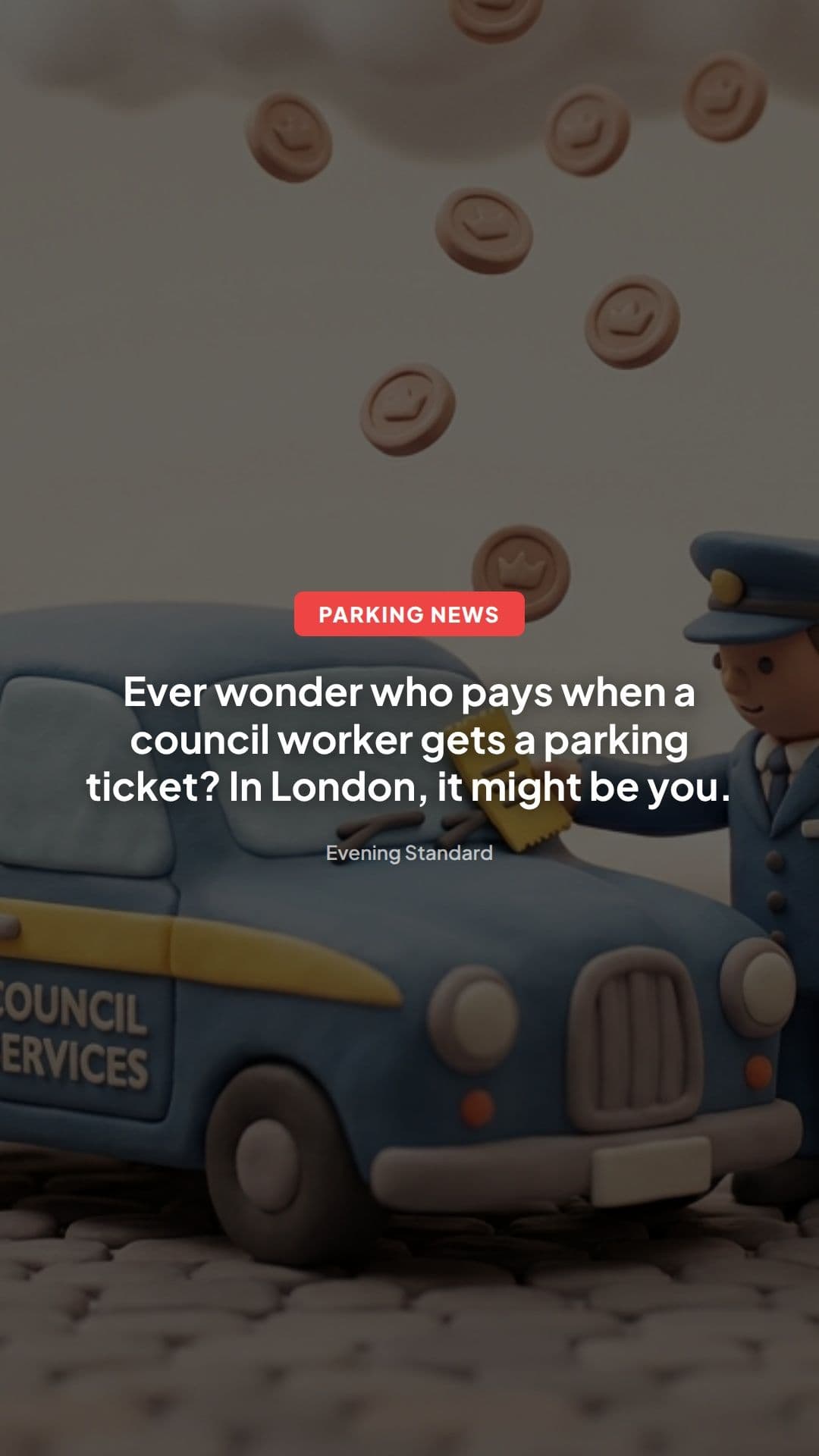
When the Rule-Makers Break the Rules: London Councils Caught Paying Staff Parking Fines With Public Money
Picture the scene: you've overstayed a pay-and-display bay by four minutes, and within days a Penalty Charge Notice lands on your doormat demanding £80 or £160, depending on the borough. Meanwhile, somewhere in the same town hall that issued your fine, a council employee's own parking penalty has quietly been settled using taxpayers' cash. No stern letter, no threat of bailiffs, no impact on their credit file. Just a line item buried in the accounts.
That is the uncomfortable picture painted by recent reporting from the Evening Standard, which found that several London boroughs, including Hackney, Lewisham, Wandsworth and Croydon, have used public funds to cover parking fines and other road traffic penalties incurred by staff. It is a story that goes well beyond a few embarrassing invoices. It cuts to the heart of how councils enforce parking rules against ordinary drivers while apparently applying a softer standard to their own employees.
What Happened
According to the reporting, the councils named paid out sums of public money to settle parking tickets and other traffic-related penalties racked up by council staff, rather than requiring individuals to pay the fines themselves. The practice reportedly came to light through scrutiny of council spending, the kind of disclosure that typically emerges via Freedom of Information requests or routine transparency reporting that local authorities are obliged to publish.
The specifics vary between authorities, but the underlying pattern is the same: penalties that would ordinarily be the personal responsibility of the individual who committed the parking or traffic contravention were instead absorbed into council budgets funded by residents' council tax and parking revenue.
This is significant because London boroughs are among the most prolific parking enforcers in the country. They issue millions of PCNs a year between them, generating substantial income that is supposed to be ring-fenced under the Traffic Management Act 2004 for transport-related purposes such as highway maintenance, concessionary travel schemes and, yes, further parking enforcement. Against that backdrop, using the same public purse to quietly wipe away staff fines sits uneasily with the justification councils routinely give for aggressive enforcement: that rules must apply equally to everyone for the system to be fair.
Why It Matters
Councils have long argued that firm parking enforcement is necessary to keep roads clear, protect loading bays, ensure disabled bays remain available and manage congestion. Most drivers accept that logic, even when they are frustrated by a specific ticket. What underpins public tolerance of enforcement, though, is a basic assumption of fairness: that the person who parks on a red route pays the same price regardless of who they are or who they work for.
When it emerges that council staff have effectively been let off the financial consequences of their own contraventions, using money that residents contributed through council tax or parking charges, it strikes at that assumption directly. It raises awkward questions:
- Were these fines incurred while employees were using council vehicles on official business, or were personal vehicles involved too?
- Was there a formal policy allowing this, or did it happen informally, without proper oversight?
- Did staff face any internal consequences, or was payment automatic?
- How much oversight did elected councillors have over these payments?
These questions matter because local authorities are subject to specific duties around financial probity. Councils are expected to operate in line with the Nolan Principles of Public Life, particularly the principles of accountability, openness and leadership, all of which are meant to guide how public officials handle public money. A council quietly settling staff parking fines without transparent policy or scrutiny sits awkwardly against those principles, even if no individual act was unlawful in isolation.
The Legal Angle
There isn't a single statute that says "councils must not pay staff parking fines." Instead, several overlapping legal and regulatory strands are relevant here.
Keeper liability and PCNs. Under the Traffic Management Act 2004 and associated regulations, a Penalty Charge Notice for a moving traffic or parking contravention is typically issued to the registered keeper of the vehicle, unless the driver is identified. Where a council owns or leases a pool vehicle used by an employee, the council as registered keeper is the one who technically receives the PCN. It would then be a matter of internal policy whether the cost is recharged to the individual driver responsible or absorbed centrally. Many organisations, public and private, do recharge such costs to staff precisely to avoid the appearance of subsidising rule-breaking.
HMRC's tax treatment of fines. This is an important, often overlooked point. HMRC's long-standing position, set out in its Employment Income Manual, is that a fine is a personal liability of the individual who committed the offence. Where an employer pays or reimburses an employee's parking fine, that payment is generally treated as a taxable benefit in kind, and the fine itself is not an allowable business expense for corporation tax purposes. In other words, even setting aside the political optics, there are tax implications to organisations settling personal fines on an employee's behalf. Whether these councils correctly accounted for any such benefit in kind is a legitimate question for auditors and, potentially, HMRC.
Transparency obligations. Under the Local Government Transparency Code, councils are required to publish details of spending above certain thresholds, along with senior salaries and other financial information. This is likely how journalists were able to identify these payments in the first place, underlining how important routine transparency reporting is for public accountability, even when the sums involved are relatively modest.
Council codes of conduct. Individual councils also operate their own codes of conduct for staff and members, often referencing standards of integrity expected in public service. Where a council's own code discourages using public funds for personal liabilities, repeated payment of staff fines could represent an internal governance failure even without any criminal or civil law being broken.
What Drivers Should Know
For everyday motorists, this story is less about a specific legal loophole to exploit and more a reminder of how the system is meant to work, and where it can quietly break down.
A few practical points worth bearing in mind:
- Your PCN rights don't change because of who else got let off. If you receive a parking ticket, you still need to challenge it on its own merits, through an informal representation, a formal appeal, or ultimately the London Tribunals service if it goes that far. Discovering that a council behaved inconsistently elsewhere is unlikely, on its own, to succeed as a legal defence to your ticket, however unfair it feels.
- Transparency data is public. Council spending records, published under the Transparency Code, are accessible to residents. If you're curious how your own local authority handles staff expenses, including fines, these registers (and Freedom of Information requests) are legitimate tools available to any member of the public.
- Know the difference between keeper and driver liability. If you lend your car to someone else, or drive a company or hire vehicle, understand who is legally responsible for a resulting PCN. This is the same principle at the heart of the council story, and it applies just as much to ordinary drivers sharing vehicles with family or employers.
- Fines aren't a business expense, for you either. If you're self-employed or run a small business, remember that HMRC does not allow parking fines to be claimed as a deductible expense, regardless of whether the ticket was incurred while working. The rule that applied to these councils applies to everyone.
- Push back through the right channels. If you believe your own ticket was wrongly issued, whether due to unclear signage, a payment error, or an incorrect vehicle registration, formal representations and appeals remain the correct route, not comparisons with how other people or organisations have been treated.
Looking Ahead
Stories like this tend to generate short-term embarrassment for the councils involved, followed by promises of review. Whether that translates into lasting change depends on pressure from councillors, auditors and residents to actually tighten internal policy, not just quietly stop the practice while it's in the headlines.
There's a broader accountability question too. As councils across England, London especially, lean increasingly on parking income to plug wider budget gaps, public tolerance of enforcement depends heavily on trust that the rules are applied evenly. Every story of staff fines being quietly absorbed by the public purse chips away at that trust, and gives frustrated drivers fresh ammunition when they feel unfairly targeted.
For now, the practical lesson for drivers is a familiar one: the system for challenging your own PCN hasn't changed, and neither have your obligations. But it's fair to expect that the councils issuing those tickets should be held to at least the same standard they enforce against everyone else.
Written by
The Parking Ticket Pal Editorial Team
Source-checked parking guidance
Ready to Challenge Your Ticket?
Let our AI analyse your PCN and generate a professional appeal letter in minutes.
Start Free Appeal