London Congestion Charge rises to £18 in 2026: key changes
TfL will increase the London Congestion Charge to £18 from 2 Jan 2026, end full EV exemptions and introduce a tiered Cleaner Vehicle Discount via Auto Pay.

Lisa Rodriguez
30 May 2026
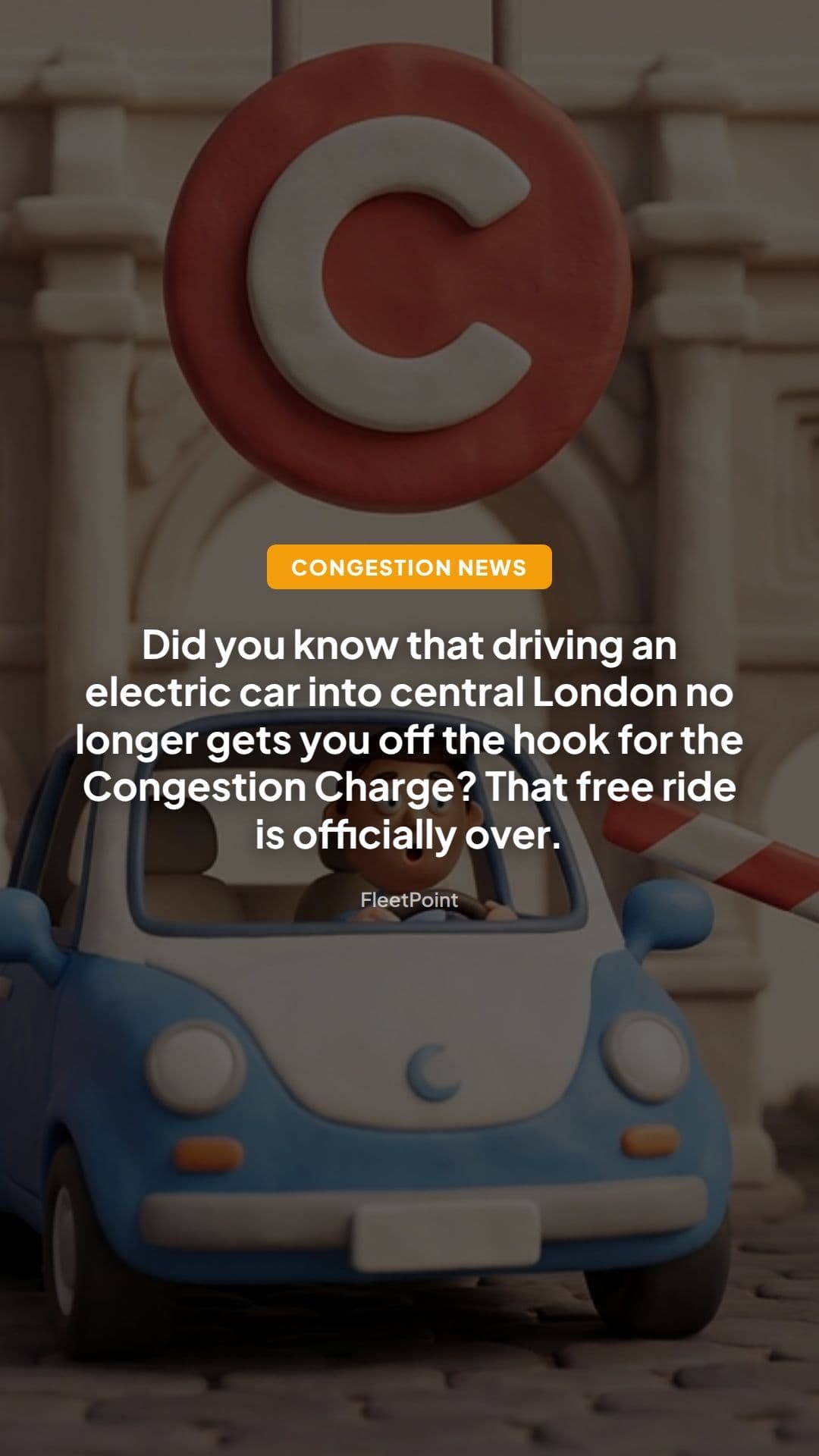
London's Congestion Charge Is About to Get a Lot More Expensive — Here's Everything You Need to Know
If you drive into central London regularly, the start of 2026 is going to feel like a cold shower. Transport for London (TfL) is overhauling the Congestion Charge in ways that will affect hundreds of thousands of drivers — from daily commuters to occasional visitors, and crucially, the growing number of EV owners who've long assumed they were exempt. The changes are significant, the detail is in the small print, and the financial implications are real. So let's break it all down properly.
What's Actually Changing?
From 2 January 2026, the London Congestion Charge rises from its current rate of £15 to £18 per day. That's a 20% increase — and it's not the only change worth your attention.
More controversially, full exemptions for electric vehicles are ending. For years, EV drivers have been able to enter the Congestion Charge zone without paying a penny, a policy designed to incentivise the switch away from petrol and diesel. That era is over. In its place, TfL is introducing a tiered Cleaner Vehicle Discount (CVD) — a partial reduction rather than a full waiver — available only to vehicles registered for Auto Pay.
The resident discount structure is also being revised. Londoners living within the zone have historically benefited from a 90% reduction on the daily charge. That arrangement is being adjusted as part of the wider pricing overhaul, though residents will still receive preferential rates compared to non-residents.
Importantly, these changes operate entirely separately from the Ultra Low Emission Zone (ULEZ). The two schemes have different geographic boundaries, different charging triggers, and different vehicle eligibility criteria. Confusing the two is an easy mistake to make — but an expensive one.
Why This Matters: The Bigger Picture
The Congestion Charge was introduced in February 2003 under then-Mayor Ken Livingstone, making London one of the first major world cities to implement a large-scale road pricing scheme. The legal foundation sits within the Transport Act 2000 and the Greater London Authority Act 1999, which granted TfL the power to levy charges on vehicles entering defined zones during specified hours.
Since its launch, the charge has been raised several times. It went from £5 to £8 in 2005, jumped to £10 in 2011, and rose to £11.50 before being temporarily increased to £15 during the pandemic as part of TfL's emergency funding deal with the government. That £15 rate became permanent, and now £18 is the next step.
The ending of EV exemptions is arguably the more seismic shift. When the scheme was redesigned in 2021, EV drivers gained significant financial advantages to encourage uptake. The policy worked — London's EV registrations surged. But TfL now faces a structural funding problem: as more drivers switch to cleaner vehicles, the revenue base for the Congestion Charge erodes. If every car entering the zone were eventually exempt, the scheme would effectively collapse as a funding mechanism.
There's also a congestion argument. An electric vehicle causes just as much traffic as a petrol one. The original purpose of the charge — reducing the number of vehicles on central London roads — is undermined if entire categories of vehicle are permanently free to enter.
The Legal Angle: What Rights Do Drivers Have?
TfL operates the Congestion Charge under a statutory framework, which means it has broad powers to set and vary charges. Penalty Charge Notices (PCNs) for non-payment are issued under the Road User Charging (Enforcement and Adjudication) (London) Regulations 2001, and disputes are heard by the Traffic Penalty Tribunal or, at the formal stage, by London Tribunals.
One area worth understanding is the Auto Pay requirement attached to the new Cleaner Vehicle Discount. The CVD is not automatic — you must register your vehicle for Auto Pay to qualify. This creates a trap for drivers who assume that simply owning an eligible EV is sufficient. If your vehicle isn't registered correctly before 2 January 2026, you will be charged the full £18 rate, regardless of what you drive.
TfL PCNs for Congestion Charge non-payment are currently set at £160, reduced to £80 if paid within 14 days. Given the new daily charge of £18, a single missed payment and subsequent PCN represents a tenfold penalty — a powerful incentive to get your registration sorted well in advance.
It's also worth noting that the burden of proof in Congestion Charge PCN appeals sits with the driver. If you believe you were exempt, or that your Auto Pay registration was in place, you'll need evidence to support that. Screenshots, registration confirmation emails, and account records are all worth keeping.
What Drivers Should Know: Practical Advice
Whether you drive into central London daily or only occasionally, here's what you need to do before 2 January 2026:
1. Check your Auto Pay registration now If you drive an EV or low-emission vehicle and want to benefit from the Cleaner Vehicle Discount, you must be registered for Auto Pay. Log in to your TfL account and verify your vehicle's status. Don't assume a previous registration carries over automatically.
2. Understand the tiered discount structure The CVD is tiered, meaning the discount you receive depends on your vehicle's emissions category. Not all EVs and hybrids will qualify for the same reduction. Check TfL's official eligibility list — particularly if you drive a plug-in hybrid, as the rules for PHEVs have historically been more complex.
3. Factor the new cost into your commuting budget At £18 per day, a driver entering the zone five days a week will pay £4,680 per year at the standard rate. Even with a discount, this is a significant household expense. If you're a frequent driver, it may be worth reassessing your travel options or applying for any available resident or fleet discounts.
4. Don't confuse the Congestion Charge with ULEZ These are separate charges with separate rules. A vehicle that's ULEZ-compliant is not automatically exempt from the Congestion Charge, and vice versa. You could find yourself paying both on the same journey if you're not careful.
5. Keep records of every payment TfL's Auto Pay system is generally reliable, but errors do occur. Keep records of your account activity, and if you receive a PCN that you believe is incorrect, challenge it promptly at the informal stage before the discount window closes.
6. Fleet operators need to act early If you manage a company fleet that regularly enters the zone, you'll need to audit your vehicle registrations and update your cost projections. The 20% charge increase alone could represent a substantial budget line for businesses operating in central London.
Looking Ahead: Where Does Road Pricing Go From Here?
The changes to the Congestion Charge are not happening in isolation. They are part of a broader, accelerating trend towards demand-based road pricing in the UK. The government's own advisers, including the National Infrastructure Commission, have repeatedly flagged that fuel duty revenues will decline sharply as EV adoption grows — and that some form of road pricing is likely to replace it at a national level eventually.
London is, in many ways, the testing ground. TfL's willingness to end EV exemptions sends a clear signal: the free ride for electric vehicles is coming to an end, and not just in the capital. Councils and combined authorities across England are watching closely, and several are already exploring their own clean air and congestion charging schemes.
For drivers, the message is clear: the era of assuming that driving a cleaner vehicle insulates you from road charges is over. The future of urban motoring in the UK involves paying to use the road, regardless of what's under the bonnet. The Congestion Charge increase is, in that sense, less of an isolated policy tweak and more of a glimpse at what's coming for drivers everywhere.
Get your Auto Pay registered, check your vehicle's eligibility, and budget accordingly. The clock is ticking.
Source: FleetPoint — "London's Congestion Charge is changing in 2026"
Written by
Lisa Rodriguez
Automotive Journalist
Ready to Challenge Your Ticket?
Let our AI analyse your PCN and generate a professional appeal letter in minutes.
Start Free Appeal