
London Congestion Charge Rise: Tunnel Toll Costs Explained
London’s Congestion Charge is now £18, EV exemptions have ended and tunnel tolls are set to rise. See what drivers may pay under London’s new plans from 2027.

The Parking Ticket Pal Editorial Team
29 September 2026
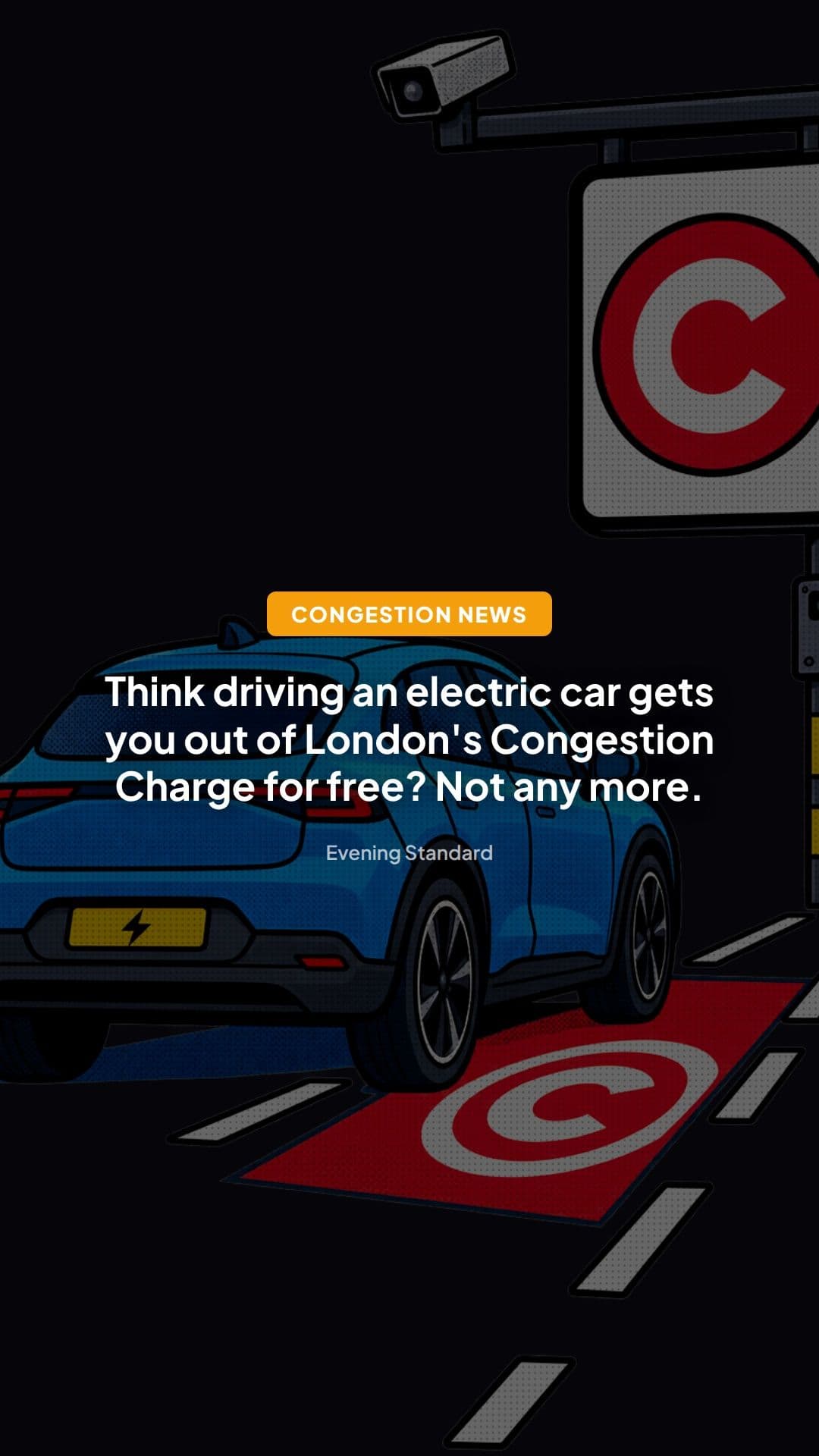
London's Congestion Charge Just Got Even More Expensive, and It's Not Stopping There
If you drive into central London, brace yourself. The cost of entering the Congestion Charge zone has jumped to £18, electric vehicles have lost their once-guaranteed free pass, and tolls on the Blackwall and Silvertown tunnels are rising too. For many drivers, this isn't just an inconvenience, it's the latest chapter in a decade-long story of London quietly becoming one of the most expensive cities in the world to drive through.
What Happened
From January 2026, Transport for London (TfL) increased the daily Congestion Charge from £15 to £18, a rise that outpaces general inflation and continues a pattern of above-inflation increases that has defined the scheme's recent history. According to reporting from the Evening Standard, further annual increases are already planned from 2027, meaning drivers should not expect this to be a one-off adjustment.
Perhaps more significant for the long term is the change to electric vehicle treatment. EVs previously enjoyed a full exemption from the charge under TfL's Cleaner Vehicle Discount, a policy designed to nudge Londoners towards zero-emission motoring. That blanket exemption has now ended, with electric vehicles losing their automatic free pass and instead facing new rules that require payment, albeit often at a reduced rate depending on the current scheme in place.
Alongside this, tolls for the Blackwall Tunnel and the newer Silvertown Tunnel have also risen, adding yet another cost layer for drivers crossing the Thames in east London. Together, these changes represent a coordinated tightening of charges across some of the capital's busiest and most unavoidable routes.
Why It Matters
To understand why this story matters beyond the immediate sting of a higher daily fee, it helps to look at what the Congestion Charge was actually designed to do. Introduced in February 2003 under powers granted by the Greater London Authority Act 1999, the scheme's original purpose was to reduce traffic congestion in central London by charging drivers for entering a defined zone during charging hours. It was, at the time, one of the most ambitious urban road pricing schemes in the world.
Over the past two decades, the charge has crept upwards from its original £5 to £18, a rise that significantly outpaces inflation over the same period. That trajectory tells its own story: what began primarily as a congestion management tool has increasingly become a meaningful revenue stream for TfL, particularly as the organisation continues to grapple with funding pressures following reduced government support and the long tail of pandemic-era passenger revenue losses.
The removal of the EV exemption is arguably the more telling policy shift. When electric vehicles were exempted, the goal was straightforward: accelerate the shift away from petrol and diesel cars by making EV ownership financially attractive in London specifically. But as EV adoption has grown, so has the number of vehicles driving through the zone for free, eroding the very revenue base TfL relies on. Ending the exemption is a pragmatic, if politically awkward, acknowledgement that you cannot indefinitely subsidise a form of transport once it stops being a minority choice.
This mirrors a broader pattern seen across London's charging schemes. Similar tensions have played out with the Ultra Low Emission Zone, where policy has had to evolve as vehicle fleets change faster than charging structures were originally designed for.
For drivers, the practical impact is a steadily rising cost of doing business in central London, whether that's commuting, making deliveries, or simply visiting. Combined with the tunnel toll increases, east London drivers crossing the river now face charges on multiple fronts, which is a significant shift for an area that historically relied on free crossings before the Silvertown Tunnel opened.
The Legal Angle
The Congestion Charge operates under a statutory scheme made possible by the Greater London Authority Act 1999, which gives the Mayor of London and TfL the power to introduce road user charging in Greater London. Unlike a criminal fine, the Congestion Charge itself is a civil charge, and failure to pay results in a Penalty Charge Notice (PCN) rather than prosecution in the traditional sense.
It's worth understanding that PCNs issued for non-payment of the Congestion Charge follow the same broad civil enforcement framework as parking PCNs, meaning recipients have a right to make representations and, if unsuccessful, appeal to the London Tribunals (formerly the Parking and Traffic Appeals Service). Drivers who believe they've been wrongly charged, perhaps due to a payment system error, an incorrect vehicle record, or genuine confusion over the new EV rules, should not simply pay up out of convenience if they have a legitimate dispute. The statutory declaration process exists precisely for cases where a PCN was never properly received or where there are valid grounds to challenge it.
There's also a legal dimension to how TfL structures discounts and exemptions. Any changes to the Cleaner Vehicle Discount, including its removal for EVs, must go through a formal consultation and scheme variation order process. This isn't something TfL can alter overnight on a whim; it involves published notices and a legal framework for implementation, which is why these changes tend to be announced well in advance and phased in with transition periods for existing permit holders.
For those affected by both the Congestion Charge and the separate Blackwall and Silvertown Tunnel charges, it's worth noting these operate under different legal instruments entirely, run by TfL but with their own penalty and appeals processes. Confusing the two, or assuming a discount on one automatically applies to the other, is a common and costly mistake.
What Drivers Should Know
If you drive into central London regularly, there are several practical steps worth taking in light of these changes:
- Check your EV's actual status. Don't assume your electric vehicle is still exempt. TfL's rules around discounts and phase-outs can involve transition periods, so it's worth checking your specific vehicle and registration date against current TfL guidance rather than relying on outdated information.
- Set up auto-pay if you're a frequent driver. TfL offers a Congestion Charge Auto Pay scheme that can reduce the daily rate compared with one-off payments, and it removes the risk of forgetting to pay and receiving a PCN.
- Understand the payment deadline. The Congestion Charge must be paid by midnight on the third charging day after travelling, and missing this window risks an automatic PCN even if you intended to pay.
- Keep evidence of payment. Screenshots, confirmation emails, and bank statements matter if a dispute arises. TfL's systems aren't infallible, and payment disputes do happen.
- Factor tunnel tolls into route planning. With Blackwall and Silvertown tunnel charges rising, drivers crossing the Thames in east London should compare the total cost of their route options rather than assuming one crossing is automatically cheaper.
- Know your appeal rights. If you receive a PCN you believe is wrong, whether for the Congestion Charge or a tunnel toll, you're entitled to challenge it formally before it escalates. Understanding the residents' permit and exemption landscape can also help avoid inadvertent charges if you live near a charging boundary.
Looking Ahead
The direction of travel here is unmistakable. With further annual increases already pencilled in from 2027, London's road charging landscape is set to become progressively more expensive, not less. The end of the EV exemption also signals that no vehicle type is likely to remain permanently insulated from charges as adoption scales up; today's incentive can become tomorrow's revenue opportunity once the policy goal of encouraging uptake has largely been achieved.
For drivers, the sensible response isn't panic, but preparation. Understanding exactly which charges apply to your vehicle, keeping on top of payment deadlines, and knowing your rights if something goes wrong will matter more than ever as London's collection of charges, congestion, tunnel tolls, and emissions zones, continues to expand and interlock. The cost of driving in the capital is rising steadily, and the drivers who stay informed will be the ones who avoid paying more than they legally have to.
Written by
The Parking Ticket Pal Editorial Team
Source-checked parking guidance
Ready to Challenge Your Ticket?
Let our AI analyse your PCN and generate a professional appeal letter in minutes.
Start Free Appeal