Liverpool Parking Charges Set for 70% Rise: What It Means
Liverpool motorists could face a 70% rise in on-street parking charges, plus higher council car park rates. Find out what the proposals could mean.

James Wilson
27 July 2026
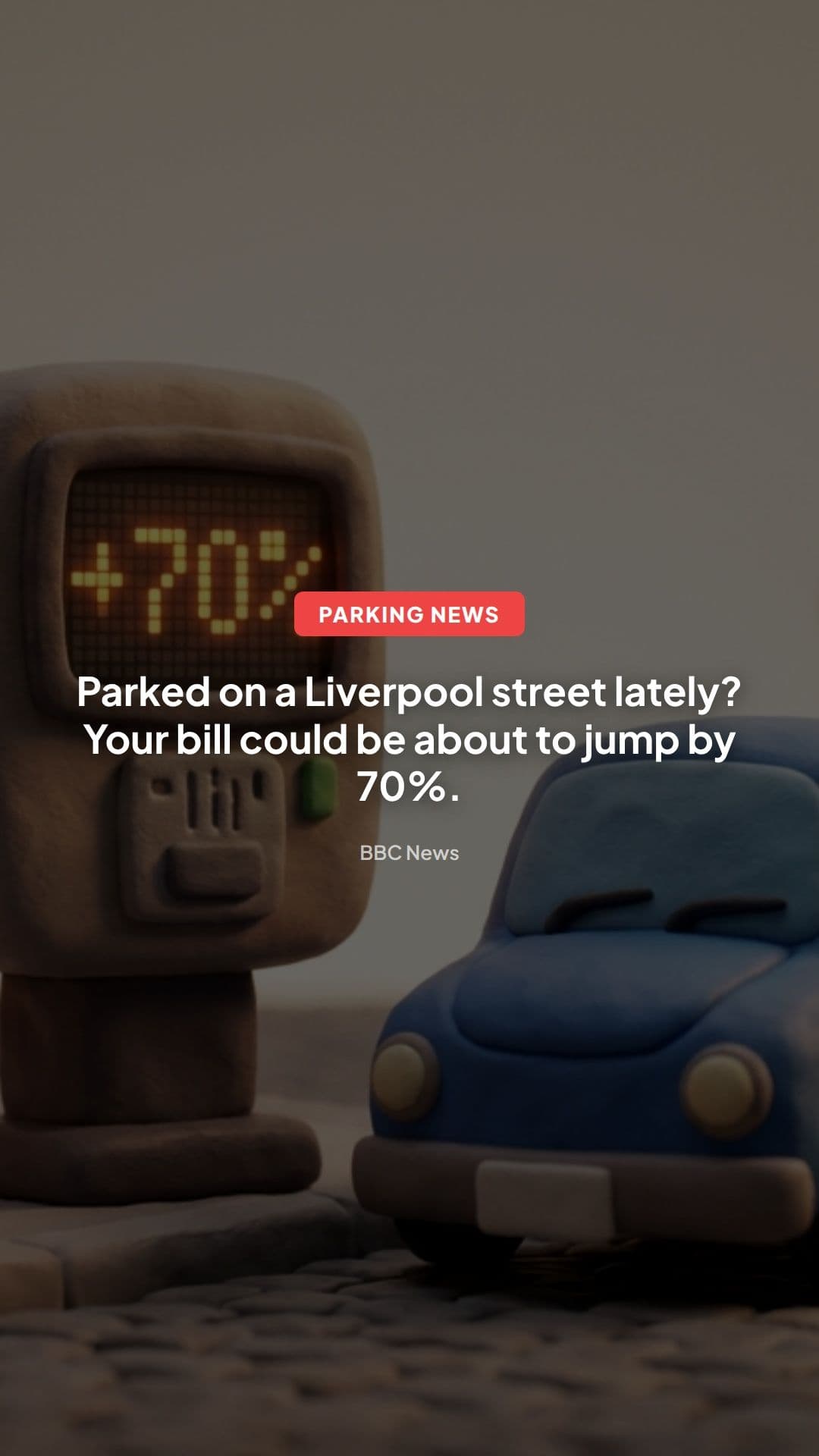
Liverpool's 70% Parking Hike Is a Warning Shot for Drivers Everywhere
If you park on the street in Liverpool, brace yourself. Council officials are weighing up a rise of as much as 70% on some on-street parking charges, alongside increases at council-run car parks. It is the kind of number that makes drivers do a double take, and rightly so. A 70% jump is not a modest inflationary tweak, it is a fundamental repricing of what it costs to leave your car in the city.
This isn't happening in isolation. Liverpool's proposals sit within a much broader pattern of councils across England reassessing how they generate parking revenue, and what that revenue is actually used for. Understanding why this matters, and what your rights are as a driver, requires digging a little deeper than the headline figure.
What's Actually Being Proposed
According to reporting, Liverpool City Council is considering increasing on-street parking charges by up to 70% on certain streets. This would sit alongside higher tariffs at car parks the council owns and operates. The changes are described as part of a wider package of reforms to how the authority raises and manages parking income.
Details of exactly which streets, which tariff bands, and the precise new figures are still emerging, and as with any council proposal at this stage, nothing is final until it has been through the proper statutory process. But the direction of travel is unmistakable: parking is becoming a more significant revenue lever for local authorities, and Liverpool is one of the more prominent examples right now.
Why This Matters Far Beyond Merseyside
It's tempting to read this as a purely local story, but it reflects pressures playing out in town halls up and down the country. Council budgets have been squeezed for years by rising demand for social care, reduced central government grants, and inflationary cost pressures on everything from staffing to road maintenance. Parking charges, unlike council tax, can often be adjusted more quickly and with fewer political constraints, which makes them an attractive dial for finance directors to turn.
There's also a policy dimension. Higher on-street charges are sometimes justified not just as revenue generation but as a tool to manage congestion, encourage turnover of parking spaces on busy shopping streets, and nudge people toward public transport or park-and-ride schemes. Whether a 70% increase achieves that balance, or simply becomes a tax on people who have no realistic alternative to driving, is exactly the kind of question that should be tested through public consultation.
For drivers, the practical impact is straightforward: parking in Liverpool, and potentially in other cities that follow suit, is about to get significantly more expensive. If you commute into the city, run errands regularly, or visit friends and family who live in charged zones, this is a cost that will land directly on your household budget.
The Legal Framework Councils Must Follow
Councils cannot simply decide to raise parking charges overnight. There is a well-established legal process behind any change to on-street parking tariffs, rooted primarily in the Road Traffic Regulation Act 1984 and the Traffic Management Act 2004.
On-street parking charges are typically set through a Traffic Regulation Order (TRO), or an amendment to an existing one. Before a TRO can be varied, the council is generally required to:
- Publish a formal notice of the proposed changes
- Allow a statutory consultation period during which residents, businesses, and other stakeholders can object
- Consider those objections properly before finalising the decision
- Publish the outcome and give appropriate notice before the new charges take effect
This is why proposals like Liverpool's are described as being "considered" rather than confirmed. There is a legal gap between an authority announcing an intention to raise charges and those charges actually becoming enforceable.
Equally important is a rule many drivers don't know exists: under Section 55 of the Road Traffic Regulation Act 1984, income from on-street parking charges and penalty charge notices cannot simply disappear into a council's general coffers. It is ring-fenced, meaning it must be spent on transport-related purposes, things like highway maintenance, public transport support, road safety schemes, or environmental improvements connected to transport. This is a meaningful legal constraint, and it's part of why councils frame parking revenue increases as being reinvested into "wider changes" to transport funding rather than a general cash grab, even when the public perception may be quite different.
Off-street, council-owned car parks operate under slightly different rules, generally falling under the council's powers as a landowner and operator, but the same broad principle of using surplus revenue for transport purposes typically still applies to local authority car parks.
What Drivers Should Know
If you park regularly in Liverpool, or in any city considering similar changes, there are some practical steps worth taking now.
Check the actual Traffic Regulation Order and signage before assuming a charge applies to you. Charges vary considerably by street, time of day, and zone, and a proposed increase on "some streets" will not apply uniformly across the whole city. Always check the signage and any on-street terminal or app before you park, rather than relying on what you paid last time.
Keep evidence of what you paid and when. Whether you use a pay-and-display machine, a phone app, or a permit, retain your payment confirmation. If charges change mid-transition, disputes over which tariff applied at the time can and do arise, and having proof protects you.
Understand your right to challenge a Penalty Charge Notice (PCN). If you believe you've been charged incorrectly, whether due to unclear signage, a technical fault, or confusion during a period of tariff change, you have the right to make informal representations to the council first, and if necessary, a formal appeal that can ultimately go to an independent tribunal. Councils must follow correct procedure, and errors during periods of change to charges are not unheard of.
Watch for consultation opportunities. If Liverpool's proposals proceed to formal consultation, residents and regular visitors have a genuine chance to object or comment before the changes are locked in. These consultations are a real part of the statutory process, not a box-ticking exercise, and objections have influenced outcomes in other council areas.
Factor Blue Badge and concession rules into your planning. Blue Badge holders typically retain specific exemptions or concessions on street parking charges, though the detail varies by council and by the type of restriction in place. It's worth checking Liverpool's specific Blue Badge policy directly rather than assuming national rules apply uniformly.
Looking Ahead
Liverpool's proposals are unlikely to be the last we hear of this kind of move. With council budgets under sustained pressure and parking revenue offering a relatively fast lever to pull, other cities are likely watching closely to see how the public and local businesses react. Business groups in particular tend to push back hard against steep parking increases, arguing that it drives shoppers to out-of-town retail parks or online spending instead.
For drivers, the sensible approach is to stay informed rather than alarmed. Keep an eye on official council communications about the consultation timeline, understand exactly which streets and charges are affected before assuming the worst, and know your rights if you ever receive a PCN you believe was issued unfairly. Parking charge increases are a genuine cost pressure, but they are also subject to real legal checks and balances, and drivers who understand that process are in a far stronger position than those who don't.
Whatever Liverpool ultimately decides, this story is a useful reminder that parking policy is never just about tarmac and ticket machines. It's about how cities fund themselves, how they try to shape travel behaviour, and how far they can push charges before the public, and the law, push back.
Written by
James Wilson
Legal Counsel
Ready to Challenge Your Ticket?
Let our AI analyse your PCN and generate a professional appeal letter in minutes.
Start Free Appeal