Labour's 20mph Speed Limits Plan for New Housing Estates
Labour has backed 20mph limits on new housing estates. We examine what the proposals, narrower roads and car-sharing measures could mean for UK drivers.

The Parking Ticket Pal Editorial Team
29 August 2026
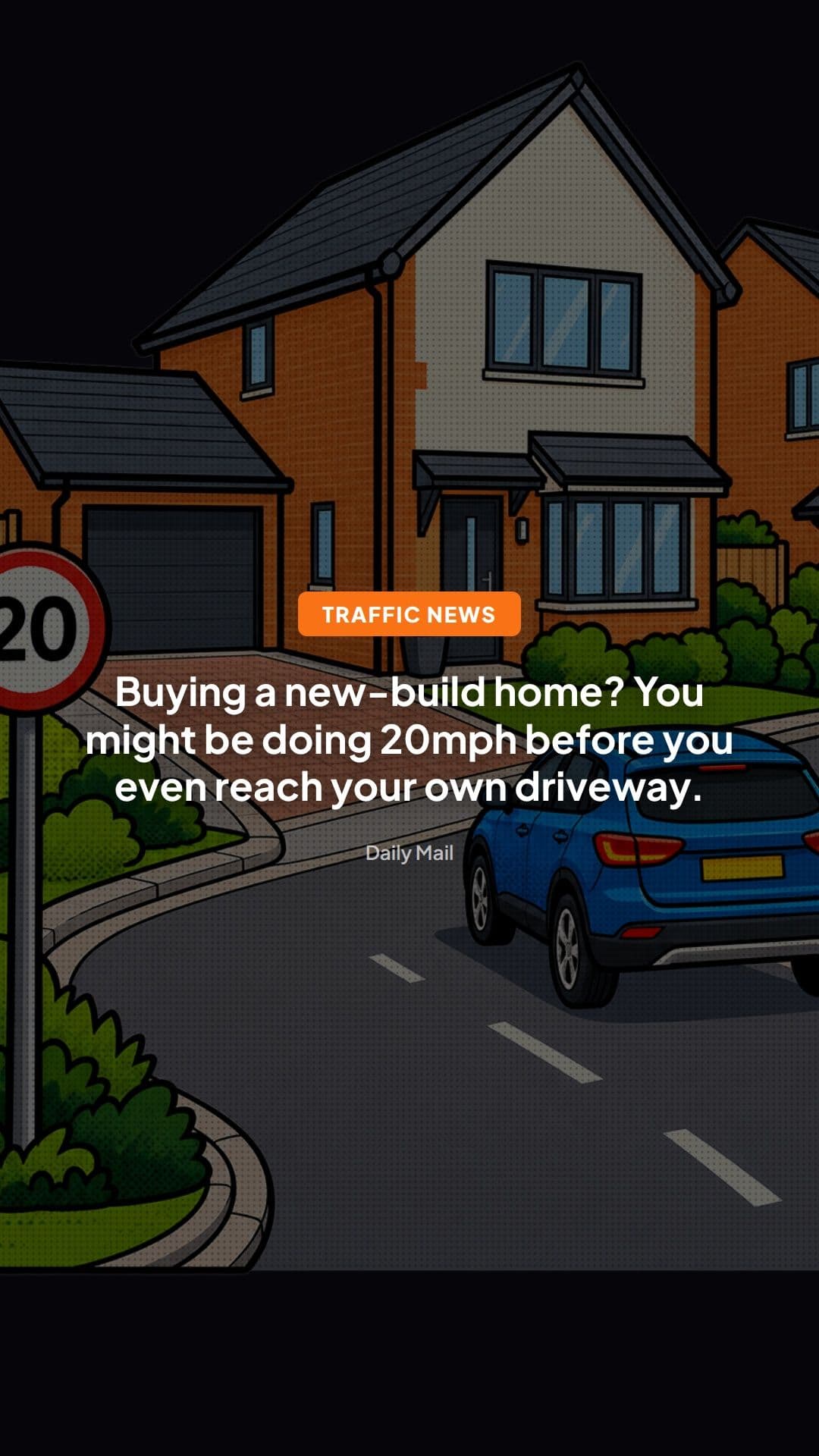
Labour's 20mph Housing Estate Plans: What They Mean for Drivers, Buyers and Residents
Picture the street outside a brand new three-bedroom semi: no through traffic, kids kicking a ball a little closer to the kerb, and cars gliding past at not much more than walking pace. That is the vision ministers have now put their weight behind, and it is set to reshape how every new housing estate in England is designed from the ground up.
The Daily Mail's story on Labour endorsing 20mph limits for new developments has, predictably, been framed as another front in the "war on motorists". But strip away the politics and there is a genuinely significant shift happening in how Britain builds streets, one that will affect anyone who buys a new-build home, visits family on a new estate, or simply drives through one on the school run.
What Happened
According to the report, ministers have backed proposals that would see 20mph (or lower) speed limits become the norm on new housing developments, rather than the exception. The plans do not stop at signage. They also include narrower carriageways and active encouragement of car sharing schemes as part of how new estates are laid out.
This is not simply a case of a council slapping up a 20mph sign after homes are built. The proposals point to a shift in design philosophy from the outset: streets engineered to naturally keep speeds low, with layout, width and visual cues doing much of the work that a speed limit sign alone cannot. It echoes long-standing "Manual for Streets" thinking, which has argued for years that residential roads should be designed for people first and vehicles second, rather than the other way round.
For a government that has made building 1.5 million homes a flagship pledge, embedding these standards into new developments is one way of trying to ensure that speed and safety are baked in rather than retrofitted later, when residents inevitably start complaining about rat-running or near misses outside the local primary school.
Why It Matters
There is a reasonably solid road safety logic behind lower urban speeds. Stopping distances shrink and the severity of any collision involving a pedestrian or cyclist drops considerably as speed comes down. It is precisely why 20mph zones have been rolled out across residential areas of London, Wales, parts of Scotland and dozens of English towns and cities over the past decade or more.
But this latest move goes further than the familiar "should 20mph be the default limit" debate that has rumbled on nationally. It targets new developments specifically, which raises different questions entirely. New estates are often built with cul-de-sacs, shared surfaces and limited through-routes already, so traffic speeds tend to be naturally lower than on older arterial roads. Layering a formal 20mph limit and narrower roads on top is as much about locking in a certain type of street character as it is about crash statistics.
There is also a practical dimension that will matter to anyone actually living there. Narrower roads mean less room for on-street parking, for two cars passing each other, and for larger vehicles such as delivery vans, refuse lorries or removal trucks to manoeuvre. Estates designed around discouraging private car dependency, with car sharing schemes baked into the plans, may also mean fewer allocated parking spaces per household than buyers have traditionally expected on a new-build estate.
For house hunters, this means the parking provision, road width and speed limit of a development are no longer minor details buried in the planning application. They are becoming central to how a new estate looks, feels and functions day to day.
The Legal Angle
Speed limits in England are governed primarily by the Road Traffic Regulation Act 1984, which gives local highway authorities the power to set speed limits through Traffic Regulation Orders (TROs). There is an important legal distinction between a 20mph limit, which simply relies on signage, and a 20mph zone, which under the Traffic Signs Regulations and General Directions typically requires physical traffic calming measures such as speed humps, chicanes or raised tables, and in return does not need repeater signs at regular intervals.
For a brand new estate, the practicalities work differently to retrofitting an existing street. Roads on new developments are usually built to an "adoptable standard" agreed with the local highway authority, often formalised through a Section 38 agreement under the Highways Act 1980, before the council takes on responsibility for maintaining them as public highway. Speed limits and road widths on these estates are typically agreed at the design and planning stage, guided by national planning policy and design codes rather than being imposed after residents have already moved in.
It is worth being clear that a 20mph limit, once properly signed, is just as legally enforceable as any other speed limit. Exceeding it can result in a fixed penalty notice, penalty points, and in more serious cases prosecution, exactly as it would on a 30mph or 40mph road. The fact that a limit feels unusually low on a wide, quiet-looking new estate road is not a legal defence. Local authorities and police forces do use speed cameras and community speedwatch schemes on residential roads, including newer developments, so the idea that a 20mph limit is somehow "unenforceable" in practice does not hold up as a reason to ignore it.
Readers interested in the broader national picture around 20mph limits, including the ongoing debate over whether 20mph should become the default urban speed limit across England, may find it useful to look at our coverage of the national default 20mph proposals and the wider road safety debate among MPs, both of which sit alongside this housing-specific announcement rather than replacing it.
What Drivers Should Know
If you are buying on a new estate, renting nearby, or simply driving through one regularly, there are a few practical points worth keeping in mind.
Read the signs, not the road. New estate roads are often deliberately designed to look and feel like they should be driven slowly, but that does not mean every estate will carry the same limit. Some may be signed at 20mph, others might retain 30mph depending on the local authority's approach and the specific planning permission granted. Never assume; check the signage.
Expect narrower margins for error. Narrower carriageways mean less room to pass oncoming traffic, particularly where residents or visitors park on-street. This increases the importance of slowing down at pinch points and being prepared to give way, regardless of the posted limit.
Parking provision may be tighter than on older estates. If car sharing schemes and reduced car dependency are being designed into new developments, buyers should ask developers directly how many parking spaces are allocated per property, whether visitor parking is provided, and whether there are any restrictions on additional vehicles. This is especially relevant for households with more than one car or older teenagers learning to drive.
Watch for enforcement, not just goodwill. Just because a 20mph limit is designed to be self-enforcing through road layout does not mean speed cameras or targeted enforcement will not appear later, particularly if a development sits near a school or has seen safety concerns raised by residents.
Factor this into house-hunting decisions. If a quiet, low-traffic environment matters to you, developments built under these newer design standards may deliver exactly that. If you are someone who relies heavily on a car and values easy, flexible parking, it is worth scrutinising a development's transport and parking strategy before committing, rather than assuming it will resemble an older-style estate.
Looking Ahead
This announcement fits into a much longer running shift in how England designs residential streets, one that has been building gradually through planning guidance for years rather than arriving overnight. What is different now is the explicit political backing at ministerial level, tying road safety design directly to the government's housebuilding ambitions.
Expect to see this play out unevenly across the country. Local authorities and developers will interpret "20mph or lower" and "narrower roads" with varying degrees of enthusiasm, and planning committees will remain the battleground where the detail of individual developments gets thrashed out. Some buyers will welcome quieter, safer-feeling streets. Others, particularly those used to generous parking and wide residential roads, may find the adjustment less comfortable.
For now, the practical advice for drivers and prospective buyers is the same as it always is with any change to speed limits or road layout: pay close attention to what is actually signed and agreed for a specific development, rather than relying on assumptions about what a "typical" new estate should look like. As these design principles become more widespread, understanding how they affect everyday driving, parking and even penalty notices will matter more, not less.
Written by
The Parking Ticket Pal Editorial Team
Source-checked parking guidance
Ready to Challenge Your Ticket?
Let our AI analyse your PCN and generate a professional appeal letter in minutes.
Start Free Appeal