Labour plan could hike council PCNs to £160 nationwide
Labour plans could let councils raise standard Penalty Charge Notices from ~£70 to £160. We unpack the proposal, trial claims and what it means for drivers.

Hannah MacLeod
8 May 2026
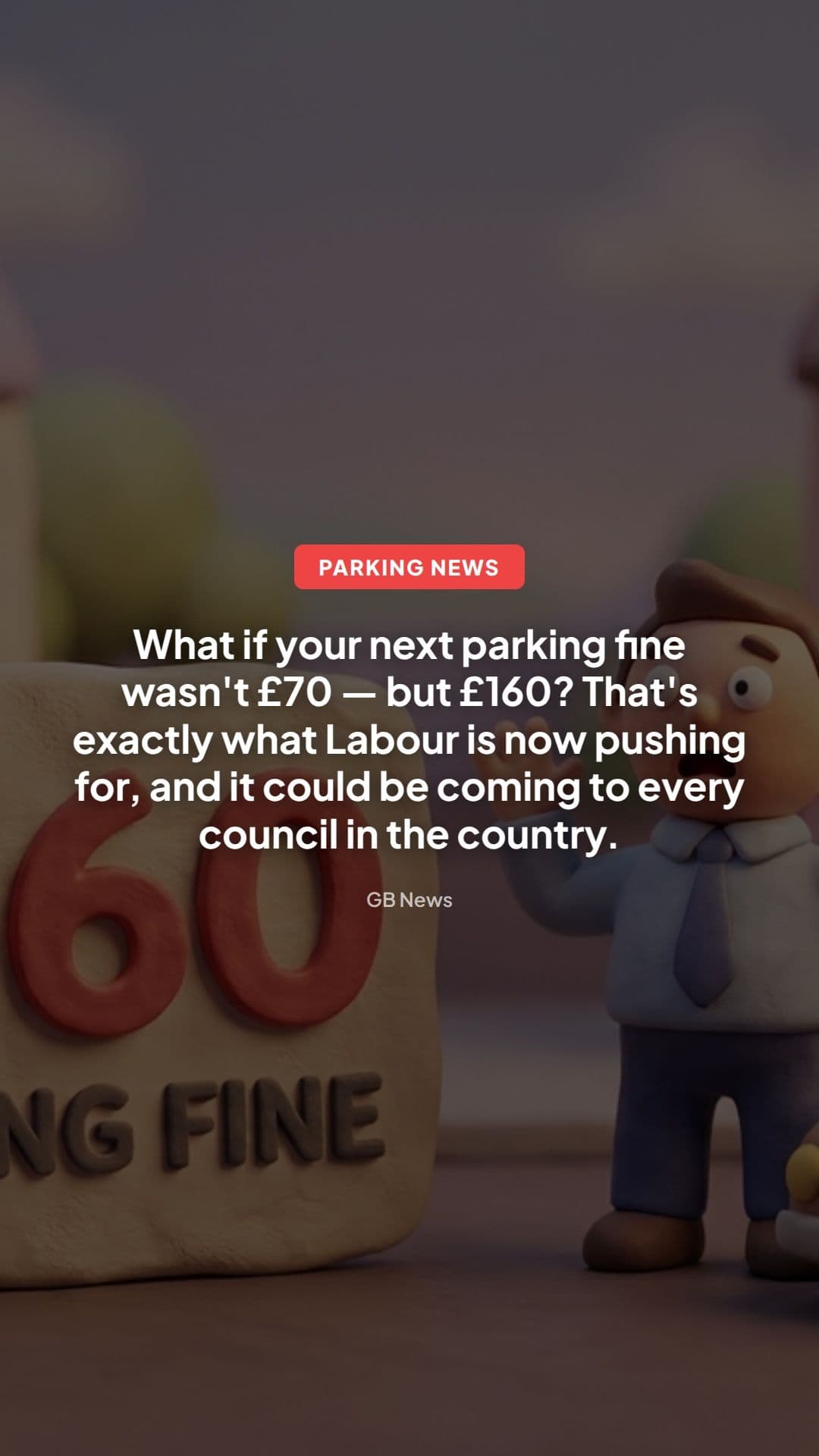
Parking Fines Could Hit £160: What Labour's Plans Really Mean for UK Drivers
A proposed doubling of penalty charges sounds alarming — but the story behind the numbers is far more complicated than the headlines suggest
The Hook: A Fine That Stings Twice as Hard
Imagine returning to your car after a quick trip to the shops, only to find a penalty charge notice tucked under your wiper blade — not for £70, but for £160. That's the reality Labour's proposed parking fine reforms could bring to drivers across England, and the implications stretch well beyond the size of the number on that yellow slip.
Whether you're a daily commuter, an occasional town-centre visitor, or someone who relies on their car because public transport simply doesn't reach you, this is a story that demands your full attention. Because if these proposals move forward, the financial stakes of a single lapse in parking judgement are about to change dramatically.
What Happened: The Proposal in Detail
According to reporting by GB News, the Labour government is actively exploring plans to allow councils across England to increase the maximum penalty charge notice (PCN) from the current standard rate of around £70 (or £130 in London for the most serious contraventions) to as much as £160 nationwide.
The proposals are reportedly backed by trial data gathered from areas where higher fines were already piloted — with officials claiming that the increased penalties did not result in a measurable reduction in visitor numbers to town centres or high streets. In other words, the argument being advanced is that higher fines are an effective deterrent without damaging local economies.
This is a significant claim, and one that deserves serious scrutiny. The suggestion that doubling a fine has no impact on footfall implies either that drivers absorb the cost without changing their behaviour, or that the trial areas were not representative of the broader national picture. Either interpretation raises important questions about what these fines are actually designed to achieve.
The proposals would not be mandatory — councils would retain discretion over whether to adopt the higher rates — but the direction of travel is unmistakably toward a more punitive enforcement regime.
Why It Matters: Context and Background
To understand why this proposal is generating such strong reactions, it helps to know how we got here.
Parking enforcement in England was decriminalised in most areas through the Road Traffic Act 1991 and subsequently expanded under the Traffic Management Act 2004. This transferred the power to issue PCNs from the police to local councils, creating what is now known as Civil Parking Enforcement (CPE). The intention was to free up police resources and allow councils to manage their roads more efficiently.
What it also did, critics have long argued, is create a financial incentive for councils to issue as many fines as possible. Councils are legally required to ringfence PCN income for transport-related expenditure — they cannot simply pocket it as general revenue — but enforcement targets and aggressive warden deployment have remained a persistent concern.
Current penalty charge levels are set by central government and vary by band:
- Band A (London and other high-demand areas): Up to £130 for the most serious contraventions, £80 for lesser ones
- Band B (most other areas of England): Up to £70 for serious contraventions, £50 for lesser ones
A jump to £160 would represent an increase of more than 120% for Band B areas — the sharpest single hike in the history of civil parking enforcement in England.
The timing is also notable. This proposal comes against a backdrop of significant financial pressure on local authorities. Many councils are struggling with funding shortfalls, and parking income — both from pay-and-display charges and from PCNs — has become an increasingly important revenue stream, even if it must technically be ring-fenced.
The Legal Angle: Rights, Regulations, and What Protects You
Under the Traffic Management Act 2004, councils operating CPE schemes must follow a strict procedural framework when issuing PCNs. This includes:
- Issuing a Notice to Owner within 28 days if the fine is not paid or challenged at the informal stage
- Allowing a formal representation to the council
- Providing the right to appeal to an independent adjudicator — either the Traffic Penalty Tribunal (outside London) or London Tribunals (within the capital)
- Offering a 50% discount if the fine is paid within 14 days of issue
Crucially, none of these protections disappear if the fine amount increases. The procedural safeguards remain intact regardless of the penalty level. This is important, because it means the appeals process — which exists precisely to correct errors and challenge unfair enforcement — remains your most powerful tool.
However, there is a practical concern: the higher the fine, the greater the pressure on drivers to simply pay up rather than take the time to challenge. Research consistently shows that a significant proportion of PCNs that are challenged are either cancelled or reduced — suggesting that many fines issued are either procedurally flawed or issued in borderline circumstances. If the fine is £160, the psychological pressure to pay and move on becomes considerably greater, even when a valid defence exists.
There is also the question of proportionality. UK courts and tribunals have long applied the principle that penalties must be proportionate to the offence. A £160 fine for, say, parking slightly over a bay line or forgetting to display a permit in a resident bay raises genuine questions about whether the punishment fits the infraction — particularly when compared to fixed penalty notices for other road traffic offences.
What Drivers Should Know: Practical Advice
If these proposals become law, the single most important thing you can do is know your rights and use them. Here is what every driver should have clearly in mind:
Always check the PCN carefully Councils must include specific information on a PCN — the contravention code, the time and location, the officer's details, and the appeal deadline. Any material error can be grounds for cancellation. Do not assume the fine is correct simply because it has been issued.
Use the 14-day discount window strategically If you intend to pay, do so within 14 days to benefit from the 50% reduction. If you intend to appeal, submit your informal challenge within the same 14-day window — the discount is typically preserved while your challenge is being considered.
Gather evidence immediately Photographs of signage, bay markings, pay-and-display machines (particularly if they were faulty), and your own vehicle's position can all be critical. The sooner you capture this evidence, the better.
Do not ignore a PCN Ignoring a fine does not make it go away. Unpaid PCNs escalate — the charge increases by 50% once a Charge Certificate is issued, and ultimately debts can be passed to enforcement agents (bailiffs). With a base fine potentially at £160, the escalated amount could reach £240 or more.
Know the difference between a council PCN and a private parking charge Private parking charges — issued by companies on supermarket car parks, retail sites, and private land — are governed by entirely different rules and are not covered by this proposal. The £160 figure applies only to council-issued PCNs on public roads and council-operated car parks.
Challenge borderline contraventions If you believe the signage was unclear, the bay markings were faded, or there were mitigating circumstances — a medical emergency, a broken pay machine, a genuine error — put it in writing. The independent appeals process exists precisely for these situations, and adjudicators do cancel fines when the evidence supports it.
Looking Ahead: What This Really Means
The broader question raised by this proposal is not simply about money. It is about what parking enforcement is for.
If the purpose of a PCN is to deter dangerous or inconsiderate parking — blocking dropped kerbs, obstructing bus stops, parking on yellow lines where it genuinely causes harm — then a higher fine might be justified. But if councils are using PCNs primarily as a revenue mechanism, applied liberally in areas where the harm caused by parking is minimal, then doubling the fine simply doubles the injustice.
The claim that higher fines did not reduce visitor numbers in trial areas deserves independent verification. Which areas were trialled? How long did the trial run? Were other variables — such as changes in public transport or local retail — controlled for? Without that transparency, the data is difficult to assess.
What seems certain is that pressure on the government to reform parking enforcement more broadly will intensify. Motoring groups, including the AA and RAC, have consistently called for greater consistency in enforcement, clearer signage standards, and stronger protections for drivers who make genuine mistakes.
For now, the message is clear: the cost of getting parking wrong in the UK is heading sharply upward. The best defence is preparation — understanding the rules in every area you park, keeping evidence of payment, and knowing exactly how to challenge a fine if one lands on your windscreen.
Because at £160 a time, the days of shrugging off a parking ticket as an unfortunate inconvenience are well and truly over.
Written by
Hannah MacLeod
Traffic Law Specialist
Ready to Challenge Your Ticket?
Let our AI analyse your PCN and generate a professional appeal letter in minutes.
Start Free Appeal