Kia EV2 gets full £3,750 grant — price drops to £24k
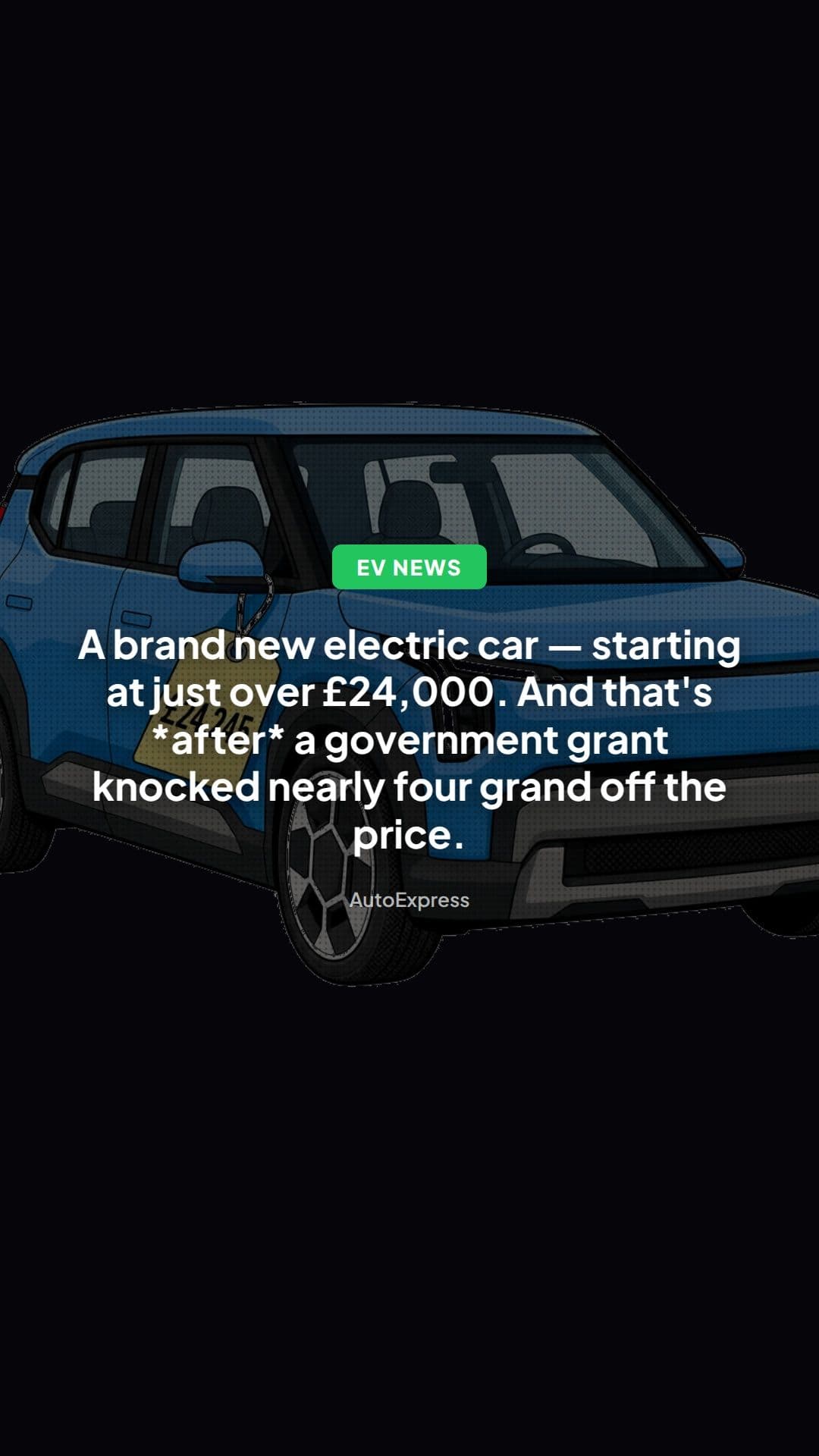
The Kia EV2 qualifies for the full £3,750 Electric Car Grant, cutting the entry price to just over £24,000 and boosting EV affordability for UK buyers.

Tariq Khan
11 July 2026
Kia EV2 Lands the Full £3,750 Electric Car Grant — Here's Why That Changes Everything
Picture this: you're standing in a Kia showroom, eyeing up a brand-new electric car that costs roughly the same as a well-specced Ford Focus or a mid-range Volkswagen Golf. Not a compromised city runabout, not a stripped-back base model with a range anxiety-inducing battery — but a genuine, properly equipped electric vehicle from one of the world's most reliable manufacturers. That's precisely the scenario the Kia EV2's qualification for the full UK government Electric Car Grant is making possible, and it's a moment the EV industry has been quietly waiting for.
What's Actually Happened
According to AutoExpress, Kia's upcoming EV2 — the brand's most affordable electric model to date — has been confirmed as eligible for the full £3,750 Electric Car Grant. That brings the entry-level price down to just over £24,000, making it one of the most competitively priced new electric vehicles available to UK buyers from a mainstream, established manufacturer.
The EV2 sits below the EV3 in Kia's expanding electric lineup and is designed specifically to target the mass-market segment — the buyers who have been watching the EV revolution from the sidelines, put off not by range anxiety or charging infrastructure, but simply by the price tag. At £24,000, that psychological barrier starts to crumble.
This isn't a trivial discount. £3,750 off the purchase price is the equivalent of roughly two years of average petrol costs for many UK drivers. It's real, meaningful money — and it arrives at a critical moment in the UK's electric vehicle transition.
Why This Matters More Than You Might Think
The UK's Electric Car Grant has had a turbulent few years. The scheme was originally far more generous — at one point offering up to £5,000 off eligible vehicles — before successive governments trimmed it back. In 2022, the grant was cut dramatically and restricted exclusively to vans, before being partially reinstated for cars in a revised form. Today, the grant stands at £3,750, but it comes with strict eligibility criteria that exclude many popular models.
To qualify, a vehicle must:
- Cost no more than £37,000 (on-the-road price before the grant is applied)
- Be type-approved in the UK or have a certificate of conformity
- Be new, not used or pre-registered
- Be a battery electric vehicle (BEV) — plug-in hybrids do not qualify
That £37,000 cap is the critical gatekeeper. It deliberately targets the mass market, pushing manufacturers to engineer genuinely affordable EVs rather than simply offering premium vehicles at a slight discount. The Kia EV2, priced just over £27,750 before the grant is applied, clears that threshold comfortably — which is precisely why it qualifies in full.
The significance here is competitive positioning. The EV2 doesn't just qualify for the grant — it qualifies with considerable headroom, suggesting Kia has engineered this vehicle with the grant threshold firmly in mind from the outset. That's a strategic decision, not a coincidence.
The Legal Framework Behind the Grant
The Electric Car Grant is administered by the Office for Zero Emission Vehicles (OZEV), operating under the Department for Transport. It's not a rebate you apply for as a consumer — the discount is applied automatically at the point of sale by the dealership, which then reclaims the money from OZEV. This means the process is largely invisible to the buyer, which is both its greatest strength and a source of occasional confusion.
Under the Automated and Electric Vehicles Act 2018, the government has broad powers to introduce financial incentives to accelerate EV adoption, and the grant scheme sits within that broader legislative framework. However, it's worth noting that the grant is not a statutory right — it's a discretionary government scheme, and its terms can change with relatively little notice.
Historically, manufacturers and dealers have sometimes faced challenges when grant terms shifted mid-order. If you place an order for a qualifying vehicle and the grant is altered or withdrawn before delivery, you may not be entitled to the original discount. The grant applies at the point of registration, not the point of order. This is a crucial distinction that has caught buyers out in the past.
The Consumer Rights Act 2015 offers some protection if a dealer has made a specific written commitment about pricing, but this is a complex area. The safest approach is always to confirm grant eligibility in writing with your dealer and check the current OZEV eligibility list at the point of registration.
What Drivers Should Know Before Buying
If the Kia EV2 is on your radar, there are several practical considerations worth understanding before you sign anything.
1. Verify eligibility at the time of purchase, not before
The OZEV eligibility list is updated regularly. A vehicle that qualifies today may not qualify tomorrow if the government adjusts the scheme. Always check the official list at gov.uk/plug-in-car-van-grants immediately before committing to purchase.
2. The grant is applied by the dealer — you don't need to do anything
You don't fill in forms or claim anything separately. The £3,750 comes straight off the purchase price. If a dealer is asking you to claim it separately or pay the full price and await a rebate, something is wrong — speak to OZEV directly.
3. Finance deals may obscure the grant
When buying on PCP or HP, some finance packages may absorb the grant into adjusted monthly payment calculations rather than presenting it as a clear upfront saving. Ask your dealer to show you the full on-the-road price, the grant deduction, and the resulting purchase price as three separate figures before any finance is calculated.
4. Check your home charging situation
The EV2 will need charging. The Electric Vehicle Homecharge Scheme (EVHS) — which previously offered a £350 grant towards home charger installation — was replaced in 2022 by a grant available only to those in flats or rental accommodation. Homeowners with off-street parking must fund installation themselves, which typically costs between £800 and £1,200 for a 7kW wallbox. Factor this into your total cost of ownership calculation.
5. Benefit-in-Kind tax for company car drivers
If you're considering the EV2 as a company car, the Benefit-in-Kind (BiK) rate for electric vehicles is currently 3% for the 2024/25 tax year, rising gradually to 7% by 2027/28. Compared to a petrol equivalent at 25–37%, the tax savings can be extraordinary — often running to thousands of pounds annually for higher-rate taxpayers.
Looking Ahead: What This Signals for the UK EV Market
The Kia EV2's grant eligibility is a bellwether moment. For years, critics of the UK's EV transition have pointed to affordability as the single biggest obstacle — not range, not charging infrastructure, not technology. Price. The argument has been simple: ordinary people cannot afford electric cars.
The EV2 at just over £24,000 doesn't entirely demolish that argument, but it chips away at it significantly. When you factor in lower running costs — electricity versus petrol, reduced servicing requirements, no road tax for EVs registered before April 2025 — the total cost of ownership over a typical three-to-five year ownership period begins to look genuinely competitive with equivalent petrol models.
The UK government's Zero Emission Vehicle (ZEV) mandate requires that 80% of new car sales be electric by 2030, rising to 100% by 2035. Manufacturers face significant financial penalties for failing to meet annual targets. That regulatory pressure is already pushing brands to prioritise affordable EV development — and the EV2 is a direct product of that pressure.
We should expect more models like this. The Renault Scenic E-Tech, the Fiat 600e, and now the Kia EV2 represent a new wave of genuinely mass-market electric vehicles engineered specifically to meet the £37,000 grant threshold. As battery costs continue to fall — analysts project a further 20–30% reduction in battery pack costs by 2027 — that threshold will become easier to hit, and the range of qualifying vehicles will expand.
The question is whether the grant itself will survive long enough for buyers to benefit. The scheme has been cut before, and with public finances under pressure, it cannot be taken for granted. If you're considering an EV purchase in the near future, the combination of the Kia EV2's price point and the current grant level represents one of the most compelling value propositions the UK new car market has seen in years.
The window may not stay open forever. For drivers who've been waiting for the right moment, this might just be it.
Source: AutoExpress — "Kia EV2 gets government's full £3,750 Electric Car Grant"
Written by
Tariq Khan
Bailiff Procedures Expert
Ready to Challenge Your Ticket?
Let our AI analyse your PCN and generate a professional appeal letter in minutes.
Start Free Appeal