Kia Driver's £150k ULEZ Fines: How Costs Spiralled
A Kia driver reportedly amassed more than £150,000 in ULEZ and Congestion Charge penalties. We examine how unpaid charges can escalate for motorists quickly.

The Parking Ticket Pal Editorial Team
30 August 2026
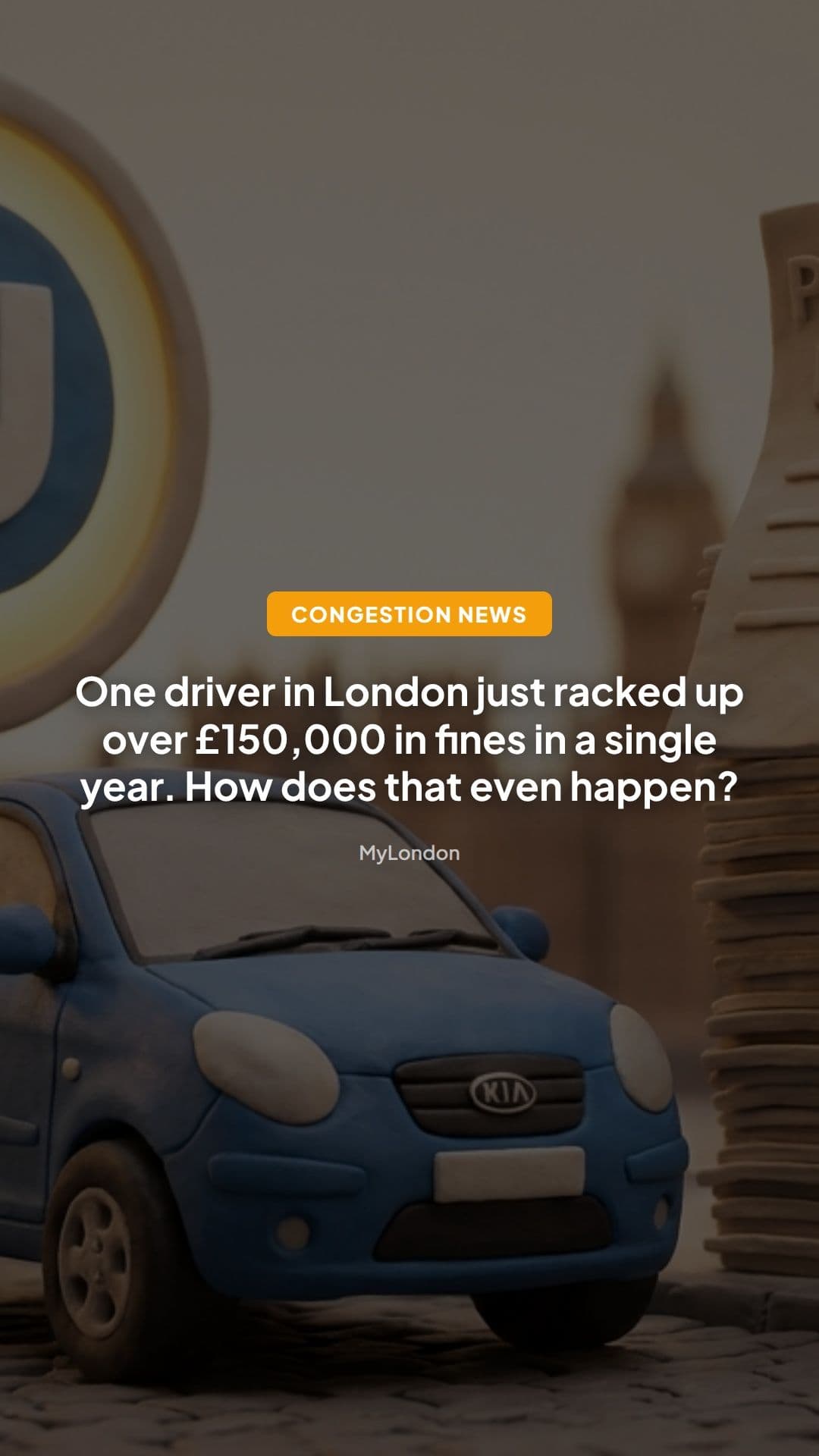
Kia Driver Racks Up £150k in ULEZ and Congestion Fines in Just One Year
Hook
Imagine opening a letter from Transport for London and discovering you owe more than the average UK house deposit, not for a mortgage or a business loan, but for driving through London without paying a daily charge. That's the reality for one Kia driver, whose unpaid ULEZ and Congestion Charge journeys have snowballed into a penalty bill exceeding £150,000 in a single year. It sounds almost unbelievable, yet it's a stark illustration of how quickly small, repeated infractions can spiral into life-altering debt under London's road charging schemes.
What Happened
According to reporting by MyLondon, a Kia registered to accumulate charges linked to the Ultra Low Emission Zone (ULEZ) and the Congestion Charge has built up penalty charge notices (PCNs) totalling more than £150,000 over the course of a year. The vehicle repeatedly entered the zones without paying the required daily charges, and rather than settling the fees promptly, either the registered keeper failed to pay or disputed liability, allowing fines to multiply at an extraordinary rate.
To put the scale of this in context, the standard ULEZ charge is £12.50 per day and the Congestion Charge is now £18 per day following the most recent increase. Miss either payment deadline and Transport for London can issue a PCN, which currently starts at £180 (reduced to £90 if paid within 14 days) but rises further with each additional missed payment. When a single vehicle is making regular, uncharged trips into both zones day after day, the fines don't just add up, they compound. A driver who ignores the charge on Monday, Tuesday and Wednesday isn't looking at one fine, but potentially three or more, each attracting its own enforcement costs if left unpaid.
The case has attracted attention precisely because of how extreme the final figure is. Six-figure ULEZ debts are not common, but they are not entirely unheard of either. What makes this story notable is the sheer speed at which the penalties escalated within a twelve-month window, suggesting a pattern of persistent non-payment rather than a single lapse in judgement.
Why It Matters
This story matters for several reasons beyond its shock value.
First, it highlights a genuine enforcement gap. TfL's ULEZ and Congestion Charge cameras use automatic number plate recognition (ANPR) to detect vehicles entering the zones. If a vehicle isn't registered for auto-pay and the driver doesn't manually pay by midnight the following day, a PCN is triggered automatically. There is no human intervention at the point of detection, which means the system can keep issuing fines indefinitely as long as the vehicle keeps entering the zone unpaid. Without a mechanism to flag persistent evaders earlier, debts can balloon before anyone steps in.
Second, it raises questions about who ultimately pays. If the vehicle changed hands, was sold, or was being used by someone other than the registered keeper, the story becomes a cautionary tale about keeping the DVLA's vehicle register up to date. Penalty liability in these schemes generally falls on the person recorded as the keeper at the time of the alleged contravention, regardless of who was actually driving. A driver who has sold a car but not correctly notified the DVLA can find themselves liable for charges incurred by someone else entirely.
Third, this case sits within a much wider context of London's clean air enforcement drive. ULEZ penalties across the capital have already reached staggering totals in recent years, and stories like this one feed into ongoing debate about whether enforcement is proportionate, whether the appeals process is accessible enough, and whether TfL does enough to intervene before debts reach eye-watering levels. For context on the bigger picture, our coverage of ULEZ fines hitting £200 million and what it means for your rights explores how enforcement has scaled up across London.
The Legal Angle
Under the Greater London Authority Act 1999 and the associated ULEZ and Congestion Charge schemes, TfL has statutory powers to charge vehicles entering designated zones and to issue PCNs for non-payment. Crucially, both schemes operate on a "keeper liability" basis. This means TfL pursues the registered keeper of the vehicle at the time of the alleged contravention, not necessarily the person who was driving.
If a keeper disputes a PCN, they can make representations to TfL, and if unsuccessful, appeal to the independent London Tribunals (formerly known as the Environment and Traffic Adjudicators). Grounds for a valid challenge typically include evidence that the charge was actually paid, that the vehicle was exempt or discounted, that it had been sold before the contravention date, or that the PCN was issued incorrectly due to an ANPR error.
Where debts are ignored rather than formally challenged, PCNs can escalate quickly. An unpaid penalty can increase by 50% if not settled within the initial period, and if it remains unpaid it can be registered as a debt through the county court, potentially leading to a warrant of execution and bailiff action. For drivers facing statutory declarations relating to out-of-time PCNs, whether because they never received the original notice, our guide to TE9 and TE7 statutory declarations explains the deadlines and forms involved in challenging enforcement after the fact.
It's also worth noting that TfL and other enforcement bodies maintain what is sometimes referred to as a persistent evader classification for vehicles that repeatedly avoid payment. Once a vehicle is flagged in this way, enforcement action can intensify, including clamping or removal in some circumstances. Readers wanting more detail on how this classification works can consult our explainer on the persistent evader database and what it means for UK drivers.
None of this constitutes legal advice for any individual case. Anyone facing a substantial ULEZ or Congestion Charge debt, particularly one reaching the sums seen in this story, should seek independent advice from a solicitor, a debt charity, or a specialist parking and traffic penalty adviser, given how much money and potential enforcement action is at stake.
What Drivers Should Know
For everyday drivers, this story is a useful prompt to check a few basic habits that prevent small charges from becoming catastrophic debts.
Set up auto-pay if you regularly drive into central London. TfL offers Auto Pay for both ULEZ and the Congestion Charge, which automatically deducts the daily fee whenever your registered vehicle is detected in the zone. This removes the risk of forgetting to pay and is arguably the single most effective way to avoid accidental non-payment fines.
Pay by midnight the day after travel, not the day of. Both charges allow payment up until midnight the following day, but many drivers mistakenly believe they must pay on the day itself and end up either paying late by accident or assuming they've missed the window entirely when they haven't.
Keep your V5C up to date. If you sell a vehicle, notify the DVLA immediately. Liability for ULEZ and Congestion Charge PCNs follows the registered keeper, so an out-of-date V5C can leave you fielding fines for a car you no longer own.
Don't ignore PCNs, even if you intend to dispute them. Ignoring a penalty doesn't make it disappear. It allows the debt to increase and moves it closer to enforcement action such as bailiff involvement. If you believe a PCN is wrong, submit formal representations within the deadline stated on the notice.
Check for exemptions and discounts. Certain vehicles, including some disabled persons' vehicles and specific low-emission models, may be exempt or discounted. It is worth confirming your vehicle's status directly with TfL rather than assuming.
Act early if debts are already mounting. If penalties have built up significantly, seeking advice sooner rather than later gives you more options, whether that's negotiating a payment plan, challenging historic PCNs, or addressing underlying issues such as incorrect vehicle records.
Looking Ahead
Cases like this Kia driver's £150,000 bill are likely to keep surfacing as London's charging zones mature and enforcement technology becomes more sophisticated. ANPR systems are only becoming more accurate and widespread, meaning fewer contraventions slip through unnoticed. At the same time, public and political pressure is growing for reform of how private and public parking and charging penalties are issued, capped, and escalated, given how quickly modest daily fees can transform into life-changing sums when they go unpaid over an extended period.
Whether TfL introduces earlier intervention triggers for vehicles racking up unusually high numbers of unpaid charges remains to be seen. For now, the lesson for ordinary drivers is straightforward even if the story itself is extraordinary: London's charging zones are unforgiving of neglect, and the gap between a missed daily fee and a five-figure, or in this case six-figure, debt can close far faster than most people realise.
Written by
The Parking Ticket Pal Editorial Team
Source-checked parking guidance
Ready to Challenge Your Ticket?
Let our AI analyse your PCN and generate a professional appeal letter in minutes.
Start Free Appeal