
Judge Caught Speeding Three Times While Rushing to Court
A judge was disciplined after three speeding offences while travelling to court. We examine UK speeding law, penalties and whether urgency is ever a defence.

The Parking Ticket Pal Editorial Team
25 September 2026
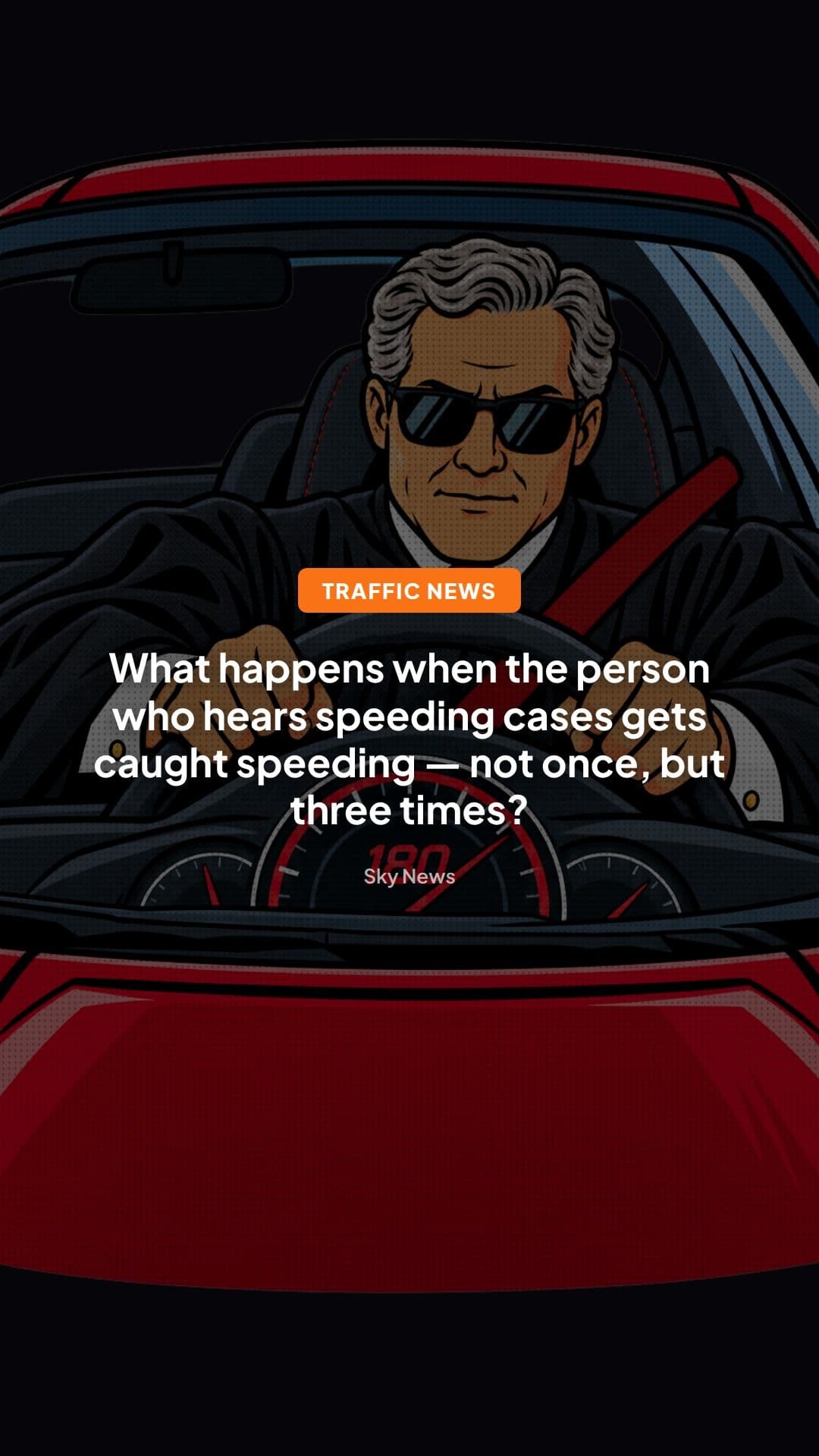
Judge Caught Speeding Three Times While "Rushing" to Court: What This Case Really Tells Us About British Justice
There is a particular irony in a judge being disciplined for breaking the very laws they are sworn to uphold. When Sky News reported that a judge faced disciplinary action after being caught speeding on three separate occasions while travelling to court, it wasn't just a quirky headline. It exposed something drivers up and down the country instinctively suspect: that the law applies differently depending on who you are, and that "I was in a rush" is a defence everyone tries, even those who sit in judgement of others.
This case deserves a closer look, not because it is scandalous, but because it raises genuine questions about accountability, judicial conduct, and how the justice system treats its own when they fall foul of the rules that apply to everybody else.
What Happened
According to Sky News, a judge was caught speeding on three separate occasions while travelling to court. The judge was reportedly "rushing" to get to hearings on time, and the repeated offending triggered disciplinary action. The report frames this as a case where professional pressure, specifically the need to be in court promptly, appears to have contributed to a pattern of offending rather than a single lapse in concentration.
Judges in England and Wales are subject to a formal conduct regime overseen jointly by the Lord Chancellor and the Lady Chief Justice, with investigations typically handled by the Judicial Conduct Investigations Office (JCIO). This body exists precisely because judicial office holders, like anyone else, can commit criminal offences or behave in ways that fall short of the standards expected of them. When that happens, the JCIO can recommend sanctions ranging from formal advice or a warning through to removal from office in the most serious cases.
Speeding, even repeated speeding, would not typically be treated in the same bracket as serious criminal conduct. But for a judge, whose entire professional authority rests on public confidence in their respect for the law, even a comparatively minor motoring matter can carry disciplinary weight that it simply wouldn't for most other professions.
Why It Matters
There's a reason this story has cut through. Speeding is one of the most common ways ordinary drivers fall foul of the law, and the standard response from courts and the DVLA to "I was late" or "I was in a hurry" is, quite rightly, that it is not a valid excuse. Time pressure is never accepted as mitigation for exceeding a speed limit, because the entire point of speed limits is that they apply regardless of how important your journey feels in the moment.
So when someone whose job involves applying exactly that logic to defendants in front of them is found to have broken the same rule, and done so on three separate occasions, it naturally raises questions about consistency. Would an ordinary member of the public get the benefit of a lighter disciplinary outcome for repeat offending, or would they be facing a totting-up disqualification?
This isn't really a story about one individual though. It's a useful lens on how the system treats professional pressure as a mitigating circumstance, and where the line sits between human error and a pattern that should trigger tougher consequences. Sky News' report matters because it puts judicial accountability under the same public scrutiny that ordinary drivers face every day when they're caught by a speed camera or stopped by police.
The Legal Angle
For most drivers, speeding is dealt with through a fairly standardised framework. A single offence typically results in a fixed penalty notice, three penalty points, and a fine, or attendance on a speed awareness course if eligible. Repeat offending changes the picture considerably.
Under the totting-up provisions in the Road Traffic Offenders Act 1988, any driver who accumulates 12 or more penalty points within a three-year period faces automatic disqualification under the "totting-up" procedure, usually for a minimum of six months, unless they can persuade a court that disqualification would cause exceptional hardship. Three separate speeding offences, depending on severity, could easily bring a driver close to or over that threshold, especially if any of them involved higher-tier fines under the Sentencing Council's guidelines for excess speed.
Court proceedings on speeding also take account of aggravating and mitigating factors. Being in a hurry for a legitimate reason, including a professional obligation such as attending court, is not treated as mitigation in sentencing guidelines. Courts have consistently held that time pressure, work commitments, and even the importance of the destination do not excuse exceeding a speed limit, precisely because everyone on the road has somewhere they need to be.
For a judge specifically, there's an additional layer. Judicial office holders are expected to maintain the highest standards of behaviour, both professionally and personally, because public confidence in the judiciary depends on it. The JCIO's disciplinary statements make clear that findings of criminal conduct, even relatively minor motoring offences, can result in formal warnings, reprimands or, in rarer cases, removal from office if the conduct is repeated or brings the judiciary into disrepute. Given the pattern of three offences reported here, it seems disciplinary action was considered proportionate without going as far as removal, though Sky News' reporting does not detail the exact sanction imposed.
It's worth noting this differs from how other public figures might be treated. Well known individuals caught speeding, including celebrities and MPs, generally face the same court process as anyone else, as seen in past cases involving high profile figures such as Richard Hammond. What sets this case apart is the additional, separate disciplinary process a judge faces on top of any criminal sanction.
What Drivers Should Know
There are a few genuinely practical lessons in this story for ordinary motorists, even though most of us will never face judicial conduct proceedings.
Being late is never a legal defence. Courts do not accept work pressure, professional deadlines, or personal urgency as mitigation for speeding. If you're caught, the fact that you were rushing to an important meeting, a hospital appointment, or even a court hearing will not reduce your penalty.
Repeat offences escalate quickly. A single speeding offence is manageable for most drivers, usually resulting in points or a speed awareness course. But three offences within a short period risks tipping you towards the 12-point totting-up threshold, and the consequences of disqualification can be severe, including loss of employment for anyone who drives for work. If you're facing this situation, it's worth understanding how the exceptional hardship argument works and when it can genuinely apply, rather than assuming it will save you.
Professional pressure can create dangerous habits. Anyone whose job involves tight travel schedules, whether that's a judge, a delivery driver, or a sales rep, is at higher risk of normalising small violations because "just this once" becomes a repeated pattern. Building in extra time for court dates, meetings, or appointments is a simple but effective way to remove the temptation altogether.
Enforcement doesn't discriminate by profession. Speed cameras and police checks don't know or care who is behind the wheel. If you want to understand how modern enforcement works, including newer AI-based systems now being rolled out across the UK, it's worth reading up on how these cameras operate and what your rights are if you believe you've been wrongly flagged.
Know your options if you're contesting a speeding matter. Whether it's a technicality, a signage issue, or a genuine case of mistaken identity, there are legitimate routes to challenge a speeding allegation. Cases where convictions have later been overturned, such as certain high profile examples in the media, show that procedural fairness still matters, even in seemingly straightforward motoring cases.
Looking Ahead
This case is unlikely to trigger a wholesale review of how judges are treated for motoring offences, but it does add to a growing public conversation about consistency in enforcement and accountability at every level of the justice system. As speed enforcement becomes more automated and widespread, with more cameras, more data sharing, and less human discretion at the point of detection, stories like this will keep surfacing, simply because more people, including those in positions of authority, are being caught.
For ordinary drivers, the real takeaway isn't really about judges at all. It's a reminder that speed limits exist independently of how busy, important, or time-pressed your journey feels, and that the system, in theory at least, is designed to apply the same standard to everyone who gets behind the wheel. Whether that theory holds up consistently in practice is precisely the question this story leaves hanging.
Written by
The Parking Ticket Pal Editorial Team
Source-checked parking guidance
Ready to Challenge Your Ticket?
Let our AI analyse your PCN and generate a professional appeal letter in minutes.
Start Free Appeal