Hyundai Earth & Venus concepts preview future Ioniq EVs
Hyundai’s Earth and Venus concept cars hint at the next Ioniq EVs, previewing new styling, cabin packaging and tech likely to reach future UK models.

Lisa Rodriguez
5 April 2026
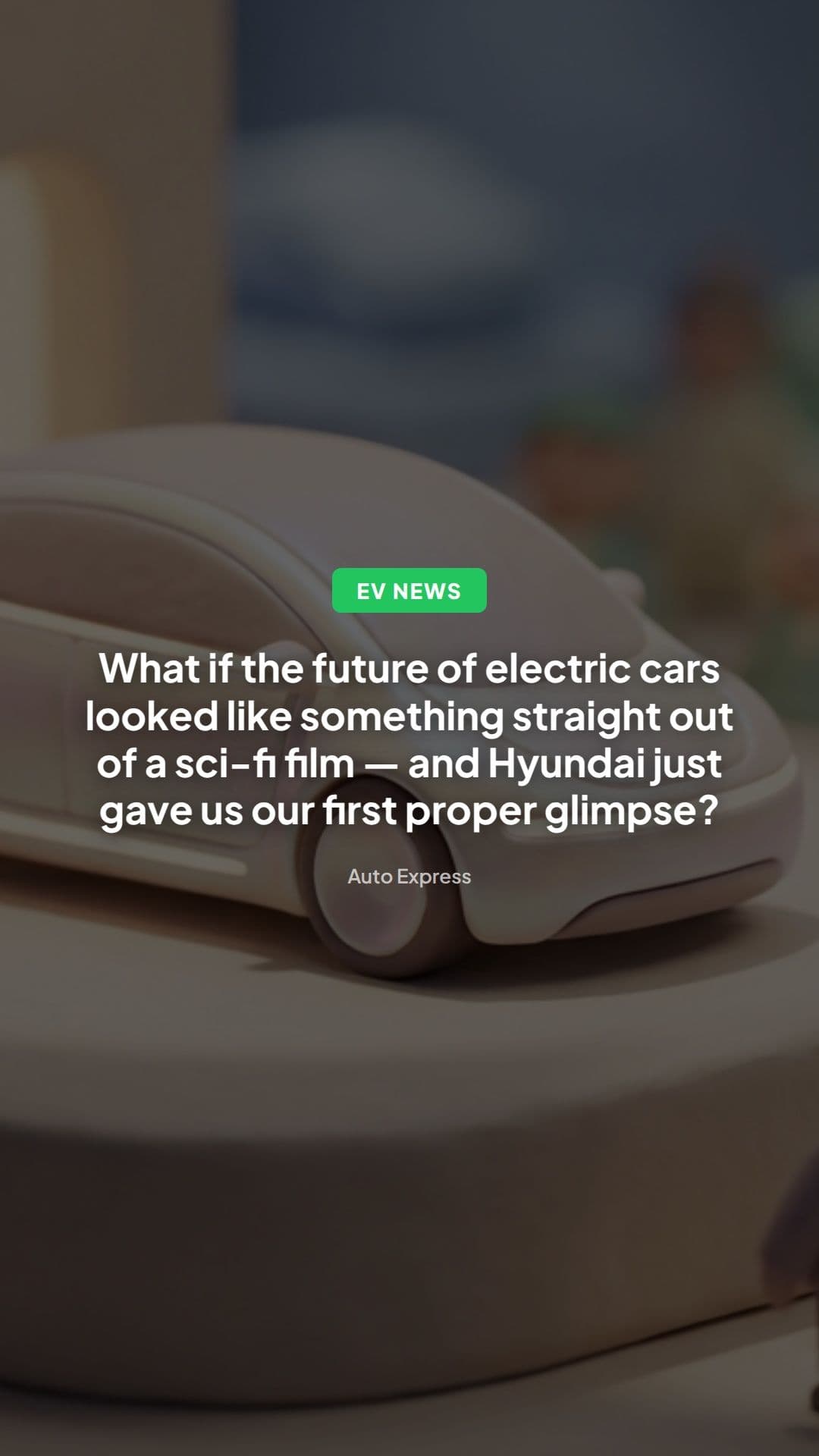
Hyundai's Earth and Venus Concepts: What the Future of Affordable EVs Really Means for UK Drivers
A glimpse at tomorrow's electric cars raises urgent questions about charging infrastructure, running costs, and whether Britain's roads are truly ready
There's something almost poetic about a car manufacturer naming its concept vehicles after planets. Earth — grounded, practical, essential. Venus — dazzling, aspirational, perhaps a little out of reach. When Hyundai unveiled these two striking concept cars, the motoring world understandably focused on the swooping bodywork and the futuristic interiors. But look a little deeper, and these concepts tell a far more important story: one about where mass-market electric vehicles are genuinely heading, and what that means for the millions of ordinary UK drivers still sitting on the fence about making the switch.
This isn't just about design. It's about affordability, infrastructure, regulation, and the very real practical challenges that will determine whether the electric revolution succeeds or stalls on Britain's congested, pothole-riddled roads.
What Hyundai Actually Revealed
Hyundai's Earth and Venus concepts, reported in detail by Auto Express, are best understood as a creative brief made physical — a bold statement of intent from a manufacturer that has already proven it can build genuinely excellent electric vehicles with the Ioniq 5 and Ioniq 6.
The Earth concept leans into practicality. Its proportions hint at a more accessible, family-oriented EV — the kind of vehicle that could slot beneath the Ioniq 5 in the range and, crucially, carry a price tag that doesn't require remortgaging the house. The Venus, by contrast, is more expressive: sleeker, more aerodynamically adventurous, previewing what a next-generation Ioniq 6 successor or an entirely new coupe-style model might look like.
Both concepts showcase Hyundai's evolving design language — a move away from the angular, deliberately retro-futurist aesthetic of the current Ioniq lineup towards something smoother, more organic, and arguably more mainstream. Interior concepts suggest a continued focus on maximising cabin space through the brand's dedicated EV platform (the E-GMP architecture), while technology previews point towards more sophisticated battery management systems and potentially faster charging capabilities.
What Hyundai is signalling, essentially, is that its best EV thinking — previously reserved for flagship models — is about to filter downwards into more affordable, higher-volume cars. And for UK drivers, that's significant news.
Why This Matters More Than You Might Think
The UK's relationship with electric vehicles is, to put it diplomatically, complicated. Government targets remain ambitious: the Zero Emission Vehicle (ZEV) mandate requires that 80% of new cars sold by manufacturers must be zero-emission by 2030, rising to 100% by 2035. These aren't suggestions — they carry real financial penalties for manufacturers who fall short, calculated per non-compliant vehicle sold.
Hyundai, like every major manufacturer operating in the UK market, is acutely aware of this pressure. The Earth and Venus concepts aren't just exercises in creative design; they're part of a commercially urgent pipeline of production vehicles that need to be on sale, at accessible prices, within the next few years.
Here's the context that makes this genuinely interesting: the UK's EV market has shown signs of consumer hesitation precisely in the mid-market segment. Premium EVs sell reasonably well. Budget EVs from Chinese manufacturers are gaining ground. But the crucial middle ground — the family hatchback and saloon territory that has always formed the backbone of British new car sales — remains stubbornly resistant to full electrification.
The reasons are well-documented: range anxiety, charging infrastructure concerns, purchase price, and a lingering uncertainty about long-term running costs. If Hyundai's concepts translate into production vehicles that genuinely address these barriers, they could be transformative for UK uptake figures.
The Legal and Regulatory Landscape Surrounding EVs in the UK
It's worth understanding the legal framework that is actively shaping this market, because it directly affects what cars manufacturers will build — and what drivers will eventually be able to buy.
The ZEV Mandate (introduced under the Automated and Electric Vehicles Act 2018 and subsequently refined) creates binding obligations on manufacturers. Fines for non-compliance can reach £15,000 per non-compliant vehicle — a figure that focuses minds considerably. Hyundai's concept reveals are, in part, a public demonstration that the company is investing in its ZEV pipeline.
The Product Safety and Metrology Bill, currently progressing through Parliament, will also affect how EV charging equipment is regulated and standardised across the UK. This matters because one of the practical barriers to EV adoption is the fragmented, sometimes unreliable public charging network — a problem that no amount of beautiful concept cars can solve on its own.
Building regulations have also been updated to require that new homes and certain commercial premises include EV charging points. Part S of the Building Regulations (England) came into force in June 2022, mandating charge points in new residential buildings with associated parking. This is gradually improving the home-charging landscape, but the reality for millions of UK drivers — particularly those in flats or terraced houses without off-street parking — remains challenging.
Consumer rights are also relevant here. The Consumer Rights Act 2015 provides protections for buyers of new vehicles, including EVs, covering satisfactory quality and fitness for purpose. As EV technology evolves rapidly, buyers should be aware that battery degradation claims and software-related disputes are an emerging area of consumer law that is still being tested in UK courts.
What Drivers Should Know Right Now
If Hyundai's concepts excite you — and they should — here's what to bear in mind as you consider your next vehicle purchase:
- Don't buy on concept alone. Production vehicles frequently differ significantly from concepts. Monitor the actual specifications, real-world range figures, and independent test results before committing.
- Check your home charging situation first. The Office for Zero Emission Vehicles (OZEV) offers grants towards home charge point installation (currently up to £350 through the Electric Vehicle Chargepoint Grant). If you live in a flat or have no off-street parking, investigate workplace and public charging options in your area before purchasing.
- Understand the total cost of ownership. EVs typically have lower fuel and servicing costs but higher purchase prices. Use tools like the Energy Saving Trust's EV cost calculator to model your actual annual savings based on your mileage and charging habits.
- Research public charging reliability. The Competition and Markets Authority (CMA) has previously raised concerns about the reliability and pricing transparency of public charge point operators. Apps such as Zap-Map provide real-time reliability data for public chargers across the UK.
- Be aware of evolving tax treatment. Benefit-in-Kind (BiK) rates for electric company cars are rising — from 2% in 2022/23 to a scheduled 9% by 2028/29. If you're considering an EV through a salary sacrifice or company car scheme, factor in how these changes affect your net benefit.
- Consider residual values carefully. The used EV market is maturing but remains volatile. Battery health certification is increasingly important — ask dealers about battery state-of-health reports for any used EV you consider purchasing.
Looking Ahead: The Road to Affordable Electric Motoring
Hyundai's Earth and Venus concepts represent something genuinely hopeful: evidence that a major manufacturer is thinking seriously about how to make electric vehicles desirable and accessible to mainstream buyers, not just early adopters with deep pockets.
The trajectory is clear. Within the next three to five years, the production descendants of these concepts will need to be competitive on price with equivalent petrol and hybrid models if the UK's electrification targets are to be met. That means Hyundai — and its rivals — face an extraordinary engineering and commercial challenge: delivering more sophisticated, better-packaged EVs at lower price points, while simultaneously managing the cost pressures of battery supply chains and the regulatory demands of multiple global markets.
For UK drivers, the practical implication is this: the next generation of genuinely affordable, genuinely capable electric family cars is coming. The question is whether Britain's charging infrastructure, planning system, and consumer confidence will be ready to meet them.
The government, manufacturers, and charge point operators are all under pressure to deliver their respective parts of that puzzle simultaneously. Hyundai's beautiful concepts remind us what the destination looks like. The challenge — for all of us — is making sure the road there is actually driveable.
The Hyundai Earth and Venus concept cars were reported by Auto Express. Production timelines and specifications have not been formally confirmed by Hyundai at the time of writing.
Written by
Lisa Rodriguez
Automotive Journalist
Ready to Challenge Your Ticket?
Let our AI analyse your PCN and generate a professional appeal letter in minutes.
Start Free Appeal