Highways Bill: Private finance and road charging plans
Labour’s new Highways Bill would allow private finance via a Regulated Asset Base model and could open the door to road charging. What it means for UK drivers.

Lisa Rodriguez
15 May 2026
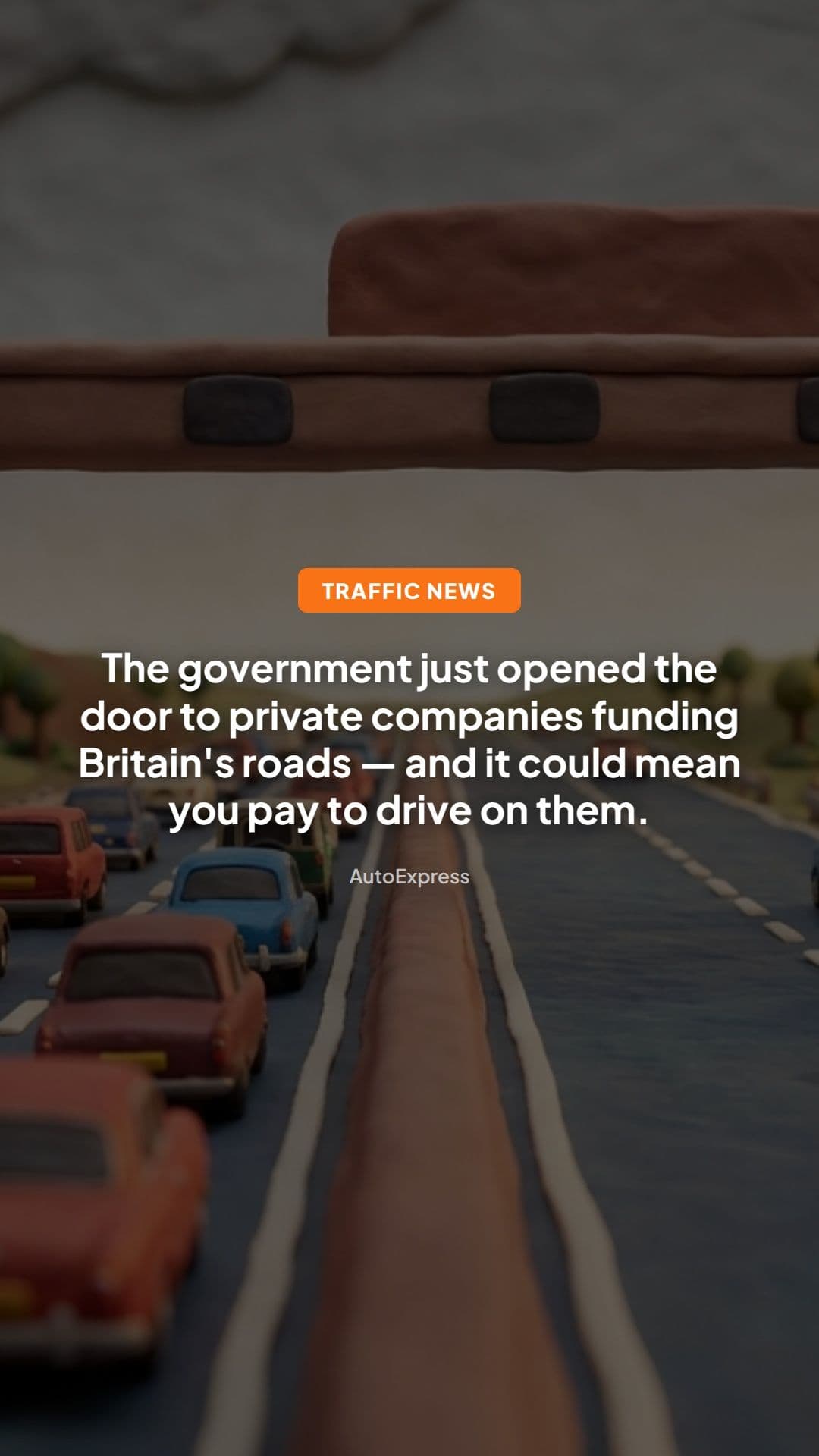
Labour's Highways Bill: What Road Charging Really Means for UK Drivers
Reading time: approximately 7 minutes
Imagine pulling onto the M6 one morning and being charged by the mile rather than by the tankful. It sounds like science fiction — or perhaps a dystopian nightmare, depending on your perspective — but the Labour government's new Highways Bill, announced in the King's Speech, has just made that prospect considerably more real. This isn't scaremongering. It's policy in motion, and every driver in Britain needs to understand what's being proposed, why it's happening, and what it could mean for their wallet and their rights on the road.
What the Highways Bill Actually Proposes
The headline from Auto Express is accurate but understated: the Highways Bill isn't just tinkering around the edges of road funding. It introduces two seismic changes to how Britain's strategic road network could be financed and managed.
First, it enables private investment in road infrastructure through a Regulated Asset Base (RAB) model — the same financing mechanism used for water companies, energy networks, and, more recently, Thames Tideway Tunnel. Under RAB, private investors fund the upfront capital costs of major infrastructure, then recover their money over decades through regulated charges. It's essentially a long-term loan from the private sector to the public, repaid with interest through ongoing user fees or government contracts.
Second, and more controversially, the Bill paves the way for road-charging schemes. The legislation doesn't mandate a specific toll or pay-per-mile system, but it creates the legal framework within which such schemes could be introduced. Think of it as Labour unlocking the door to road pricing — they haven't walked through it yet, but they've made sure the key fits.
The Bill specifically applies to England's strategic road network — the motorways and major A-roads managed by National Highways (formerly Highways England), covering around 4,300 miles of the country's most heavily used routes.
Why This Is Happening Now
To understand the significance of this Bill, you need to appreciate the financial black hole that British road infrastructure currently sits in.
The Road Investment Strategy (RIS) — the government's long-term plan for motorway and trunk road improvements — has been chronically underfunded. The second iteration of that strategy, RIS2, covering 2020 to 2025, was budgeted at approximately £27.4 billion. But inflation, supply chain disruption, and post-pandemic cost overruns have left numerous projects delayed, descoped, or quietly shelved. The Office of Rail and Road, which scrutinises National Highways' performance, has repeatedly flagged the gap between ambition and delivery.
Meanwhile, the Treasury faces a structural problem that's only going to worsen: fuel duty revenue is falling. As the UK's electric vehicle fleet grows — and the government's own 2035 zero-emission vehicle mandate accelerates that shift — the £25 billion or so that fuel duty currently raises annually will progressively shrink. Road pricing, in some form, is widely seen by economists and transport analysts as the inevitable replacement. The Office for Budget Responsibility has flagged this fiscal gap explicitly in its long-term forecasts.
The RAB model is being positioned as a way to unlock private capital without it appearing on the government's balance sheet — a neat accounting trick that successive governments have used for infrastructure projects, from the London Underground's ill-fated PPP to the aforementioned Thames Tideway. Whether it represents good value for money over the long term is a legitimate debate; the evidence from other sectors is decidedly mixed.
The Legal Landscape: What Powers Already Exist?
It's worth being clear about what the law currently allows — and what it doesn't.
The Transport Act 2000 already permits local authorities to introduce road user charging schemes, and the Greater London Authority Act 1999 gave London the power to implement the Congestion Charge, which launched in 2003. The Infrastructure Act 2015 further refined the governance of National Highways and set out the framework for road investment strategies.
However, charging for use of the strategic road network — the motorways and major trunk roads — requires primary legislation. That's precisely what the Highways Bill is intended to provide. It would grant the Secretary of State for Transport new powers to designate roads as subject to charging, set up the regulatory framework for those charges, and determine how revenue is ringfenced or distributed.
The Bill is also likely to interact with the Financial Services and Markets Act 2023 and existing utility regulation frameworks, given the RAB model's precedent in those sectors. Ofwat and Ofgem both regulate RAB-based industries; a new body — or an expanded remit for the Office of Rail and Road — would presumably oversee road RAB arrangements.
Crucially, the legislation as described does not appear to include automatic compensation rights for drivers if road quality falls below a standard, unlike the regulatory frameworks in water or energy. That's a significant omission, and one that campaign groups are likely to challenge.
What Drivers Should Know Right Now
Before you cancel your direct debit to the fuel pump in protest, here are the practical realities you need to keep in mind:
- Nothing changes immediately. The Highways Bill is enabling legislation — it creates the power to introduce road charging, not the charge itself. Any actual scheme would require further secondary legislation, public consultation, and almost certainly years of political wrangling.
- Watch for the pilot schemes. The most likely near-term development is a targeted pilot on a specific corridor — possibly a new road or a heavily congested section of motorway — rather than a nationwide roll-out. Keep an eye on any consultation notices from the Department for Transport.
- RAB doesn't necessarily mean tolls at the roadside. Under a RAB model, the charge could be embedded in Vehicle Excise Duty, collected through a telematics-based system, or levied as a direct toll. The mechanism matters enormously for privacy, fairness, and practicality. A GPS-based pay-per-mile system, for example, would require the government to track vehicle movements — a significant civil liberties concern that has sunk previous proposals.
- Rural drivers will be disproportionately affected. Any flat per-mile charge hits those with no alternative to car travel hardest. If you live in a rural area with limited public transport, now is the time to engage with your MP and respond to any future consultations. Your voice carries weight in these debates precisely because your dependency on the road network is demonstrably higher.
- Keep records of your current journeys and costs. If road charging is eventually introduced, the basis on which it's set — and whether it replaces or supplements existing taxes — will be fiercely contested. Drivers who can demonstrate the financial impact on their daily lives will be better placed to engage with consultation processes.
- Understand the RAB risk. If private investors fund road improvements under a RAB model, they will expect a return. That return ultimately comes from somewhere — either government funding (i.e., taxpayers) or user charges. The notion that private finance is somehow "free" money is a political fiction worth challenging whenever you hear it.
Looking Ahead: The Road to Road Pricing
The Highways Bill represents the most significant shift in road funding philosophy since the motorway network was built in the 1950s and 1960s — funded entirely from general taxation on the principle that roads were a public good, free at the point of use.
That principle is now formally under review. The political consensus is shifting: even motoring organisations that have historically opposed road pricing are beginning to acknowledge that some form of replacement for fuel duty is inevitable as EVs proliferate. The question is no longer really whether road charging will come, but how, when, and — most critically — on what terms.
The terms matter enormously. A well-designed scheme could be progressive, with lower charges for those who drive less or have no alternative. It could genuinely replace fuel duty rather than adding to it. It could be transparent, audited, and subject to meaningful democratic oversight. Or it could be opaque, regressive, and structured primarily to satisfy private investors rather than serve the public interest.
The difference between those two outcomes will be determined by how loudly and coherently drivers, campaign groups, and ordinary citizens engage with the consultation process — which hasn't formally begun yet, but will.
Watch this space. The Highways Bill is the starting gun, not the finish line.
Source: [Auto Express — Labour allows private finance for roads, and possible road charging, in new Highways Bill](https://www.autoexpress.co.uk/news/369586/labour-allows-private-finance-roads-and-possible-road-charging-new-highways-bill)
Written by
Lisa Rodriguez
Automotive Journalist
Ready to Challenge Your Ticket?
Let our AI analyse your PCN and generate a professional appeal letter in minutes.
Start Free Appeal