High-Tech Speed Cameras on UK Roads: What Drivers Need to Know
New high-tech speed cameras are coming to UK roads. Learn how they work, where they may be used, and what it could mean for speeding fines and points.

Marcus Campbell
26 March 2026
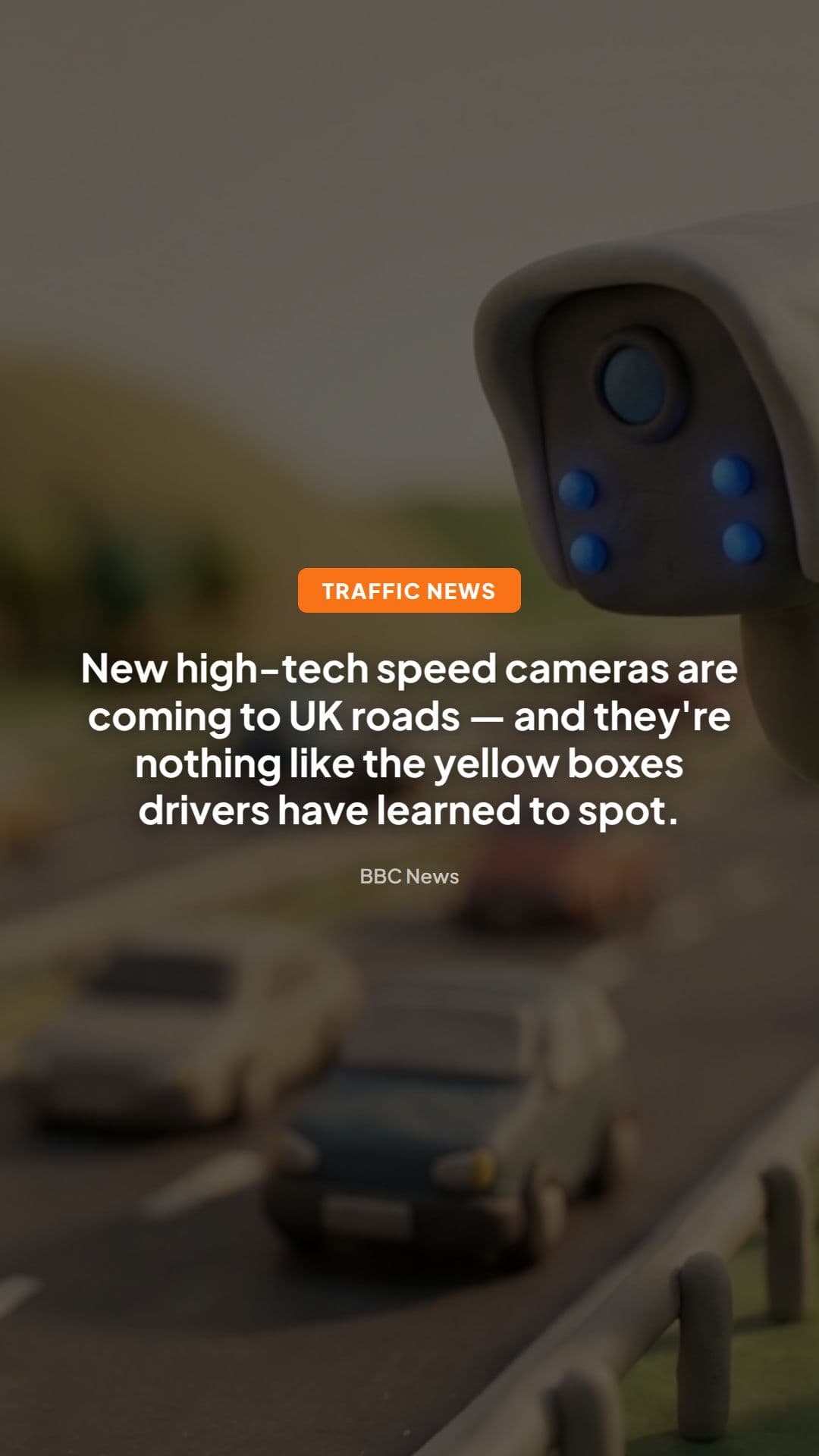
High-Tech Speed Cameras Are Coming to UK Roads — Here's What Every Driver Needs to Know
Imagine driving along a familiar stretch of road, confident you know where every speed camera sits, only to discover that the rules of the game have fundamentally changed. That's precisely the situation millions of UK drivers are about to face, as a new generation of sophisticated speed enforcement technology prepares to roll out across Britain's roads. This isn't just another incremental upgrade — it represents a genuine shift in how speeding is detected, prosecuted, and ultimately, how drivers need to think about their behaviour behind the wheel.
What's Actually Happening
According to a report by BBC News, high-tech speed cameras are on their way to UK roads, bringing with them capabilities that go well beyond the familiar yellow boxes and average speed gantries that drivers have grown accustomed to. The new generation of enforcement technology includes cameras capable of detecting multiple offences simultaneously — not just speeding, but also mobile phone use, seatbelt violations, and potentially tailgating.
These systems use artificial intelligence and advanced image recognition to process footage in real time, flagging potential offences automatically before human operators review the evidence. Some of the technology being trialled can operate across multiple lanes simultaneously, function in low-light conditions, and even detect offences in vehicles travelling in the opposite direction.
Crucially, some of these cameras are designed to be far less conspicuous than their predecessors. Whereas traditional Gatso cameras were deliberately made visible as a deterrent, some of the newer systems are compact, portable, and can be deployed without the infrastructure of a fixed installation. That changes the dynamic considerably for drivers who've relied on camera location apps and muscle memory to stay compliant.
Why This Matters — The Bigger Picture
Speed enforcement in the UK has always been a contentious topic, sitting at the intersection of road safety, civil liberties, and revenue generation. Critics have long argued that static cameras encourage drivers to slow down only at known enforcement points, before returning to higher speeds elsewhere — a behaviour sometimes called "point compliance." Average speed cameras, which calculate your speed across a measured distance rather than at a single point, were introduced partly to address this problem, and studies have shown they are generally more effective at reducing casualties.
The new AI-powered cameras represent the next logical step in this evolution. But they also raise important questions about proportionality, accuracy, and the rights of drivers who believe they've been wrongly captured.
It's worth remembering that speed-related collisions remain a significant factor in UK road deaths. According to Department for Transport statistics, exceeding the speed limit or travelling too fast for conditions is recorded as a contributory factor in around 11% of all reported injury collisions. Proponents of enhanced enforcement argue that more sophisticated cameras will make roads genuinely safer, not just at enforcement hotspots but across the network as a whole.
However, the rollout also comes at a time when public trust in automated enforcement is fragile. High-profile errors with ULEZ cameras and debates over the fairness of penalty charge notices have made many drivers sceptical of technology-led enforcement. If the new cameras are to command public confidence, the systems underpinning them — from calibration to appeals — will need to be watertight.
The Legal Angle — Your Rights and the Law
Under the Road Traffic Regulation Act 1984 and the Road Traffic Offenders Act 1988, speeding is a criminal offence in England, Scotland, and Wales. Unlike parking penalties, which are civil matters, speeding fines are issued as Fixed Penalty Notices (FPNs) or, for more serious cases, result in prosecution through the magistrates' court.
The standard fixed penalty for speeding is £100 and three penalty points, though magistrates can impose fines of up to £1,000 (or £2,500 on a motorway) and disqualification for the most serious cases. Drivers who accumulate 12 or more penalty points within three years face a totting-up disqualification under Section 35 of the Road Traffic Offenders Act.
A critical legal safeguard that many drivers don't know about is the type approval process for speed enforcement equipment. In England and Wales, cameras must be approved by the Secretary of State under the Road Traffic Act 1991, and the evidence they produce must meet strict standards of accuracy and reliability. If a camera has not been properly calibrated, maintained, or approved, the evidence it generates may be challenged.
When a Notice of Intended Prosecution (NIP) is issued — which must happen within 14 days of the alleged offence under Section 1 of the Road Traffic Offenders Act 1988 — the registered keeper of the vehicle is legally required to identify the driver. Failure to do so is itself an offence carrying six penalty points and a fine. This obligation applies even if you weren't the driver at the time.
For the new AI-assisted cameras, the legal framework around evidence admissibility will be particularly important. Courts have historically required that automated evidence be reviewed and confirmed by a trained human operator before it can be used in prosecution. Whether the new systems meet this standard — and how that standard evolves as the technology matures — will be a key legal battleground in the years ahead.
What Drivers Should Know — Practical Advice
The arrival of smarter enforcement technology makes this an important moment to reassess your driving habits and your knowledge of your rights. Here's what you need to bear in mind:
Understand that camera-spotting apps have limits. Services like Waze and dedicated speed camera databases rely on fixed or reported locations. Portable, AI-driven cameras can be deployed anywhere, meaning you cannot rely on prior knowledge of camera positions to stay safe. The only reliable strategy is to drive within the speed limit at all times.
Check your speedometer regularly. Most vehicles' speedometers over-read slightly — typically by around 2-3 mph — which can give drivers a false sense of security. GPS-based speed displays, available on many modern satnavs and smartphones, are often more accurate.
Know the difference between a Fixed Penalty Notice and a court summons. If you're offered a fixed penalty, you have the right to opt for a court hearing instead — though this carries risk if the evidence against you is strong. For minor first offences, many forces offer a Speed Awareness Course as an alternative to points, typically costing around £100 and taking half a day to complete. This option is generally available if you were travelling between the speed limit and 10% plus 9 mph above it.
If you believe a camera has made an error, you have the right to challenge the evidence. Request full disclosure of the calibration records, the camera's type approval documentation, and the footage itself. Errors in any of these can form the basis of a successful challenge.
Keep your vehicle registration details up to date with the DVLA. If a NIP is sent to an old address and you don't respond, you could face prosecution for failing to provide driver information — even if you weren't aware of the original alleged offence.
Looking Ahead — What This Means for Drivers
The introduction of high-tech speed cameras signals a broader shift in the philosophy of UK road enforcement — one that moves away from predictable, static deterrence towards pervasive, intelligent monitoring. Whether you view that as a welcome step towards safer roads or a troubling expansion of surveillance, it represents a reality that drivers will need to adapt to.
There are genuine questions still to be answered. How will the data captured by these cameras be stored and protected? What oversight mechanisms will exist to prevent errors from leading to wrongful prosecutions? And how will the appeals process work when AI-generated evidence is challenged in court?
Campaigners and motoring organisations will rightly push for transparency and accountability as the rollout progresses. Drivers, meanwhile, would do well to stay informed — both about the technology being deployed and about the legal rights they retain when facing enforcement action.
The roads are changing. The cameras are getting smarter. And the best protection any driver has, now more than ever, is simply to know the rules, respect the limits, and understand what to do if the system gets it wrong.
Source: BBC News — "High-tech speed cameras coming to UK roads"
Written by
Marcus Campbell
Former Traffic Warden
Ready to Challenge Your Ticket?
Let our AI analyse your PCN and generate a professional appeal letter in minutes.
Start Free Appeal