
Graduated Driving Licences: Will Great Britain Follow NI?
Northern Ireland has launched graduated driving licence rules for young motorists. Could England, Scotland and Wales introduce similar restrictions?

The Parking Ticket Pal Editorial Team
4 October 2026
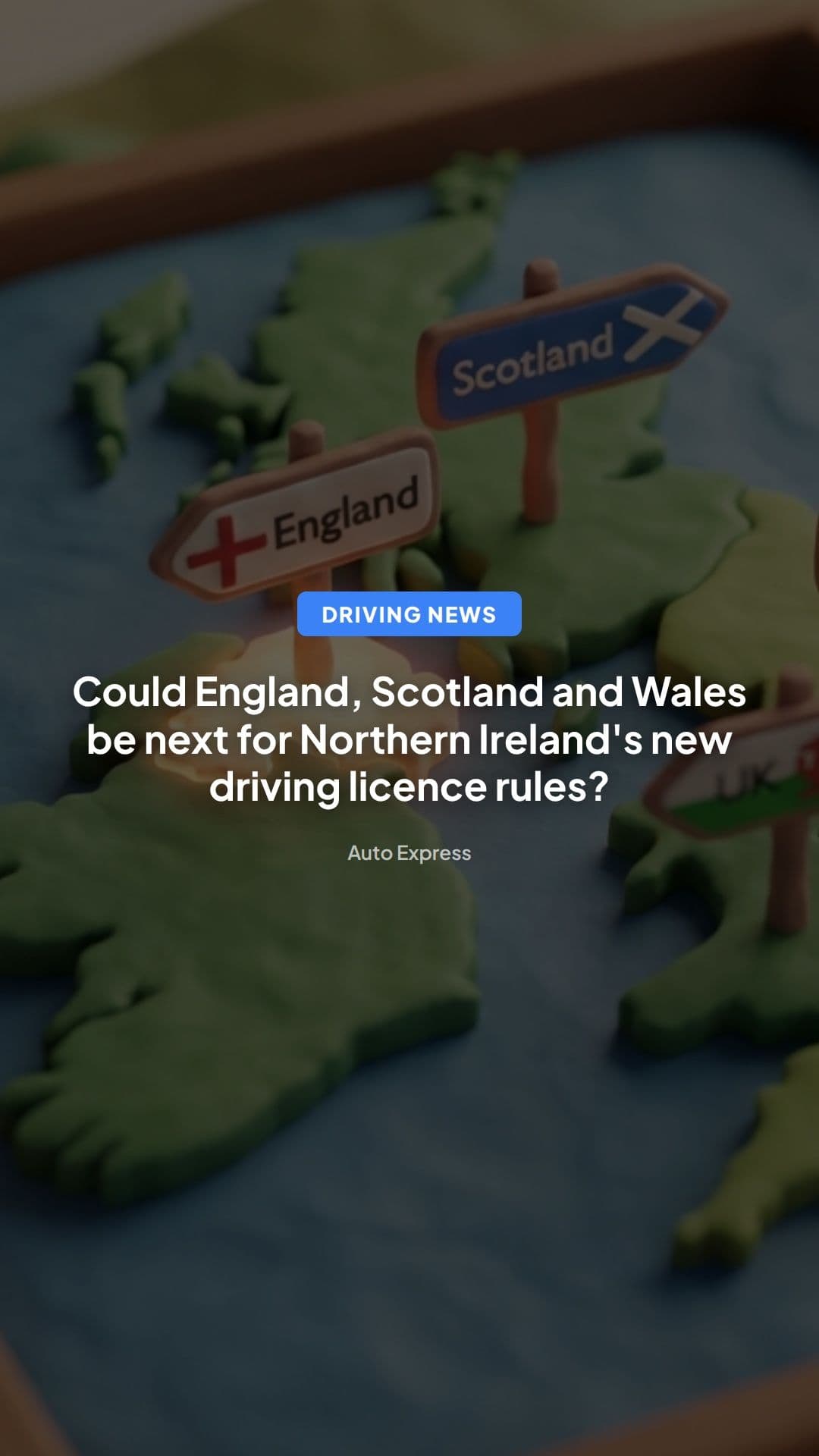
Graduated Driving Licences: Could England, Scotland and Wales Follow Northern Ireland's Lead?
Hook
Picture two 18 year olds passing their driving test on the same day. One lives in Belfast, the other in Birmingham. From that moment, their experience behind the wheel will look markedly different. The Belfast driver faces a set of legally enforced restrictions designed to ease them into independent driving. The Birmingham driver gets a full licence and the keys to drive wherever, whenever, and with whoever they like, within the ordinary rules of the road.
That gap has just widened. Northern Ireland has rolled out a tightened graduated driving licence scheme for new drivers, reigniting a debate that has simmered in Westminster and Holyrood for years: should Great Britain adopt something similar?
What Happened
Northern Ireland has long operated a version of graduated licensing that differs from the rest of the UK. New drivers there display "R" plates (for Restricted) for a period after passing their test, during which they are limited to a maximum speed of 45mph, regardless of the posted limit on the road they're using.
The latest changes build on that foundation, introducing a more structured graduated system with additional restrictions aimed specifically at newly qualified and novice drivers. The principle behind graduated driving licensing (GDL) is straightforward: rather than handing a new driver full, unrestricted access to the road network the moment they pass their test, licensing authorities phase in privileges over months or years, gradually lifting restrictions as the driver builds experience in lower risk conditions first.
Typical GDL restrictions found in schemes around the world, and reportedly featuring in some form in Northern Ireland's approach, include limits on night time driving, caps on the number of passengers a new driver can carry, and lower drink drive limits for novice licence holders. The logic is to remove the riskiest driving scenarios, such as driving late at night with a car full of friends, from a new driver's early experience until they've had time to build genuine road skills.
Crucially, Northern Ireland's driving licences are administered separately from the rest of the UK. The Driver & Vehicle Agency (DVA) in Northern Ireland handles testing and licensing there, distinct from the DVLA and DVSA that cover England, Scotland and Wales. That institutional separation is precisely why NI has been able to move faster and further on graduated licensing. It isn't bound by the same single licensing framework that governs the rest of Great Britain.
Why It Matters
Young and newly qualified drivers are consistently overrepresented in road collision statistics, a pattern recognised for decades by road safety researchers, insurers and government bodies alike. It's one of the most stubborn problems in road safety policy. New drivers, almost by definition, lack the hazard perception and judgement that comes only with time behind the wheel, yet the current system in Great Britain gives them full licence privileges the moment they pass a test that, for all its rigour, cannot simulate years of real world experience.
This isn't a new conversation. Road safety charities including Brake and the Parliamentary Advisory Council for Transport Safety (PACTS) have called for a form of graduated licensing in Great Britain for years, pointing to countries such as New Zealand, Australia and Canada, along with many US states, where staged licensing systems have been credited with reducing crash involvement among novice drivers. The Transport Select Committee has also examined the issue in the past, weighing up the safety case against concerns about restricting young people's independence and employment opportunities, particularly those who need to drive for work or live in areas with poor public transport.
Northern Ireland tightening its own rules puts fresh pressure on the Department for Transport to explain why a safety intervention considered worthwhile in one part of the UK isn't being pursued in the others. It also raises an uncomfortable question for policymakers: if the evidence supports GDL, what's actually stopping it being introduced more widely, and if it doesn't, why has NI gone further?
The Legal Angle
Road traffic law in the UK is a patchwork of devolved and reserved powers, which is part of why this issue is more complicated than it might first appear.
In England, Scotland and Wales, new drivers are already subject to one significant legal safeguard: the Road Traffic (New Drivers) Act 1995. Under this law, if a driver accumulates six or more penalty points within two years of passing their first driving test, their licence is automatically revoked. They don't simply lose points like an experienced driver would; they're required to reapply for a provisional licence and, in effect, start again, including retaking both the theory and practical tests. This is already a form of probationary licensing, even if it isn't branded as such, and it catches out a surprising number of new drivers who don't realise how little margin for error they have in those first two years.
What Great Britain doesn't have is the broader, structural GDL framework seen in Northern Ireland and in countries like New Zealand and Australia, where restrictions on passengers, night driving and alcohol are baked into the licence itself from day one, rather than being triggered retrospectively by points accumulation.
Introducing full graduated licensing in England, Scotland and Wales would likely require fresh primary legislation, almost certainly preceded by a formal government consultation, given the scale of behavioural and economic impact on young people, driving instructors and insurers. Any such scheme would also need to grapple with devolved road safety powers in Scotland and Wales, where ministers have shown appetite for distinct road safety measures before, as seen with Wales's lower drink drive limit proposals and Scotland's differing approach to speed limits in built up areas. Readers wanting a wider sense of where UK licensing policy might be heading can look at how the government has already flagged potential changes in its review of the driving licence system more broadly.
What Drivers Should Know
For now, nothing changes for learners and new drivers in England, Scotland or Wales. There's no graduated licence requirement, no R plates, and no legal passenger or night time restrictions beyond the general duty to drive safely and appropriately for the conditions.
That said, there are a few practical points worth keeping in mind:
- If you're newly qualified, treat the first two years as probationary in practice, even if not in name. The New Drivers Act means six penalty points, which could come from something as simple as a speeding offence and a mobile phone infraction, will see your licence revoked and force you back to learner status.
- Consider voluntary measures even without a legal requirement. Many insurers offer telematics or "black box" policies for young drivers that monitor night time driving, harsh braking and speed. Opting in can lower premiums and, more importantly, encourage safer habits during the highest risk period of a driving career.
- Look at Pass Plus and further training. Pass Plus and similar post-test courses cover motorway driving, night driving and adverse weather conditions, essentially replicating some of the staged exposure that formal GDL schemes provide, on a voluntary basis.
- If you're driving in or visiting Northern Ireland as a new driver, check the current R plate and restriction rules before you travel. These are legally enforceable and differ from what you may be used to in Great Britain.
- Parents of learner and newly qualified drivers may want to set informal household rules mirroring GDL principles, such as limiting the number of friends in the car during the first few months, even though there's no legal requirement to do so.
Anyone affected by a licence revocation under the New Drivers Act, or facing penalty points as a new driver, should treat the situation seriously and seek guidance from the DVLA directly or a motoring solicitor rather than assuming the rules work the same way as they would for an experienced licence holder.
Looking Ahead
Northern Ireland's move doesn't automatically mean England, Scotland and Wales will follow suit, but it does shift the political and evidential landscape. Ministers in Westminster have previously resisted full graduated licensing partly over concerns about disproportionately affecting young people in rural areas with limited public transport, and partly due to the practical complexity of enforcement.
But with road safety campaigners continuing to push the issue, and a working, comparable model now operating just across the Irish Sea, pressure for a formal consultation on graduated licensing in Great Britain is likely to grow rather than fade. Given how often driving test and licensing rules have been revisited in recent years, from mobile phone enforcement to proposed changes to the driving test itself, it wouldn't be surprising to see graduated licensing formally tabled for discussion before long.
For now, the safest approach for new drivers across the UK is the same regardless of where you live: drive cautiously, understand exactly how fragile your licence is in those early years, and don't assume the rules will stay the same for long.
Written by
The Parking Ticket Pal Editorial Team
Source-checked parking guidance
Ready to Challenge Your Ticket?
Let our AI analyse your PCN and generate a professional appeal letter in minutes.
Start Free Appeal